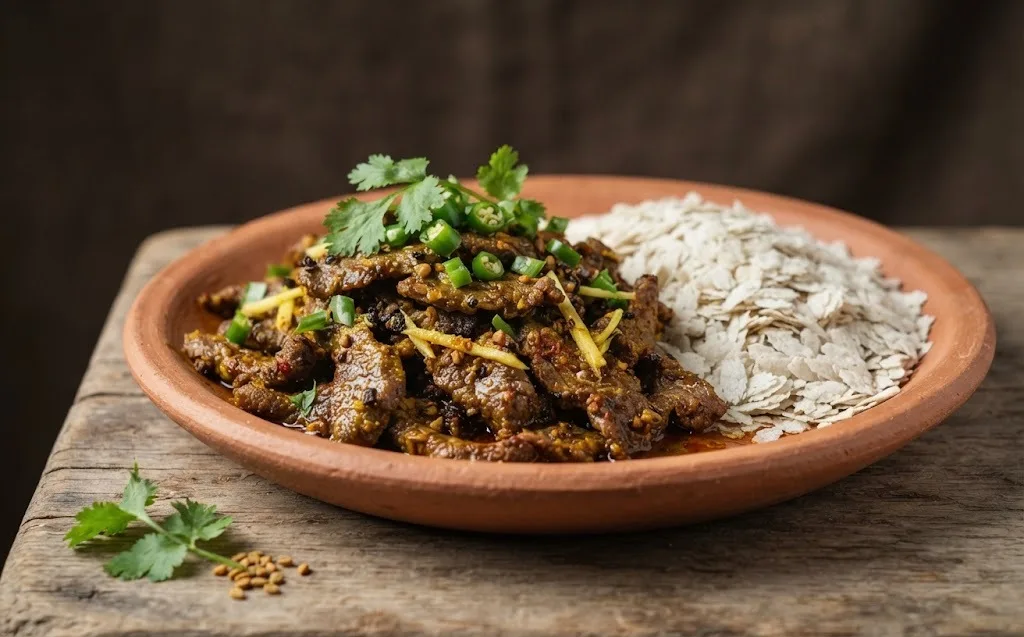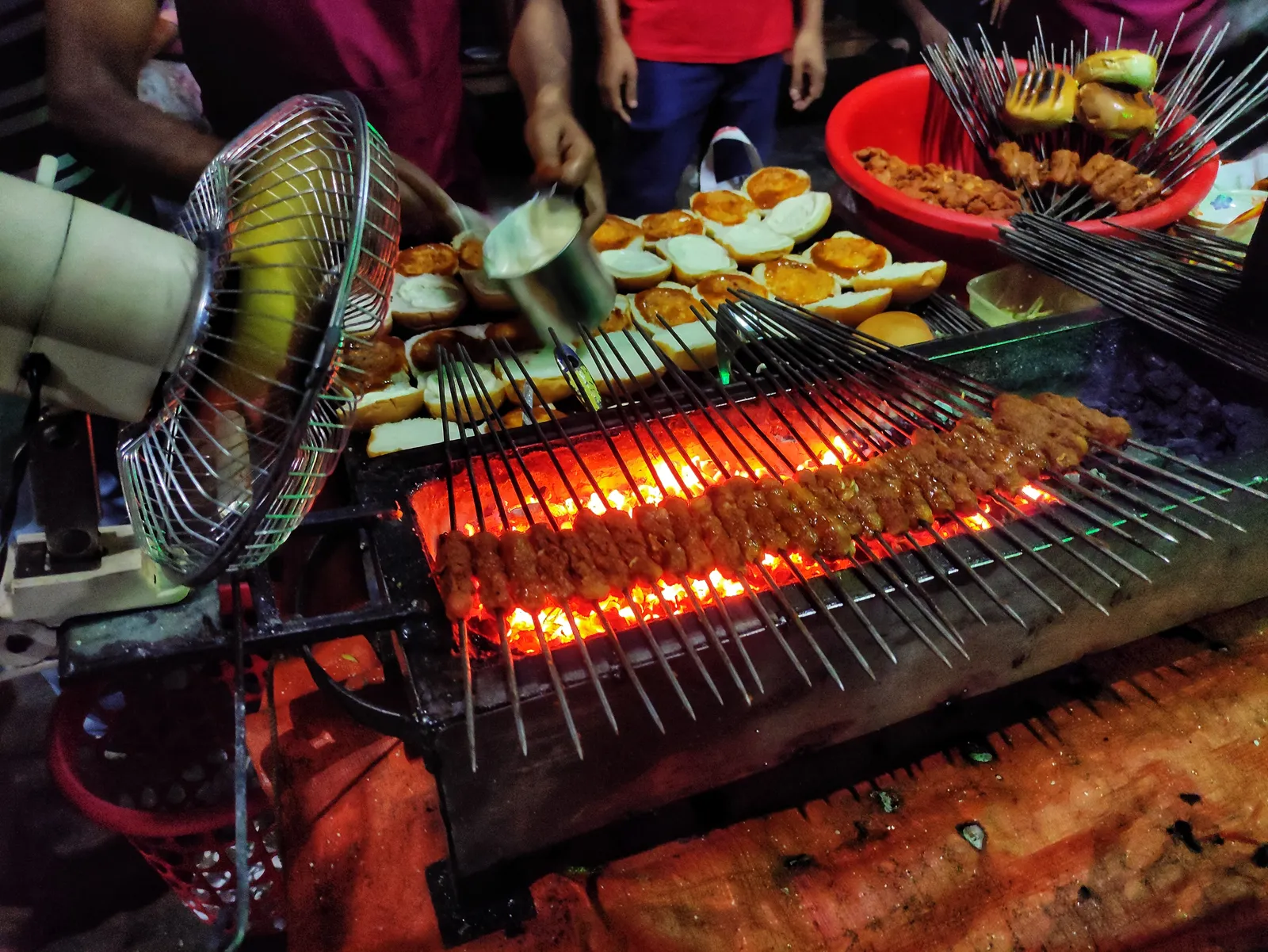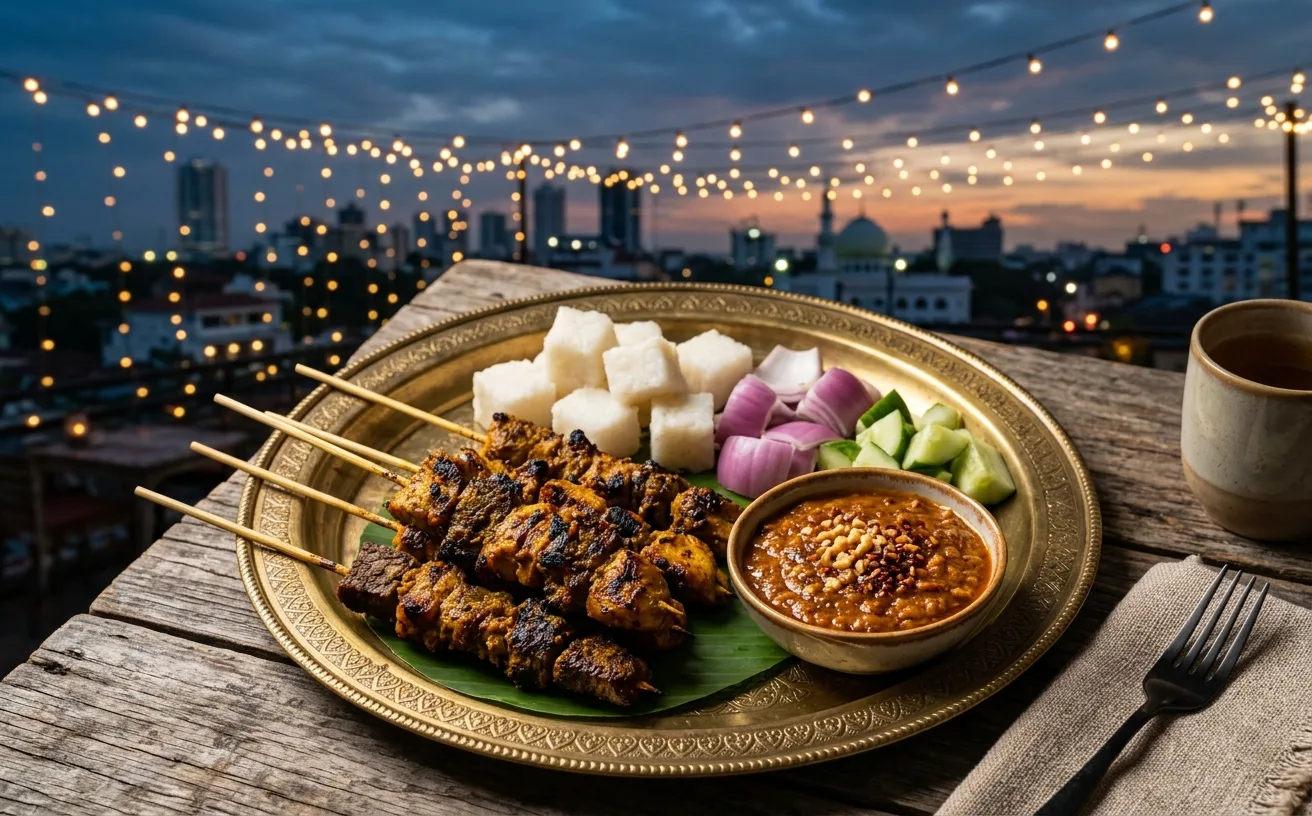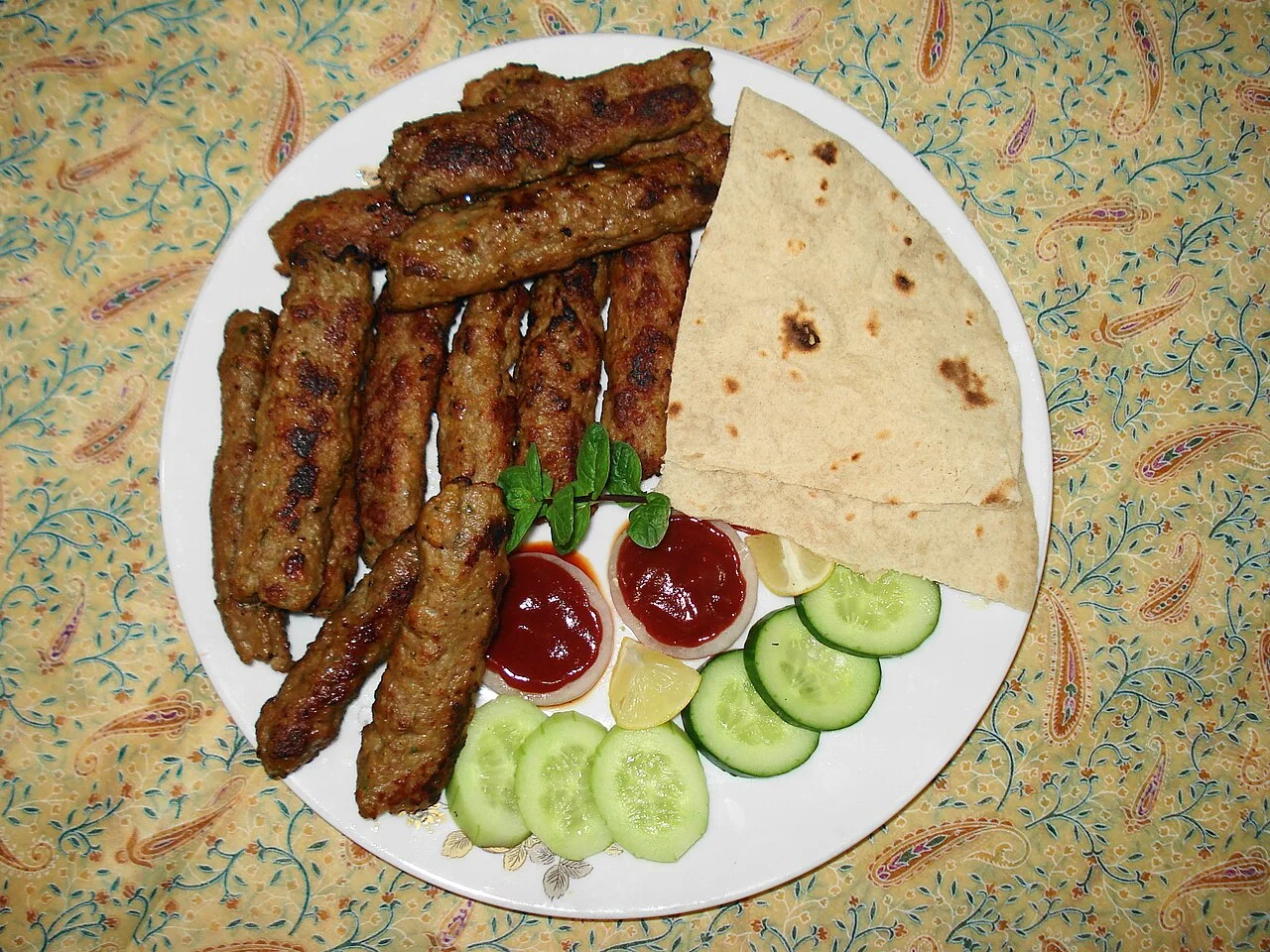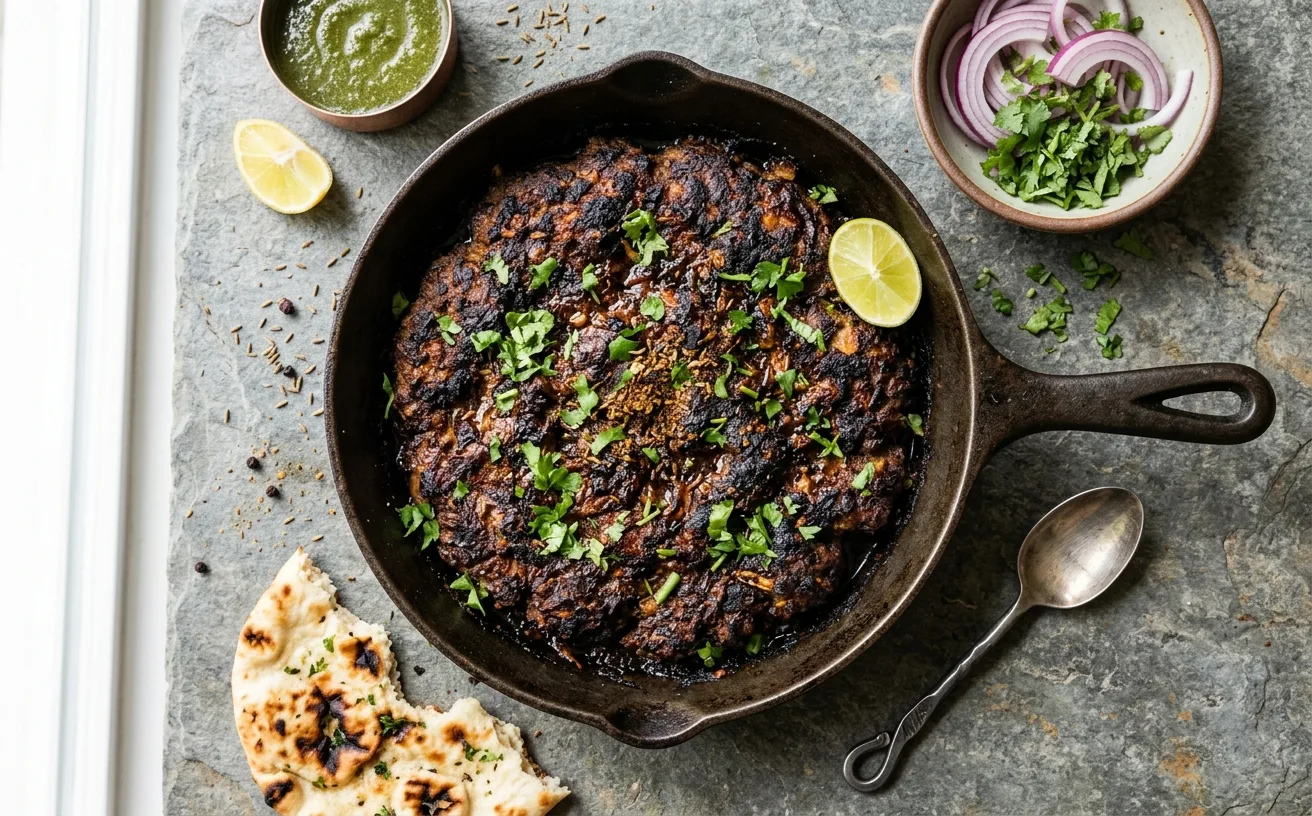
A Hyderabadi specialty, made for Eid and family gatherings, in which marinated minced or flattened mutton is sealed in a tray and slow-baked under 'dum' with live coals smoking the surface. It is a kebab made without any direct flame, cooked entirely by trapped heat and smoke.
Also known as dum kebab, Hyderabadi dum ke kabab, دم کے کباب.
Reference video
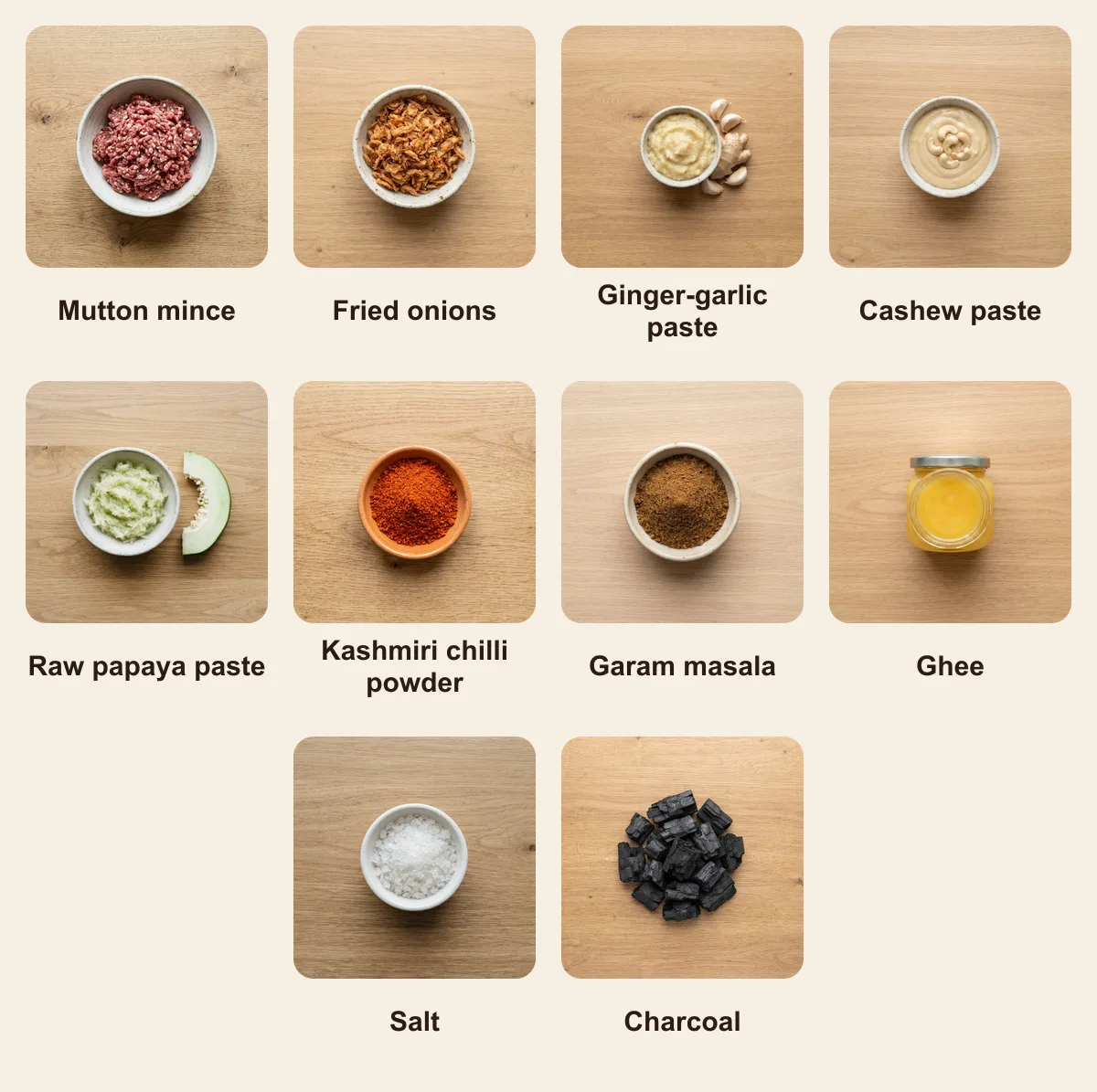
Ingredients
- 600 g mutton mince (or thin flattened boneless mutton)
- 80 g fried onions, crushed
- 1.5 tbsp ginger-garlic paste
- 40 g cashew paste
- 30 g raw papaya paste
- 1 tsp Kashmiri chilli powder
- 0.5 tsp garam masala
- 40 g ghee, plus extra for the coal
- 1.25 tsp salt
- 1 piece of charcoal, for dhungar smoke
How to make it
- 1
Marinate the mutton overnight with everything except the ghee and coal.
- 2
Spread it 2 cm deep in a baking tray greased with some of the ghee, and spoon the rest over the top.
- 3
Sit a glowing coal in a foil cup on the meat, pour a spoon of ghee over it, and seal the tray tight with foil for 5 min of smoke.
- 4
Re-seal and bake on dum at 160 C for 60-70 min so it cooks in its own trapped steam.
- 5
Uncover, flash under the broiler 3 min, and cut into squares with lemon, onion rings and roomali roti.
Pro tip: The airtight seal is the technique itself; crimp the foil so nothing escapes, because dum means the kebab bastes in its own smoke and steam.
Where Dum ke Kebab comes from
Dum pukht — cooking under pressure in a sealed vessel — is the technique Hyderabadi and Awadhi cooking is most known for, and applying it to a kebab rather than to a biryani is characteristically Hyderabadi.
How Dum ke Kebab is cooked
The tray is sealed — traditionally with a rope of dough around the lid, now often with foil — so that no steam escapes. Inside, the meat cooks in its own moisture at low temperature for an extended period, which is why the result is soft in a way no grilled kebab is.
The smoke is added separately by the dhungar method: a small bowl of glowing charcoal is set into the meat, ghee is poured over it, and the tray is sealed immediately so the smoke is trapped. That charcoal-and-ghee smoke is what gives a flameless dish the aroma of one that has been over a fire, and it is not optional.
Ingredients and shopping
Mutton mince, or thin flattened strips of mutton, with a good proportion of fat. Raw papaya paste in small quantity as a tenderiser. Crushed fried onions, cashew paste, ginger-garlic, Kashmiri chilli and garam masala for the warm Hyderabadi spice; some cooks also add yoghurt.
A tray with a well-fitting lid, or foil sealed tightly. Charcoal and ghee for the dhungar. A moderate oven, around 160°C, for an hour or more. The dish rewards patience and punishes opening the tray to look.
How Dum ke Kebab is served
With sheermal, roomali roti or naan, mint chutney and sliced onion, at Eid and family gatherings. It reheats well, which suits a dish made in quantity.
Common mistakes
Opening the tray during cooking
It releases the trapped steam and smoke, which are the entire mechanism. Seal it and leave it.
Skipping the dhungar
Without the coal-and-ghee smoke the dish has no fire aroma at all, which is the thing it is trying to reproduce.
Cooking it hot
Dum is a low, slow method. High heat dries the meat and defeats the point.
A loose seal
Dough rope or well-crimped foil. A gap and the steam escapes.
Dum ke Kebab: questions and answers
What does dum mean?
Cooking in a sealed vessel so that steam and aroma are trapped. It is the technique Hyderabadi and Awadhi cooking is best known for.
What temperature and how long?
Around 160°C for an hour or more, sealed. It is a low, slow method and should not be rushed.
Sources and further reading
- Hyderabadi Dumh Kebab — Dawat Dil Se