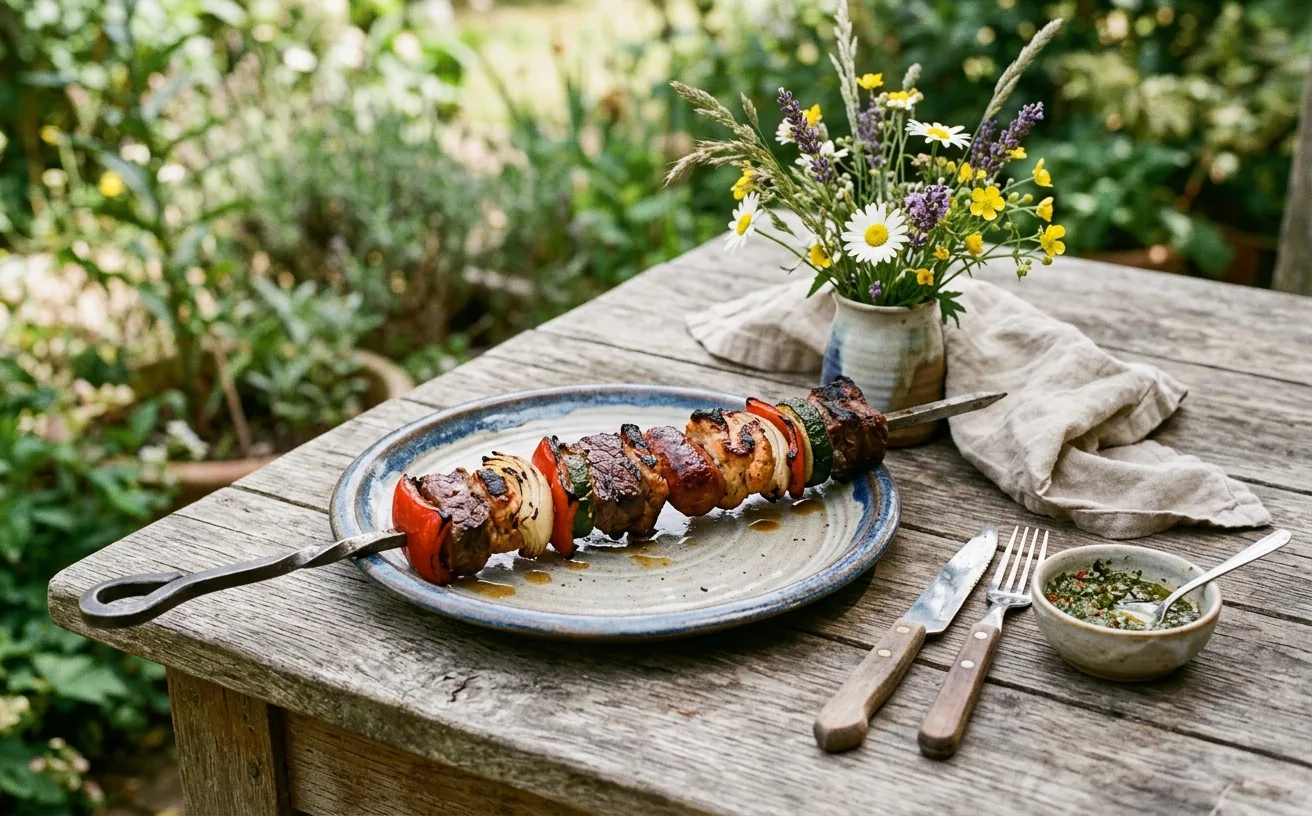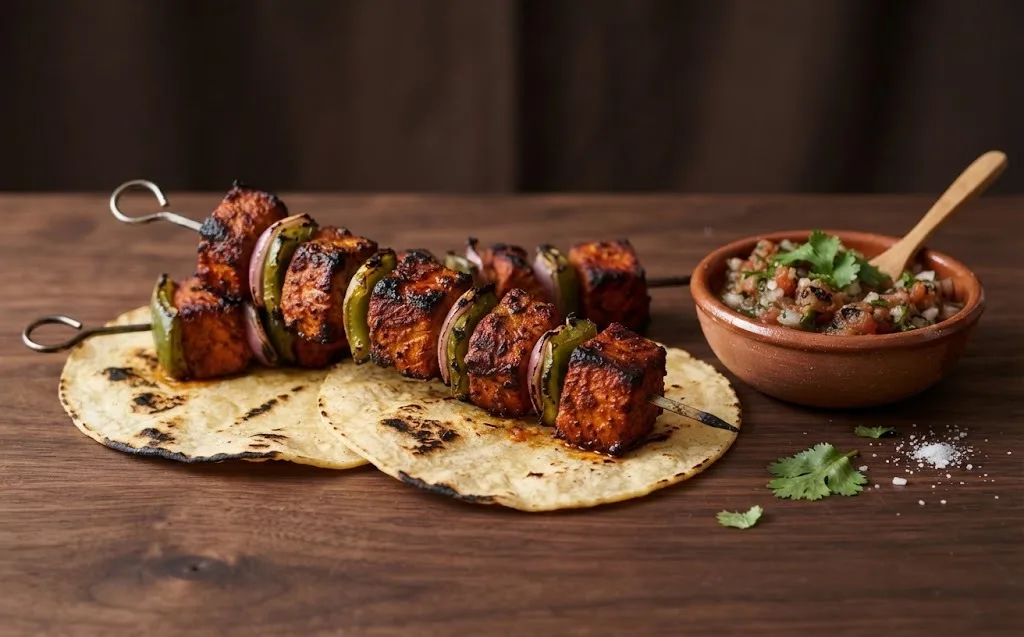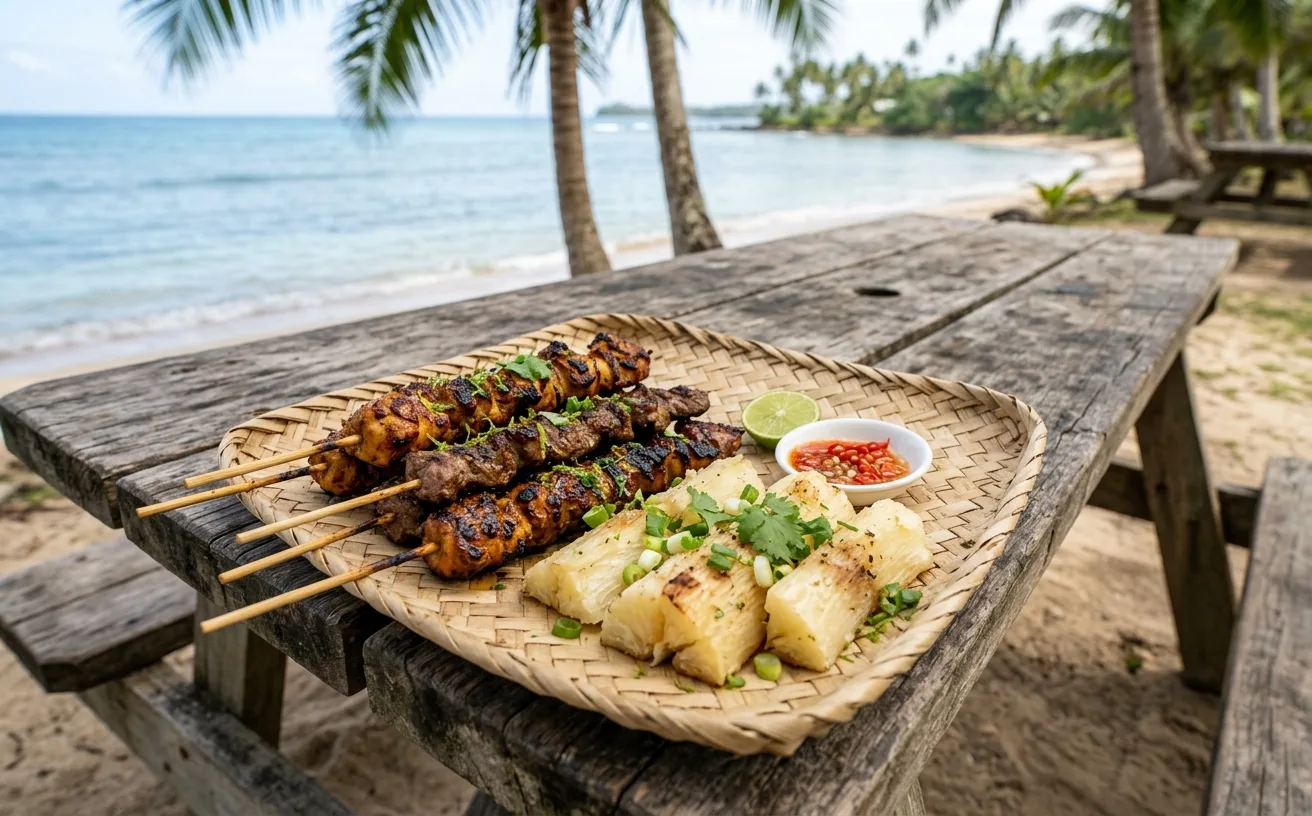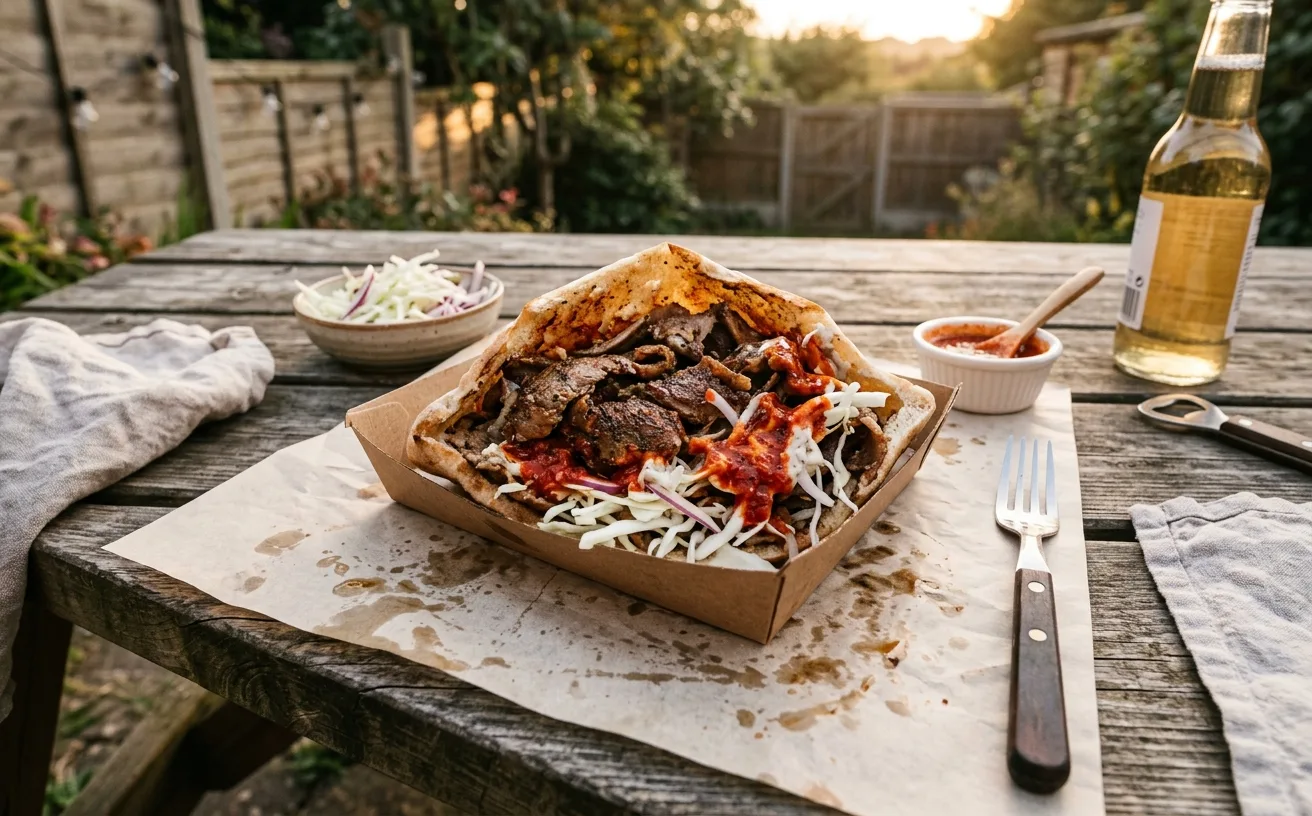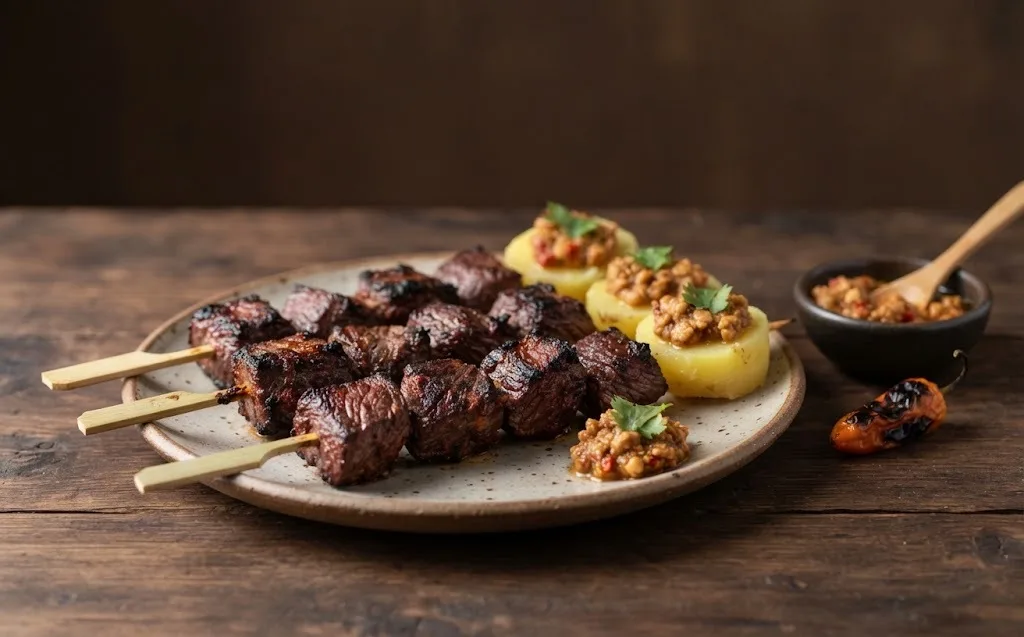
The Peruvian beef-heart skewer as re-rooted by its neighbors: La Paz street vendors serve it late-night with potato and spicy peanut sauce, Ecuadorian coastal grills swap in ordinary beef or chicken, and the Chilean 'anticucho' becomes an asado brochette of mixed meat, longaniza sausage, and onion. A colonial-era dish blending pre-Columbian llama-on-spit cooking with skewer technique carried by Iberian and enslaved African cooks.
Also known as anticuchos, anticucho de corazón, anticucho boliviano.
Reference video
Ingredients
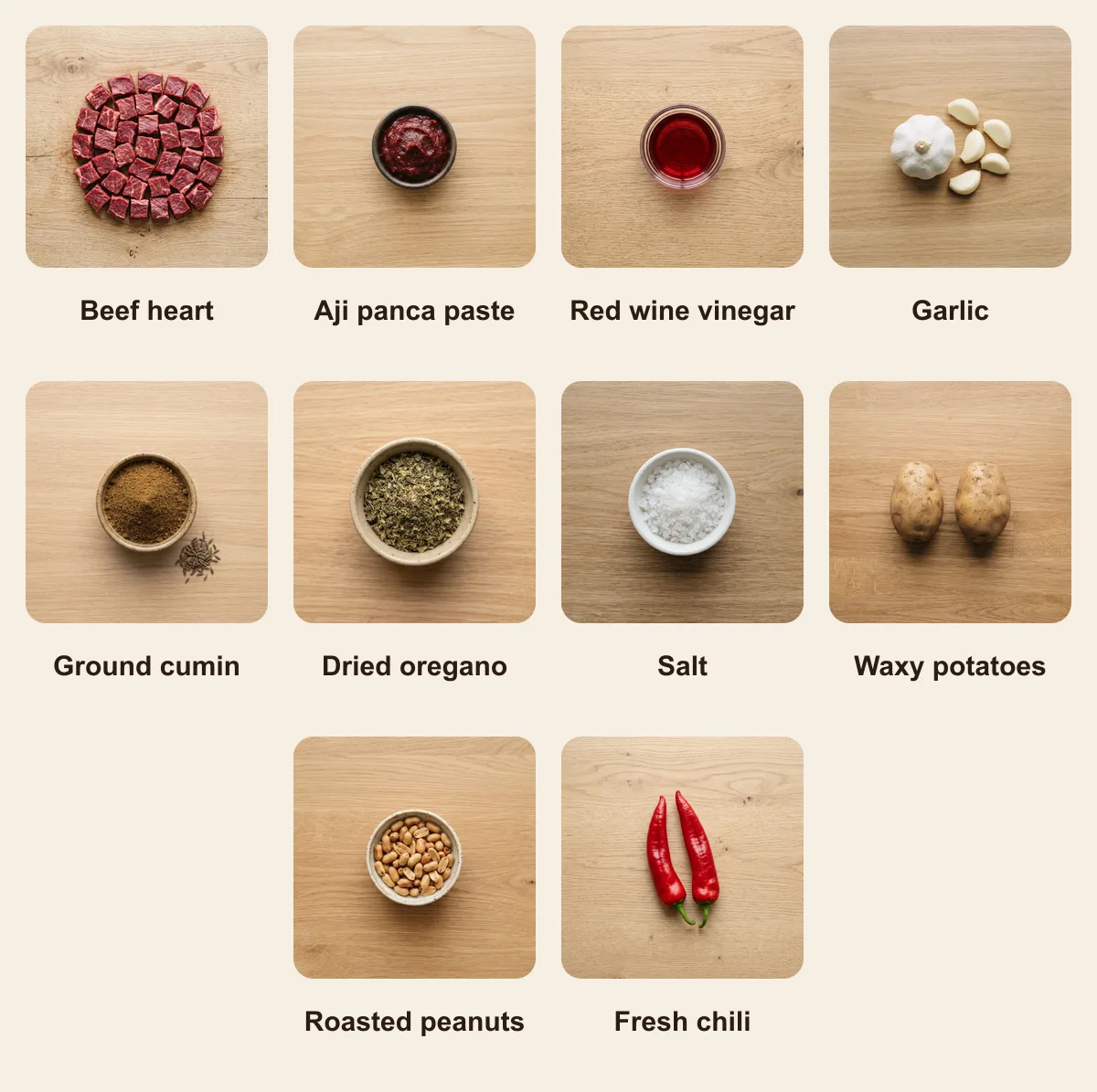
- 700 g beef heart, trimmed of veins and fat, 3 cm pieces
- 4 tbsp aji panca paste
- 80 ml red wine vinegar
- 4 garlic cloves, crushed
- 1 tsp ground cumin
- 1 tsp dried oregano
- 1.5 tsp salt
- 4 boiled waxy potatoes
- 100 g roasted peanuts
- 1 fresh chili
How to make it
- 1
Stir the panca paste, vinegar, garlic, cumin, oregano and salt into a marinade and bury the heart pieces in it overnight — heart is lean muscle and needs the full 12 hours.
- 2
Blend the peanuts and chili with a splash of water and salt into a loose salsa de mani, La Paz style.
- 3
Thread 4-5 pieces per skewer and finish each with a thick slice of boiled potato.
- 4
Sear over fierce charcoal 2-3 minutes per side, brushing with leftover marinade as it cooks; heart goes from tender to rubber past medium.
- 5
Serve straight off the fire with the peanut salsa spooned over the potato end.
Pro tip: Trim every silvery vein from the heart before marinating — one missed membrane makes a whole piece chewy.
Where Anticucho comes from
A Chilean anticucho and a Peruvian one are not the same dish, and calling them by the same name obscures more than it explains.
Andean anticucho: peanut sauce, achiote or merkén by country
Measured against Peruvian Anticuchos, which pair beef heart in ají panca and vinegar with boiled potato and choclo, Bolivia stays closest. La Paz vendors keep the heart and the fast grilling but add a spicy peanut sauce that softens the marinade's acidity, and the home recipe ends each skewer with a slice of boiled potato. Ecuadorian coastal grills switch to beef or chicken cubes in achiote and cumin, with plantain on the side. Chile moves furthest, using no offal at all: beef, longaniza and onion alternate on the skewer, seasoned with merkén, cooked at moderate distance over an asado fire and eaten with pebre and bread.
Compare: Anticuchos
How Anticucho is cooked
The Bolivian version stays closest to the Peruvian: beef heart, marinated, grilled fast, and served with a potato — but the peanut sauce is the La Paz addition and it is a genuine departure, thickening the plate and softening the acidity of the marinade.
The Chilean version abandons offal entirely and becomes a mixed brochette, which changes the cooking problem completely: longaniza, beef and onion have different timings, so the pieces are cut to compensate and the skewer is cooked over an asado fire at moderate distance rather than seared hot.
Ingredients and shopping
For the Bolivian version: beef heart, trimmed hard, with ají panca or a local equivalent, plus roasted peanuts blended with chilli and water for the sauce. For the Chilean: beef, longaniza sausage and onion in alternating pieces, seasoned with merkén — the smoked Mapuche chilli — which is the Chilean signature.
For the Ecuadorian coastal version: beef or chicken in cubes with an achiote-and-cumin marinade, grilled fast and served with a peanut or achiote sauce. Each version wants its own local chilli and substituting across them flattens the differences.
How Anticucho is served
In La Paz, from a street cart at night with a boiled potato and peanut sauce. In Chile, as part of an asado with pebre and bread. In Ecuador, from a coastal grill with plantain. The accompaniment is the clearest marker of which version you are eating.
Common mistakes
Treating them as one dish
A Chilean mixed brochette, a La Paz heart skewer with peanut sauce and an Ecuadorian chicken skewer are genuinely different. Cook the one you intend.
Using generic chilli powder
Ají panca in Peru and Bolivia, merkén in Chile, achiote on the Ecuadorian coast. Each is the local marker.
Overcooking heart in the Bolivian version
The same rule as Peru: very lean, very dense, pulled while pink.
Mixed pieces cut the same size
Longaniza, beef and onion cook at different rates. Cut them to compensate.
Anticucho: questions and answers
Is the Bolivian anticucho the same as the Peruvian?
Close — both use beef heart — but La Paz adds a spicy peanut sauce and serves it with potato, which is a genuine local departure.
What is a Chilean anticucho?
A mixed asado brochette of beef, longaniza sausage and onion, seasoned with merkén. It uses no offal and is a different dish sharing a name.
What is merkén?
A smoked, ground Mapuche chilli from Chile, the signature seasoning of Chilean grilling.
Why do the versions differ so much?
Each country re-rooted a colonial-era dish in local ingredients and local grilling culture. The shared name records a shared ancestry, not a shared recipe.
Sources and further reading
- Anticucho — Wikipedia
- Merkén — Wikipedia
- Declaran patrimonio cultural a 22 comidas y bebidas paceñas — El Diario (La Paz, Bolivia)
- Independence Day in Chile: Culture, Gastronomy and Traditions — Chile Travel (official tourism site of Chile)