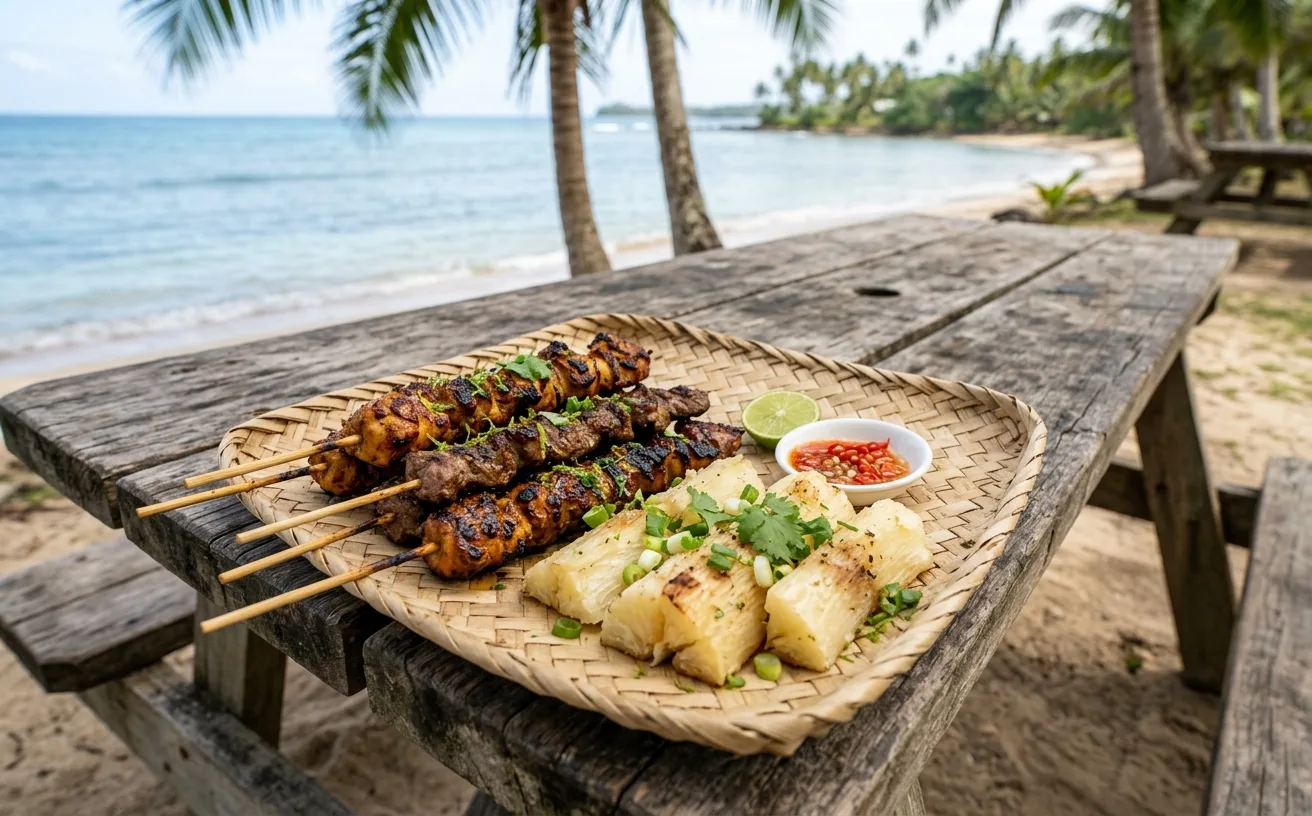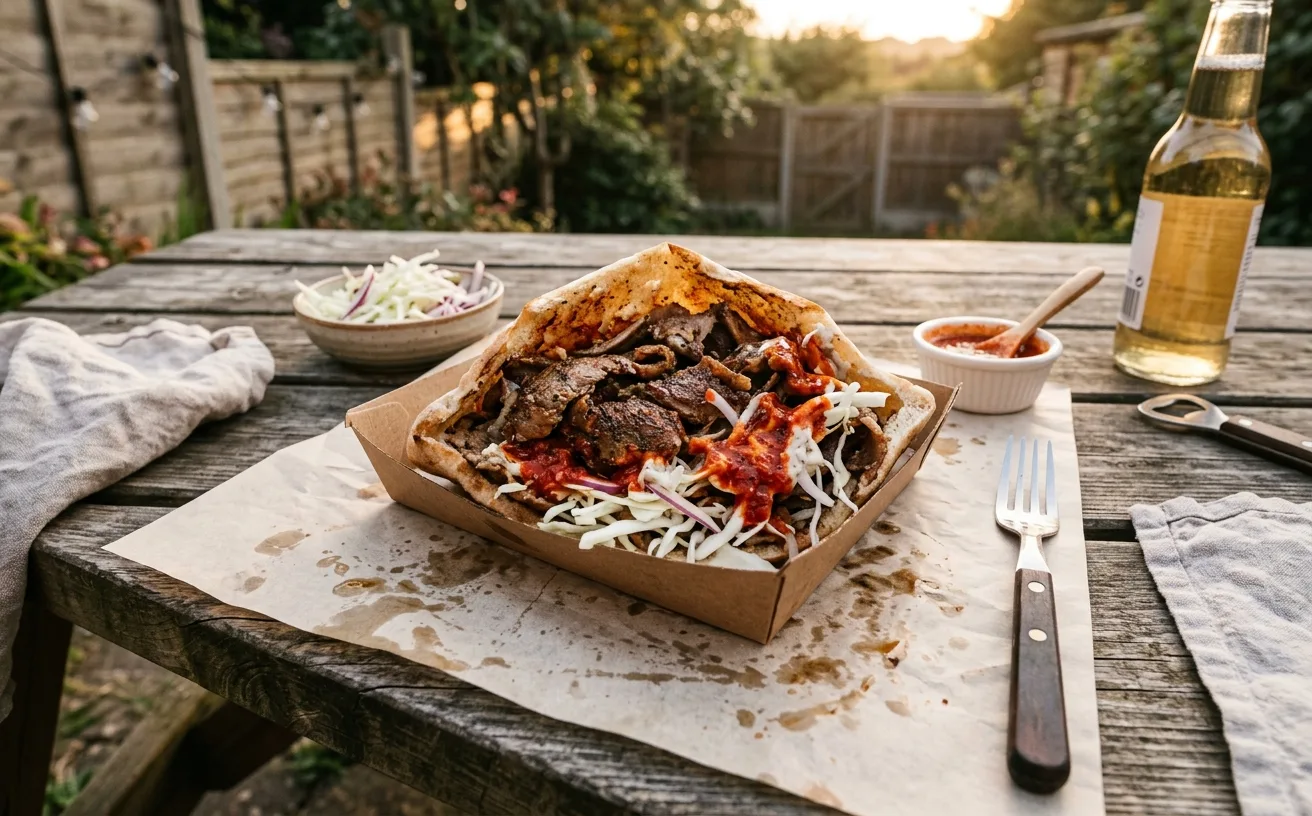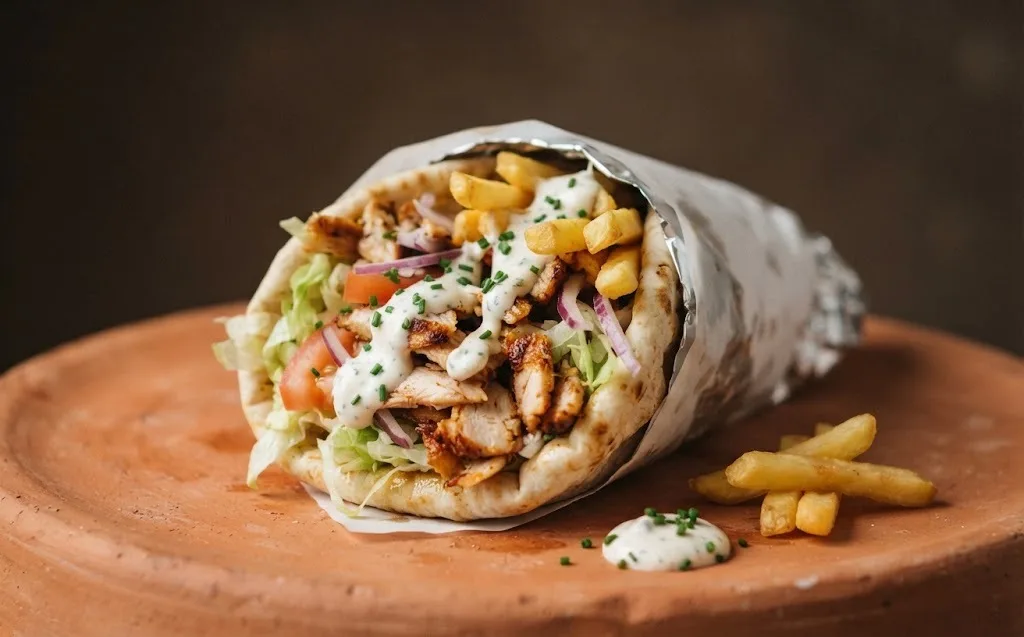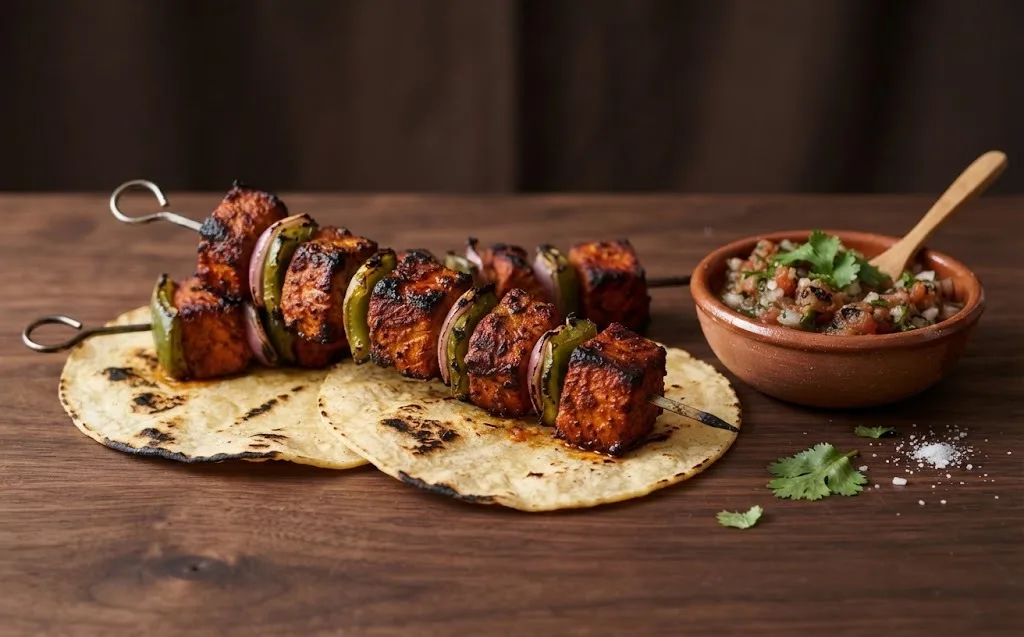
The night-market skewer of Guatemala, Honduras, Nicaragua, and Panama: adobo-rubbed beef, pork, or chorizo grilled over charcoal and eaten with tortillas, curtido, or fried plantain. In Guatemala the Levantine merchant community that arrived in the late 1800s helped normalize shish-style grilling, though the Arabic name vanished into the Spanish 'pincho'.
Also known as pinchos, pincho de carne, carne en palillo.
Ingredients
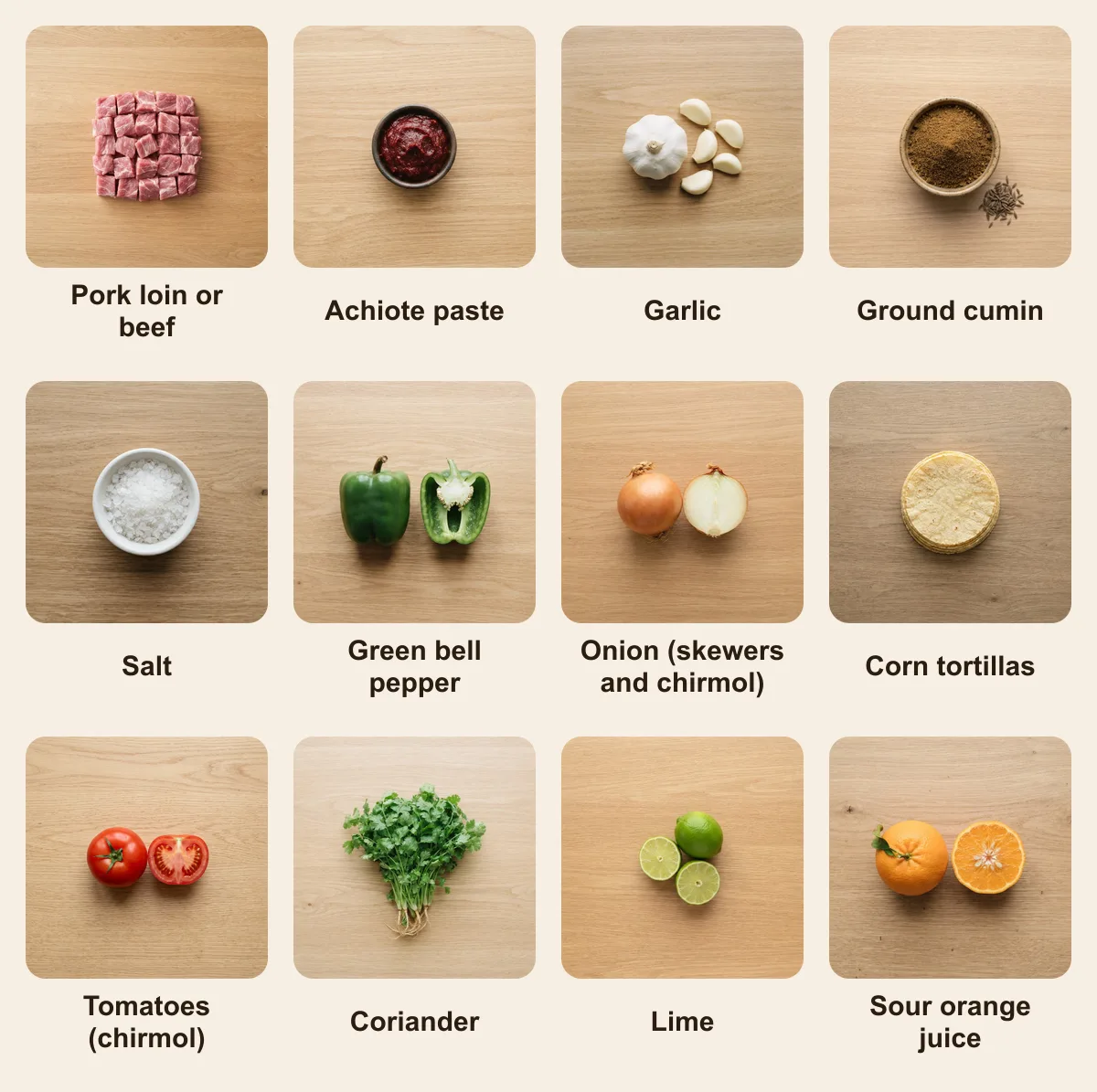
- 600 g pork loin or beef, 3 cm cubes
- 2 tbsp achiote paste
- 60 ml sour orange juice (or half lime, half orange)
- 3 garlic cloves, crushed
- 1 tsp ground cumin
- 1 tsp salt
- 1 green bell pepper and 1 onion, chunks
- 8 corn tortillas
- 3 tomatoes, 0.5 onion, a small bunch coriander and a squeeze of lime (chirmol)
How to make it
- 1
Loosen the achiote in the sour orange juice, work in garlic, cumin and salt, and coat the meat for 2 hours.
- 2
Char the whole tomatoes on a dry comal or the grill until their skins split, then chop them rough with onion, coriander, lime and salt for the chirmol.
- 3
Build the skewers alternating meat, pepper and onion.
- 4
Cook over medium charcoal 12 minutes, turning every 3, until the achiote crust darkens to brick red.
- 5
Warm the tortillas over the coals and serve the pinchos on top with chirmol on the side.
Pro tip: Achiote burns quickly past medium heat — if the crust blackens before 10 minutes, raise the grate, not the patience.
Where Pincho centroamericano comes from
It is street and market food and the setting is fixed: a charcoal grill at the edge of a plaza or a market, a stack of tortillas, and a few plastic chairs. In Guatemala City and Antigua the pincho stands operate into the night and the format has barely changed in decades.
Pincho centroamericano: achiote adobo with tortillas and curtido
Market stands in Guatemala, Honduras, Nicaragua and Panama rub beef, pork or fresh chorizo with a thick adobo of achiote, garlic, cumin and sour orange, then grill it close over charcoal with onion or pepper on the same stick. Charcoal and achiote also mark Puerto Rico's Pinchos, whose colour comes from sazón, but that skewer ends with a guava-barbecue glaze and a chunk of bread on the tip. Here the starch is warm tortillas heated at the grill's edge, served with curtido, fried plantain and chirmol. Pinchos morunos rely on a thick paste too, but theirs is cumin and pimentón, and the cubes are smaller, cut for a tapa.
Compare: Pinchos · Pinchos morunos
How Pincho centroamericano is cooked
Adobo here means a thick paste rather than a liquid marinade — achiote, garlic, cumin, salt and sour orange, with oregano, black pepper or vinegar in some versions, worked into the meat and left for hours. Its thickness matters because a wet marinade on a small charcoal grill steams instead of charring.
The skewers are grilled close over charcoal and turned frequently, and they are usually served with a piece of grilled onion or pepper on the same stick. Tortillas are warmed on the same grill at the edge, which is a small efficiency that also gives them a little smoke.
Ingredients and shopping
Beef in cubes, pork loin or shoulder, or chorizo — Central American chorizo is fresh and heavily seasoned with achiote and herbs. All three often appear on the same stand and diners order a mix.
Achiote paste, garlic, cumin and sour orange (naranja agria) or a lime-and-orange substitute, with oregano as an optional extra. Curtido — the lightly fermented cabbage relish — and fried plantain are the standard accompaniments, with a chirmol or a chilli salsa alongside.
How Pincho centroamericano is served
On the stick with warm tortillas, curtido, fried plantain and a chilli salsa, at a market or plaza stand in the evening. A cold beer or a fruit drink. Ordered by the stick, and nobody orders one.
Common mistakes
A thin marinade
It steams rather than chars on a small charcoal grill. The adobo should be a thick paste.
Using cured chorizo
Central American chorizo is fresh and must be cooked through. Cured Spanish chorizo is a different product.
Cold tortillas
They warm on the edge of the same grill and pick up a little smoke. It costs nothing and improves the plate.
Skipping the acid
Curtido or a sharp chirmol is what balances the grilled meat. Without one of them the plate is heavy.
Pincho centroamericano: questions and answers
What is curtido?
A lightly fermented or vinegared cabbage relish served across Central America. Its acidity balances the grilled meat.
Is Central American chorizo the same as Spanish?
No — it is fresh rather than cured, heavily seasoned with achiote and herbs, and must be cooked through.
How did shish-style grilling reach Guatemala?
Partly through the Levantine merchant community that arrived in the late 1800s, though the dish took the Spanish name pincho rather than an Arabic one.
Sources and further reading
- Curtido — Wikipedia
- Arab immigration to Honduras — Wikipedia
- Receta para hacer pinchos de carne al estilo guatemalteco — Aprende Guatemala (Guatemala.com)