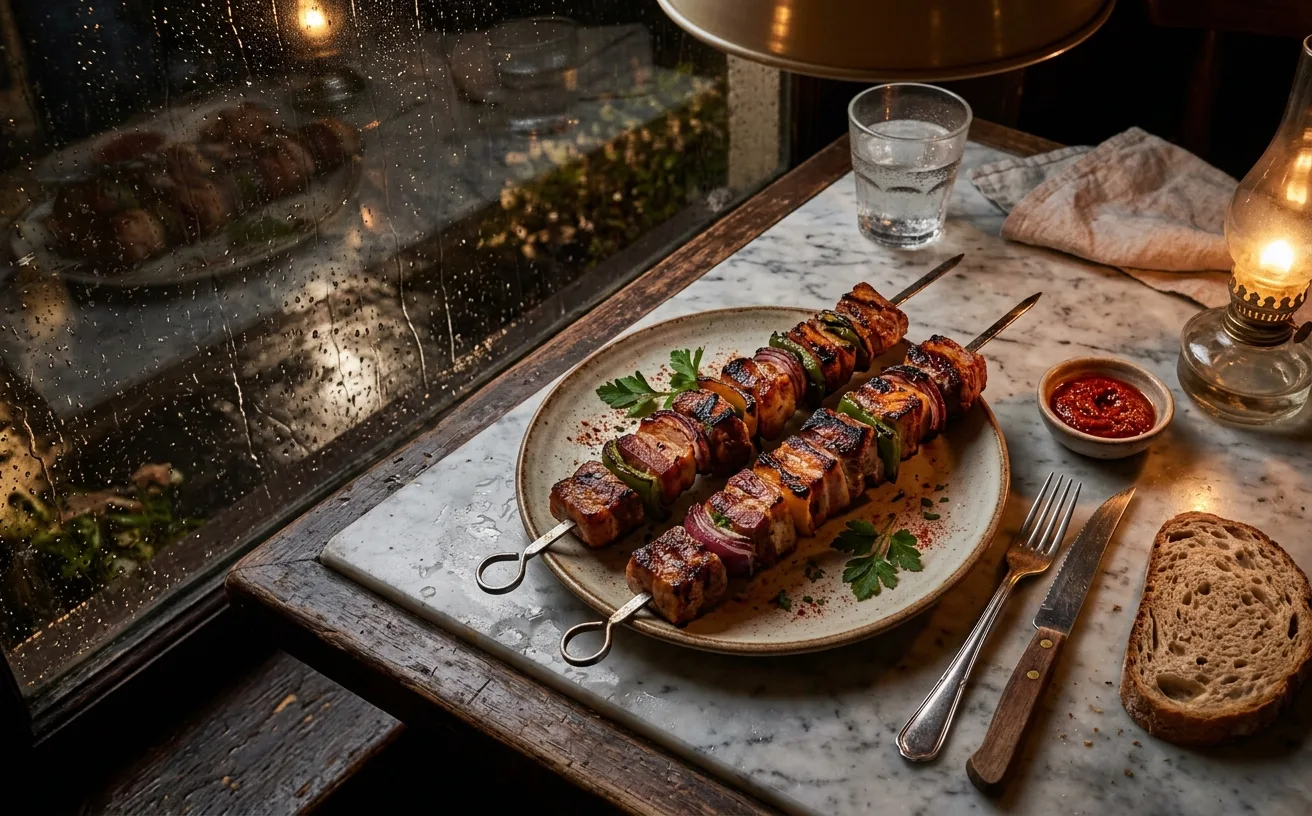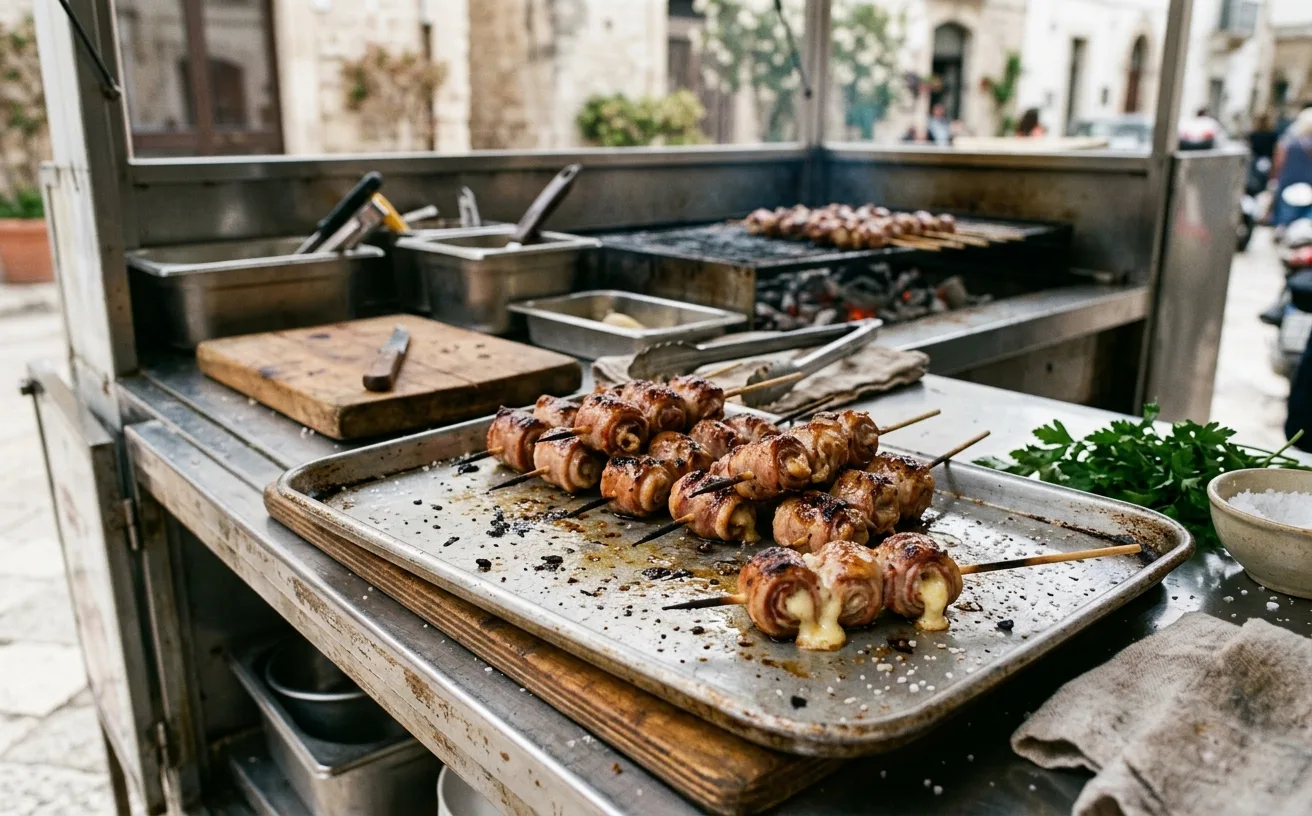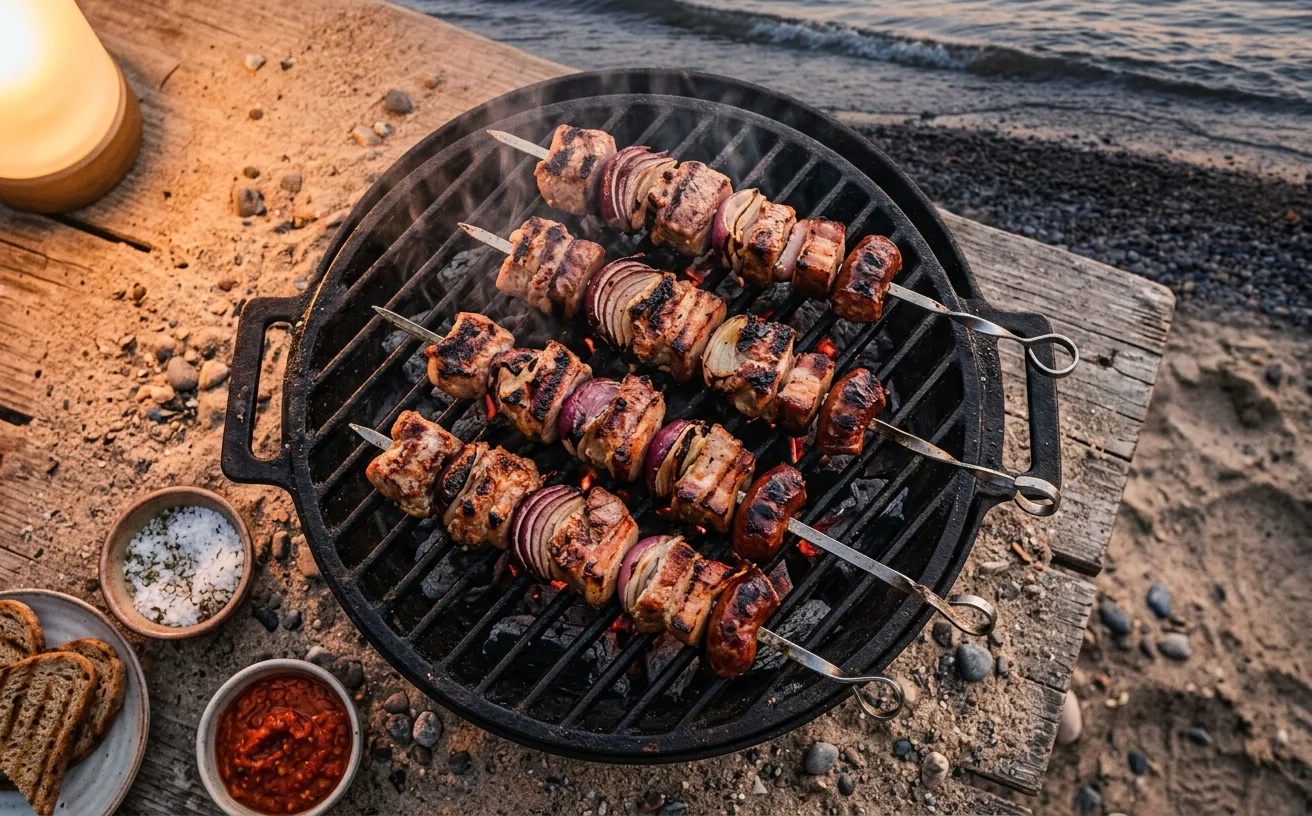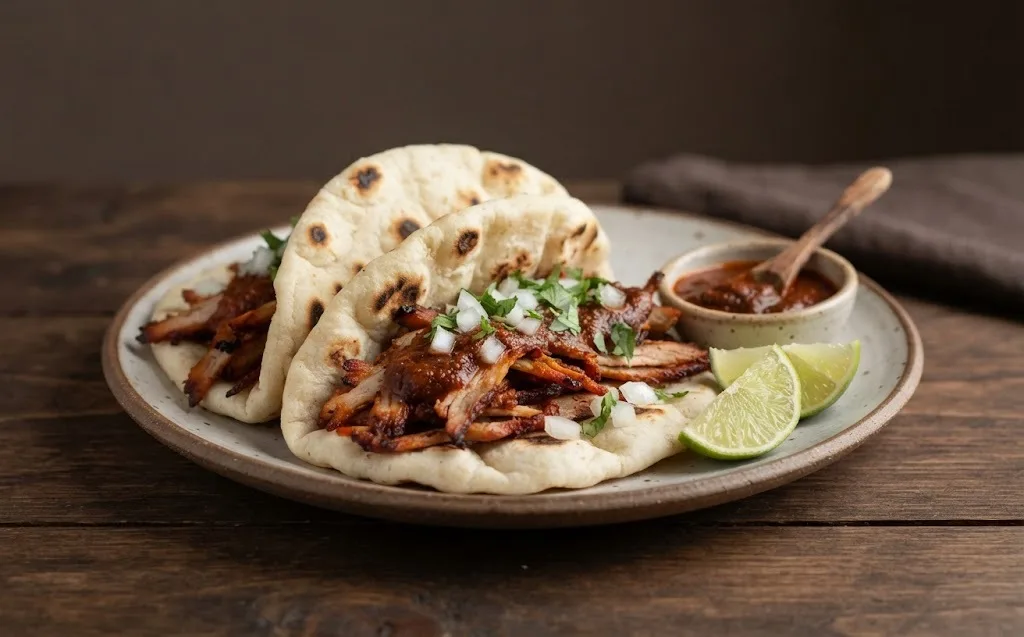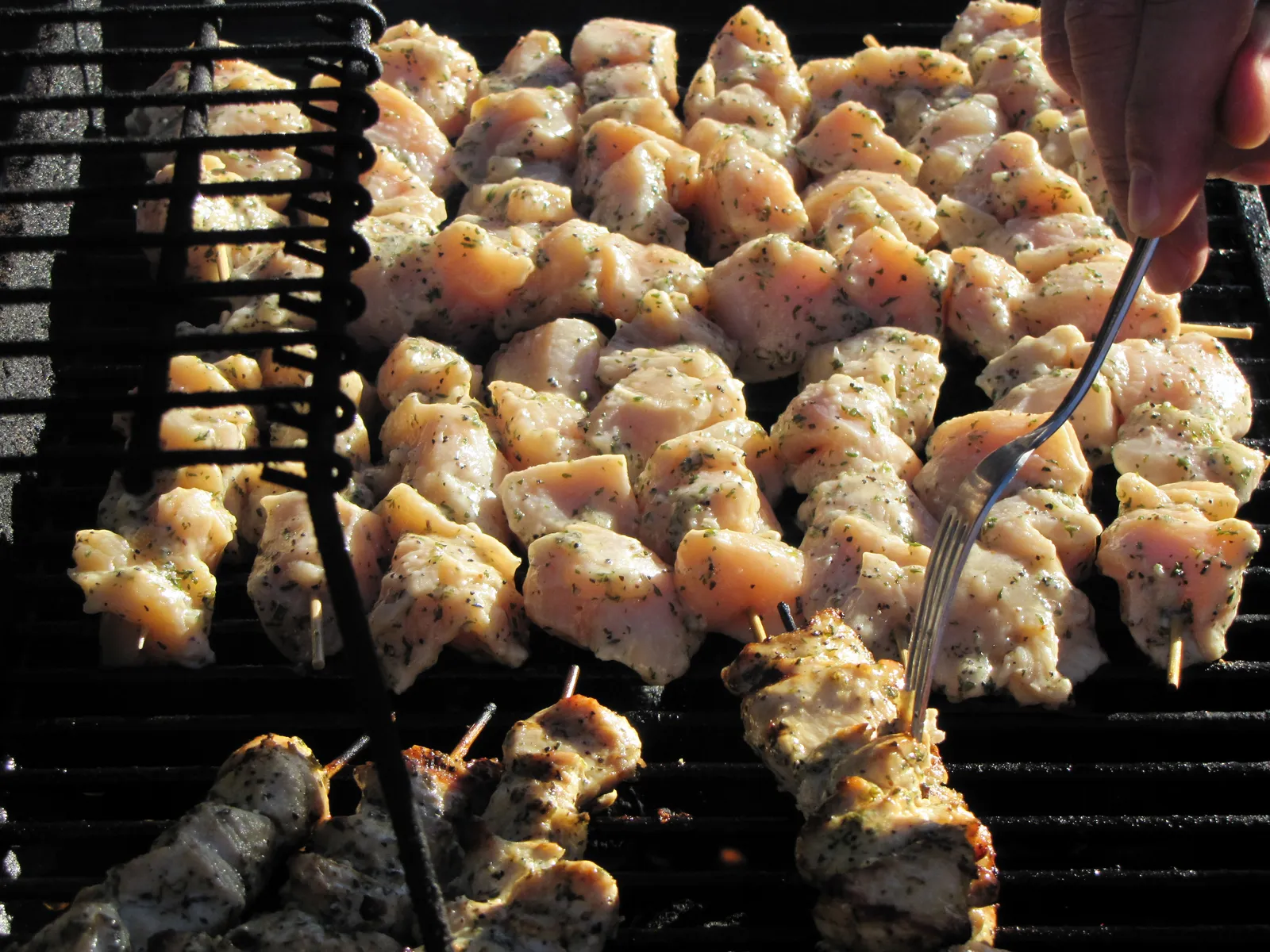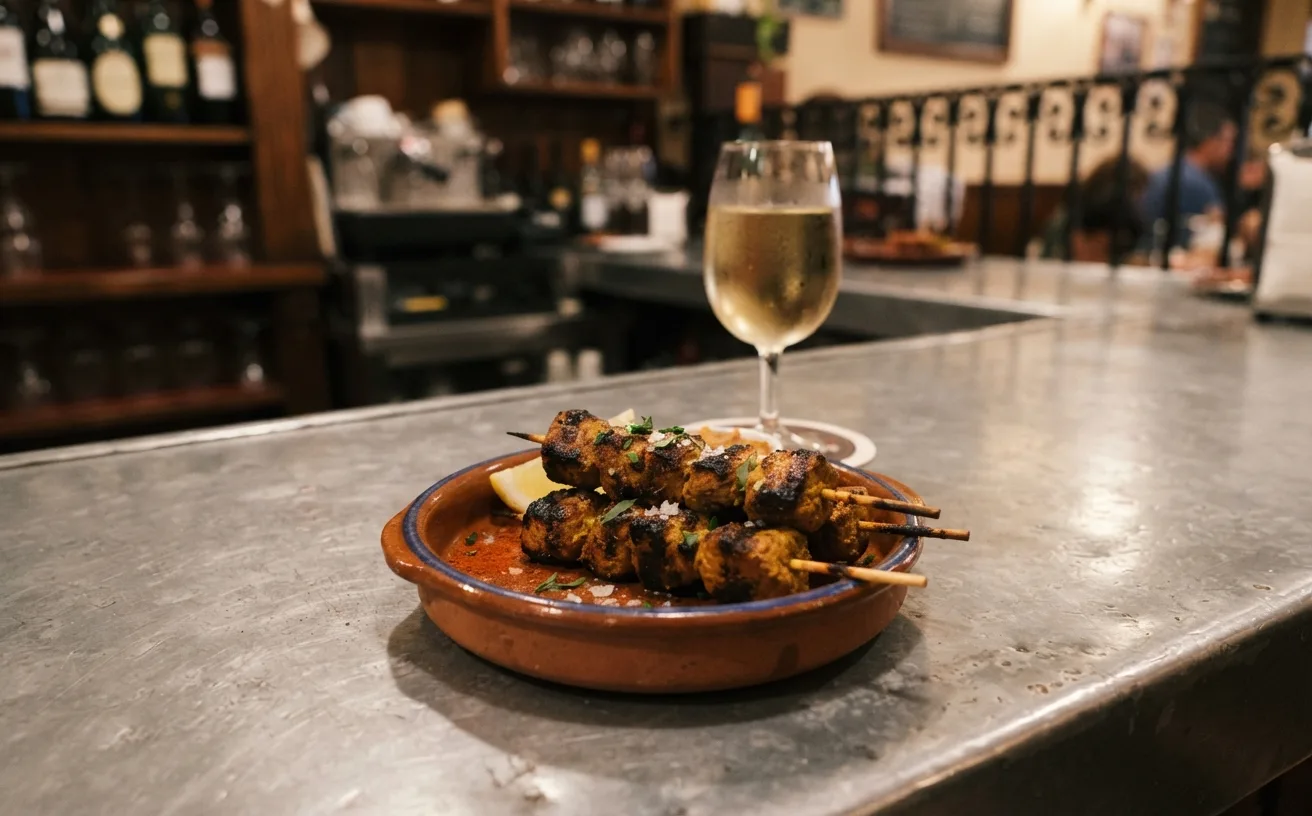
Andalusian 'Moorish skewers' of pork or chicken cubes marinated in ras el hanout-style spices (cumin, paprika, coriander) and grilled, a direct descendant of Maghrebi lamb brochettes adapted to Spanish tapas bars. The pork version is the telling sign of how a Muslim kebab lineage was Hispanicized.
Also known as pincho moruno, pinchitos, pinchitos morunos.
Reference video
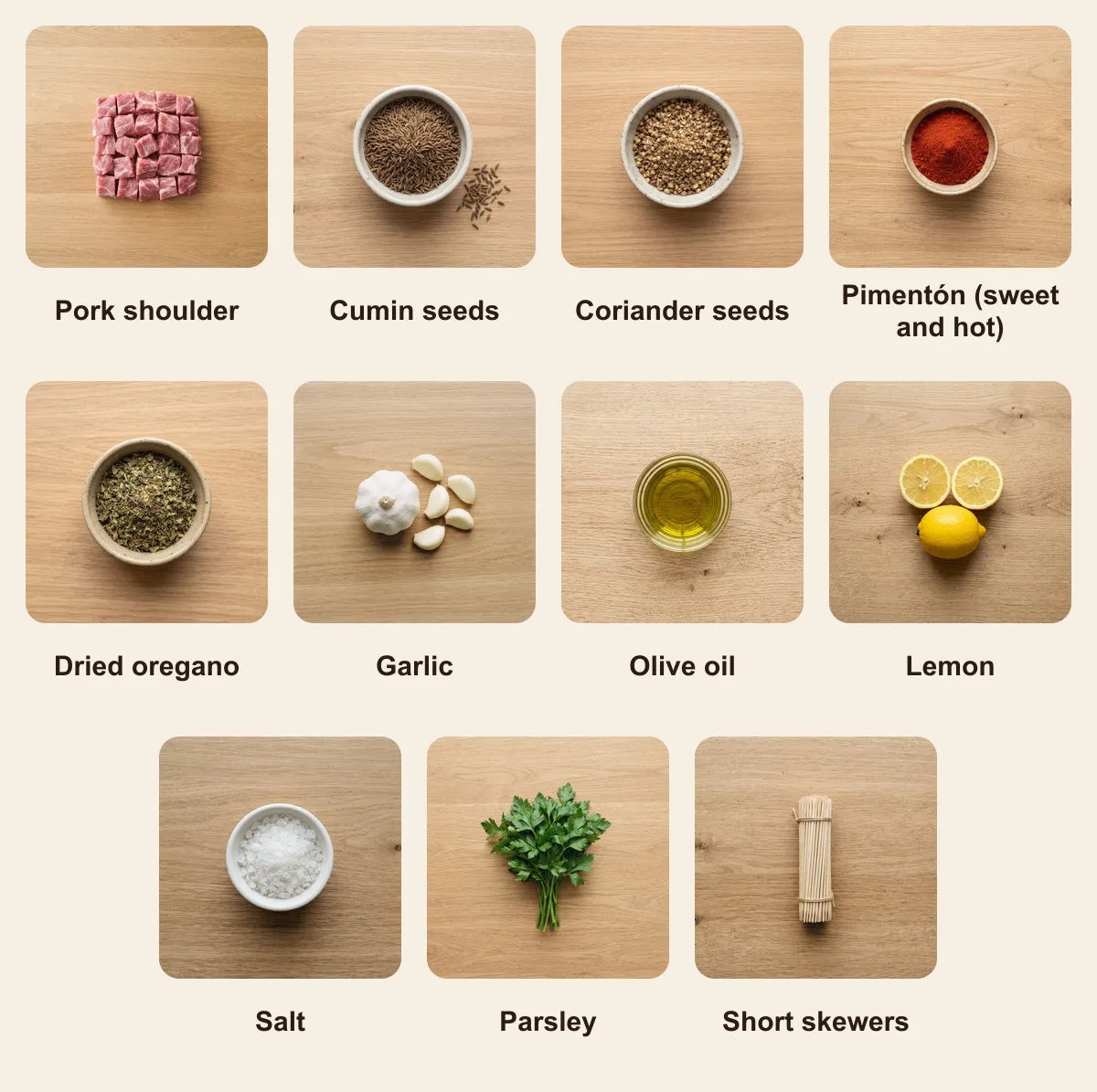
Ingredients
- 700 g pork shoulder (presa or secreto if possible), in 2 cm cubes
- 2 tsp cumin seeds and 1 tsp coriander seeds, toasted and ground
- 2 tsp sweet pimenton plus 0.5 tsp hot
- 1 tsp dried oregano
- 4 garlic cloves, grated
- 60 ml olive oil and 30 ml lemon juice
- 1.25 tsp salt
- Chopped parsley and lemon wedges
- Short skewers, tapas length
How to make it
- 1
Whisk the ground spices, pimenton, oregano, garlic, oil and lemon into a loose paste.
- 2
Tumble the pork through it and refrigerate overnight; the Moorish spice needs the hours.
- 3
Thread onto short skewers, about 4 cubes each, and salt just before cooking.
- 4
Sear on a plancha or over hot coals 8-10 minutes, turning to brown all faces.
- 5
Rest under foil 3 minutes and serve dusted with parsley, lemon alongside, bread mandatory.
Pro tip: Choose the shoulder cuts, presa or secreto, over lean loin: the marinade is Moorish but the succulence is pure Iberian pig, and the marbling in those cuts keeps the cubes juicy through a proper hard sear.
Where Pinchos morunos come from
The name preserves the origin openly — moruno means Moorish — while the pork now on the skewer documents the conversion. It is one of the clearest examples in this atlas of a dish surviving a change of religion by changing its meat, exactly as Bulgarian shishcheta and Serbian ražnjići did in the Balkans.
Pinchos morunos: Spain's tapa-sized cumin and pimentón skewer
Cubes of about 2 cm, three or four to a short skewer, make this a tapa eaten at a bar counter with lemon and bread. Where Puerto Rico's Pinchos use 3 cm cubes and finish with a sweet guava-barbecue glaze, the Spanish version is coated in a loose paste of cumin, sweet and hot pimentón, coriander, oregano, garlic, olive oil and lemon. Thick paste also links it to the Pincho centroamericano, though that adobo is built on achiote and sour orange and the skewers come with tortillas. Pork is the Andalusian standard, chicken thigh the common swap, and lamb points back to the Maghrebi brochette.
Compare: Pinchos · Pincho centroamericano
How Pinchos morunos are cooked
The spice mix is the dish, and it is applied as a loose paste rather than a thin liquid marinade: cumin, sweet and hot paprika, coriander, garlic, oregano, olive oil and lemon, with turmeric in some versions, worked into the meat and left for several hours. Its consistency matters because a wet marinade steams on a hot grill instead of forming the crust the dish wants.
The pieces are small — this is a tapa, not a meal — and go on thin skewers, several small cubes each. Grilling is fast over high heat, eight to ten minutes total, and a squeeze of lemon at the end is standard. Some bars finish with a brush of the marinade thinned with oil, which lacquers the surface.
Ingredients and shopping
Pork loin or shoulder in small cubes is the Andalusian standard; chicken thigh is the common alternative, and lamb takes the dish back toward its origin. The cubes should be around two centimetres — a tapa portion is three or four per skewer.
Ras el hanout works but the Spanish blend is more specific: cumin-forward, with both sweet and hot pimentón, coriander, oregano and garlic, and in some versions turmeric for colour. Pimentón de la Vera, the smoked Spanish paprika, is worth using and adds a dimension the North African original does not have.
How Pinchos morunos are served
As a tapa, two or three skewers on a small plate with lemon and bread, at a bar counter. A dry fino or a cold beer. In Andalusia they are ordered alongside other tapas rather than as a meal, and the portion size assumes that.
Common mistakes
A wet marinade
It steams on the grill. The spice mix should be a loose paste that clings to the cubes, not a liquid they sit in.
Cubes too large
This is a tapa. Two-centimetre cubes, three or four to a skewer.
Skipping the pimentón
Spanish paprika, especially the smoked variety, is what distinguishes this from a Moroccan brochette.
A slow fire
Small cubes need high heat and eight to ten minutes. A gentle grill dries them out.
Pinchos morunos: questions and answers
Why are they called Moorish if they use pork?
The name preserves the dish's North African origin. The switch to pork happened as the dish was absorbed into Christian Spain — the same conversion that happened to kebabs in the Balkans.
How big should the cubes be?
About two centimetres, three or four to a skewer. This is a tapa portion, not a main course.
Sources and further reading
- Pinchitos — Wikipedia
- Pinchos Morunos (Spanish Pork Skewers) — Spanish Sabores
- How to make pinchos morunos — The Spanish Chef (Omar Allibhoy)