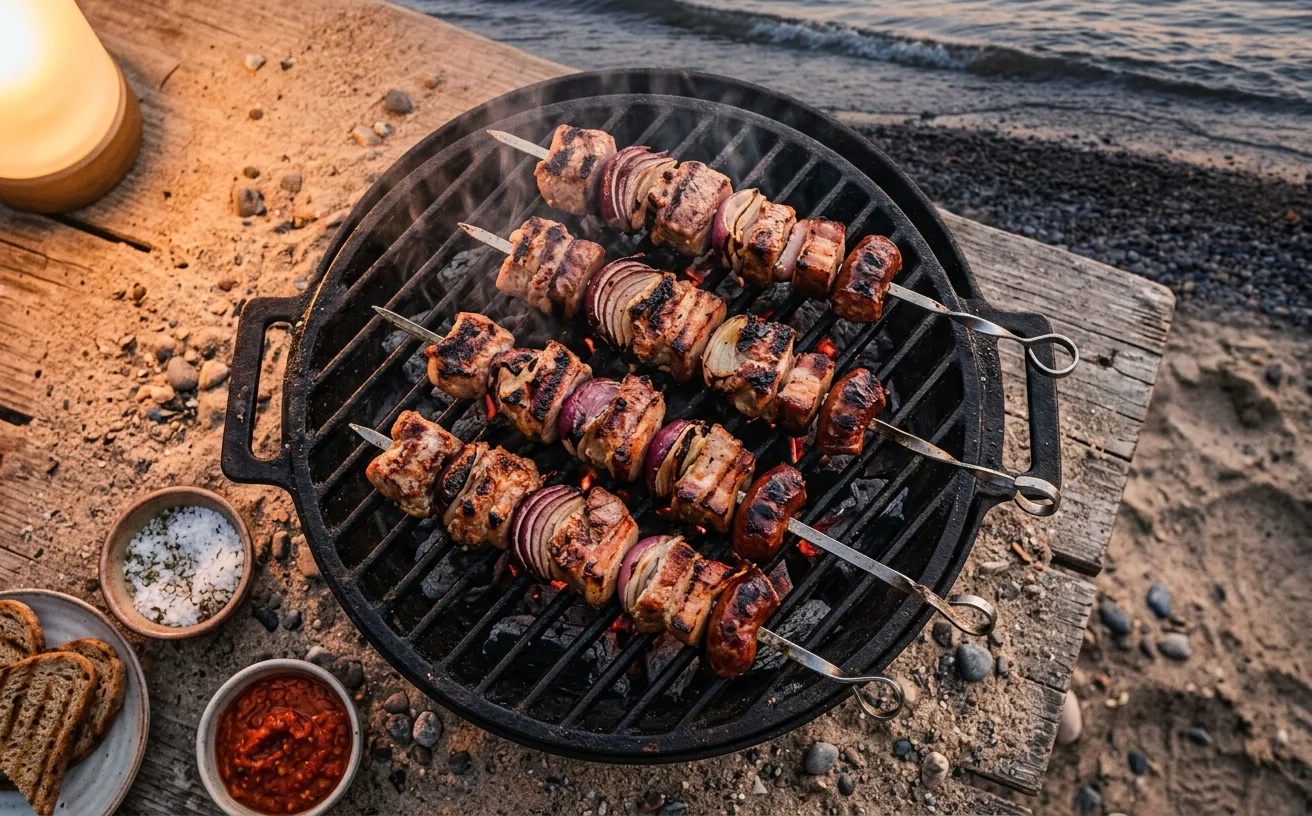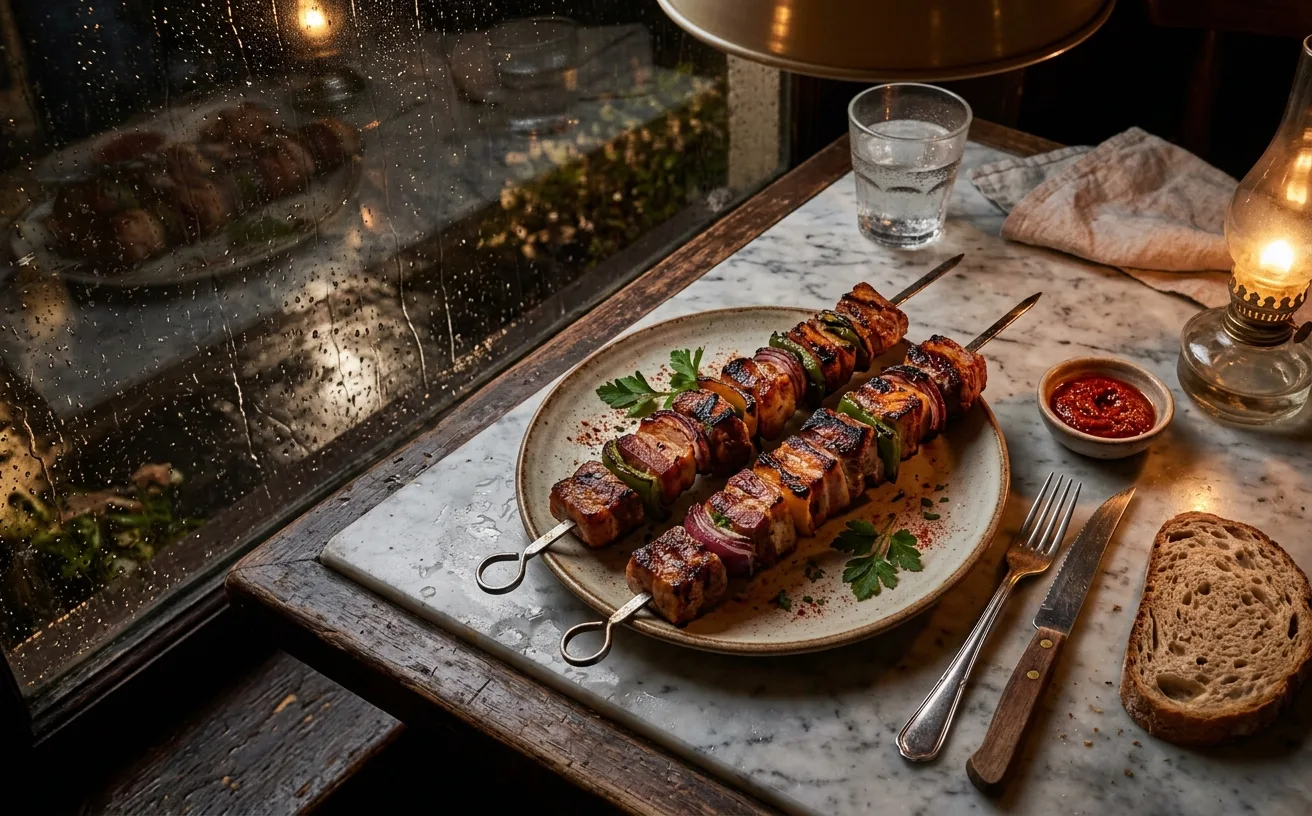
Hungarian 'robber's meat': cubes of pork or beef skewered with smoked bacon, onion, and pepper and roasted over an open campfire, folklorically attributed to highwaymen cooking stolen livestock on their swords. It is Hungary's native branch of the sword-roasted meat family that also produced the kebab.
Also known as robber's meat, rablóhús nyárson.
Ingredients
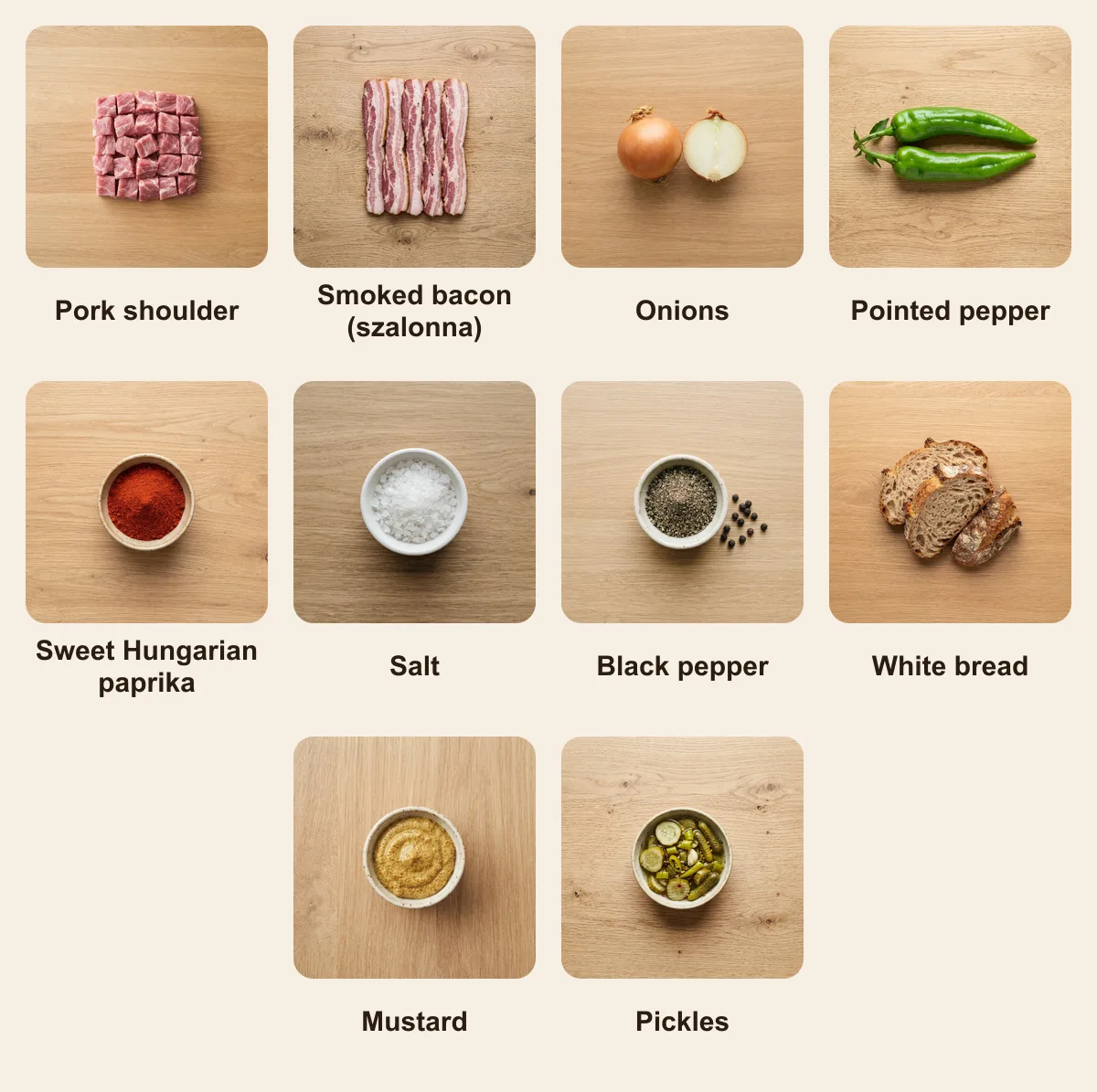
- 600 g pork shoulder, in 3 cm cubes
- 200 g smoked slab bacon (szalonna), in 1 cm slices
- 2 onions, in petals
- 1 pointed pepper, in pieces
- 2 tsp sweet Hungarian paprika
- 1 tsp salt and 1/2 tsp black pepper
- thick slices of white bread
- mustard and pickles, to serve
How to make it
- 1
Dust the pork with paprika, salt and pepper — no marinade; robbers travelled light.
- 2
Skewer a repeating loot of pork, bacon, onion petal and pepper until each stick is full, starting and ending with bacon.
- 3
Roast over the embers of a wood fire, held back from direct flame, 15-18 minutes, turning slowly so the bacon fat wanders over the pork.
- 4
For the last few minutes, hold a slice of bread under the skewer to catch every drip, campfire fashion.
- 5
Slide the meat onto that very bread and eat with mustard and pickles.
Pro tip: Ember discipline makes the dish: flames soot the szalonna before its fat can render — wait until the fire collapses into orange coals.
Where Rablóhús comes from
Whether or not highwaymen ever roasted stolen livestock on their swords, the dish is genuinely a campfire and cookout tradition rather than a restaurant one. It appears at family gatherings, in gardens and on the shores of Lake Balaton, and it belongs to the same outdoor culture as the bogrács stew cooked in a hanging cauldron.
How Rablóhús is cooked
Smoked bacon threaded between the meat is the mechanism of the dish. Hungarian szalonna is heavily smoked and very fatty, and as it renders it runs down the skewer, seasoning and basting everything below with smoke as well as fat. Ordinary unsmoked bacon does half the job.
The skewers are cooked over a wood fire burned down to glowing embers, held at a distance and turned patiently — this is campfire cooking and the heat is uneven by nature. Because the bacon flares, the skewer is moved rather than the fire adjusted, which is a skill that comes with a few ruined batches.
Ingredients and shopping
Pork neck or shoulder, or beef chuck, in generous cubes. Hungarian smoked szalonna in thick strips — a well-smoked streaky bacon is the substitute. Onion in thick wedges and pepper in wide squares, cut larger than the meat.
The seasoning here is a dry dusting of sweet Hungarian paprika, salt and black pepper; cooks who marinate add a little hot paprika, garlic, caraway and oil and give it a few hours. Hungarian paprika is genuinely different from generic supermarket paprika and is worth buying properly for this. Long metal skewers for a campfire.
How Rablóhús is served
Pulled off the skewer with fresh bread, pickles, raw onion and a glass of wine or pálinka. Sometimes with lecsó — the Hungarian pepper-and-tomato stew — alongside. It is outdoor food and is eaten standing around the fire it was cooked on.
Common mistakes
Unsmoked bacon
The smoke from the rendering szalonna is a large part of the flavour. Use a heavily smoked bacon.
Thin bacon
It crisps to nothing before it can baste. Thick strips.
Generic paprika
Hungarian paprika is sweeter, deeper and more aromatic. It is the defining spice and a poor one shows immediately.
Cooking over flames
Even at a campfire, hold the skewers at a distance and be patient. Direct flame chars the outside and leaves the middle raw.
Rablóhús: questions and answers
What does rablóhús mean?
Robber's meat. Hungarian folklore attributes it to highwaymen roasting stolen livestock on their swords over a campfire.
What is szalonna?
Hungarian cured and smoked pork fat or fatty bacon. Threaded between the meat, it renders and bastes everything below with smoke and fat.
Sources and further reading
- Hungarian-English Culinary Dictionary — Taste Hungary
- Roast, meatballs: these are the favorite dishes of the Hungarian winter — Trademagazin