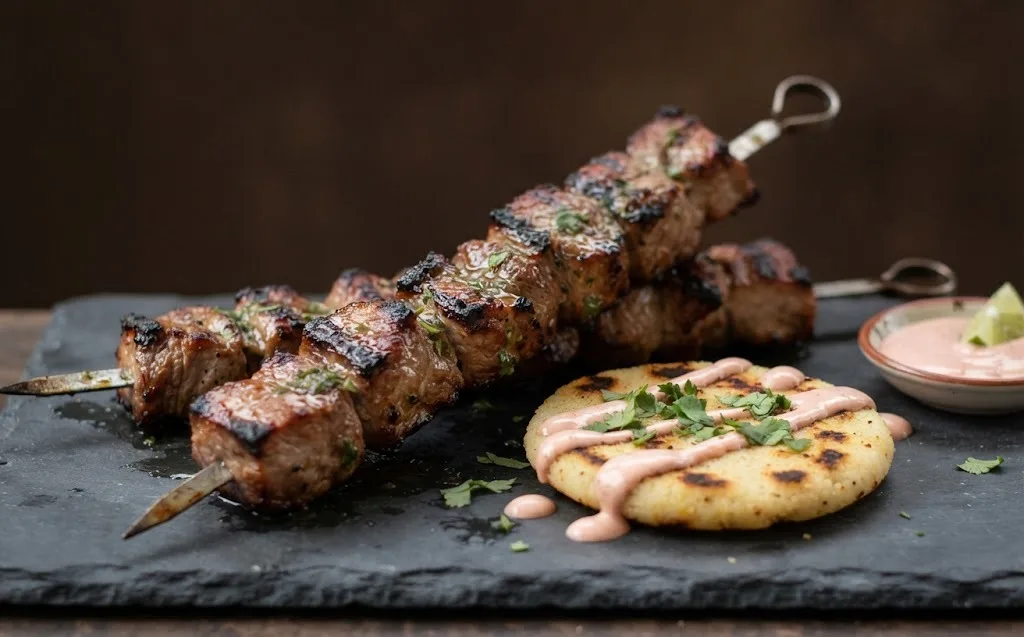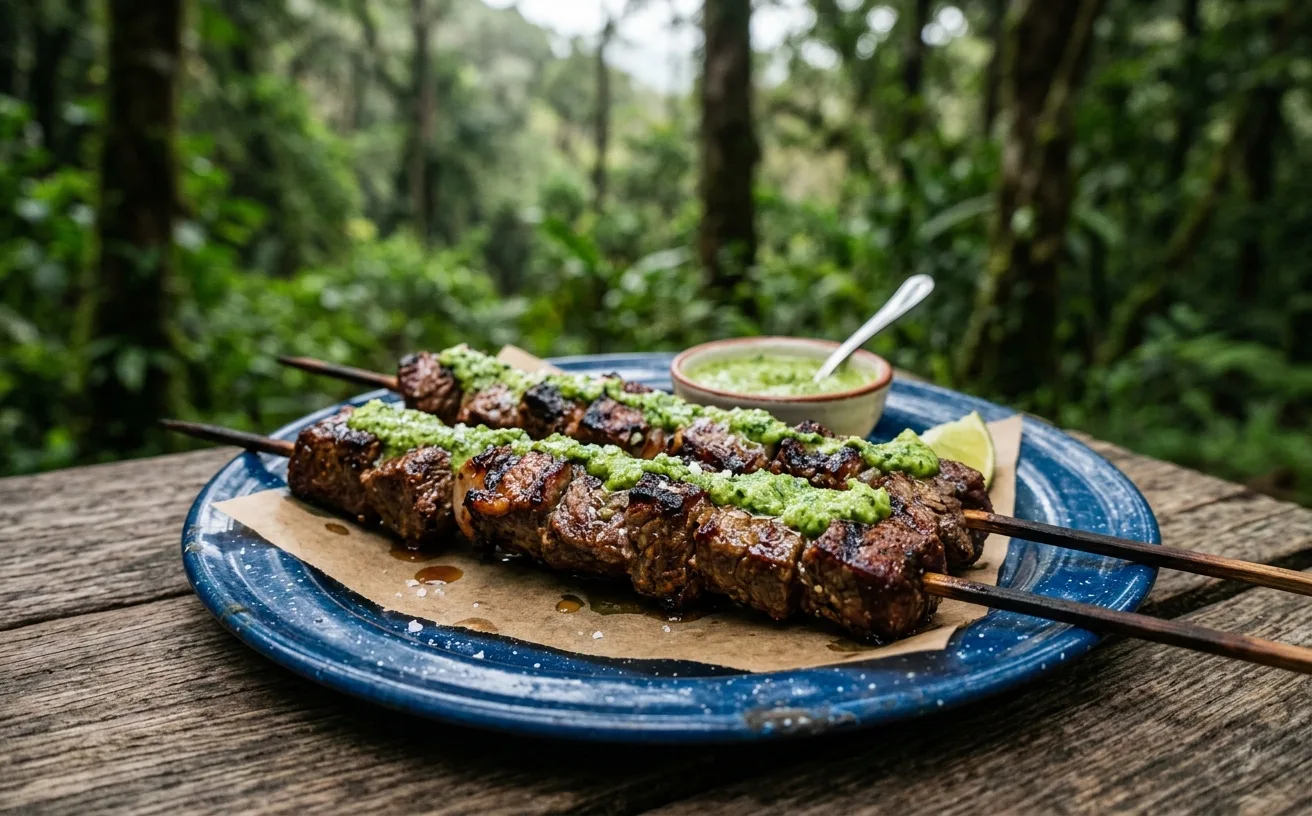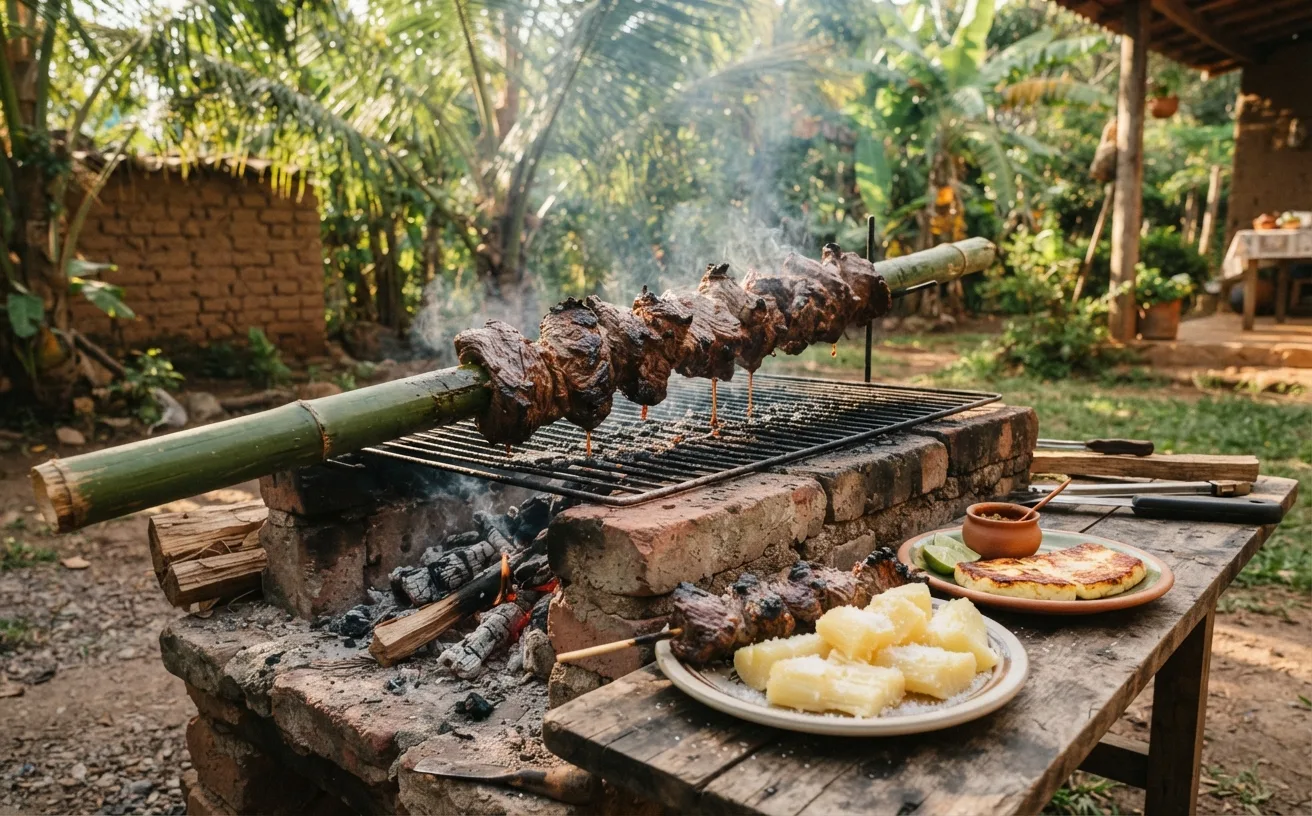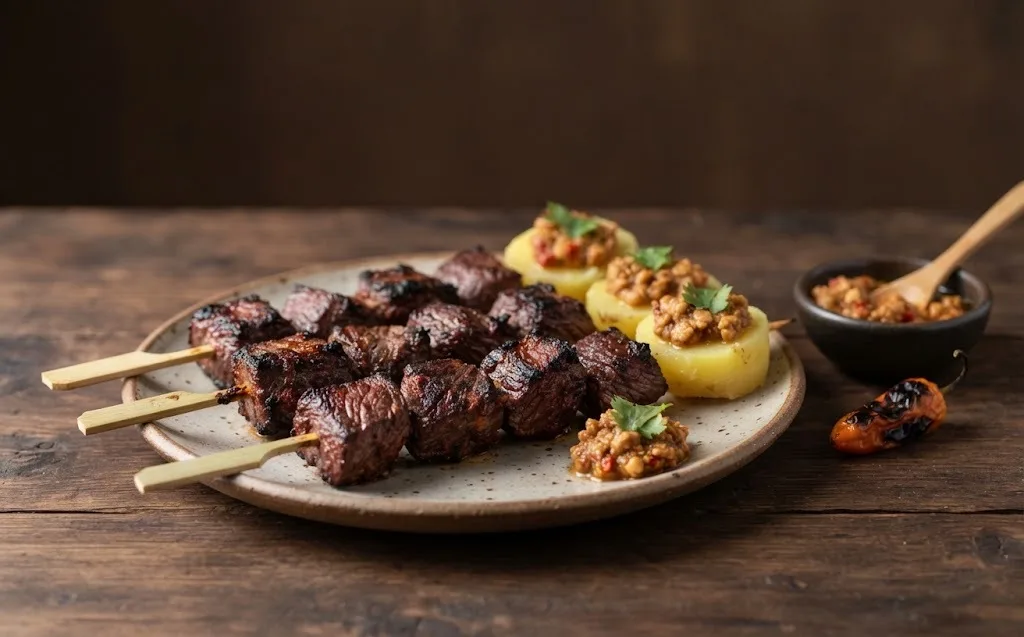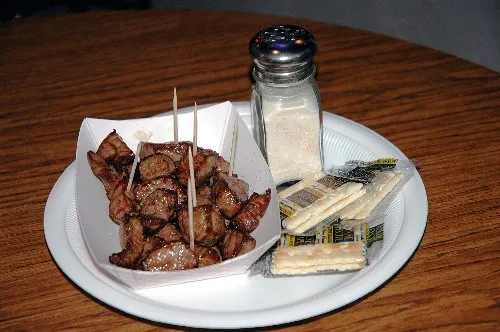
South Dakota's official state 'nosh': cubes of mutton, lamb, or beef deep-fried or grilled, served on toothpicks or skewers with garlic salt and saltines, a bar-food fixture south of Sioux Falls. The name and dish arrived in the 1870s with Germans-from-Russia settlers and derives directly from Crimean-Turkic shashlik.
Also known as shishliki.
Ingredients
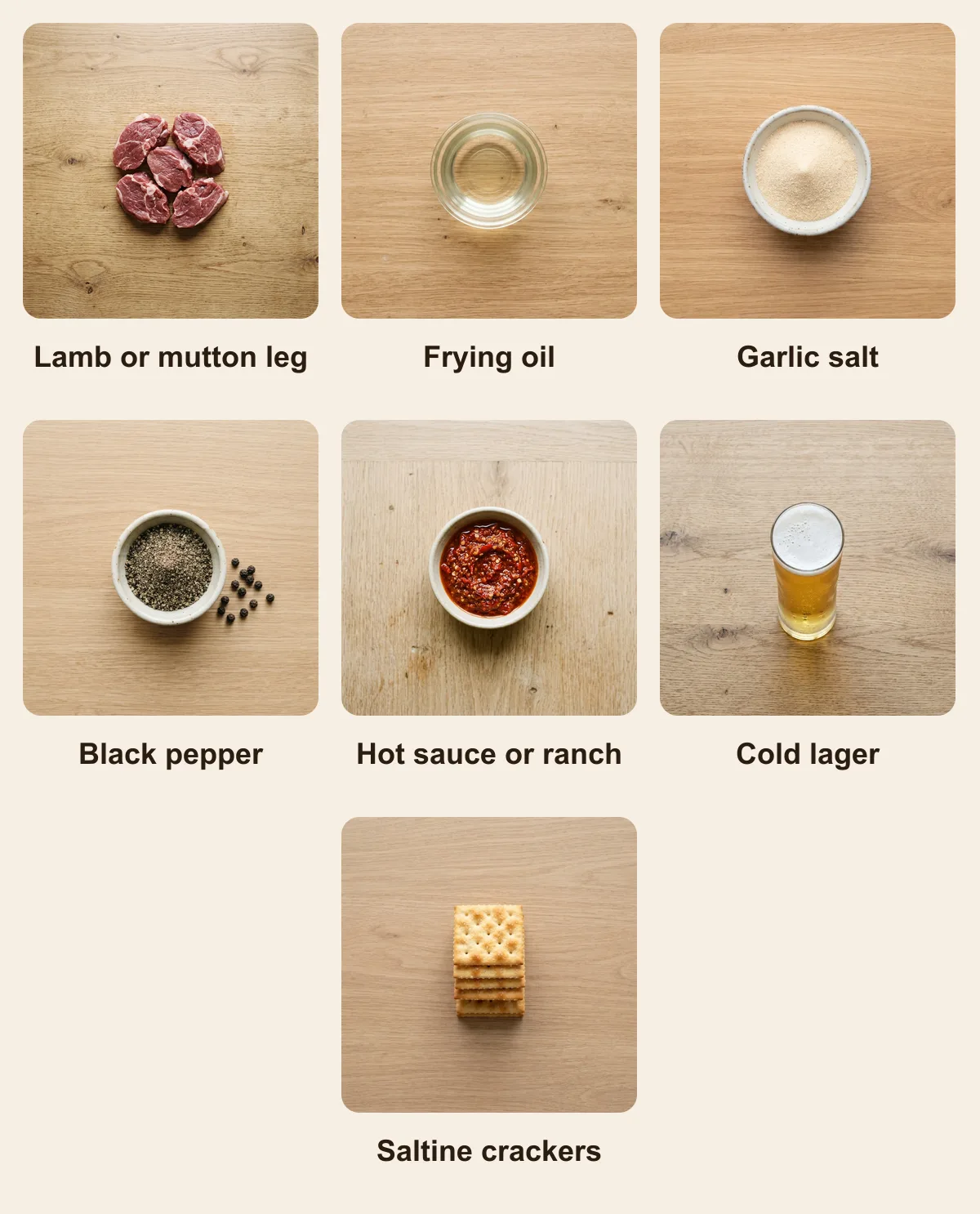
- 600 g lamb or mutton leg (beef sirloin if you must), in 2 cm cubes
- 1 L oil, for deep frying (or a ripping-hot grill)
- 1.5 tsp garlic salt, plus more for the table
- 0.5 tsp black pepper
- Saltine crackers, a full sleeve
- Toothpicks
- Hot sauce or ranch, in the modern bar manner
- A cold lager alongside
How to make it
- 1
Trim off the sinew but leave some fat on, and cut the meat into even 2 cm cubes; small and uniform is the South Dakota way.
- 2
Heat the oil to 190 C in a deep pot.
- 3
Fry in small batches 2-3 minutes for medium, keeping the oil temperature from crashing.
- 4
Drain on paper for a moment and dust with garlic salt and pepper while the surface still glistens.
- 5
Spear with toothpicks and serve each batch immediately with saltines, repeating until the bowl is gone.
Pro tip: Season after the fry, never before: garlic salt thrown on hot, glistening cubes clings and stays aromatic, while salted raw meat weeps and spits in the oil. And in a proper Freeman-area bar it would be mutton, not lamb.
Where Chislic comes from
Its lineage is the most surprising in this atlas. It is a Turkic kebab that reached the American Midwest by way of Russia and Germany.
How Chislic is cooked
Modern chislic is usually deep-fried rather than grilled, which is the American bar's contribution and which changes the dish considerably. Cubes go into hot oil for two or three minutes, come out, and are tossed immediately with garlic salt — the seasoning must go on hot so it adheres.
The grilled version is closer to the shashlik ancestor and involves a short marinade of oil, garlic and pepper. Either way the cubes are small, around two centimetres, and the cook is short. Overcooked chislic is the standard complaint and mutton in particular turns tough very quickly.
Ingredients and shopping
Mutton is the traditional and most-defended meat in South Dakota; lamb is common and beef sirloin is the modern bar default. Cubes of about two centimetres, with fat left on. The fried version needs no marinade; the garlic salt after the fry does the seasoning.
Garlic salt is genuinely the traditional seasoning and substituting something more refined misses the point. Saltine crackers on the side, which is a convention nobody outside the region can explain and everybody inside insists on. Hot sauce and a beer.
How Chislic is served
On toothpicks or skewers with saltine crackers and hot sauce, at a bar, with beer. It is shared from a basket rather than plated individually. Freeman, the town at the centre of the so-called Chislic Circle, hosts the South Dakota Chislic Festival, which tells you how seriously the state takes it.
Common mistakes
Overcooking
Two or three minutes. Mutton and lamb cubes toughen fast and there is no recovery.
Seasoning after it cools
Garlic salt goes on the moment it leaves the oil, so it sticks.
Cubes too large
Two centimetres. Bigger pieces need a different method and lose the bar-snack character.
Trimming all the fat
It keeps the cubes moist through a fast, hot cook.
Chislic: questions and answers
What is chislic?
Cubes of mutton, lamb or beef deep-fried or grilled and served on toothpicks with garlic salt and saltines. It is South Dakota's official state nosh.
Where does the name come from?
From the Crimean-Turkic shashlik, carried to the Dakotas in the 1870s by Germans-from-Russia settlers who had lived on the Black Sea steppe.
Sources and further reading
- Chislic — Wikipedia
- The Chislic Story — Heritage Hall Museum & Archives (Freeman, SD)