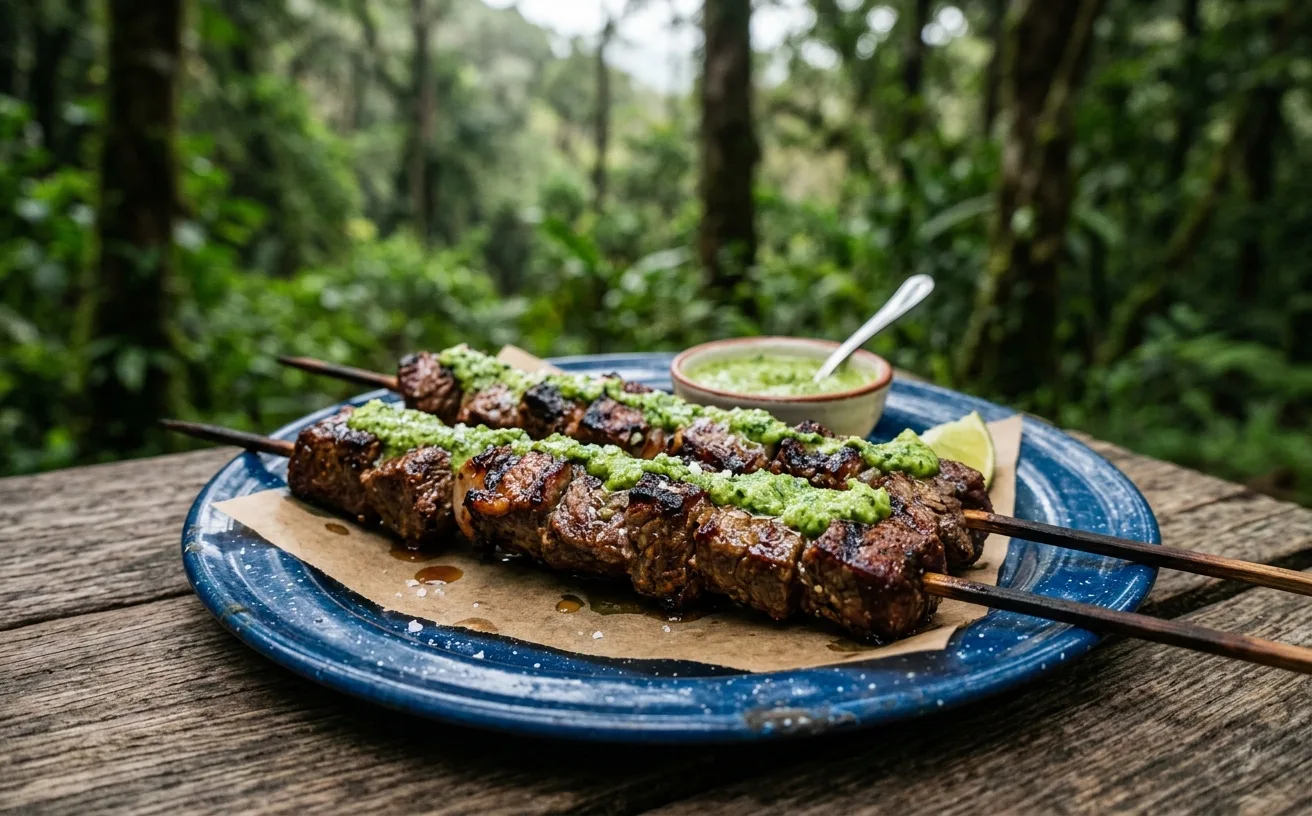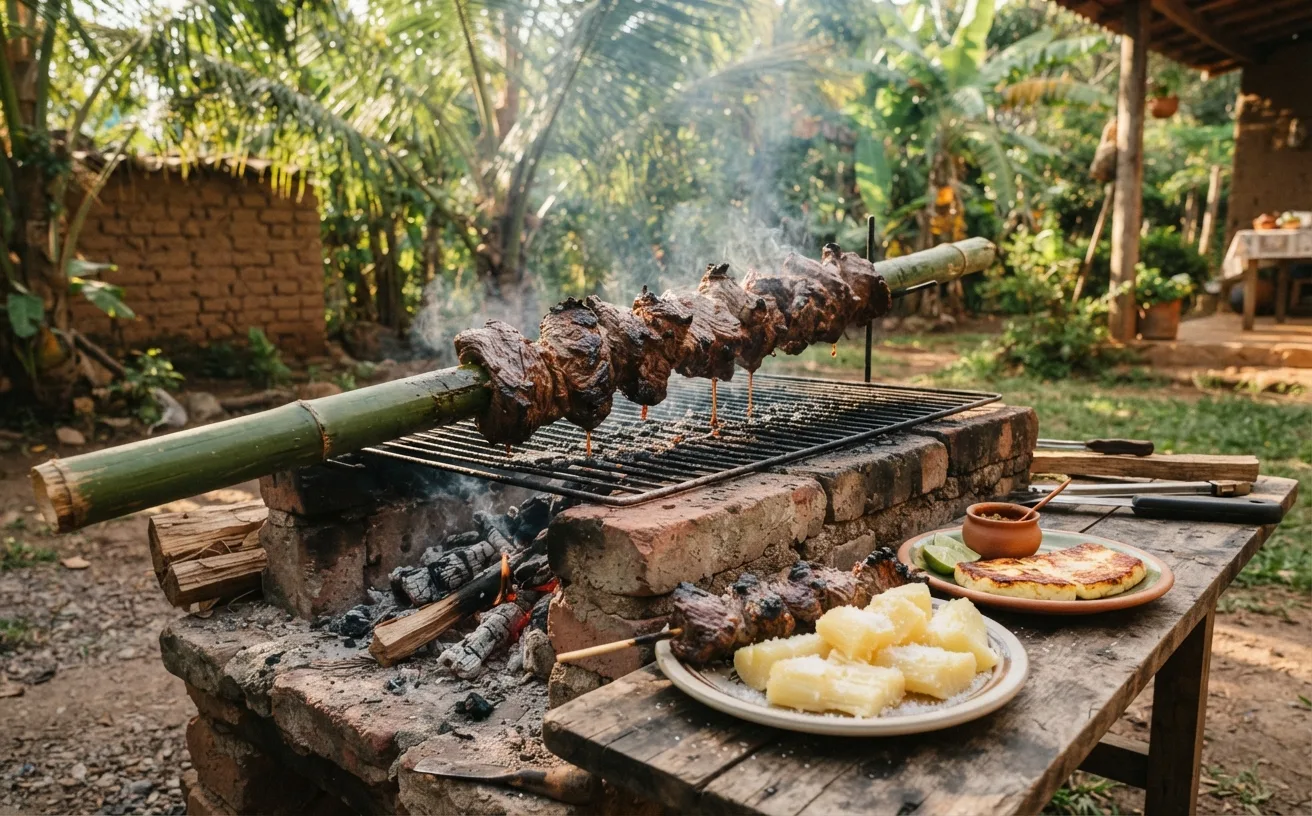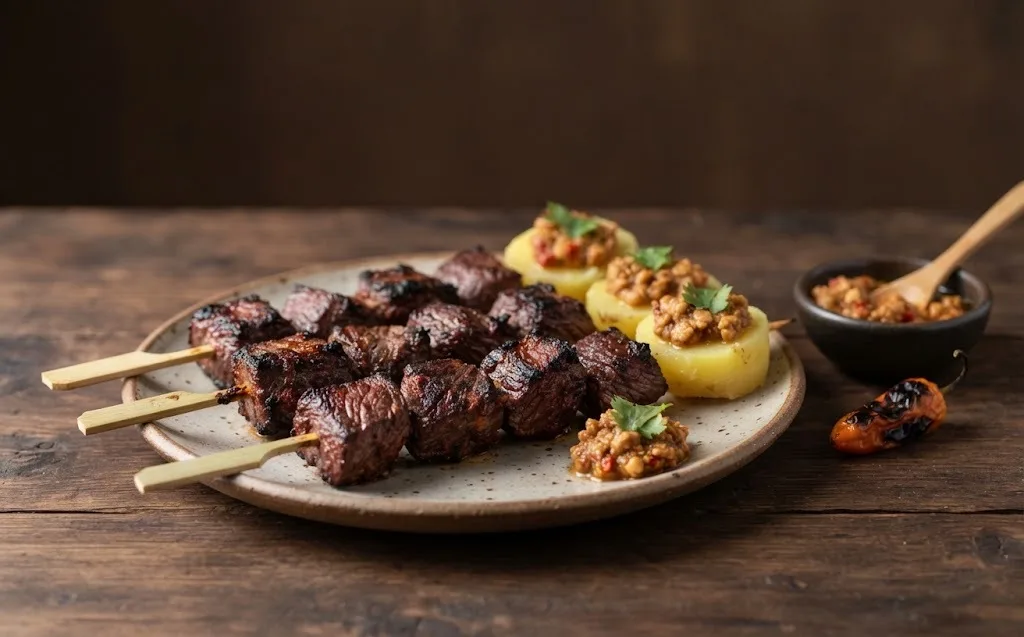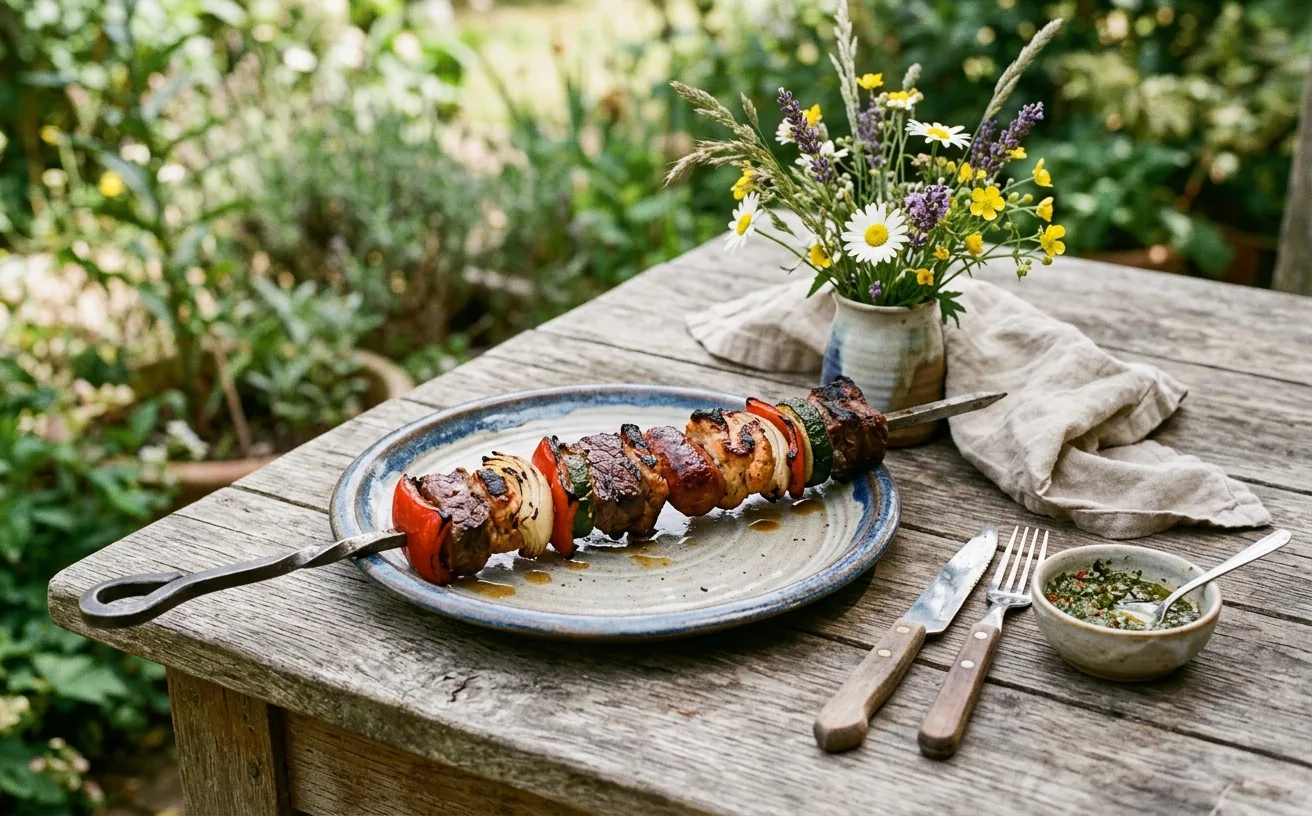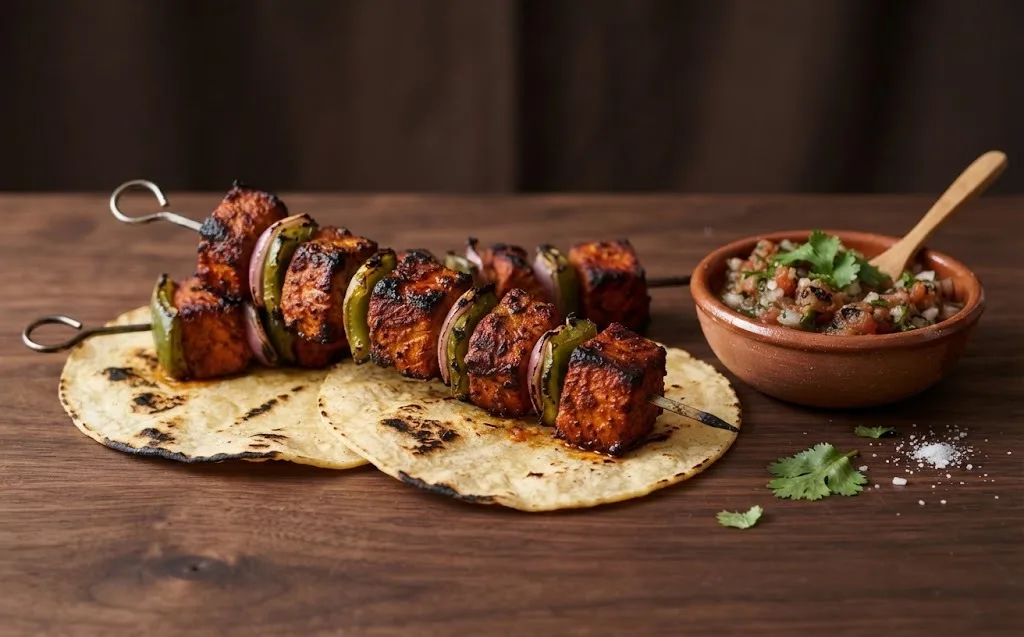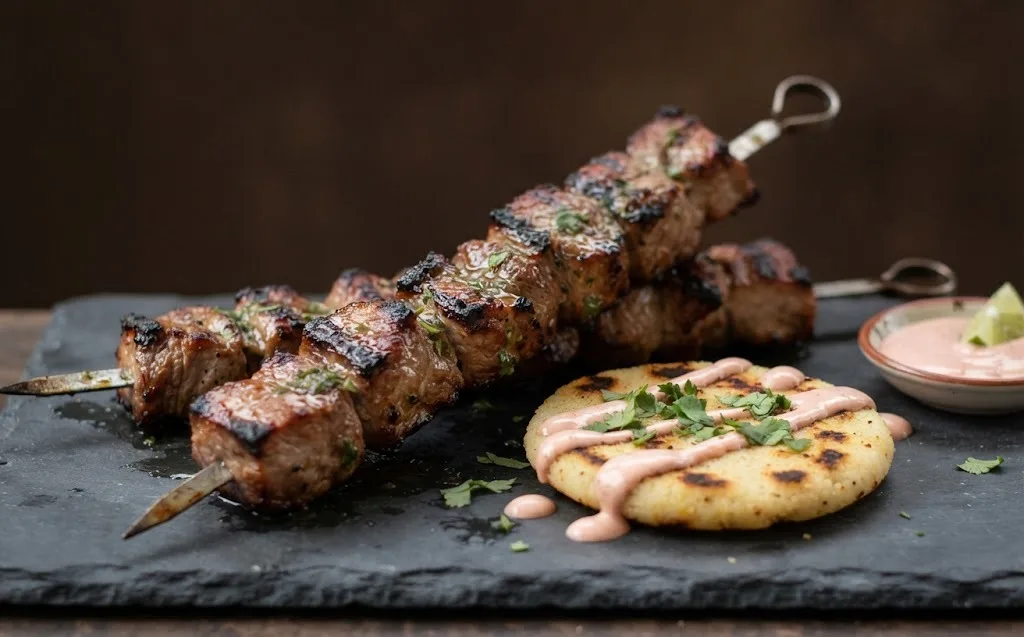
Colombia's after-dark street skewer: generous chunks of pork, chicken, or beef marinated in beer and spices, char-grilled and served with a small arepa or boiled potato grilled alongside, doused in pink and pineapple sauces. The word 'chuzo' just means a pointed stick, hiding its Iberian-Moorish kebab lineage.
Also known as chuzos, chuzo desgranado, chuzos colombianos.
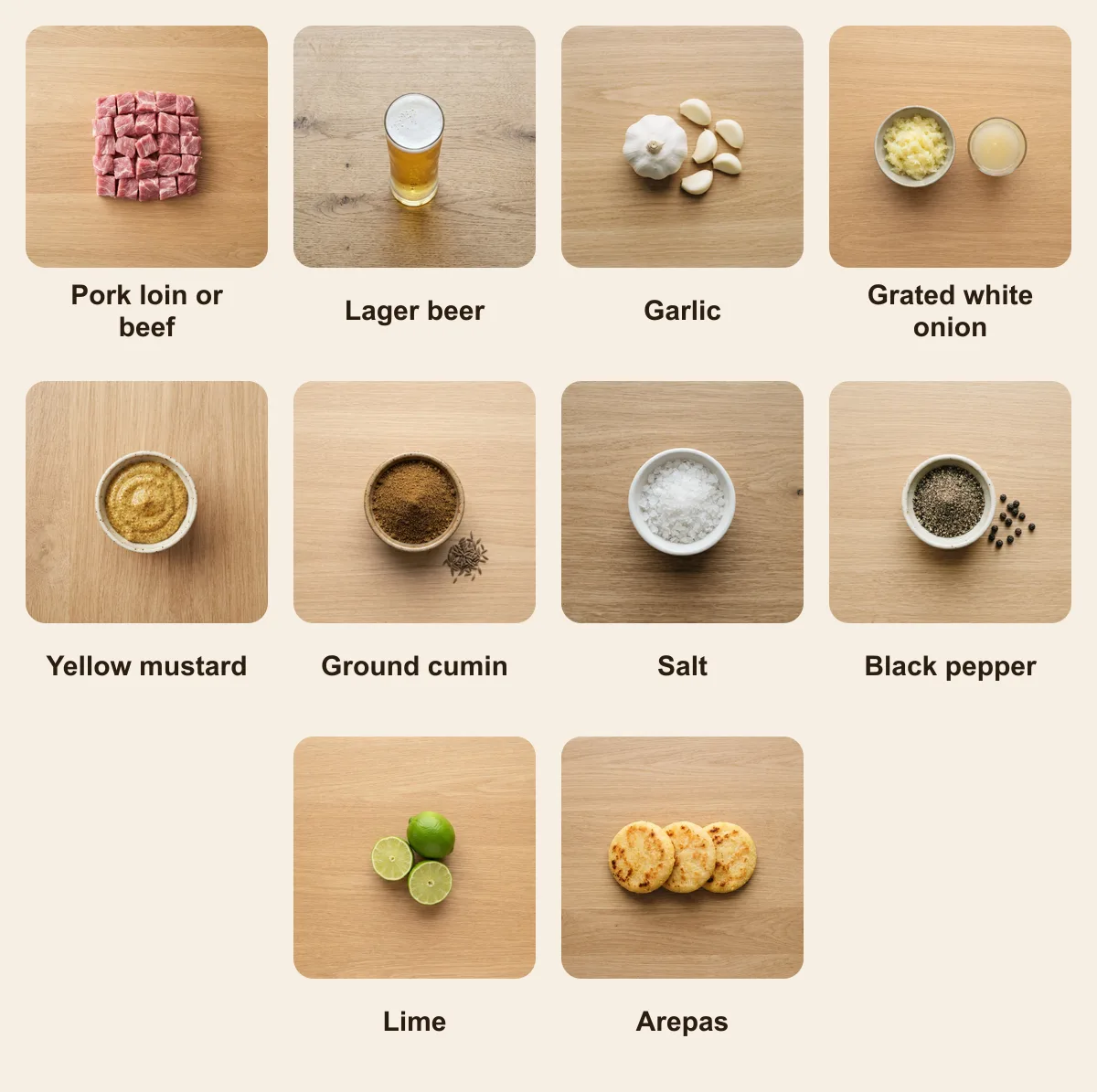
Ingredients
- 800 g pork loin or beef, 4 cm chunks
- 250 ml lager beer
- 3 garlic cloves, minced
- 1 small white onion, grated
- 1 tbsp yellow mustard
- 1 tsp ground cumin
- 1 tsp salt and 1/2 tsp black pepper
- 4 small arepas
- 1 lime
How to make it
- 1
Combine the beer, garlic, onion, mustard, cumin, salt and pepper and submerge the meat overnight — 8 hours is what lets the beer do its tenderizing work.
- 2
Pat the chunks dry and thread them generously onto long skewers without crowding.
- 3
Grill over glowing (never flaming) charcoal for about 15 minutes, splashing spoonfuls of the leftover marinade over the meat at each turn.
- 4
Toast the arepas at the cooler edge of the grill until freckled brown.
- 5
Squeeze lime over the skewers and serve each chuzo with an arepa and pink sauce or aji.
Pro tip: Street vendors listen for doneness: when the drips stop hissing violently and settle into a lazy sizzle, the pork is just cooked through.
Where Chuzo comes from
The small arepa or papa criolla served beside each chuzo is the Colombian signature and it is genuinely functional as well as decorative: it absorbs the drippings and is eaten last. Chuzos are sold from carts outside bars and on street corners across the country, and the pink and pineapple sauces poured over them are a local convention that visitors find startling.
How Chuzo is cooked
Beer in the marinade is the Colombian detail and it works on two levels: its acidity is mild enough to marinate overnight without damaging the meat, and its sugars help the surface caramelise on the grill. It is combined with grated onion, garlic, mustard, cumin, salt and pepper.
The chunks are large — this is a substantial skewer, not a tapa — and the grill is charcoal, moderate, with a longer cook than most street skewers get. The arepa or potato is grilled alongside near the end so it warms and picks up smoke without drying out.
Ingredients and shopping
Pork loin or shoulder, chicken thigh or beef in chunks of four centimetres or so. Colombian street chuzos often use pork and it is the most forgiving. Small arepas or papas criollas — the small yellow Colombian potatoes — for the tip, boiled in advance.
The marinade is beer, grated onion, garlic, yellow mustard, cumin, salt and pepper, overnight. The sauces are salsa rosada (mayonnaise and ketchup) and a pineapple sauce, and both are poured over generously at the cart. Aji, the Colombian chilli-and-coriander relish, for those who want heat.
How Chuzo is served
From a street cart, poured over with pink and pineapple sauce, with aji on the side, eaten standing outside a bar late at night. Often with a small arepa or boiled potato alongside. Aguardiente or a cold beer.
Common mistakes
Small chunks
A chuzo is generous. Small cubes make it a different, lesser thing.
Adding the arepa or potato at the start
It dries out. Grill it alongside near the end so it warms through and picks up smoke.
A fierce fire
Large chunks need moderate coals and patience or they char outside and stay raw inside.
Skipping the sauces
Salsa rosada and pineapple sauce are the Colombian convention. Without them it is simply a grilled skewer.
Chuzo: questions and answers
What does chuzo mean?
A pointed stick, in Colombian Spanish. The name says nothing about the dish's Iberian-Moorish kebab ancestry.
What comes alongside a chuzo?
A small arepa or a boiled papa criolla potato, grilled next to the meat. It absorbs the drippings and is eaten last.
Sources and further reading
- Beef Skewers (Chuzos de Res) — My Colombian Recipes
- Chuzos o Pinchos de Cerdo (Colombian Grilled Pork Skewers) — My Colombian Recipes