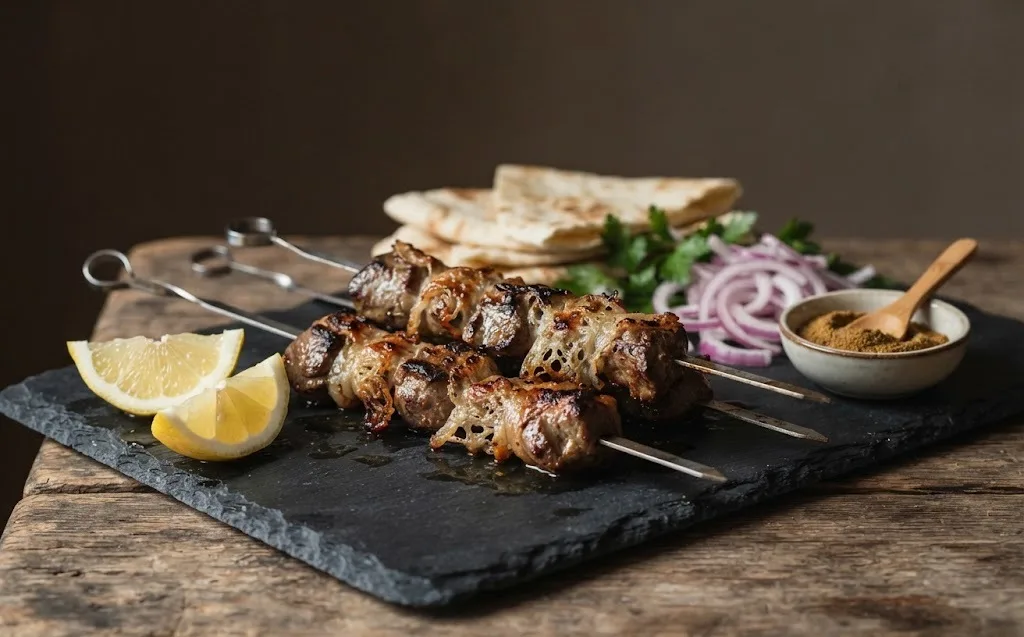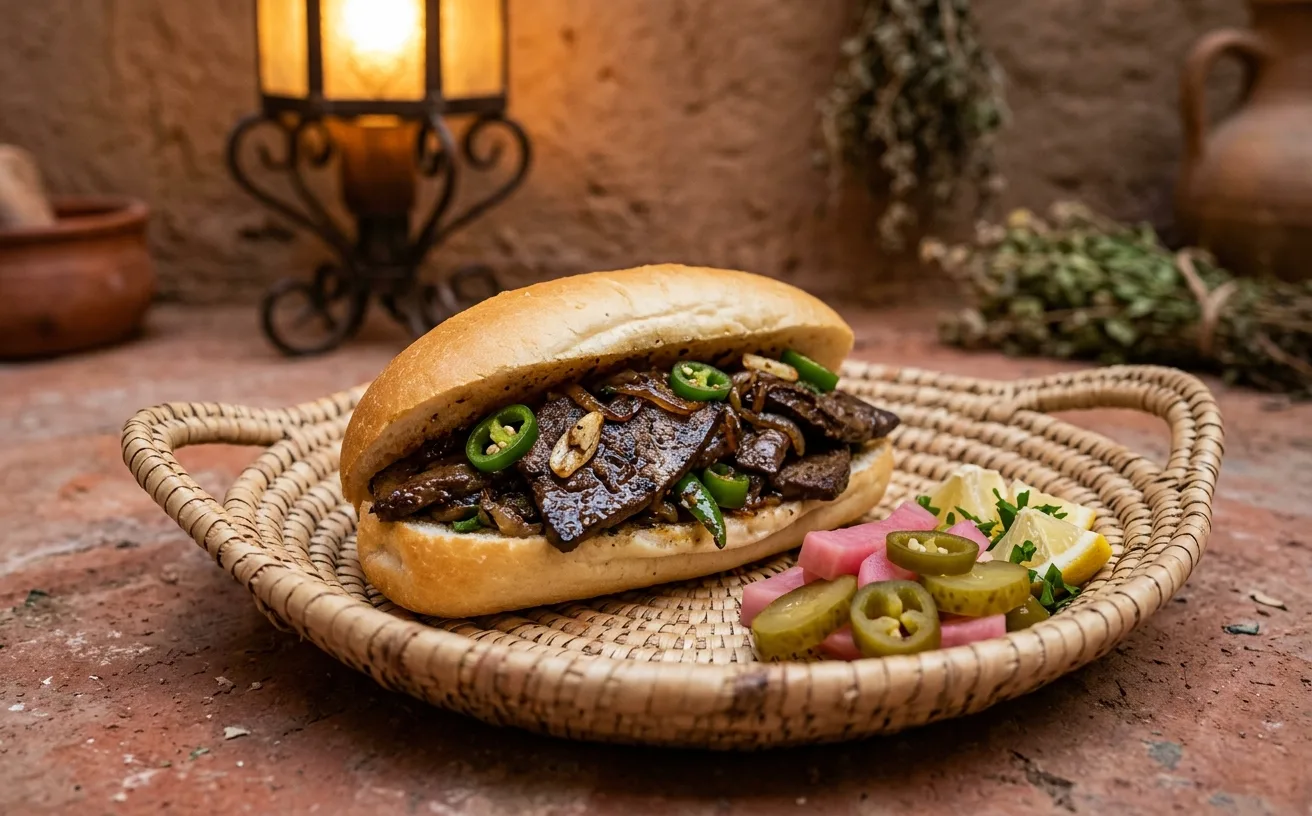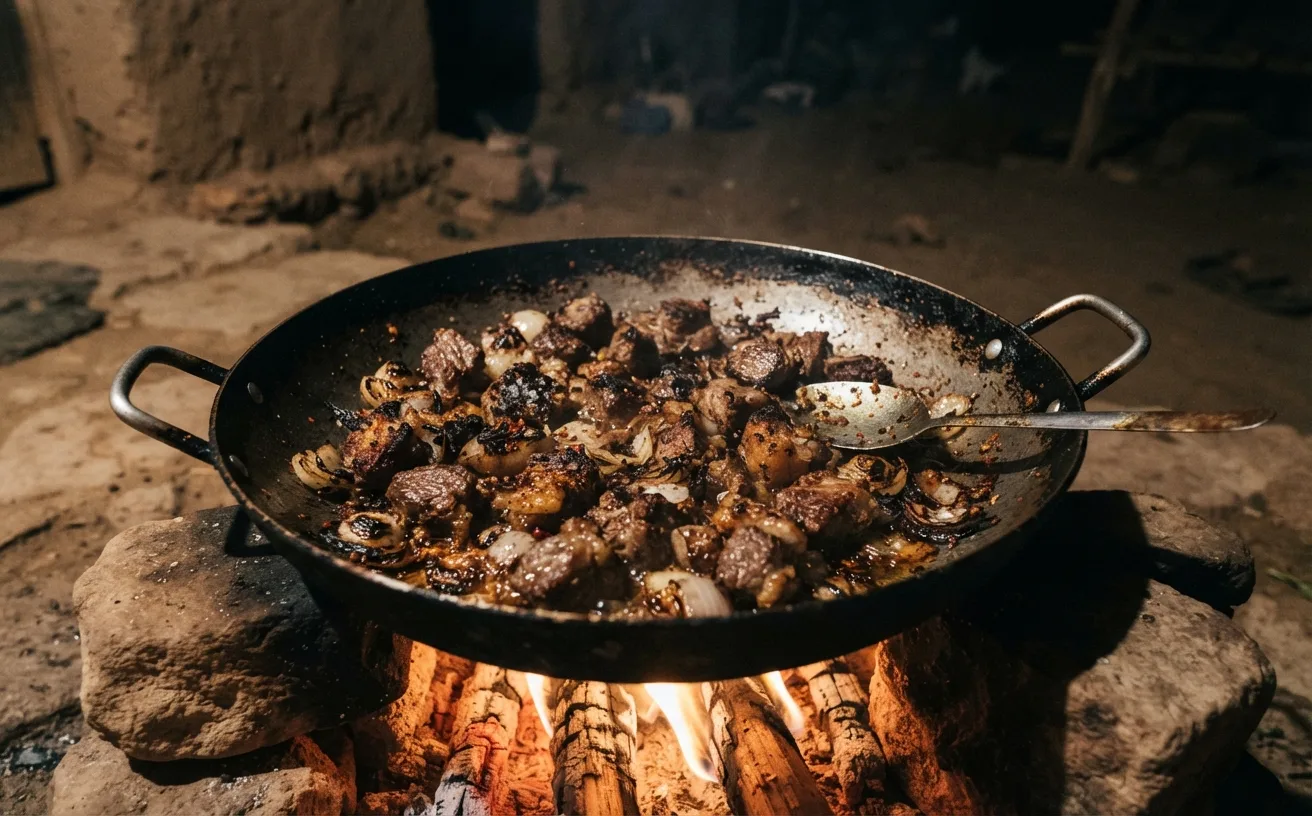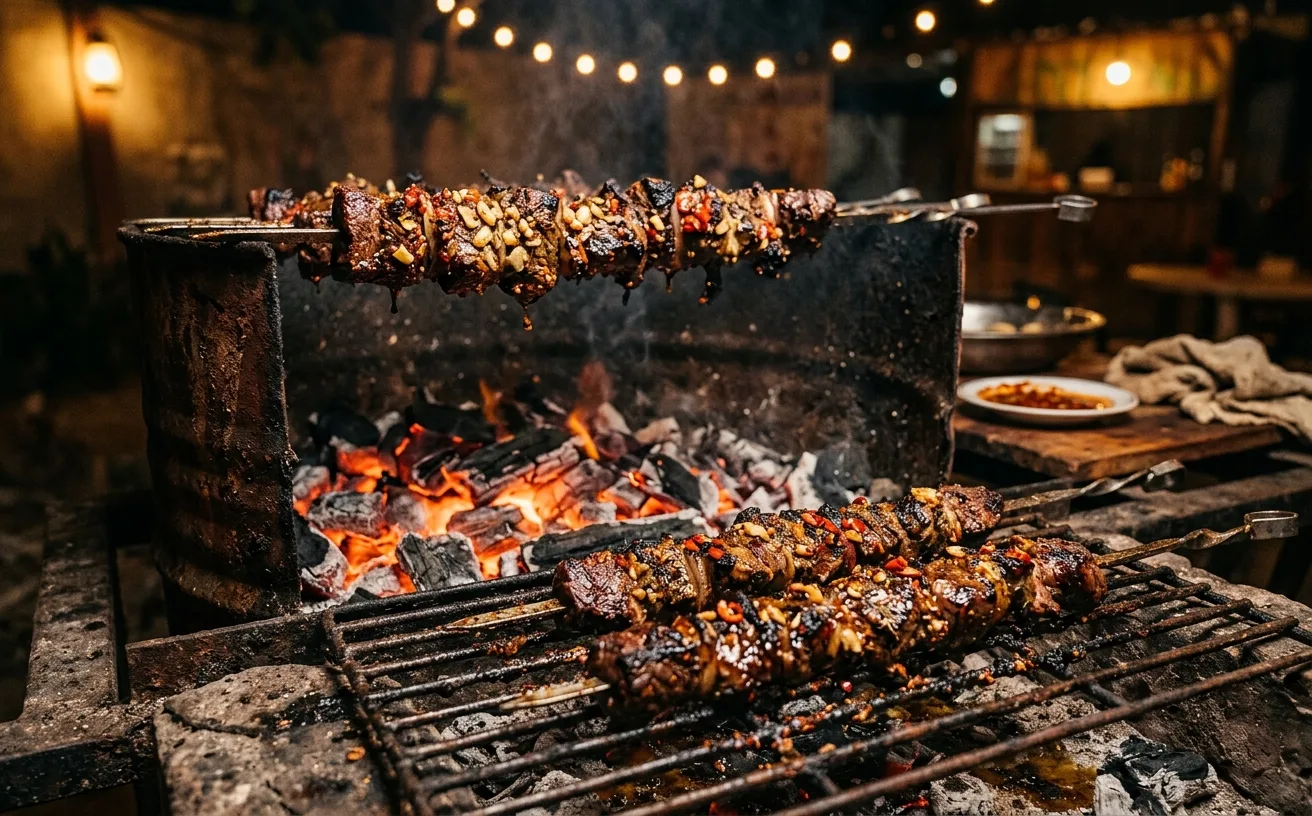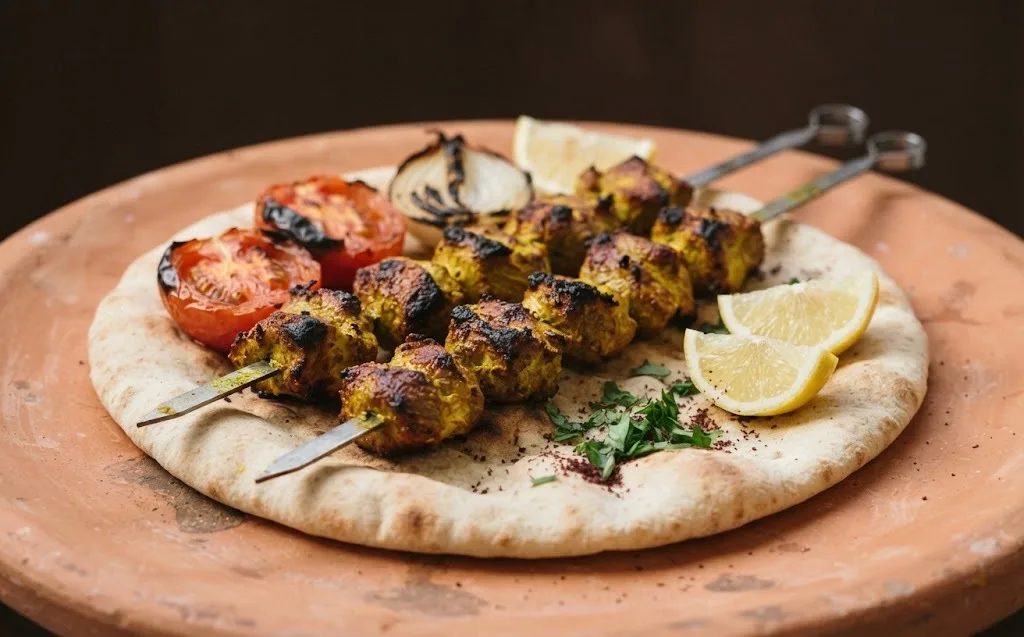
Libya's take on shish: lamb cubes marinated in the national bzaar spice mix (turmeric-heavy, with grated onion and chili), skewered and charred over charcoal, served with khubza bread, harissa-spiked salad and often chips. Ottoman rule left the kebab; Libyan spicing made it local.
Also known as Libyan kebab, kabab mashwi, kebab meshwi libi.
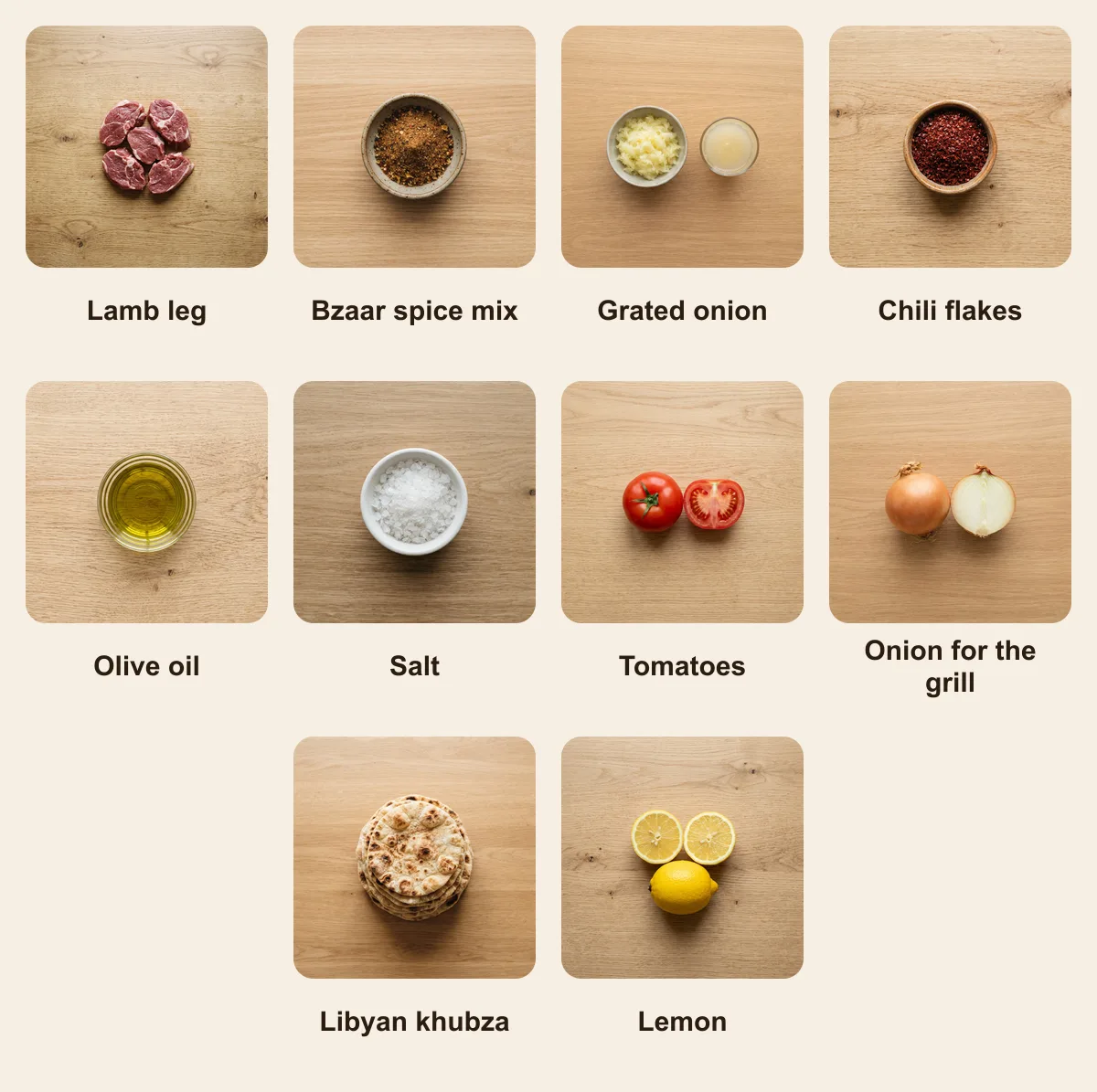
Ingredients
- 700 g lamb leg, 3 cm cubes
- 2 tsp bzaar spice mix (turmeric-forward, with caraway, coriander and cinnamon)
- 1 onion, grated with its juice
- 1 tsp chili flakes
- 3 tbsp olive oil
- 1.5 tsp salt
- 2 tomatoes and 1 onion, for the grill
- Libyan khubza or flatbread
- 1 lemon
How to make it
- 1
Stir the bzaar, grated onion with juice, chili, oil and salt into a golden slurry and coat the lamb for 3 hours.
- 2
Wipe excess onion pulp off each cube — it scorches bitter over charcoal if left clinging.
- 3
Skewer and grill over medium-hot coals 10-12 minutes with the tomato and onion halves roasting beside.
- 4
Turn every 3 minutes until the turmeric crust deepens from yellow to burnished gold.
- 5
Serve on khubza with the charred vegetables and lemon wedges.
Pro tip: Bzaar's turmeric burns faster than plain-marinated meat browns — keep the skewers one notch further from the coals than instinct says.
Where Kebab Libi comes from
What makes this shish Libyan is bzaar, the spice mix in its marinade. It is a turmeric-heavy blend used across Libyan cooking — in soups, in stews, in rice — and its presence in a marinade immediately marks the dish as Libyan rather than Egyptian or Tunisian. It is one of the clearest cases of a national spice blend claiming an imported format.
How Kebab Libi is cooked
Bzaar is applied with grated onion and a little oil into a thick paste rather than a wet marinade, and the turmeric in it stains the meat yellow-orange. Because turmeric can turn bitter over high heat, the fire is kept moderate and the pieces are turned frequently rather than left to char hard on one face.
The marinade is short — two to four hours — since bzaar is a seasoning blend rather than a tenderiser, and longer soaking with grated onion softens the surface without adding anything.
Ingredients and shopping
Lamb leg in three-centimetre cubes. Bzaar, from a Libyan or North African grocer, or a home approximation of turmeric, coriander, caraway, cinnamon, black pepper and chilli, turmeric-dominant.
Grated onion with its juice, oil, salt. Khubza — the round Libyan bread — or a pita. A salad of tomato, onion and cucumber with harissa stirred through the dressing, and chips, which are a genuine and standard Libyan accompaniment.
How Kebab Libi is served
With khubza, a harissa-dressed salad, chips and pickles. Libyan tea afterwards, made strong and served in small glasses, often with peanuts. It is restaurant and gathering food rather than a street snack.
Common mistakes
A fierce fire
Turmeric turns bitter over hard heat. Moderate coals and frequent turning.
A long marinade
Two to four hours. Bzaar is a seasoning, not a tenderiser, and grated onion left overnight softens the surface.
Substituting curry powder for bzaar
They share turmeric but little else. Bzaar leans on caraway and cinnamon rather than cumin and fenugreek.
Leaving onion pulp on the cubes
It scorches bitter over charcoal. Wipe the excess off each cube before skewering.
Kebab Libi: questions and answers
What is bzaar?
Libya's national spice blend — turmeric-heavy, with caraway, coriander, cinnamon, black pepper and chilli. It is used across Libyan cooking and is what localises the kebab.
Why chips with a kebab?
Chips are a standard Libyan accompaniment to grilled meat, alongside bread and salad. It is a local convention rather than an import.
Sources and further reading
- The Bzaar Mix — The Libyan Kitchen
- Baharat and Bzaar Spice Mixes — Marga's Libyan Recipes
- Libyan cuisine — Wikipedia