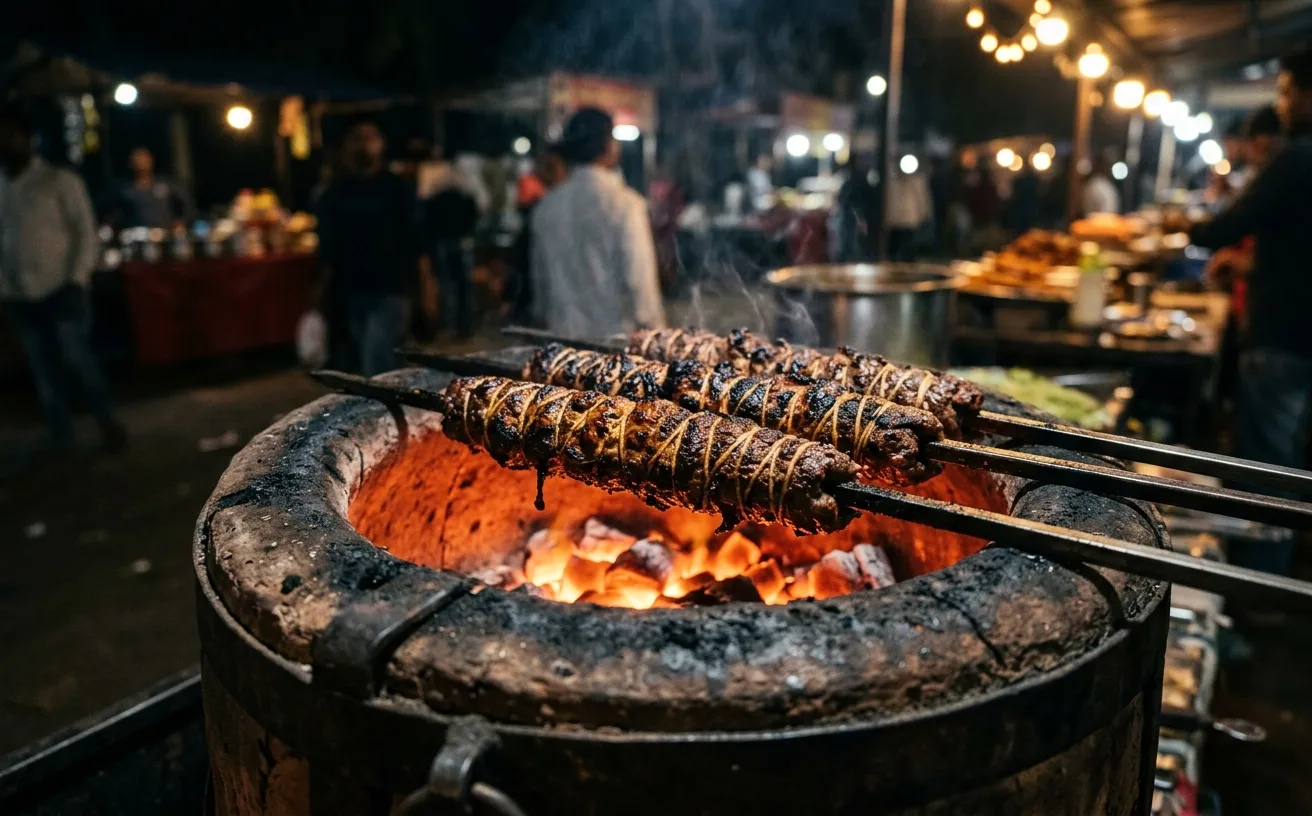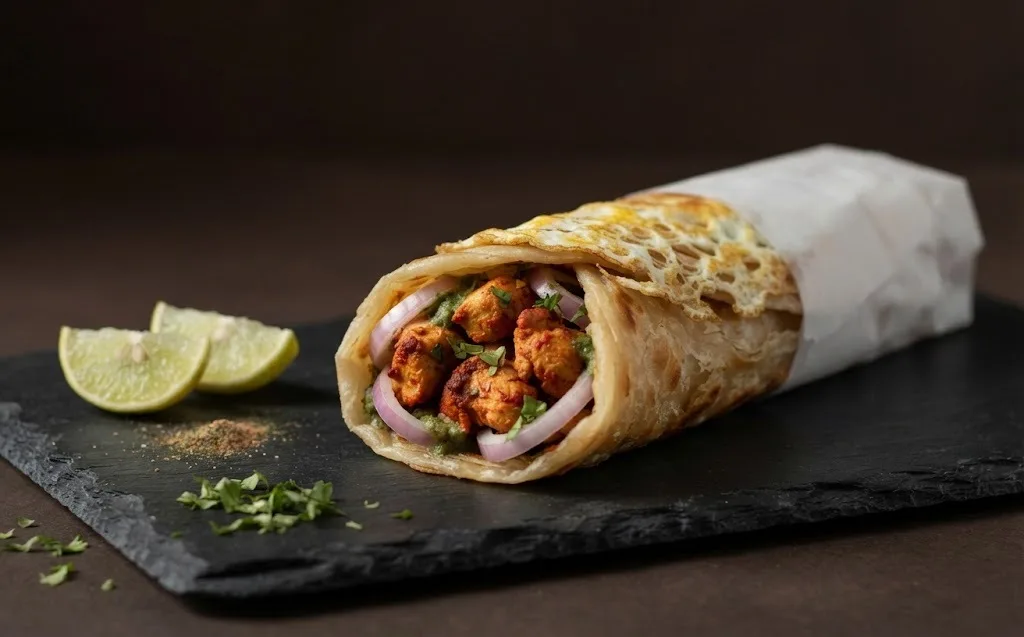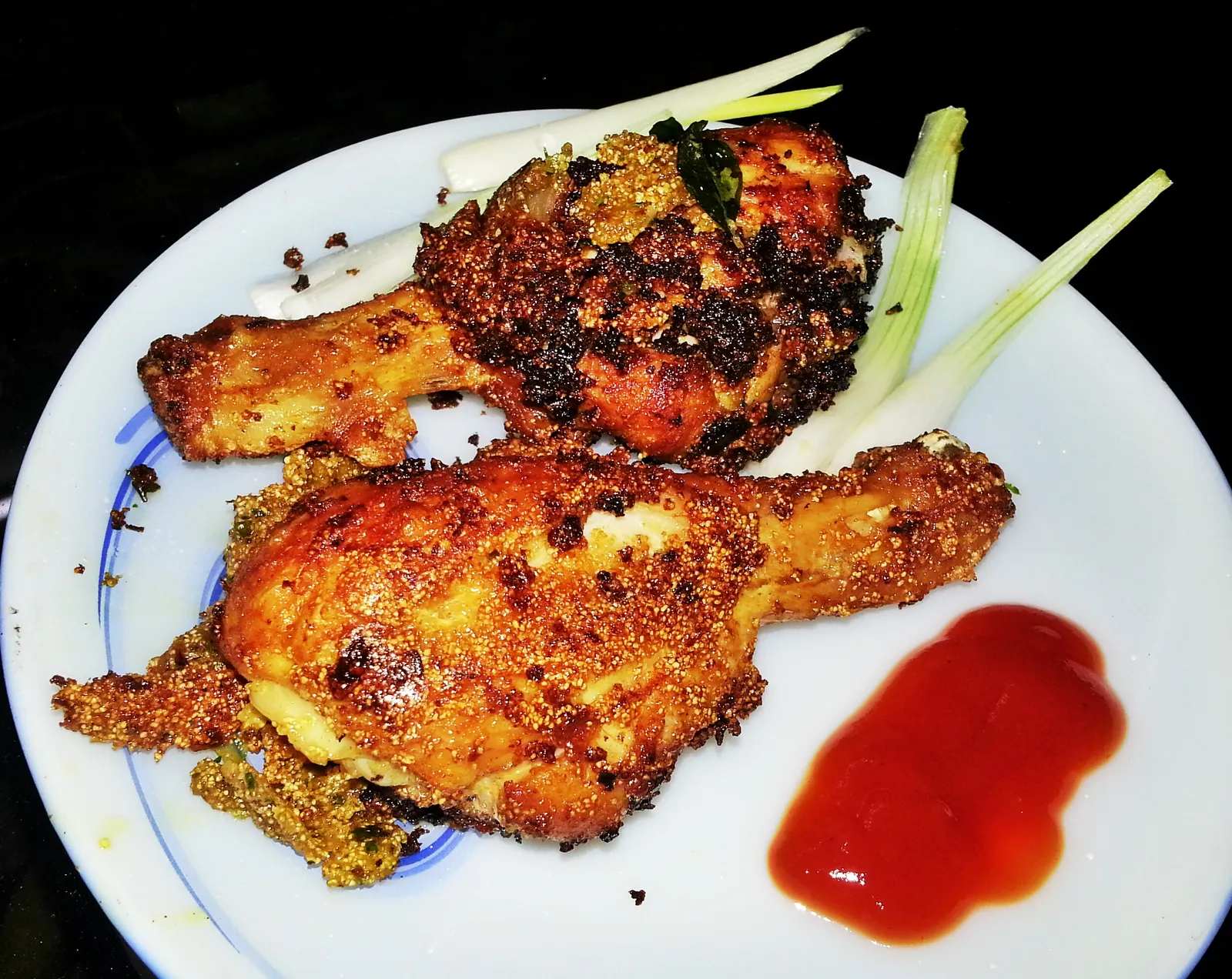
Whole chicken drumsticks slashed to the bone, marinated in spiced yogurt (kalmi versions add cream and cheese), and roasted in the tandoor. Cooking on the bone keeps the meat juicier than any boneless tikka.
Also known as kalmi kebab, kalmi kabab, tandoori drumstick kebab.
Reference video
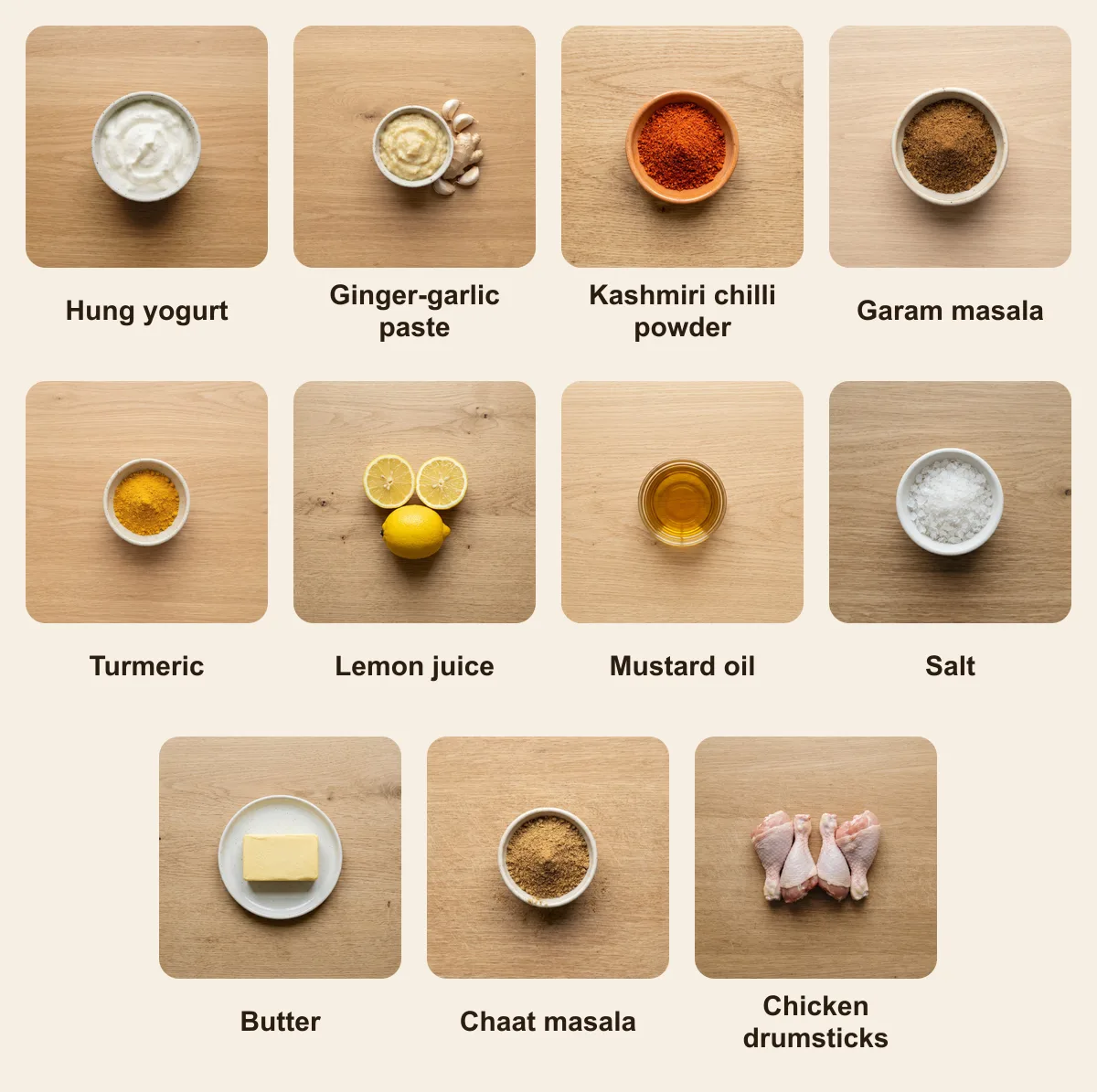
Ingredients
- 8 chicken drumsticks
- 200 g hung (thick) yogurt
- 1.5 tbsp ginger-garlic paste
- 8 g Kashmiri chilli powder
- 1 tsp garam masala
- 0.5 tsp turmeric
- 15 ml lemon juice
- 30 ml mustard oil, smoked to its smoke point and cooled
- 1.5 tsp salt
- 30 g butter and chaat masala, to finish
How to make it
- 1
Pull the skin off each drumstick, slash it to the bone in three places and rub with lemon, salt and half the chilli; wait 15 min.
- 2
Whisk the yogurt with mustard oil, ginger-garlic and remaining spices and work it deep into the cuts; marinate 6 h.
- 3
Roast on a rack at 220 C for 30-35 min, turning once, until the tips char and the thickest part reads 75 C.
- 4
Brush with butter and give them 3 more minutes for gloss.
- 5
Dust with chaat masala and serve with onion rings and mint chutney.
Pro tip: Hang the yogurt an hour in muslin before mixing; watery marinade slides off the drumsticks and steams instead of coating.
Where Tangdi Kebab comes from
Tangdi means leg, and tangdi kebab is whole chicken drumsticks slashed to the bone, marinated in spiced yoghurt and roasted in the tandoor. The kalmi variant, made from the same drumsticks with cream and cheese added to the marinade, is close enough that most restaurants use the names interchangeably.
It sits between tandoori chicken and chicken tikka in the North Indian repertoire: bone-in like the former, portioned like the latter. Its practical appeal is that a drumstick is self-contained, holds heat, and is easy to serve, which is why it is the standard tandoori item at Indian weddings and buffets.
How Tangdi Kebab is cooked
The slashing is the technique. Deep cuts to the bone, three or four per drumstick, do two things: they let the marinade reach the interior of a thick cut, and they open channels for heat so the meat next to the bone cooks in the same time as the surface. An unslashed drumstick is raw at the bone or dry at the outside.
Cooking on the bone is what makes tangdi juicier than any boneless tikka — the bone moderates the heat and the connective tissue around it renders into the meat. It needs longer than tikka, twenty-five to thirty-five minutes at high heat, and a final basting with butter or ghee as it comes off.
Ingredients and shopping
Chicken drumsticks, skin removed so the marinade reaches the meat. Lemon, salt and half the Kashmiri chilli in the first marinade; hung yoghurt, ginger-garlic paste, mustard oil, garam masala, turmeric and the rest of the chilli in the second. For the kalmi version, add cream and grated cheese to the second.
A two-stage marinade works here as it does for tikka: lemon, salt and chilli first, then the thick yoghurt mixture, with at least four hours and preferably overnight for a cut this thick.
How Tangdi Kebab is served
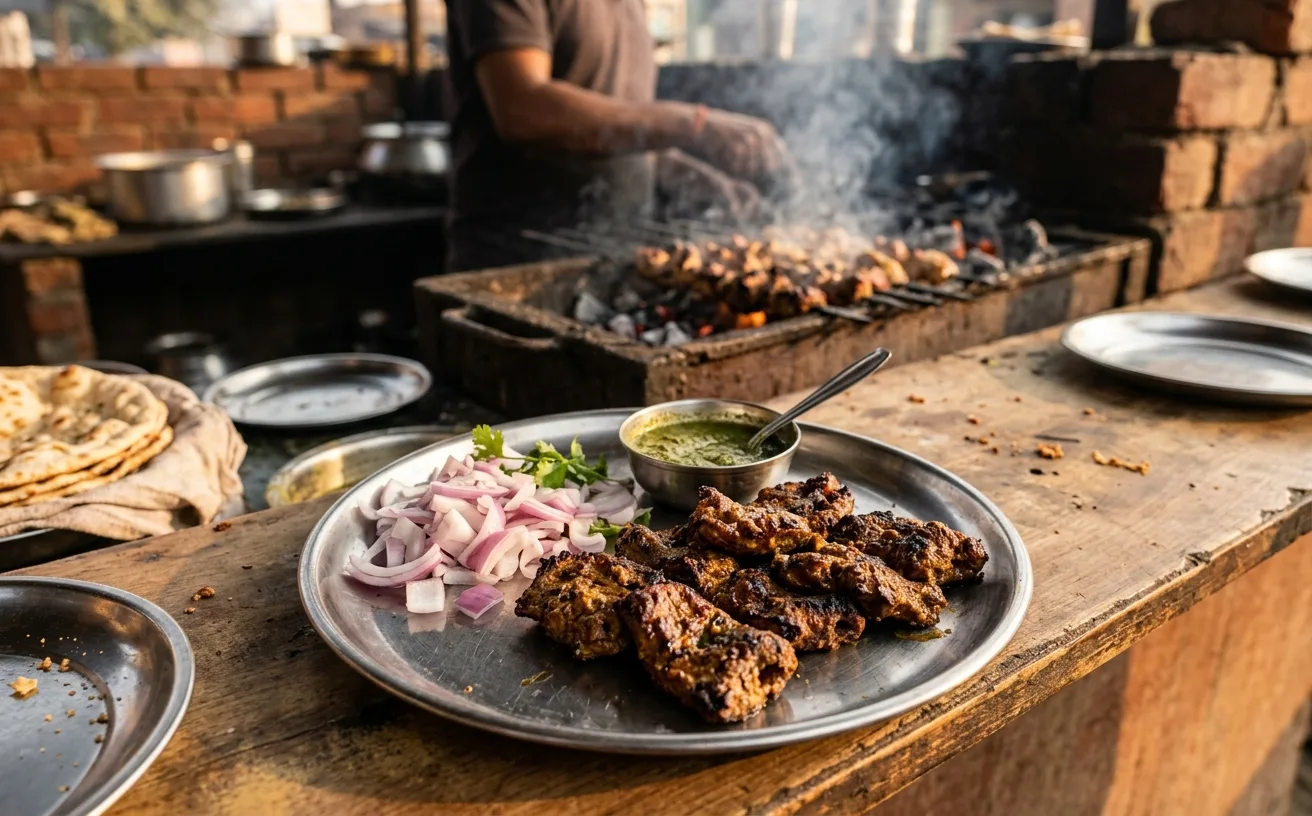
With mint chutney, onion rings, lemon and naan, or as part of a tandoori platter. It holds heat well, which is why it is a buffet standard. A sprinkle of chaat masala at the table is standard and worth doing.
Common mistakes
Not slashing deeply enough
Cuts must reach the bone. Shallow scoring leaves the meat next to the bone undercooked while the outside dries.
Leaving the skin on
The marinade cannot penetrate skin. Remove it.
Short marinating
A drumstick is thick. Overnight is genuinely better than four hours here, unlike with boneless tikka.
Cooking it as briefly as tikka
Bone-in needs twenty-five to thirty-five minutes. Pulling it at tikka timing leaves it raw at the bone.
Tangdi Kebab: questions and answers
What is the difference between tangdi and kalmi kebab?
Kalmi kebab uses the same drumsticks, and its marinade usually adds cream and cheese. In practice most restaurants use the two names for the same dish.
Why slash the drumsticks?
So the marinade reaches inside and so heat can get to the meat next to the bone. Without deep cuts the drumstick cooks unevenly.
Sources and further reading
- Kalmi kebab — Wikipedia
- Kalmi Kabab Recipe - Mughlai Style Chicken Tangdi — Archana's Kitchen