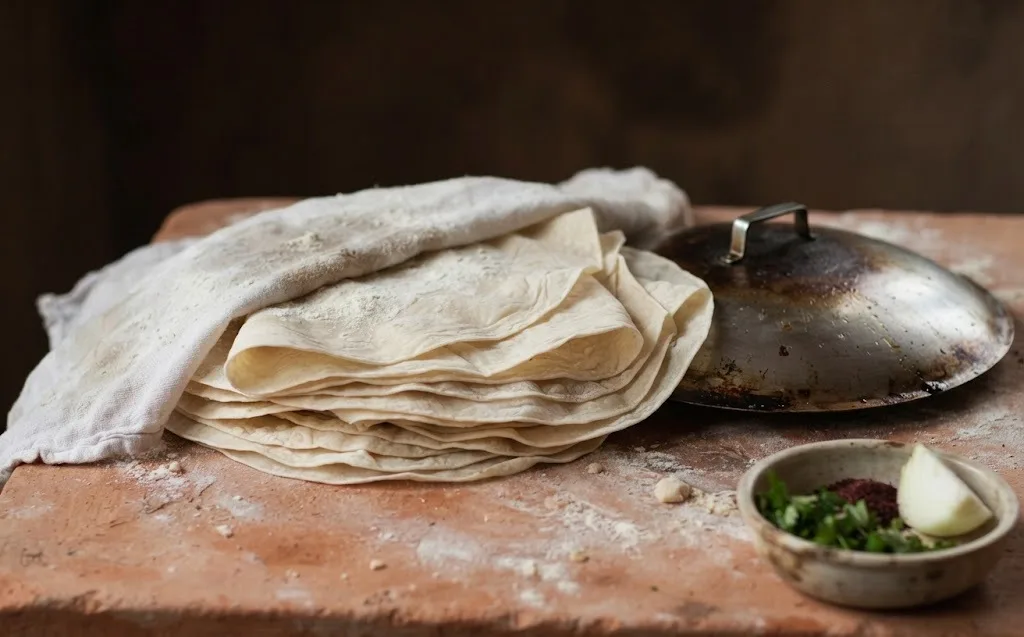
In Adana, the kebab starts with a knife. The zırh — a heavy crescent-shaped blade — rocks through hand-cut lamb and tail fat until the mince is coarse, glossy, and cohesive, seasoned with nothing but salt and pul biber, the sun-dried red pepper of the region. Kneaded onto wide flat skewers and grilled over oak charcoal, it becomes Adana kebab; rolled while hot into a thin lavaş with sumac-dressed onions and parsley, it becomes the dürüm — Turkey's definitive wrap. The genius move happens before assembly: the fresh bread is laid over the grilled skewer for a minute to steam and soak up the rendered fat, so the wrap is seasoned from the inside out. Then a firm roll, a brief press on the grill, and a paper sleeve. No sauce. Adana dürüm needs none, and locals would tell you adding any is a confession. The recipe below covers the bread: a thin, unleavened wrap cooked pale and kept soft under a damp cloth.
Also known as: Yufka Bread, Durum Ekmegi, Soft Lavash, Wrap Bread
Reference video
Reference video, embedded from YouTube: filmed by International Cuisines, not by How To Make A Kebab, and not owned, relicensed or distributed by this site.
View Original Video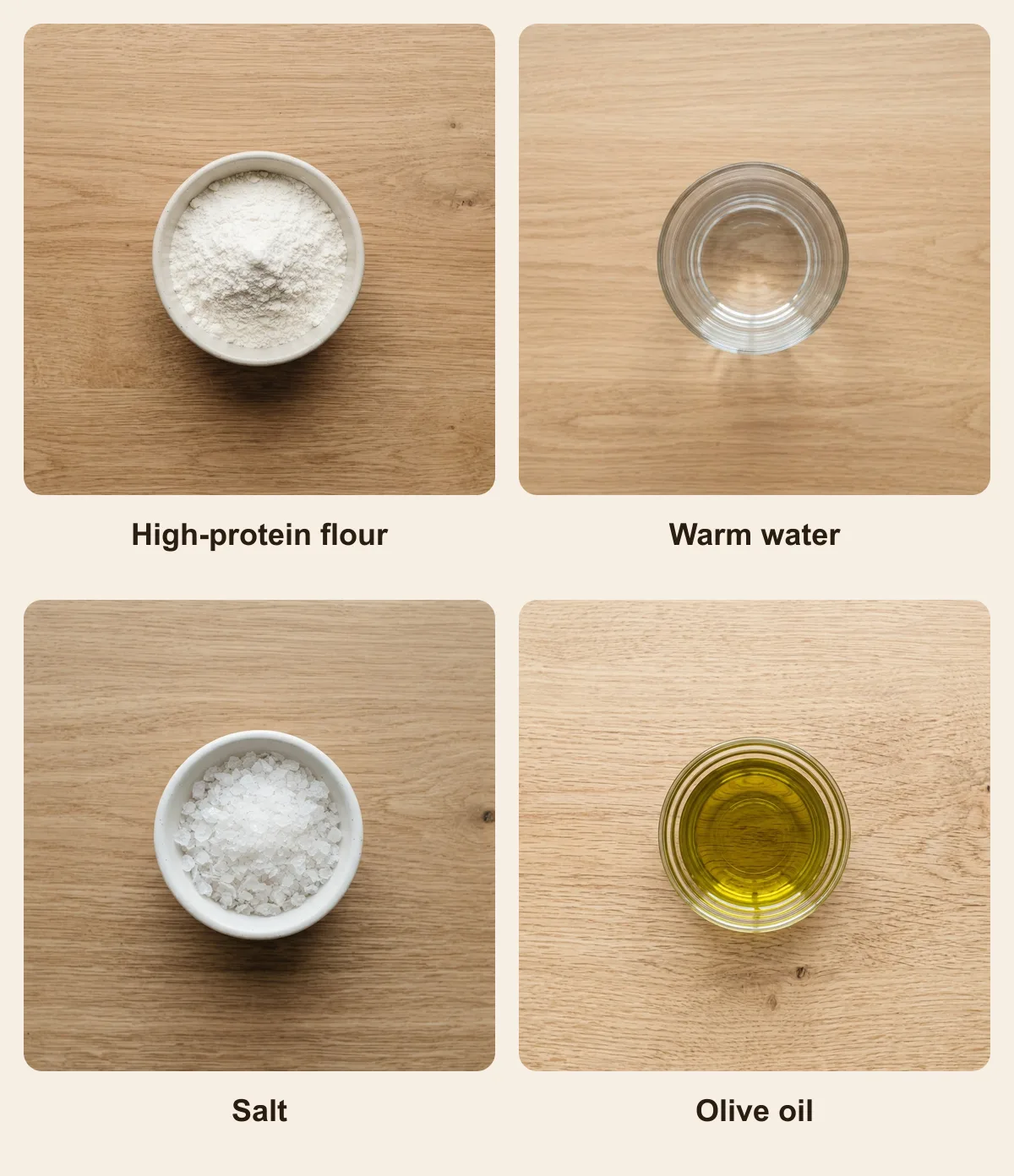
Ingredients
- 500g Flour (High Protein)
- 250ml Warm Water
- 1 tsp Salt
- 2 tbsp Olive Oil (for pliability)
How To Make Adana Durum
-
1
Mix the flour, warm water, salt and olive oil into a medium-firm dough, then knead it for 10 minutes, until smooth.
-
2
Divide the dough into orange-sized balls, cover them and rest for 30 minutes: this relaxes the gluten so each ball rolls out without springing back.
-
3
On a floured surface, roll each ball out until it is paper-thin and translucent, about 50cm wide.
-
4
Heat a sac (convex griddle), or a large non-stick pan over medium heat. Cook each sheet for 30-45 seconds per side, just until it sets, and do not let it brown or crisp.
-
5
As soon as each sheet comes off the pan, stack it and cover the stack with a damp cloth: the trapped steam keeps the bread soft enough to roll.
Note: The secret to a non-cracking wrap is the damp cloth. If it dries out, it becomes a cracker (Kitir).
Go Deeper · the full story
About this recipe
Adana dürüm's bread is the opposite of both its bakery cousins on this site: it isn't thick and dimpled like tırnaklı pide, and it isn't meant to puff hollow like balloon lavaş. This yufka is rolled paper-thin and cooked just long enough to set without colouring, because its only job is to wrap tightly around hot meat without cracking or fighting back.
The dough here is a straightforward 500g of flour to 250ml of water with a splash of olive oil for pliability, nowhere near the wet, high-hydration doughs used for the site's other flatbreads, because a stretchy, medium-firm dough is what rolls out to 50cm without tearing. The pan time is deliberately brief, 30-45 seconds per side, and the goal is a bread that's cooked but not browned; colour here would mean a crisp, crackable wrap instead of a foldable one.
Why this recipe works
Why This Recipe Works
- Two tablespoons of olive oil in a dough this lean keeps a paper-thin sheet pliable enough to fold around meat without splitting at the crease.
- Resting the dough for 30 minutes relaxes the gluten enough that it rolls out to 50cm wide without snapping back to a smaller circle.
- Cooking each side for only 30-45 seconds keeps the sugars from caramelising; the moment this bread browns, it stops being a foldable wrap and starts being a cracker.
How to serve it
Serving Notes
Steam it under a damp cloth the instant it comes off the pan; skip this step and the last pieces on the stack will already have started to stiffen.
Roll the meat while both the bread and the filling are still hot: a cooled wrap tears at the fold instead of bending.
Keep the stack covered until serving; every minute uncovered pushes it closer to the cracker texture you want to avoid.
Common mistakes to avoid
Common Mistakes
- Rolling the dough too thick: anything short of paper-thin won't fold tightly enough around the filling and turns doughy in the middle.
- Browning the bread in the pan: it should not brown or crisp at all, since colour here means it will crack instead of roll.
- Skipping the damp cloth after cooking: a bread that dries out even slightly turns into kıtır, the crisp version this recipe is built to avoid.
- Not resting the dough the full 30 minutes: under-rested dough resists the roll to 50cm and springs back to a smaller, thicker circle.
Frequently Asked Questions
Can I use this same dough for balloon lavaş instead?
No; this dough is deliberately firmer and less hydrated than the balloon lavaş recipe, because it needs to fold without tearing rather than trap steam and puff.
What's a Sac and do I need one?
It's a Turkish convex griddle; a large non-stick pan gets the same 30-45-second-per-side result without one.
Why shouldn't the bread brown?
Browning means the sugars have caramelised and the structure has started to crisp, exactly what turns a foldable wrap into a cracker.
How long does the dough keep before rolling?
Once rested the full 30 minutes it should be rolled and cooked in the same session; the method is built around that short rest, not a long fridge rest.
Sources and further reading
- Dürüm — Wikipedia
- Adana kebab — Wikipedia
Keep Cooking
Build The Full Plate
Complete Kebab Guide
The full method behind every kebab on this site: meat and fat, heat, bread and sauce.
Kebab Breads
Choose the bread that matches the moisture, fat level, and service style of this recipe.
Turkish Kebab Collection
Compare related Turkish kebab formats, breads, and serving styles.
Technique And Support Guides
Best Meat For Kebab
Choose the best meat for kebab by fat ratio, cut, grind, and cooking style, whether it ends up on a skewer, in a wrap, or on a plate.
How To Keep Kebab On The Skewer
Learn how to keep kebab on the skewer with the right fat level, onion handling, kneading, skewer shape, and grill timing.
Best Bread For Kebab Wraps
Choose the best bread for kebab wraps, gyros, shawarma, doner, and plate service with lavash, pita, somun, pide, and durum explained clearly.
Gyros Vs Shawarma Vs Donair
Compare gyros, shawarma, and donair by meat style, bread, sauce, garnish, and wrap structure so you know which page to cook next.
Explore Related Hubs
Turkish Kebab Guides
A focused collection for Turkish kebab styles including Adana, Urfa, Cag, Iskender, and supporting bread pages.
Best Bread for Kebab, Shawarma, and Gyros
Learn which bread to use for kebab wraps, gyros, shawarma, doner, and grilled meat plates, including lavash, pita, pide, somun, lepinja, and durum.
Related Recipes
Tirnakli Pide
Turkish "Fingernail" Bread. Chewy, dimpled flatbread essential for Adana Kebab.
Balloon Lavas
Thin, hollow flatbread that puffs up like a balloon in the oven. Spectacular presentation.
Somun (Lepinja)
Spongy Balkan flatbread. The only authentic vessel for Cevapi.
Nan-e Sangak
Persian Pebble Bread. Large whole wheat flatbread baked on hot stones.