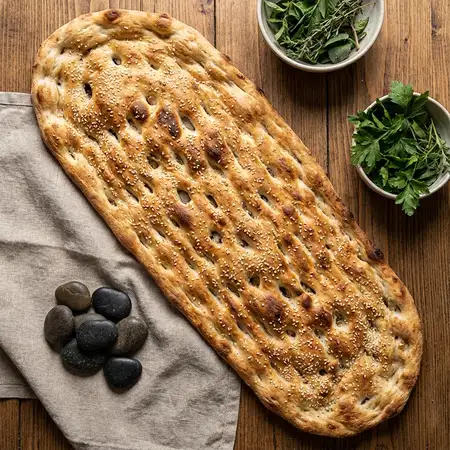
Sangak means "little stone" in Persian, and the name is literal: this metre-long whole wheat flatbread is baked directly on a bed of hot river pebbles inside a sloped oven, each stone leaving its own dimple in the crust. It is Iran's daily bread — collected fresh at dawn, draped over the forearm on the walk home, torn at the table with feta, herbs and walnuts, or wrapped around kabab koobideh straight off the skewer. The dough is traditionally sourdough-leavened and remarkably slack, stretched over a paddle and flung onto the stones in one practised motion. A home version swaps the pebble bed for clean baking stones or a heavy sheet pan scattered with oven-safe pebbles, and a sourdough starter does the leavening, delivering that same tangy, wheaty depth and cratered surface; instant yeast works too, for a quicker, milder loaf.
Reference video
Reference video, embedded from YouTube: filmed by On The Gas, not by How To Make A Kebab, and not owned, relicensed or distributed by this site.
View Original Video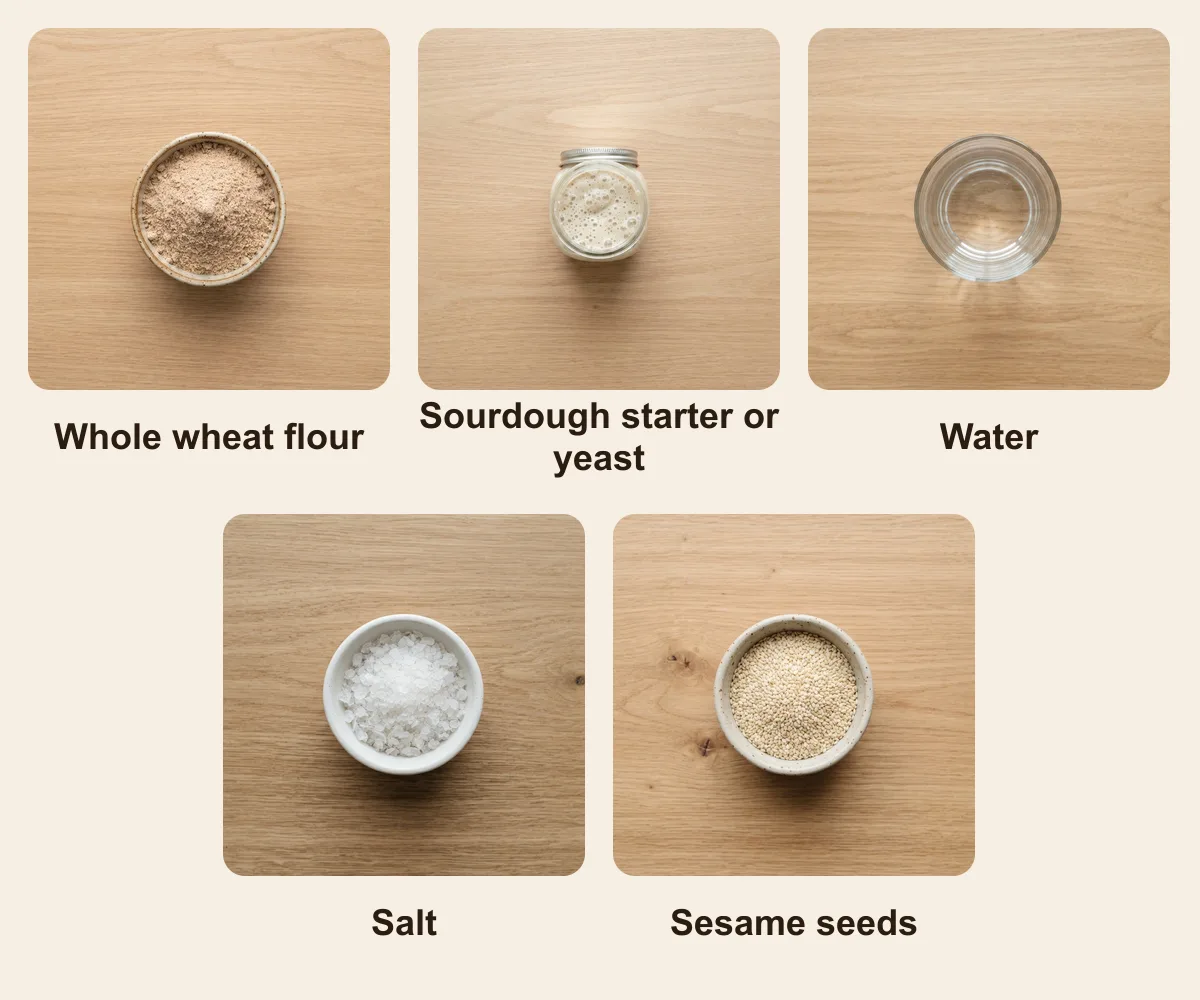
Ingredients
- 1kg Whole Wheat Flour
- 200g Sourdough Starter (or 7g Instant Yeast)
- 700ml Water
- 20g Salt
- 2 tbsp Sesame Seeds
- Clean River Pebbles (for baking)
How To Make Nan-e Sangak
-
1
Wash the river pebbles in warm soapy water, sanitize them by boiling for 10 minutes, then let them dry completely, because damp stones can crack or burst in a hot oven. Spread them on a baking tray and heat them at 250°C (480°F) for at least 30 minutes, timing it so they are scorching hot when the dough has risen.
-
2
Stir the flour, water, salt and starter (or yeast) together until no dry flour remains and the dough is slack enough to pour, like thick pancake batter. Cover the bowl and let it rise until the surface is bubbly and the dough has visibly risen.
-
3
Working one bread at a time, pull the hot tray from the oven with oven gloves and, with wet hands, pour and stretch a portion of the dough over the stones as thinly as you can. Scatter some of the sesame seeds over the top.
-
4
Return the tray to the 250°C oven and bake for 5-8 minutes, until the top is golden and cratered. The dough bubbles up around the stones as it bakes, and that is what gives sangak its texture.
-
5
Lift the bread off the stones with tongs; if it clings, it is not quite baked, so give it a little longer. Use the tongs to pick out any oven-hot pebbles stuck to the underside. Let the stones reheat in the oven before you spread the next bread, and repeat until the dough is used up.
Note: Spread the dough thin over the pebbles: a thick layer will still be raw in the center when the crust is done.
Go Deeper · the full story
About this recipe
Sangak is the one bread on this site that comes with its own furniture: a bed of clean river pebbles standing in for the sloped, stone-lined ovens Iranian bakeries build specifically for it. Nothing else here needs a purpose-built surface, and that's the tell that sangak's texture comes from the stones themselves, chewy where the dough draped between pebbles, blistered wherever a stone made direct contact.
The dough is closer to a thick batter than a kneadable bread dough, 700ml of water against 1kg of whole wheat flour, leavened with a sourdough starter (instant yeast is the faster fallback) for a depth whole wheat alone doesn't provide. It gets poured and stretched over pebbles that have already spent 30 minutes or more at 250°C, which makes the bread bubble and set in as little as 5-8 minutes instead of needing anything close to a standard bread bake.
Why this recipe works
Why This Recipe Works
- A pourable, slack dough (700ml water to 1kg flour) lets it drape and settle into the gaps between pebbles instead of sitting on top the way a rolled dough would.
- Preheating the pebbles for 30 minutes or more at 250°C means the stones radiate heat from every angle the dough touches, not just from below.
- The short 5-8 minute bake works because the dough is thin and wet; enough contact points with scorching stone cook it through fast despite the whole wheat's density.
How to serve it
Serving Notes
Tear it while still warm; the crust sets as it cools, and this bread doesn't reheat the way a puffed pocket bread does.
Check every torn piece for a stray pebble before serving, because stones do occasionally lodge in the crust.
Serve it flat on the table for tearing rather than pre-cut slices; the irregular pebble-marked surface doesn't slice cleanly.
Common mistakes to avoid
Common Mistakes
- Using cold or under-heated pebbles: anything short of the 30-minute, 250°C preheat and the dough sits and steams instead of bubbling and crisping around the stones.
- Making a kneadable dough instead of a pourable one: sangak needs enough water to spread over the pebbles on its own, and a stiff dough just sits in a lump.
- Skipping the pebble check after baking: stones do stick to the underside, and that final check is there specifically to catch them before serving.
- Substituting all-purpose flour for whole wheat: whole wheat flour is part of what gives sangak its dense, nutty crumb, and white flour changes the texture entirely.
Frequently Asked Questions
Can I make sangak without river pebbles?
You need some kind of stone or pebble bed; a flat stone or steel gives you a flatbread, not sangak's distinctive cratered surface, so oven-safe pebbles on a tray are the practical home substitute.
Is sangak the same as naan or pide?
No; sangak is whole wheat and stone-baked with no rolling pin involved, naan is a leavened white-flour dough slapped on a tandoor wall, and pide is a hand-pressed, dimpled loaf baked on a flat stone.
Can I use commercial yeast instead of a sourdough starter?
Yes, either works; yeast is faster, but the starter gives sangak its traditional tang.
How do I clean the pebbles safely for reuse?
Sanitize them before every use as the first step specifies, and heat them fully each time, since pebbles straight from storage won't be hot enough to bake with.
Sources and further reading
- Sangak — Wikipedia
- Iranian cuisine — Wikipedia
Keep Cooking
Build The Full Plate
Complete Kebab Guide
The full method behind every kebab on this site: meat and fat, heat, bread and sauce.
Kebab Breads
Choose the bread that matches the moisture, fat level, and service style of this recipe.
Persian Kebab Collection
Use the Persian collection to compare skewers, marinades, and plate structure.
Technique And Support Guides
Best Meat For Kebab
Choose the best meat for kebab by fat ratio, cut, grind, and cooking style, whether it ends up on a skewer, in a wrap, or on a plate.
How To Keep Kebab On The Skewer
Learn how to keep kebab on the skewer with the right fat level, onion handling, kneading, skewer shape, and grill timing.
Best Bread For Kebab Wraps
Choose the best bread for kebab wraps, gyros, shawarma, doner, and plate service with lavash, pita, somun, pide, and durum explained clearly.
Gyros Vs Shawarma Vs Donair
Compare gyros, shawarma, and donair by meat style, bread, sauce, garnish, and wrap structure so you know which page to cook next.
Explore Related Hubs
Persian Kebab Recipes
A collection of Persian grilling styles, from koobideh and barg to joojeh and other skewer traditions.
Best Bread for Kebab, Shawarma, and Gyros
Learn which bread to use for kebab wraps, gyros, shawarma, doner, and grilled meat plates, including lavash, pita, pide, somun, lepinja, and durum.
Related Recipes
Tirnakli Pide
Turkish "Fingernail" Bread. Chewy, dimpled flatbread essential for Adana Kebab.
Balloon Lavas
Thin, hollow flatbread that puffs up like a balloon in the oven. Spectacular presentation.
Adana Durum
The Art of the Wrap. Hand-minced kebab wrapped in warm Lavas with sumac onions.
Somun (Lepinja)
Spongy Balkan flatbread. The only authentic vessel for Cevapi.