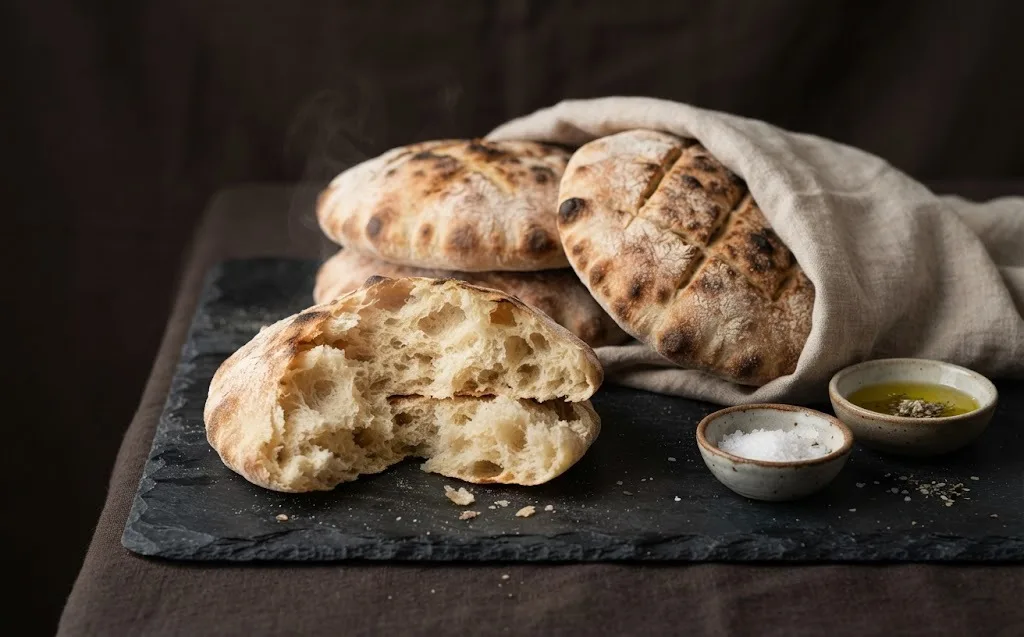
In Sarajevo's Baščaršija, somun comes out of wood-fired pekara ovens in time for the lunchtime ćevapi trade, the flatbreads ballooning in under two minutes. Bosnians are adamant that ćevapi served in anything else is simply wrong — the bread's open, spongy crumb drinks up the meat juices and raw onion bite without collapsing. During Ramadan, bakers dust the tops with ćurekot (nigella seed) and queues form before iftar. What separates somun from an ordinary pita is a very wet, well-fermented dough and a ferociously hot baking surface, which force the loaf to puff into a hollow pillow. At home, a pizza stone cranked to your oven's maximum reproduces that violent oven-spring surprisingly well, giving you the same soft interior and blistered, floury skin.
Reference video
Reference video, embedded from YouTube: filmed by Irma's Sofra, not by How To Make A Kebab, and not owned, relicensed or distributed by this site.
View Original Video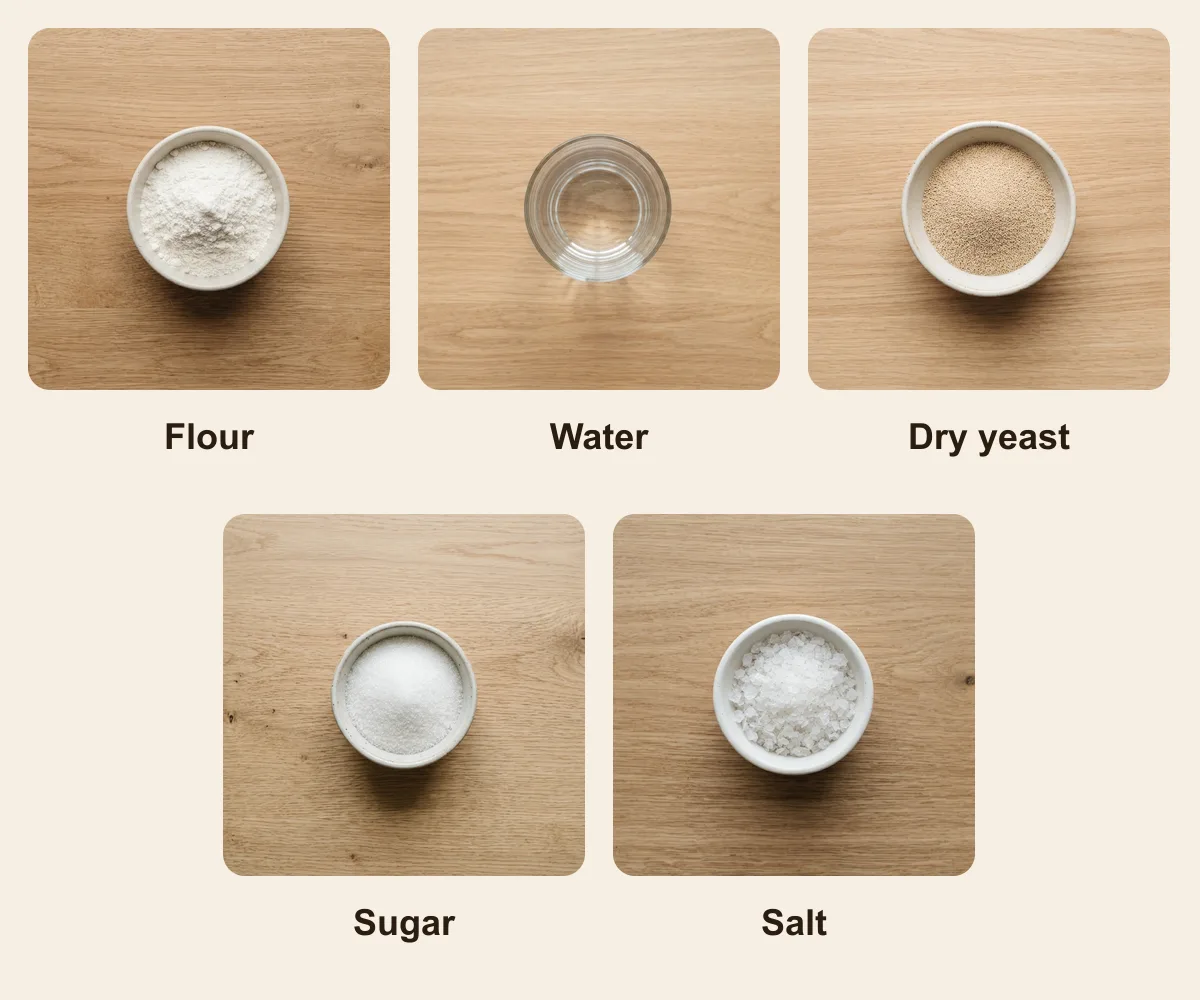
Ingredients
- 1kg Flour
- 700ml Water
- 10g Dry Yeast
- 1 tbsp Sugar
- 2 tsp Salt
How To Make Somun (Lepinja)
-
1
Warm the water until lukewarm, dissolve the yeast and sugar in it and leave for 5-10 minutes until frothy, then mix in the flour and salt to a soft, sticky dough that is wetter than ordinary bread dough. Cover and let it rise 3 times, about 30-40 minutes per rise, punching it down in between.
-
2
Divide the dough into equal pieces and shape each one into a ball. Flatten each ball slightly with your palm into a thick round, pressing by hand rather than with a rolling pin so the air stays in the dough.
-
3
Press the back of a dull knife into the top of each round to mark a rustic grid of lines. Mark the surface without cutting through it, or the bread will deflate instead of holding its rise.
-
4
Slide the rounds onto a baking stone or tray preheated in the 250°C oven and bake for 12-15 minutes, until puffed and golden-brown on top. Steam the oven if possible.
-
5
As soon as the loaves come out of the oven, wrap them in a clean kitchen cloth. The trapped steam softens the crust, so keep them wrapped until you serve.
Note: Before serving with Cevapi, dunk the whole bread in warm beef broth.
Go Deeper · the full story
About this recipe
Somun and lepinja are the same bread under two names on either side of an old border; Bosnia says somun, Serbia and Croatia lean toward lepinja, and both exist for one job, holding ćevapi without falling apart under the fat and raw onion. That single-mindedness sets it apart from the site's other flatbreads, which are built around dimpling or folding instead of being a sturdy, absorbent pocket.
This dough is wetter than a standard sandwich bread, 700ml of water to 1kg of flour, and it rises three separate times with a punch-down between each, which is what builds the open, spongy crumb that can soak up meat juices without turning to mush. Baking at 250°C for the full 12-15 minutes matters more than it looks: pull it early and the crumb stays dense instead of pillowy.
Why this recipe works
Why This Recipe Works
- Punching the dough down through three separate rises develops more structure than a single proof, which is why the crumb stays open and spongy instead of tight.
- A 700ml-to-1kg hydration keeps the dough wet enough to steam-puff at 250°C without drying into a dense roll.
- Wrapping the bread in a cloth straight out of the oven traps the steam that keeps the crust soft, instead of letting it set hard as it cools.
How to serve it
Serving Notes
Split it while still warm and let the ćevapi's fat soak straight into the crumb; this bread is built to absorb, not just contain.
Dunking the bread in beef broth gives the Banja Luka-style soaked version; skip it for the drier Sarajevo style instead.
Serve it the day it's baked: the open, spongy crumb that makes it good with ćevapi also means it stales faster than a tighter-crumbed loaf.
Common mistakes to avoid
Common Mistakes
- Only rising the dough once: somun needs three separate rises with punch-downs in between, and skipping two of them leaves the crumb dense instead of spongy.
- Pulling the bread at first colour: 250°C needs the full 12-15 minutes for the loaf to puff through, and early removal leaves a doughy centre.
- Skipping the cloth-wrap after baking: the crust sets hard within minutes without it, losing the soft texture the dish depends on.
- Scoring too deep with the knife: use a dull knife to draw a rustic grid; cutting too far into the dough lets it deflate instead of holding its rise through the bake.
Frequently Asked Questions
Is somun the same bread as lepinja?
Yes; they're regional names for the same style of flatbread, with Bosnia typically saying somun and Serbia or Croatia saying lepinja.
Can I use this bread for something other than ćevapi?
It works for any grilled meat that needs a bread pocket rather than a wrap; the spongy, absorbent crumb is the point, not the ćevapi specifically.
Why is my somun dense instead of spongy?
Most likely one of the three rises got skipped or cut short; each punch-down-and-rise cycle builds the open crumb, not just the total rise time.
Do I need to steam my home oven?
It helps but isn't essential, since the high hydration dough and 250°C heat do most of the puffing on their own.
Sources and further reading
Keep Cooking
Build The Full Plate
Complete Kebab Guide
The full method behind every kebab on this site: meat and fat, heat, bread and sauce.
Kebab Breads
Choose the bread that matches the moisture, fat level, and service style of this recipe.
Balkan Kebab Collection
See the Balkan meat, bread, and onion pairings that belong with this style.
Technique And Support Guides
Best Bread For Kebab Wraps
Choose the best bread for kebab wraps, gyros, shawarma, doner, and plate service with lavash, pita, somun, pide, and durum explained clearly.
What To Serve With Cevapi
Serve cevapi properly with somun, onion, ajvar, kajmak, and practical Balkan plate-building advice for home cooks.
Gyros Vs Shawarma Vs Donair
Compare gyros, shawarma, and donair by meat style, bread, sauce, garnish, and wrap structure so you know which page to cook next.
Lavash Vs Pita Vs Durum
Compare lavash, pita, and durum for kebab wraps so you know which bread to use for gyros, shawarma, Adana wraps, and sliced-meat rolls.
Explore Related Hubs
Balkan Kebab Recipes: Cevapi, Somun, Lepinja, Raznjici
Compare Balkan kebab recipes, breads, and serving traditions including cevapi, somun, lepinja, raznjici, onion garnish, ajvar, and kajmak.
Best Bread for Kebab, Shawarma, and Gyros
Learn which bread to use for kebab wraps, gyros, shawarma, doner, and grilled meat plates, including lavash, pita, pide, somun, lepinja, and durum.
Related Recipes
Tirnakli Pide
Turkish "Fingernail" Bread. Chewy, dimpled flatbread essential for Adana Kebab.
Balloon Lavas
Thin, hollow flatbread that puffs up like a balloon in the oven. Spectacular presentation.
Adana Durum
The Art of the Wrap. Hand-minced kebab wrapped in warm Lavas with sumac onions.
Nan-e Sangak
Persian Pebble Bread. Large whole wheat flatbread baked on hot stones.