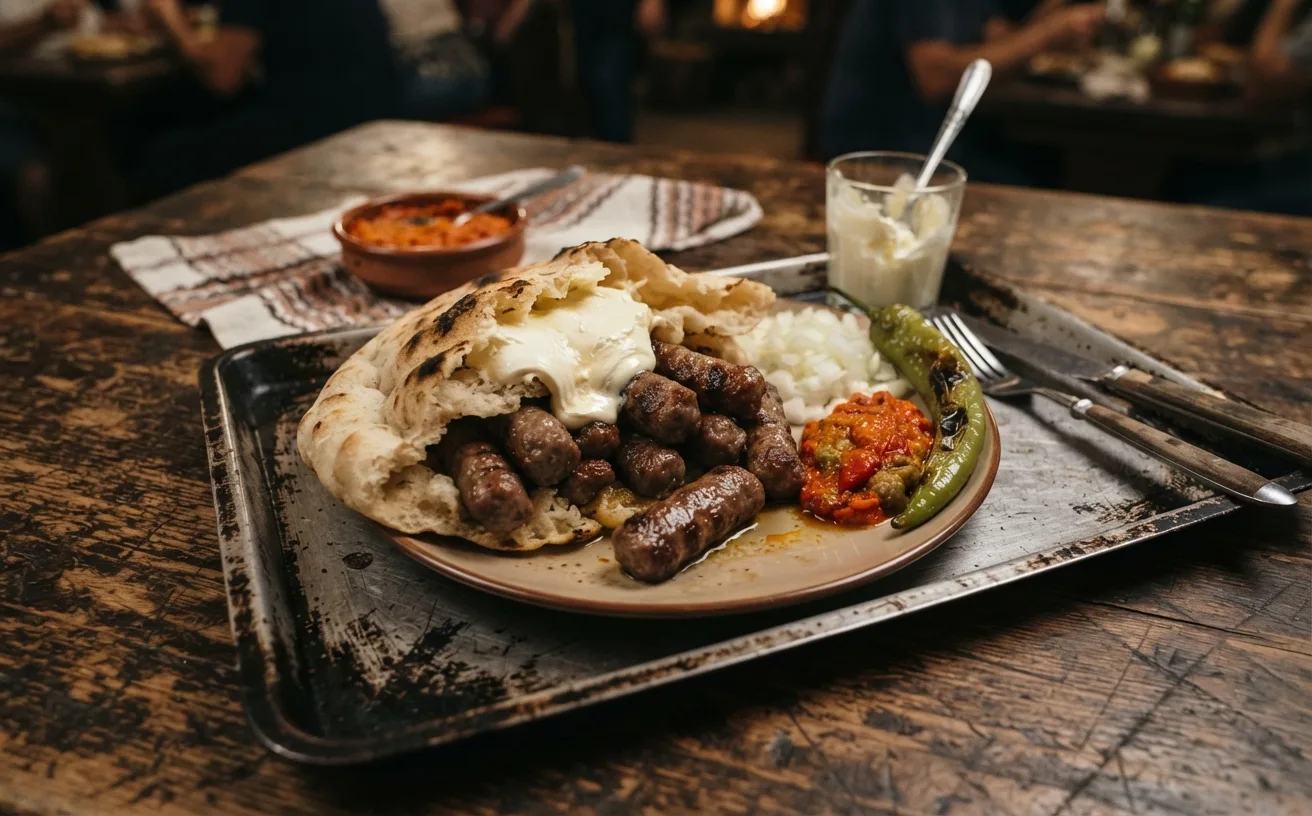
Cevapi is the rare grilled dish where the sides are not optional accessories — they are half the recipe. In Sarajevo, Banja Luka, or Belgrade, nobody orders cevapi and then thinks about what goes with it. The order is fixed: five or ten pieces in somun, a heap of raw onion, and kajmak or ajvar depending on the house. Get those three things right and a home plate tastes like the real thing. Get them wrong and you have grilled mince in the wrong sandwich.
Serving guide
What To Serve With Cevapi
By Ali Ocak
Updated 2026-11-03
Quick answer
What do you serve with cevapi?
Somun or lepinja bread, raw yellow or white onion in a 3 to 5 mm dice, and kajmak; then sopska salad and a glass of chilled drinkable yogurt.
What bread is served with cevapi?
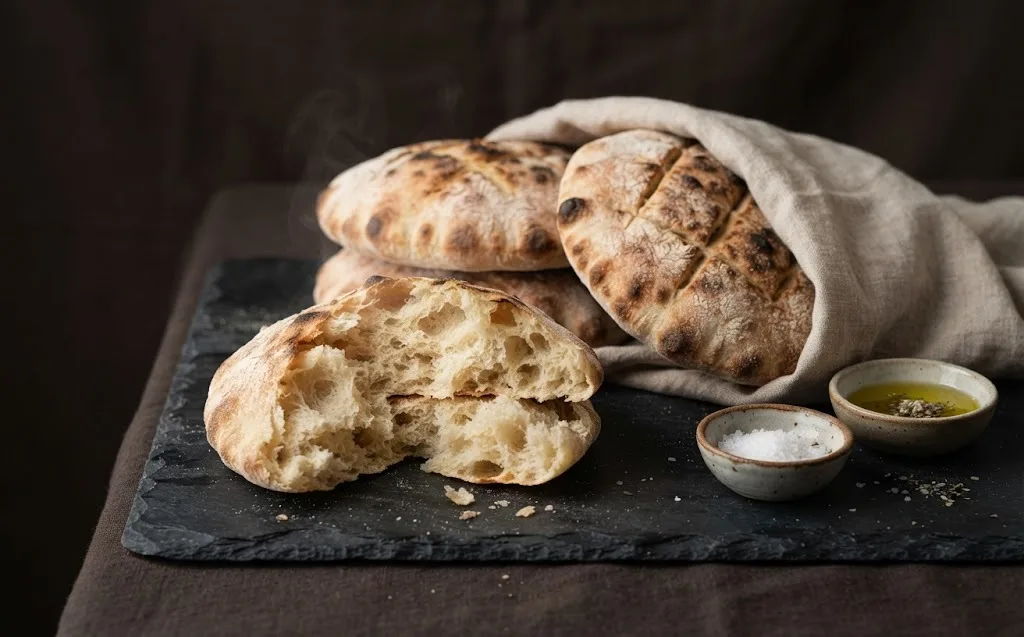
Somun (the Bosnian name) or lepinja (Serbian and Croatian): a soft, slightly chewy flatbread 15 to 20 cm across and 3 to 4 cm thick, with an open interior that traps steam.
Key takeaways
- The single most important side is the bread, and the correct bread is somun (the Bosnian name) or lepinja (the Serbian and Croatian name) — a soft, slightly chewy flatbread about 15 to 20 cm across and 3 to 4 cm thick, with an open interior that traps steam.
- Every traditional cevapi plate carries raw onion, and the format is precise: yellow or white onion, chopped to a 3 to 5 mm dice — coarse enough to crunch, fine enough to spread through the sandwich.
- If you serve only one condiment, make it kajmak.
- The classic salad alongside cevapi is sopska: tomato, cucumber, onion, and raw pepper in a rough 2:1:1:1 ratio, dressed with oil and a little vinegar, buried under a snowfall of grated white brine cheese (sirene or feta), about 50 g per serving.
- The canonical drink is drinkable yogurt — plain, unsweetened, thin enough to pour, served well chilled, a glass per person.
- Timing is where home cevapi plates fall apart, so work backwards from the meat.
The reason the sides matter so much is structural. Cevapi are small — finger-thick logs about 5 to 7 cm long — and they come off the grill hot, fatty, and unrested. The bread has to catch that fat, the onion has to cut it, and the dairy or pepper condiment has to round it. Each side has a mechanical job, which is why substitutions fail in predictable ways.
This guide walks through each component in order of importance, with the temperatures, sizes, and ratios that make them work, and finishes with the mistakes that most often ruin an otherwise good batch. If you have not made the meat yet, start with the cevapi recipe itself, then come back here before you light the grill.
Bread comes first: somun or lepinja, warmed over the fire
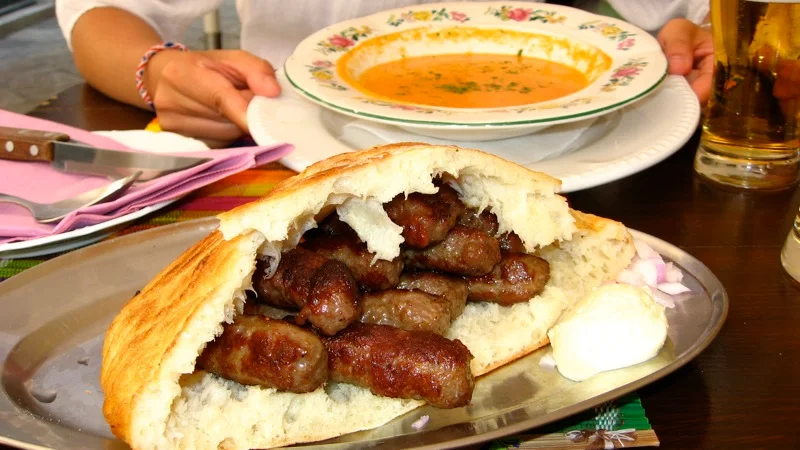
The single most important side is the bread, and the correct bread is somun (the Bosnian name) or lepinja (the Serbian and Croatian name) — a soft, slightly chewy flatbread about 15 to 20 cm across and 3 to 4 cm thick, with an open interior that traps steam. It is closer to a thick pita with a crumb than to a naan or a burger bun. The defining move is what happens at the grill: the bread is split, laid cut-side down over the coals for 30 to 60 seconds, and pressed lightly so it warms through and picks up rendered fat and smoke. Some grill men go further and dip the cut face directly into the drippings tray. That fat-soaked interior is the flavor most people miss when they eat cevapi outside the Balkans.
If you cannot get or bake somun, choose your substitute by mechanics, not appearance. You need a bread that is at least 2.5 cm thick, soft enough to compress, and absorbent enough to drink fat without disintegrating. A thick Greek-style pita — the kind used for gyros and souvlaki, without a pocket — is the best stand-in. A Turkish pide loaf works well too. Thin pocket pita fails because a 2 mm wall turns greasy and tears; a crusty baguette fails because it fights the soft texture of the meat instead of yielding to it.
Serve the bread hot, not warm. Once it cools, the crumb stops absorbing and starts smearing, and the sandwich eats cold-edged even when the meat is fresh off the fire. Practical rule: bread goes over the heat during the last minute of the cevapi cook, never before. If you are baking your own, the somun recipe on this site is built for exactly this job — high hydration, short bake, steam-soft crust.
Raw onion is non-negotiable
Every traditional cevapi plate carries raw onion, and the format is precise: yellow or white onion, chopped to a 3 to 5 mm dice — coarse enough to crunch, fine enough to spread through the sandwich. Figure a quarter to half an onion (about 40 to 60 g) per portion. It goes on the plate or straight into the somun next to the meat, always raw, never cooked, never pickled.
The onion has a chemical job, not just a textural one. Cevapi are made from fatty beef, often with lamb, and the finished pieces run around 20 to 25 percent fat. Raw onion's sharpness and moisture reset the palate between bites the same way pickled onion does on an adana plate or sumac onion does beside koobideh. Cook the onion and you remove the pungency that does the cutting; what is left is sweetness on top of rich meat, which makes the plate heavy by the third bite.
Two refinements are worth doing. First, chop the onion no more than 30 minutes before serving — after about an hour at room temperature the cut surfaces develop the harsh, sulfurous edge people wrongly blame on the onion variety. Second, if your onions are aggressively hot, rinse the dice in cold water for 30 seconds and drain well; this washes out some of the sulfenic acid bite without touching the crunch. Do not soak longer, or you flush the flavor along with the burn.
Kajmak: the dairy that outranks everything else
If you serve only one condiment, make it kajmak. It is a Balkan cultured cream — skimmed from slowly heated milk, layered, and lightly fermented — with roughly 60 percent fat and a taste between clotted cream, young butter, and mild feta. In Bosnia it is spooned into the somun with the hot cevapi so it half-melts into the bread. A serious portion is 30 to 50 g per person; it should be a presence, not a garnish.
Real kajmak is hard to find outside the Balkans, but a close stand-in is easy: mash 3 parts full-fat clotted cream (or mascarpone) with 1 part finely crumbled feta and a pinch of salt, then let it sit for at least 2 hours so the salt and lactic tang distribute. Cream cheese alone is too tart and too tight; sour cream is too thin and slides off the meat. The mixture should hold a soft peak at fridge temperature and slump at plate temperature.
Serve kajmak cool, just out of the fridge, and let the heat of the meat do the melting. Pre-warmed kajmak turns oily because its fat separates as it warms, and separated kajmak reads greasy instead of rich. This is the same logic as not warming the tzatziki you serve with gyros: the temperature contrast is part of the dish.
Ajvar: sweet pepper depth, and when to choose it over kajmak
Ajvar is the roasted red pepper relish of the Balkans, made from peppers charred at 220 to 240°C until fully blistered (25 to 30 minutes), peeled, milled, and cooked down slowly with oil until thick — traditionally with about 1 part eggplant to 4 or 5 parts pepper. Good ajvar is sweet, faintly smoky, and dense enough that a spoon stands a moment before falling. Jarred is completely acceptable; look for pepper listed first and only a modest amount of oil, and avoid anything padded out with tomato paste.
Choosing between ajvar and kajmak is a real decision, and the deciding variable is your meat. If your cevapi are all-beef and on the leaner side, choose kajmak — the plate needs the fat. If your cevapi are already rich, or you mixed in lamb, choose ajvar — sweetness and mild acidity balance fat better than more fat does. Serving both is common in restaurants and entirely correct at home; put them on opposite sides of the plate, because ajvar bleeding into kajmak makes both look tired.
Note what ajvar is not: it is not a hot sauce. Traditional ajvar ranges from fully mild to gently warm, and its job is depth, not fire. If you want genuine heat with grilled mince, that craving points you toward an adana kebab, which is built spicy from the inside, rather than toward drowning cevapi in chili.
Salad, cheese, and the honest role of fries
The classic salad alongside cevapi is šopska: tomato, cucumber, onion, and raw pepper in a rough 2:1:1:1 ratio, dressed with oil and a little vinegar, buried under a snowfall of grated white brine cheese (sirene or feta), about 50 g per serving. It works because it is cold, acidic, and wet — the three qualities the sandwich lacks. A plain cabbage salad, shredded fine and dressed with vinegar, salt, and oil at least 30 minutes ahead so it wilts slightly, is the winter equivalent and just as traditional.
Fries appear next to cevapi across the Balkans and there is no reason to pretend otherwise, but understand the trade: fries add starch to a dish that already has bread doing the starch job. If you serve fries, shrink the bread — half a somun instead of a whole one — or the plate becomes a carbohydrate slog. If forced to choose, the bread wins every time, because fries do not absorb meat fat the way a grilled somun does.
Skip anything with rice. Cevapi are a bread dish the way doner and gyros are bread dishes; rice belongs with plated skewers like shish kebab or koobideh, where the meat comes off the metal onto the plate rather than into a loaf.
Drinks: cold, plain, and slightly sour
The canonical drink is drinkable yogurt — plain, unsweetened, thin enough to pour, served well chilled, a glass per person. It does the same work as Turkish ayran next to a doner: lactic acid and cold temperature strip fat from the palate between bites. Make it at home by whisking 2 parts plain yogurt with 1 part cold water and a small pinch of salt.
Beer is the other traditional partner — a clean, cold lager, nothing hoppy or heavy, because bitterness stacks unpleasantly on char. Wine is genuinely awkward with cevapi; if you insist, a chilled, low-tannin red served at 12 to 14°C survives better than anything white. What you should not serve is sweet soda, which coats the palate with sugar exactly where you want acid.
Building the plate: order of operations
Timing is where home cevapi plates fall apart, so work backwards from the meat. Chop the onion and dress the salad up to 30 minutes ahead. Take the kajmak out of the fridge 10 minutes before serving so it spreads without warming through. Grill the cevapi — 8 to 10 minutes over medium coals, turning them occasionally — and in the final minute, split the somun and press it cut-side down over the grill next to the meat.
Assembly, in order: hot bread opened on the plate, kajmak spread on the bottom face if using it, 5 to 10 cevapi laid in, onion scattered over the meat, ajvar on the side of the plate for dragging. Do not close and press the sandwich like a burger; it is eaten half-open, torn, and dipped. And do not rest the meat — cevapi are small enough that carryover is irrelevant, and the whole dish is designed around grill-to-bread heat. A cevap that sits 10 minutes has already lost the plate.
The mistakes that actually ruin the plate
Cold bread is the biggest one. Room-temperature somun does not absorb; fat sits on the surface of the crumb instead of soaking in, so the first bite is greasy and the last is dry. The fix costs 45 seconds over the grill. Related: toasting the bread hard until it crisps. A crisp crust physically blocks absorption — you want it hot and soft, not browned and rigid.
Cooked or marinated onion is the second. Caramelized onion, sumac onion, pickled rings — all good on other plates, all wrong here, because each removes the raw pungency that balances 20-plus percent meat fat. If someone at the table cannot eat raw onion, give them extra ajvar rather than cooking the onion for everyone.
Condiment errors round out the list. Warming kajmak splits it into oil and curd. Substituting tzatziki or garlic sauce drags the plate toward gyros and doner and buries the mild, beefy profile that makes cevapi distinct — the meat carries only a little garlic, worked in as garlic water, and almost no spice beyond salt and pepper, so a loud sauce erases it. And hot sauce on the plate is a category error: cevapi were never a spicy dish, and heat masks exactly the clean grilled-beef flavor you spent effort building. Finally, portion drift: fewer than 5 pieces in a whole somun makes a bread sandwich with meat garnish. Match bread to meat — half a loaf for 5 pieces, a whole one for 10.
Sources and further reading
- Kajmak from the Sheepskin Sack — Slow Food Foundation (Ark of Taste)
- Ćevapi — Wikipedia
- 4 places for the best cevapi in Sarajevo — Boston.com
- Pepper season in the Balkans means it's 'Ajvar' sauce production time — Euronews (AFP)
Cook These Next
Related Collections
Balkan Kebab Recipes: Cevapi, Somun, Lepinja, Raznjici
Compare Balkan kebab recipes, breads, and serving traditions including cevapi, somun, lepinja, raznjici, onion garnish, ajvar, and kajmak.
Best Bread for Kebab, Shawarma, and Gyros
Learn which bread to use for kebab wraps, gyros, shawarma, doner, and grilled meat plates, including lavash, pita, pide, somun, lepinja, and durum.
More Guides
Meat guide
Best Cut For Shish Kebab
Choose the best cut for shish kebab with a practical guide to lamb, beef, and chicken options, cube size, fat balance, and what actually stays juicy on skewers.
Technique guide
How To Marinate Kebab Properly
Learn how to marinate kebab without making the meat mushy, watery, or flat, with clear guidance for chicken, lamb, beef, and yogurt-based marinades.
Heat guide
What Temperature to Cook Kebab
The heat each method needs, from charcoal to oven, and the internal temperature that makes chicken, minced and cubed kebabs safe: 74 °C, 71 °C and 63 °C with a rest.
Serving guide
Best Onion Salad For Kebab
Build the right onion-and-sumac side for kebab, Adana, Urfa, doner, and cevapi with a guide to slicing, seasoning, resting, and balancing sharpness.
Technique guide
How To Shape Minced Kebab On Skewers
Shape Adana-style, koobideh, and seekh kebabs correctly with better hand pressure, skewer coverage, thumb patterning, and grill-ready thickness.
Sauce guide
Best Yogurt Sauce For Gyro And Kebab
Compare tzatziki-style, Turkish-style, and garlic-yogurt sauces for kebab wraps and plates so you know which cooling sauce fits each meat and bread style.
Keep cooking
New to kebab? Start with our step-by-step kebab guide, then read about satti, kokorec or donair vs shawarma.
Comments
Cooked it, changed something, or spotted a mistake? Say so here. Every comment is read before it is published.