Kebab lives or dies on two temperatures, and most advice only ever tells you about one of them. The surface of the meat needs to pass roughly 140 to 150 °C fast, because that is where real browning chemistry begins; the center needs to land on a number that depends entirely on what is on the skewer — 74 °C for chicken, 71 °C for anything minced, as low as 55 °C for a cube of good lamb. Every kebab failure you have ever produced is one of those two numbers going wrong.
Heat guide
What Temperature To Cook Kebab
Get the right cooking temperature for kebab on charcoal, gas, grill pan, and oven so minced and chunked kebabs brown properly without drying out.
By Ali Ocak
Updated 2026-09-09
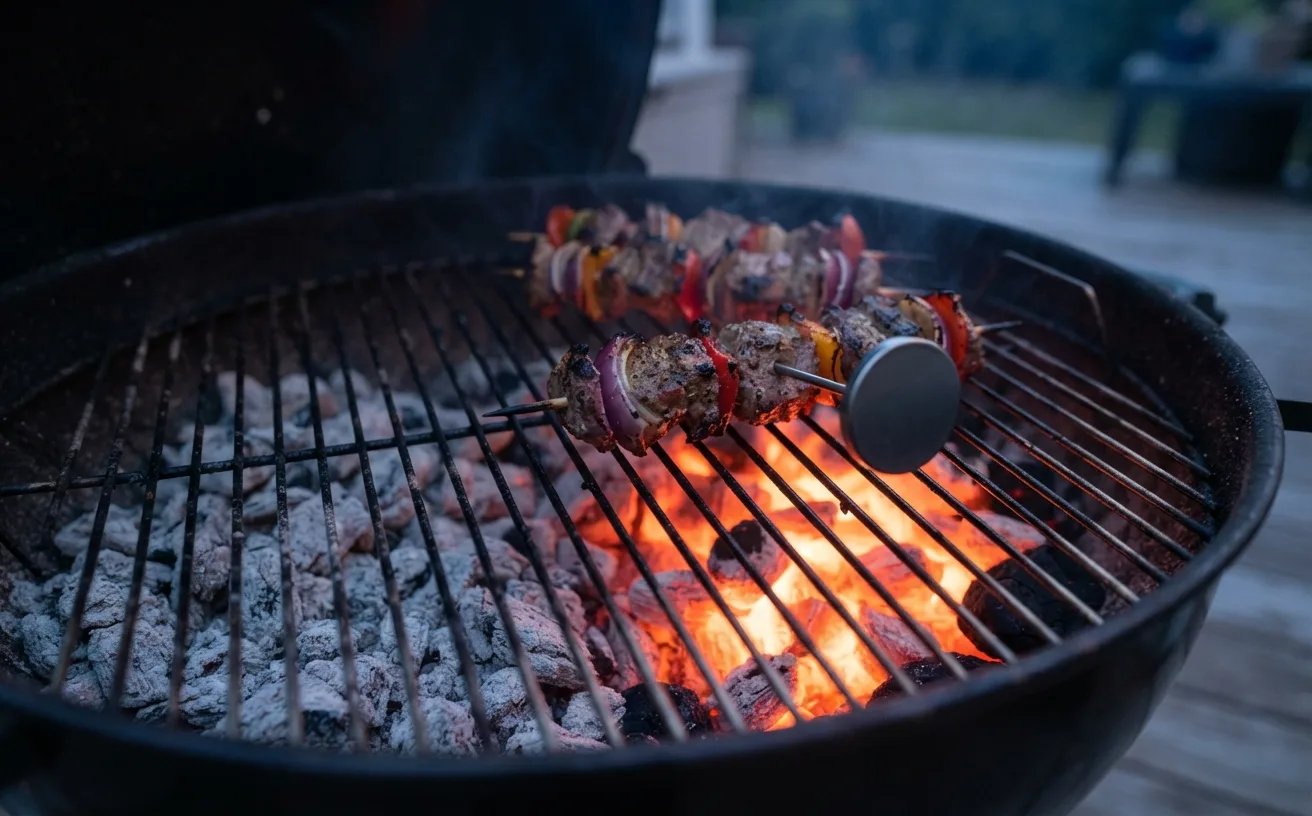
The reason kebab is less forgiving than a steak is geometry and fat. A skewer of adana or koobideh is a thin cylinder of 20-plus percent fat that starts melting around 40 to 45 °C — if the outside has not set into a crust by the time the inside warms, that fat leaks into the fire instead of basting the meat, and the skewer literally falls apart. A cube of souvlaki pork is the opposite problem: small, lean-ish, and done in the middle long before a lazy fire can color the outside.
So this guide is organized the way the decision actually works: first the fire itself — charcoal, gas, pan, broiler, with real numbers for each — then the internal targets by meat, then the specific handling that minced kebabs demand and chunked kebabs do not. A cheap instant-read thermometer makes all of it repeatable; the hand test covers you until you buy one.
The fire: how hot, measured honestly
For almost every kebab, the cooking zone at grate level should be in the 230 to 290 °C band — what grillers call high heat. The honest field measurement is the hand test: hold your palm 10 centimetres above the grate, and if you can keep it there only 2 to 3 seconds, you are in the zone. Four to five seconds is medium, and medium is where kebabs go gray. Five-plus seconds means you are steaming meat, not grilling it, and no amount of turning will fix that.
Charcoal earns its reputation here because it delivers radiant heat, not just hot air, and radiant heat browns a surface faster at the same air temperature. Light a full chimney, wait 20 to 30 minutes until every coal is ashed over gray — flames licking up mean unburned volatiles and soot on your meat, not flavor — then rake the coals into a bed 8 to 15 centimetres below the grate. A Turkish mangal sits shallow, around 8 to 12 centimetres, precisely because adana wants that close radiant blast.
Always build two zones: bank two-thirds of the coals on one side, leave the rest thin or bare. The hot side sets and colors; the cool side finishes anything thick and gives you somewhere to go when fat flares. A single uniform fire is the setup of someone who has decided in advance to burn the outside or undercook the inside, whichever comes first.
Internal targets: the number by meat, not by guesswork
Minced kebabs — adana, cevapi, koobideh, seekh — cook to 71 °C in the center, full stop. Grinding distributes surface bacteria through the whole mass, so the medium-rare logic of whole muscle does not apply. The good news is that a properly fatty mince at 20 to 25 percent fat is still juicy at 71 °C; a lean mince is dry at any temperature, which is why the fix for dry cevapi is in the grinder, not on the grill.
Chicken goes to 74 °C. Breast meat on a tawook skewer should be pulled at 71 to 72 °C and rested — carryover in a 3-centimetre cube adds 2 to 4 °C and lands you exactly on target, while cooking to 74 on the fire lands you at 77 and toward sawdust. Thigh is the forgiving cut: its collagen actually improves up to 80-plus °C, which is why thigh tawook and home doner are so much harder to ruin than breast.
Whole-muscle lamb and beef are where you have real choice. Pull lamb shish at 55 to 57 °C for medium-rare, 60 to 63 °C for medium; beef the same. Pork souvlaki is safe at 63 °C with a 3-minute rest — the old 71 °C pork rule is decades out of date and responsible for generations of dry souvlaki. In every case, measure through the side of the cube into its center; stabbing down from the top reads the hot surface and lies to you by 10 degrees.
Minced kebab: the first two minutes decide everything
Adana, koobideh, and cevapi have one make-or-break window: the first 90 to 120 seconds on the fire. The outside must set into a firm skin before the interior fat — which softens from about 40 °C — turns liquid. Onto a proper hot zone, that set happens fast; onto a weak fire, the fat melts first, the meat slackens, and the mass rotates on the skewer or drops into the coals. When a kebab falls off the skewer, cooks blame the binding; nine times out of ten the real culprit is the fire, or meat that went on warm instead of fridge-cold.
The rhythm after the set: turn every 60 to 90 seconds, total cook 8 to 12 minutes for a standard flat-skewer adana pressed to about 1.5 centimetres thick. Frequent turning is correct for minced kebabs — it builds crust evenly and keeps rendering fat distributed instead of pooling and flaring on one side. What is not correct is touching the skewer in the first minute and a half. Set first, then turn.
Flare-ups are the tax on 20-percent-fat meat over live coals, and the answer is movement, not water. Slide the skewer to the cool zone for 20 to 30 seconds, let the flame die, come back. Spraying water throws ash onto the meat and drops your coal temperature; a two-zone fire makes the whole problem a non-event. This is also the argument for skewers over a grate for minced kebabs: fat drips clean between coals instead of pooling on hot metal.
Chunked kebab: hot fire, patient hands
Shish, souvlaki, and tawook invert the rules. Cubes tolerate — and want — less frequent turning: 4 sides, roughly 2 to 3 minutes per side over high heat, 8 to 12 minutes total for 3-centimetre cubes. Each face needs uninterrupted contact with radiant heat to pass 140 °C and brown; a cube turned every 30 seconds spends its whole life below crust temperature on every face at once.
Cube size is a temperature decision, not a presentation one. At 2 centimetres, the center outruns the crust and you get browned outside, overdone inside — acceptable for thigh, fatal for breast or lean lamb. At 4-plus centimetres the crust is done minutes before the center, so you need the two-zone move: sear on high, finish on the cool side. Three centimetres is the size at which crust and center finish together over a single hot zone, which is exactly why it is the traditional cut.
One skewer, one ingredient. Onion and pepper wedged between meat cubes look generous and cook terribly — vegetables release water, the steam caps the neighboring meat surfaces at 100 °C, and you get pale meat welded to charred peppers. Give vegetables their own skewer over the same fire and everything on the plate hits its own correct temperature.
No charcoal: the real numbers for gas, pan, and broiler
Gas grill: close the lid and preheat 10 to 15 minutes until the thermometer reads 260 °C or better, then cook with the lid open. Gas radiates less than charcoal at the same reading, so err hotter than feels reasonable and preheat the grates themselves — most gas-grill kebab failure is a 5-minute preheat onto cold cast iron. Keep one burner low or off as your cool zone.
Grill pan or cast-iron skillet: this is the best indoor option for cevapi and koobideh, honestly better than most gas grills for small formats. Preheat the dry pan 4 to 5 minutes over high until a drop of water skitters and vanishes instantly — that is a 200-plus °C surface — then film it with a high-smoke-point oil and lay the kebabs in with a full finger-width between them. Crowding is the killer: each cold kebab drops the pan temperature, the gaps fill with steam, and the batch boils in its own juices. Two batches with a reheat between beats one gray batch every time.
Broiler: preheat the element a full 10 minutes with the rack positioned so the meat sits 5 to 8 centimetres below it, and leave the oven door cracked if your model cycles the element off when hot. The broiler is pure radiant heat from one side, so it is effectively a one-sided charcoal fire — turn once at the halfway mark and expect 4 to 6 minutes per side for minced kebabs. What you must not do is bake kebabs at 180 °C on a middle rack; that is a meatloaf program, and gray, crustless meat is its guaranteed output.
Doner and gyros at home: a two-temperature problem
The vertical spit at the kebab shop is doing something a home oven cannot: holding the outer 3 to 4 millimetres of a rotating cone at crisping temperature while the mass behind it stays barely warm, shaving the cooked layer off, and exposing the next. At home you replicate it in two stages instead of one. Stage one: pack the seasoned doner or gyros meat into a loaf, and roast at 180 to 200 °C to an internal 71 °C — about 40 to 50 minutes for a loaf the size of a standard bread tin — then rest it 15 minutes, or better, chill it fully.
Stage two is where the shop flavor actually comes from: slice the loaf as thin as your knife allows, 2 to 3 millimetres, and crisp the slices in a screaming-hot dry pan or under the preheated broiler for 60 to 90 seconds until the edges brown and frizzle. The slice-then-crisp step is not optional garnish — the browned edges are the identity of doner and gyros, and a loaf served straight from the oven in thick slabs tastes like spiced meatloaf because, at that point, it is one.
The chilled-loaf version is the pro move for a crowd: roast a day ahead, refrigerate, and the firm cold loaf slices to 2 millimetres cleanly where a warm one smears and tears. Crisping from cold takes only 30 extra seconds and the texture is closer to the cone than anything you can produce same-day.
Where kebabs actually go wrong, and the mechanism each time
Gray meat with no crust: the surface never passed 140 °C. Either the fire was medium when it needed to be high, the meat went on wet — water pins the surface at 100 °C until it boils off — or the pan was crowded into a steam bath. The fix is never more time; more time on weak heat just moves the center past its target while the outside stays pale. Hotter fire, drier surface, more space.
Burnt outside, raw inside: heat correct, distance or size wrong. Coals too close, cubes too big, or a sugar-heavy marinade scorching from 160 °C before the center moves. Raise the grate, cut to 3 centimetres, sear-then-finish on the cool zone, and save sweet glazes for the last 2 to 3 minutes.
Adana or seekh sliding off the skewer mid-cook: the fat melted before the crust set. Warm meat, weak fire, or a round thin skewer where a wide flat one was needed. Meat goes on fridge-cold, fire at the 2-to-3-second hand-test level, and the first turn waits a full 90 seconds. Binding with egg or breadcrumbs treats the symptom and changes the texture; cold meat plus a hot fire cures the disease.
Dry chicken and dry lean mince: an internal overshoot, almost always from cooking to the final number on the fire instead of pulling early for carryover, or from stabbing the thermometer down through the top and reading the surface. Pull breast at 71 to 72 °C, probe horizontally, and rest every skewer 3 to 5 minutes before serving — the rest lets temperature equalize and juices thicken enough to stay in the slice instead of on the board. The rest is part of the cook time, not an afterthought.
Cook These Next

Lamb / 45m
Adana Kebab
The spicy gold standard of Turkish BBQ. Hand-minced lamb with tail fat.
Beef / 24h
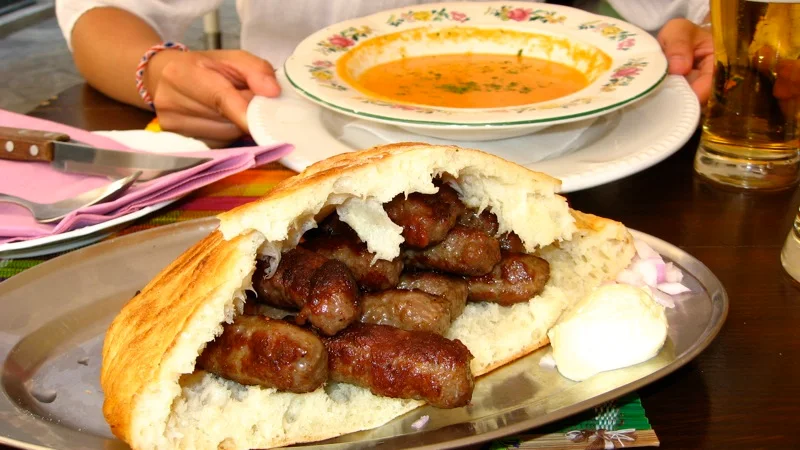
Cevapi (Cevapcici)
Small skinless grilled thick sausages. The soul food of the Balkans.
Beef / 1h
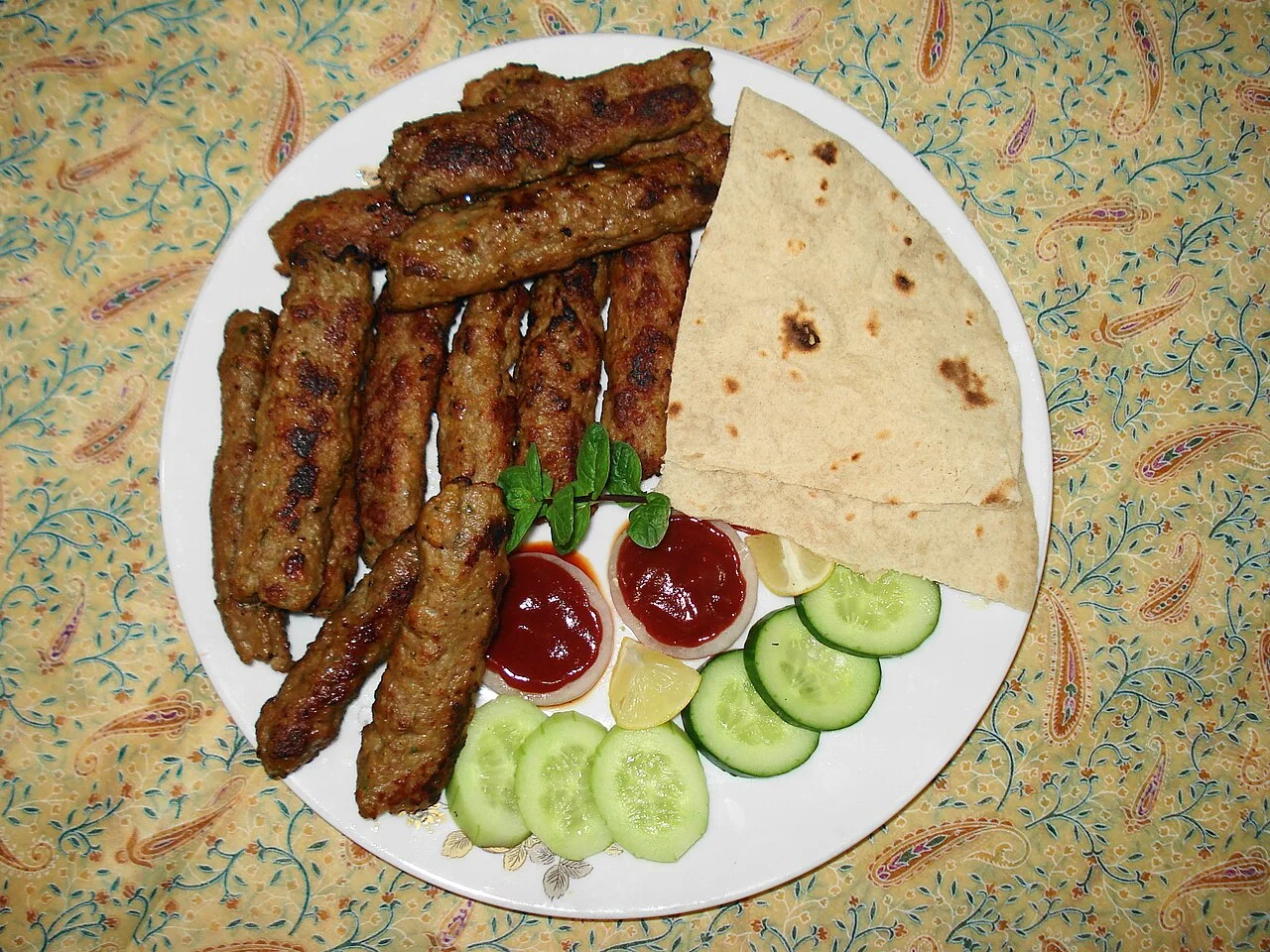
Seekh Kebab
Spiced minced meat cylinders cooked in a Tandoor.
 AI illustration
Chicken / 6h
Shish Tawook
Levantine grilled chicken skewers. White marinade of yogurt, lemon, and garlic.
Related Collections
Turkish Kebab Guides
A focused collection for Turkish kebab styles including Adana, Urfa, Cag, Iskender, and supporting bread pages.
Indian Kebab Recipes
A collection of Indian kebab styles, from seekh and galouti to boti, reshmi, and green-marinated skewers.
Gyros, Shawarma, and Donair Guide
Compare gyros, shawarma, donair, souvlaki, and tawook with bread pairings, sauce choices, wrap assembly, and serving ideas.
More Guides
Serving guide
Best Onion Salad For Kebab
Build the right onion-and-sumac side for kebab, Adana, Urfa, doner, and cevapi with a guide to slicing, seasoning, resting, and balancing sharpness.
Technique guide
How To Shape Minced Kebab On Skewers
Shape Adana-style, koobideh, and seekh kebabs correctly with better hand pressure, skewer coverage, thumb patterning, and grill-ready thickness.
Sauce guide
Best Yogurt Sauce For Gyro And Kebab
Compare tzatziki-style, Turkish-style, and garlic-yogurt sauces for kebab wraps and plates so you know which cooling sauce fits each meat and bread style.
Terminology guide
Kebab Vs Kabob Vs Kabab
Understand the difference between kebab, kabob, and kabab spellings, what people usually mean by each, and which dishes fall under the broader kebab family.
Serving guide
Best Side Dishes For Kebab
Serve kebab better with the right sides, salads, rice, pickles, breads, and sauces for wraps, plates, Turkish grills, Balkan spreads, and shawarma-style meals.
Comparison
Shashlik vs Shish Kebab: Meat, Marinade, Cut and Fire Compared
How shashlik differs from shish kebab: the shared şiş root, 4-5 cm pieces vs 3 cm cubes, vinegar or kefir marinades, the mangal fire, and which one to cook.