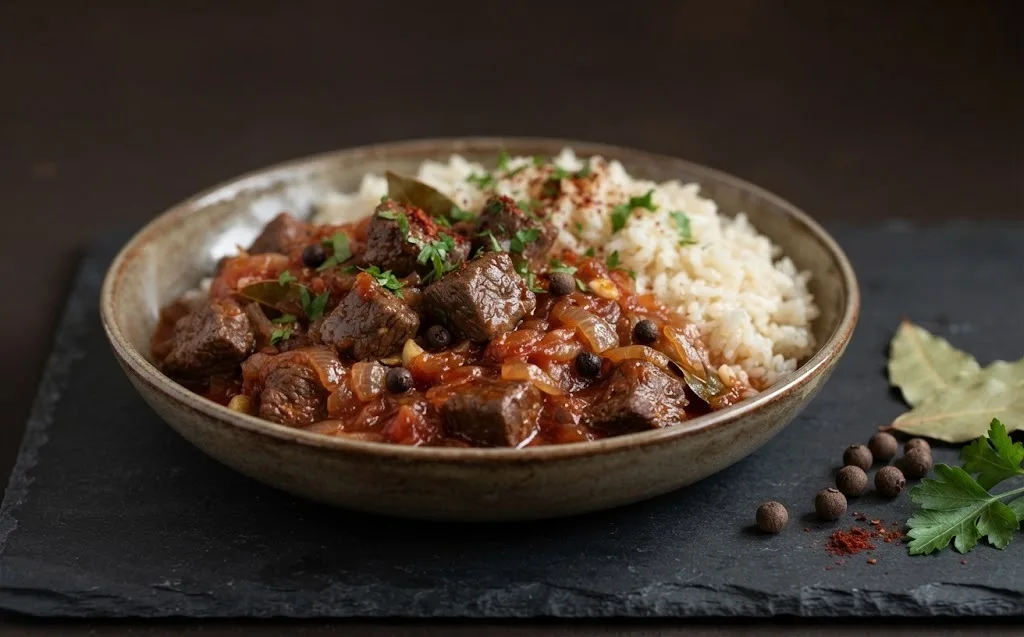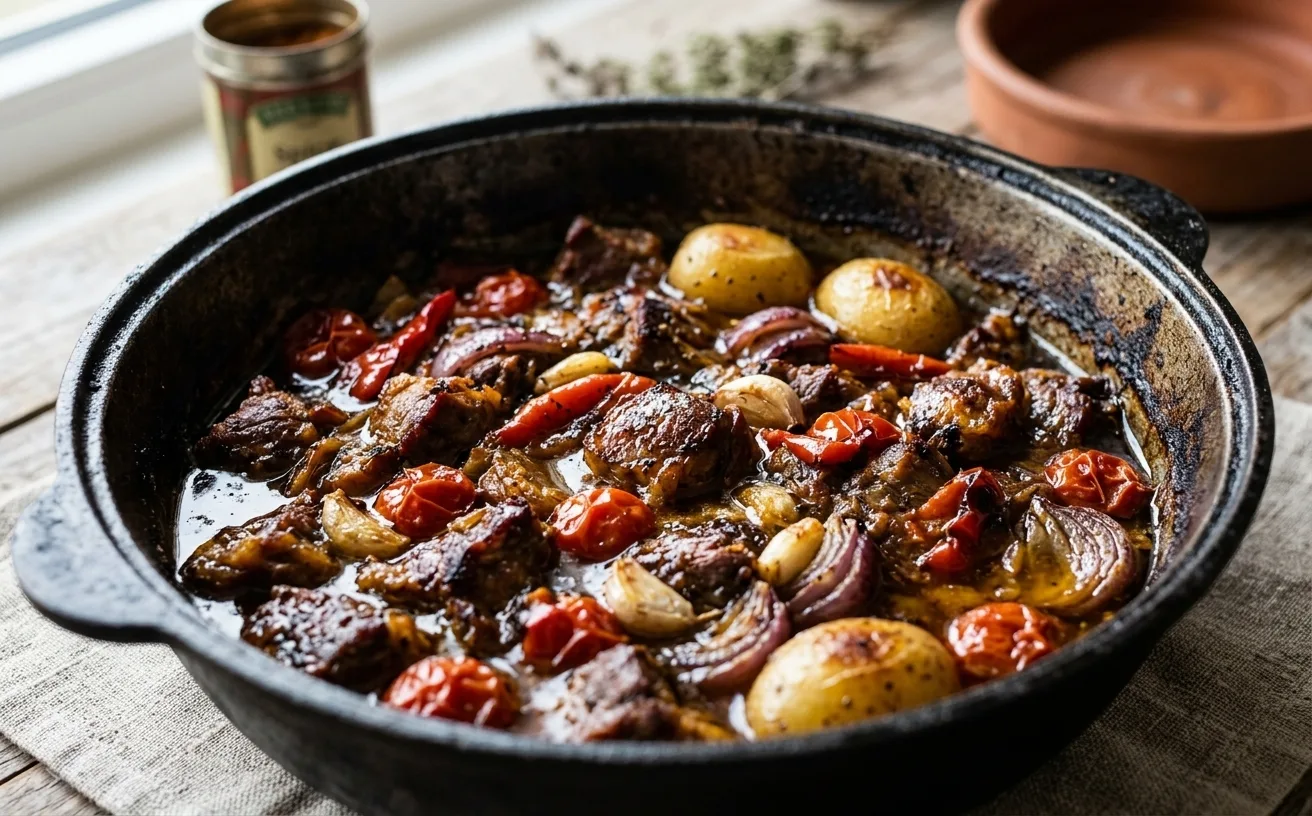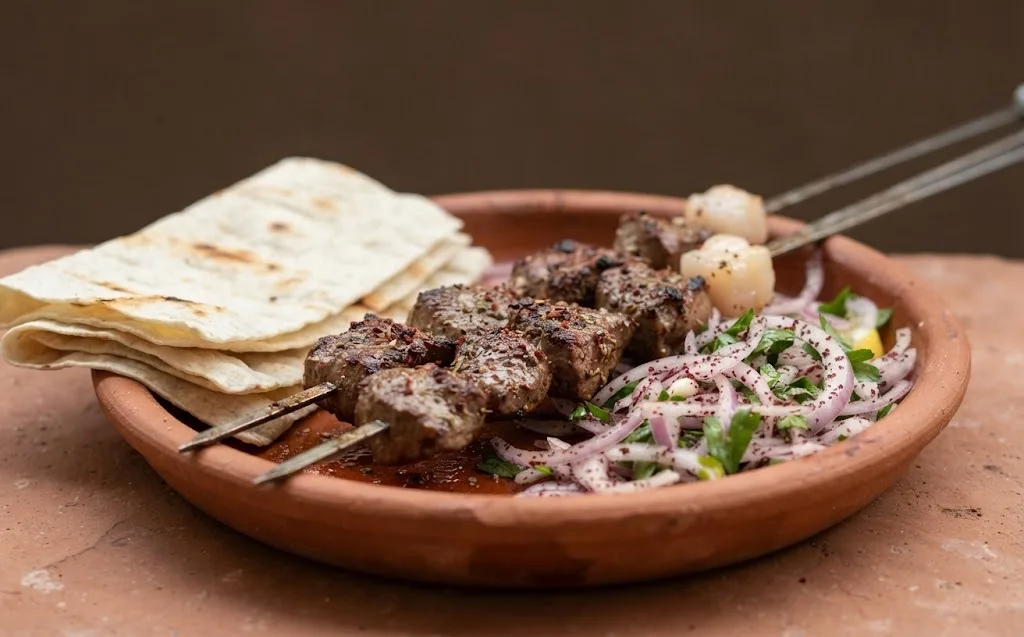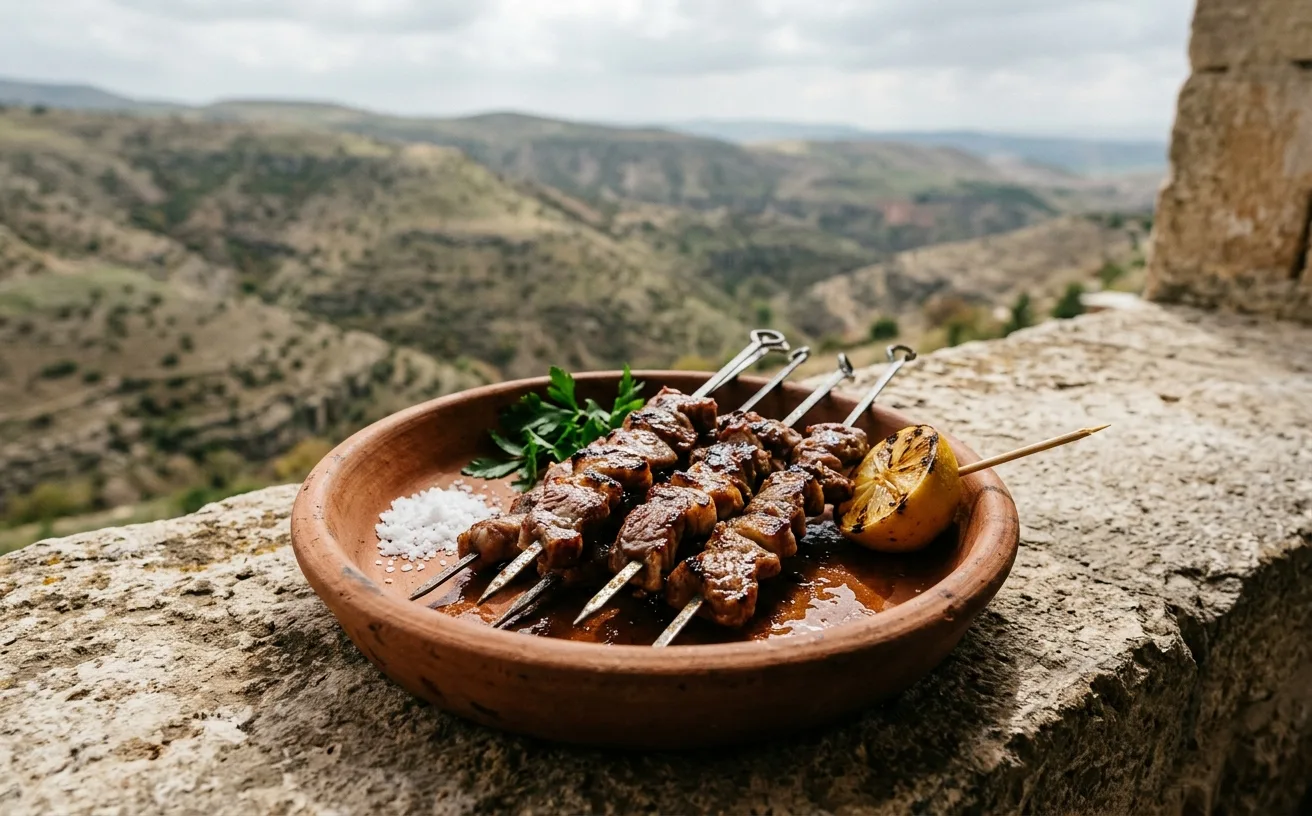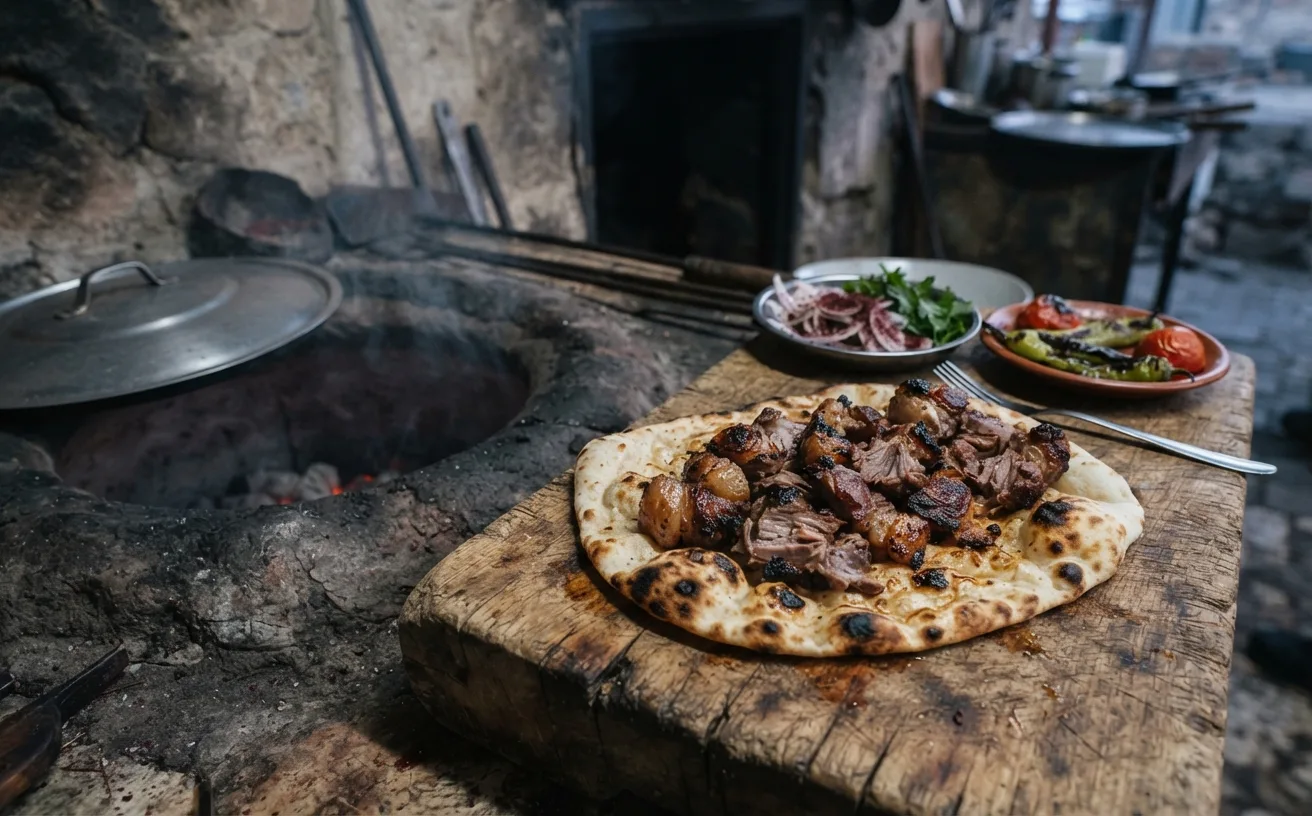
The pit-roasted lamb of Siirt and Bitlis: whole carcass halves hung in a covered well oven over embers, steaming and roasting at once until the fat crisps. It is traditionally a morning food, sold by weight on flatbread.
Also known as büryan, Siirt büryan, Bitlis büryan.
Ingredients
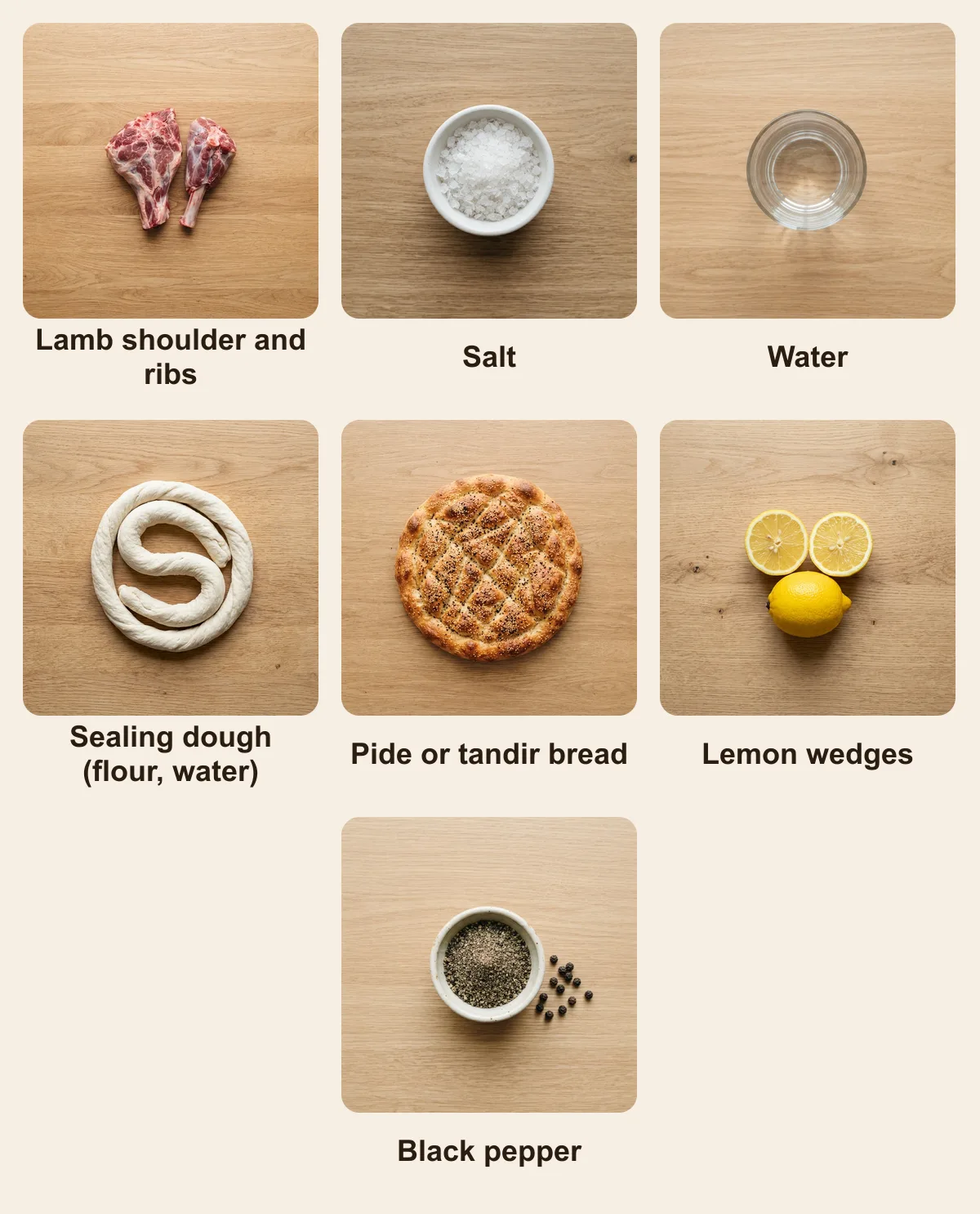
- 2 kg lamb shoulder and ribs, on the bone
- 25 g salt
- 250 ml water
- 150 g flour + 80 ml water, for a sealing dough
- 3 large pide or tandir breads
- 1 lemon, in wedges
- 1 tsp black pepper, freshly ground
How to make it
- 1
Massage the salt into the lamb and set it on a rack inside a deep lidded pot with the water beneath.
- 2
Roll the flour paste into a rope and press it around the rim, sealing the lid completely.
- 3
Cook at 150 C for 3.5-4 h; the trapped steam and slow heat do the work of the covered well.
- 4
Break the seal, lift the heat to 240 C and give the meat 12 min uncovered for its browned crown.
- 5
Chop through the bone into serving chunks and pile onto warm bread with the pan juices, pepper and lemon.
Pro tip: Do not skip the dough seal; buryan is defined by meat that steams and roasts at once, and a loose lid loses the steam half.
Where Buryan Kebab comes from
Büryan belongs to Siirt in Turkey's south-east, with a close relative in Bitlis, and it is one of the country's most distinctive pit dishes. Halves of lamb carcass are hung inside a deep well oven over embers, the mouth is sealed, and the meat cooks suspended in its own atmosphere for hours.
It is traditionally a morning food. Büryan shops in Siirt open before dawn and are frequently sold out by mid-morning, and eating it at breakfast is not an eccentricity but the norm. The dish is sold by weight on flatbread, and the queue at 7am is a genuine feature of the city.
How Buryan Kebab is cooked
The well is heated with wood until the walls glow, then the fire is reduced to embers at the base. The lamb hangs on iron hooks so that no part touches the wall or the coals, and a tray beneath catches the rendering fat, which is used to make perde pilavı or simply poured over the meat.
The seal at the top is what makes büryan büryan. With the mouth closed, the shaft holds smoke and steam together, and the lamb cooks by radiant heat in a humid chamber for around three hours. The fat crisps on the outside while the interior stays wet — a combination that an open fire cannot produce.
Ingredients and shopping
The lamb must be young; Siirt cooks are specific about this, and older mutton in this method turns strong rather than sweet. Nothing is added but salt. There is no marinade, no rub, and no basting, which puts all the responsibility on the animal and the fire.
A domestic version is possible in an oven with a deep roasting tin: bone-in shoulder or leg on a rack, a little water in the tray to create steam, tightly covered, three and a half to four hours at 150°C, then uncovered at 240°C for twelve minutes. It is not büryan, but it follows the same three rules — suspended meat, trapped moisture, rendered fat caught below.
How Buryan Kebab is served
It is weighed, laid on flatbread and served plain with raw onion and sometimes a little of the rendered fat spooned over. Büryan is very often eaten with perde pilavı, the Siirt rice baked in a pastry dome, and the pairing is the local definition of a proper meal. No sauce, no salad, no ceremony — just meat, bread and onion, at breakfast.
Common mistakes
Letting the meat touch the heat source
The whole method depends on radiant heat and hanging. Contact with a hot surface fries and toughens the underside.
Opening the oven repeatedly
Every opening releases the steam that keeps it moist. Seal it and leave it alone.
Discarding the rendered fat
In Siirt that fat is a prized ingredient. Keep it for rice, or pour it back over the sliced meat.
Using mutton
Older meat becomes assertive under three hours of enclosed cooking. Young lamb is not a preference here but a requirement.
Buryan Kebab: questions and answers
Is büryan the same as kuyu kebab?
They are close cousins — both hang lamb in a sealed pit. Büryan is the Siirt and Bitlis version, traditionally eaten in the morning and served by weight on flatbread.
Why is büryan eaten for breakfast?
The pit is loaded overnight and opened early, so it is ready at dawn. Shops sell out by late morning, which made it a breakfast food by logistics rather than by design.
Can I cook büryan in a normal oven?
You can approximate it: lamb on a rack over a tray with a little water, tightly covered at 150°C for around four hours, then uncovered hot to crisp the fat.
Sources and further reading
- Büryan — Vikipedi (Wikipedia tr)
- Büryan Kebabı, Pit BBQ in Istanbul's Fatih Neighborhood — Culinary Backstreets