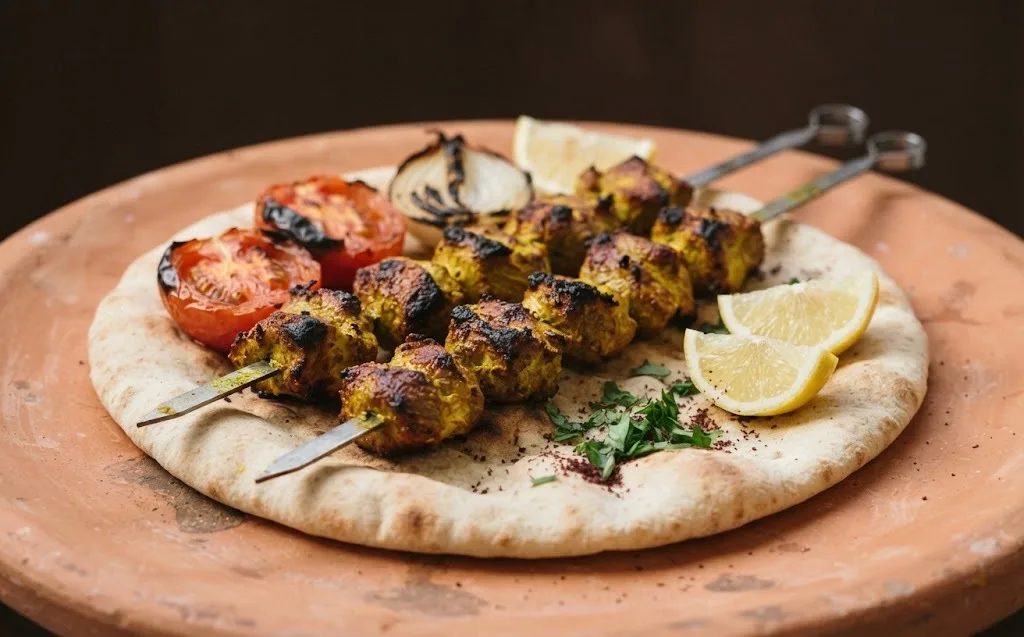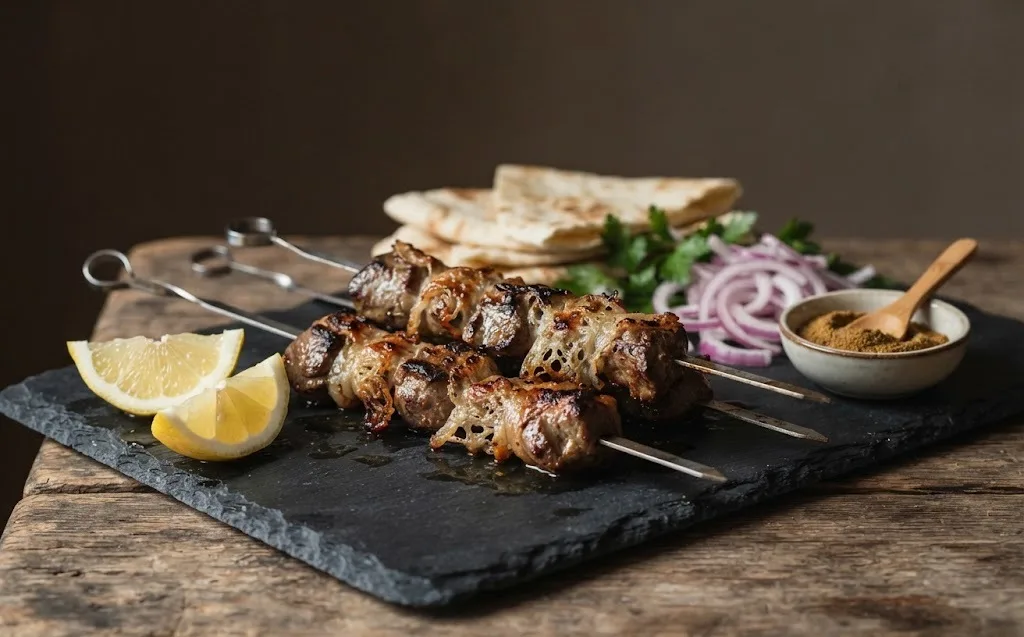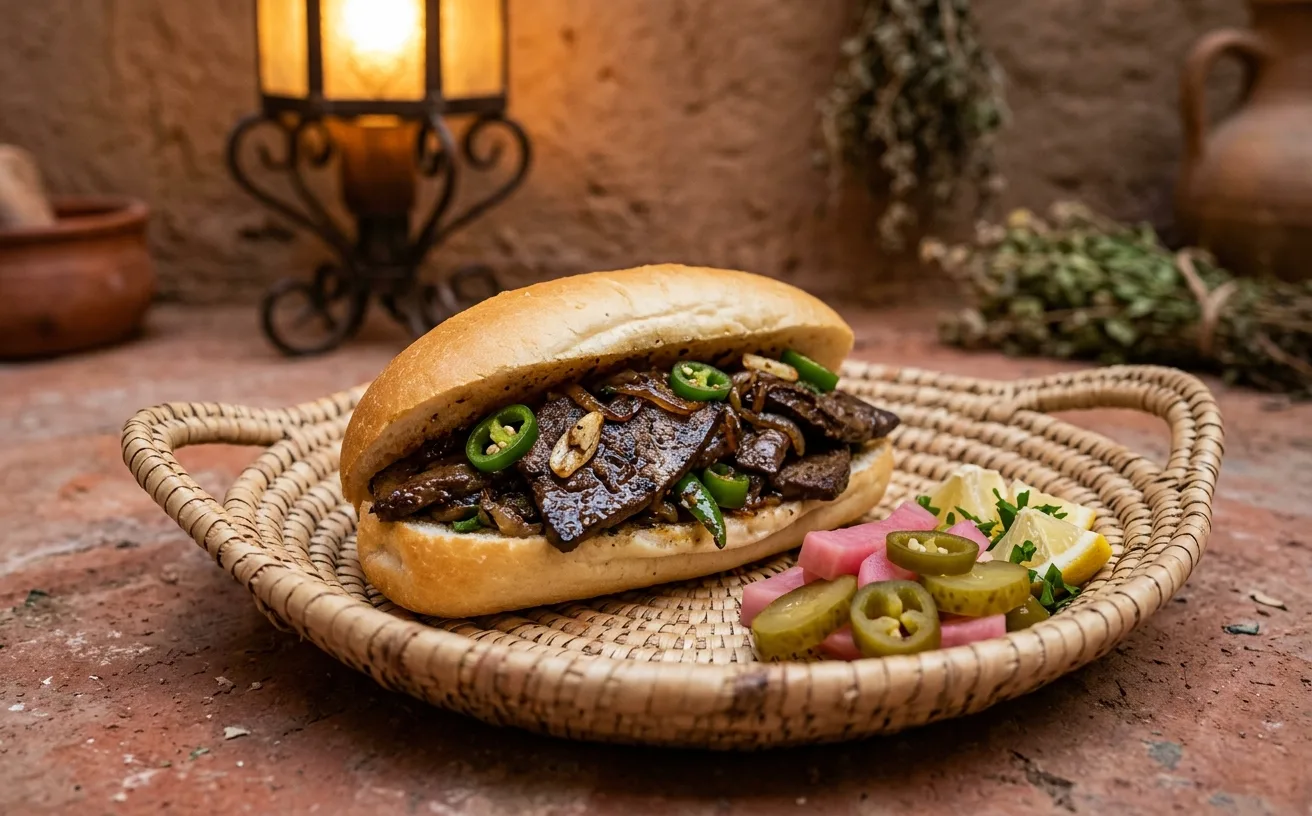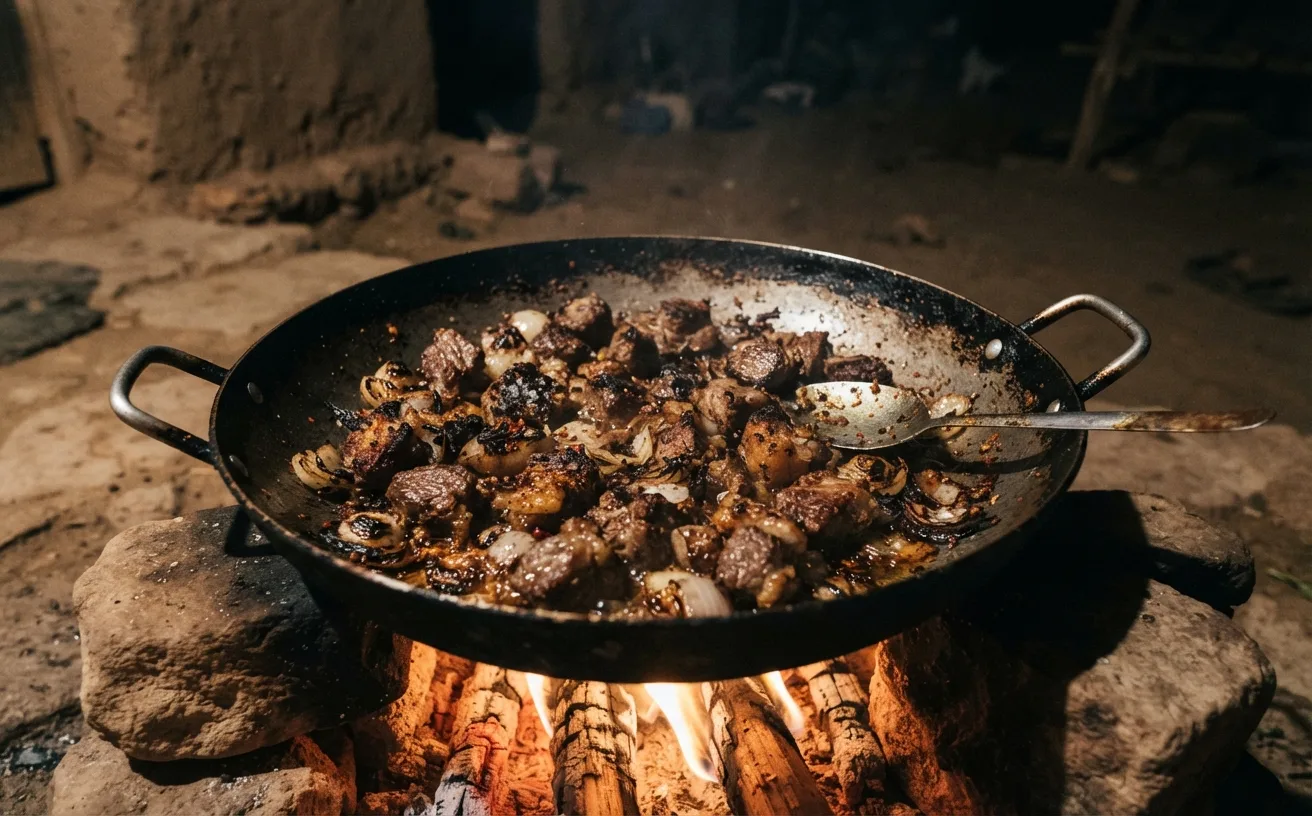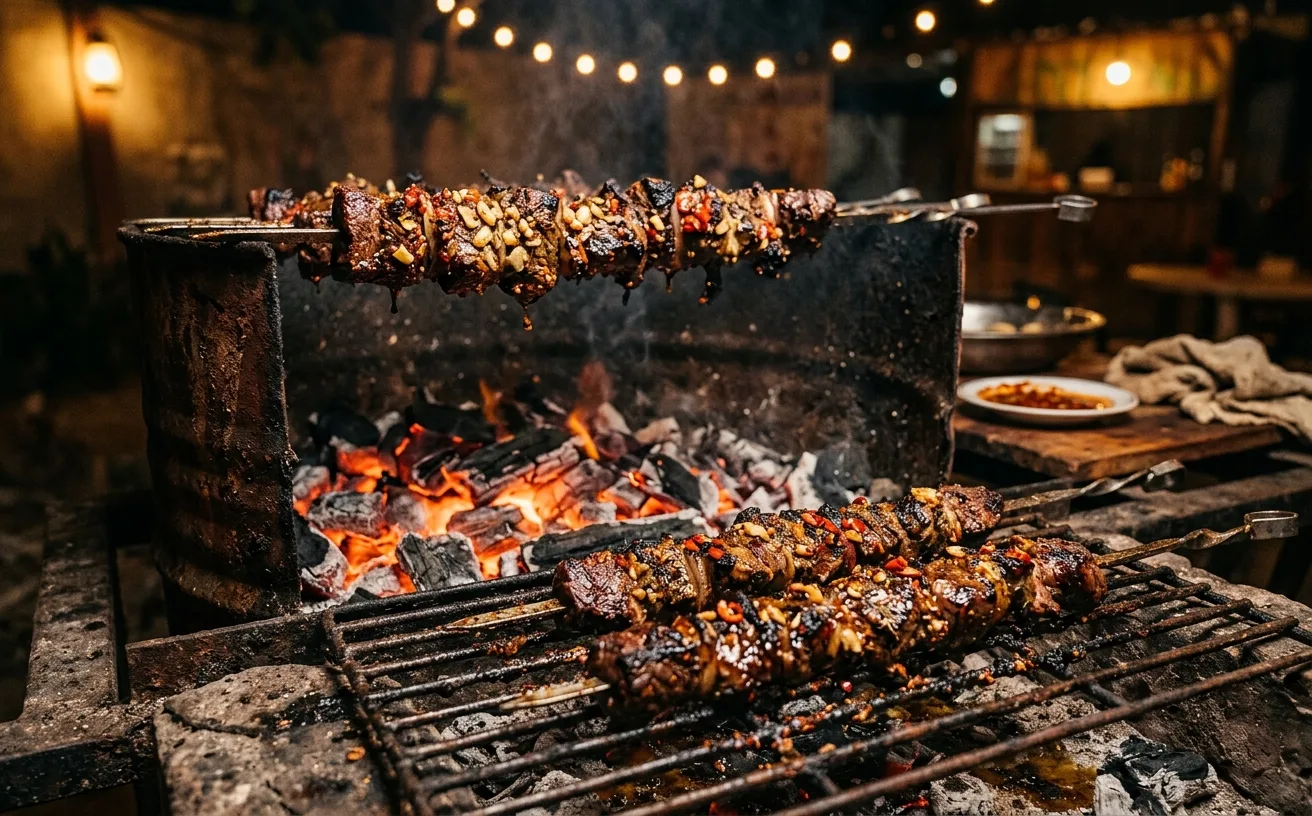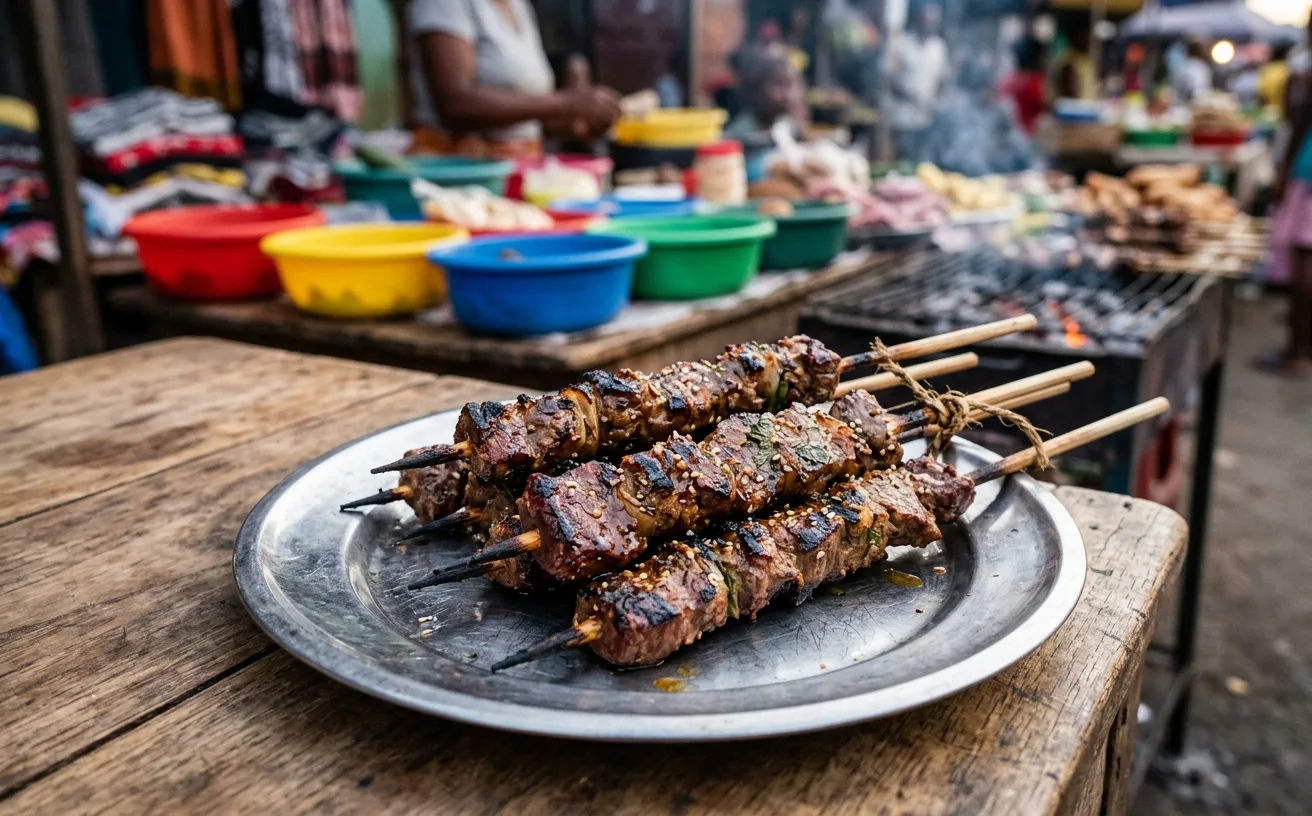
Madagascar's street skewer of zebu beef, marinated in ginger, garlic, and sometimes a touch of sugar, grilled over charcoal and sold in bunches by evening vendors. The lean, distinctive flavor of humped zebu cattle makes it unlike any mainland African brochette.
Also known as mosakiky, masikita zebu, Malagasy zebu skewers.
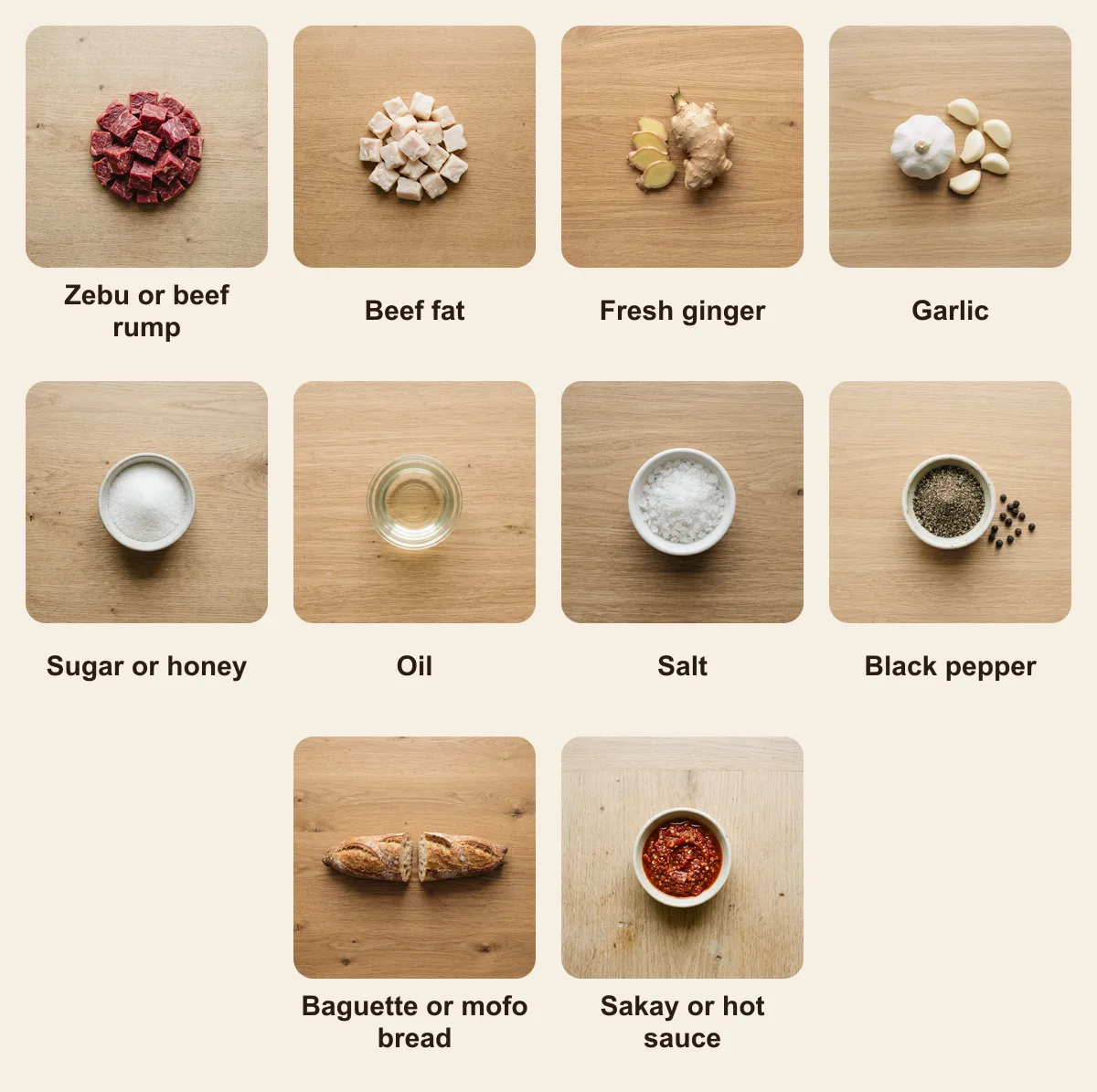
Ingredients
- 600 g zebu or lean beef rump, in small 2 cm cubes
- 100 g beef fat (zebu hump fat where available), in small cubes
- 1 tbsp grated fresh ginger
- 3 garlic cloves, crushed
- 1 tbsp sugar or honey
- 2 tbsp oil
- 1 tsp salt
- 1/2 tsp black pepper
- baguette or mofo bread, to serve
- sakay (Malagasy chili paste) or hot sauce
How to make it
- 1
Stir the ginger, garlic, sugar, oil, salt and pepper into a wet rub and massage it through the beef; rest 1 hour.
- 2
Pack the little cubes onto short bamboo sticks, four or five per skewer, with a piece of fat after every three cubes, Antananarivo street-size.
- 3
Grill fast over hot coals 6-8 minutes, rolling often — the sugar should caramelise into dark freckles, never solid black.
- 4
Eat straight off the stick with bread and a cautious smear of sakay.
Pro tip: That spoonful of sugar is Madagascar's tell: watch for deep amber spotting and pull the skewers the moment it appears.
Where Masikita comes from
In the north and on Nosy Be the same dish goes by mosakiky, and the regional naming reflects the island's linguistic patchwork.
Zebu — the humped cattle that are central to Malagasy economy, ritual and identity — is what makes it distinctive. The meat is leaner and more strongly flavoured than European beef, and a Malagasy skewer eats differently from any mainland African brochette for that reason alone.
How Masikita is cooked
Zebu is lean and worked, and the marinade compensates. Ginger and garlic in quantity, a little oil, and often a small amount of sugar or honey — the sugar helps the surface caramelise on a lean cut that would otherwise stay pale and dry.
The pieces are cut small, around two centimetres, and grilled fast over hot charcoal so the exterior chars before the lean interior has time to dry. Vendors grill continuously and sell in bunches of several skewers, which suits the fast cook.
Ingredients and shopping
Zebu where available; otherwise a lean grass-fed beef, which behaves more like it than grain-finished beef does. Two-centimetre cubes. A little fat threaded between helps considerably.
Ginger and garlic in quantity, oil, salt, a little sugar or honey, and often a splash of soy sauce, which is a real Malagasy usage reflecting Asian influence on the island. Sakay — the Malagasy chilli condiment — on the side.
How Masikita is served
In bunches of several skewers, with sakay chilli, raw onion and often a piece of bread or rice on the side, from an evening street vendor. THB beer or a soft drink. It is bought by the handful and eaten walking.
Common mistakes
Grilling lean zebu slowly
It dries out. Small pieces over a hot fire, fast.
Skipping the sugar
A small amount helps a lean cut caramelise. Without it the surface stays pale.
No fat between the pieces
Zebu is very lean. Threading a little fat between the cubes makes a real difference.
Cutting it large
Two centimetres. Bigger pieces on a lean cut over a hot fire go dry before they char.
Masikita: questions and answers
What is mosakiky?
The northern Malagasy and Nosy Be name for the same dish. The two names reflect regional linguistic variation.
Why sugar in the marinade?
It helps a very lean cut caramelise on the grill. Without it the surface stays pale and the meat dries.
What is sakay?
The Malagasy chilli condiment, served alongside grilled meat and rice.
Sources and further reading
- Malagasy cuisine — Wikipedia
- Madagascar: la bosse de zébu — RFI (Radio France Internationale)