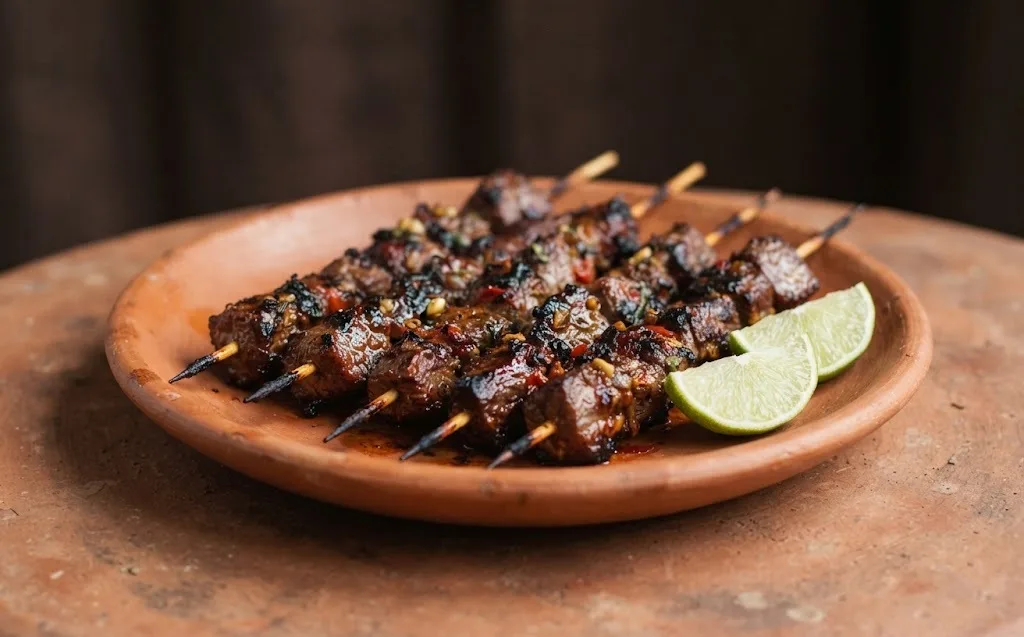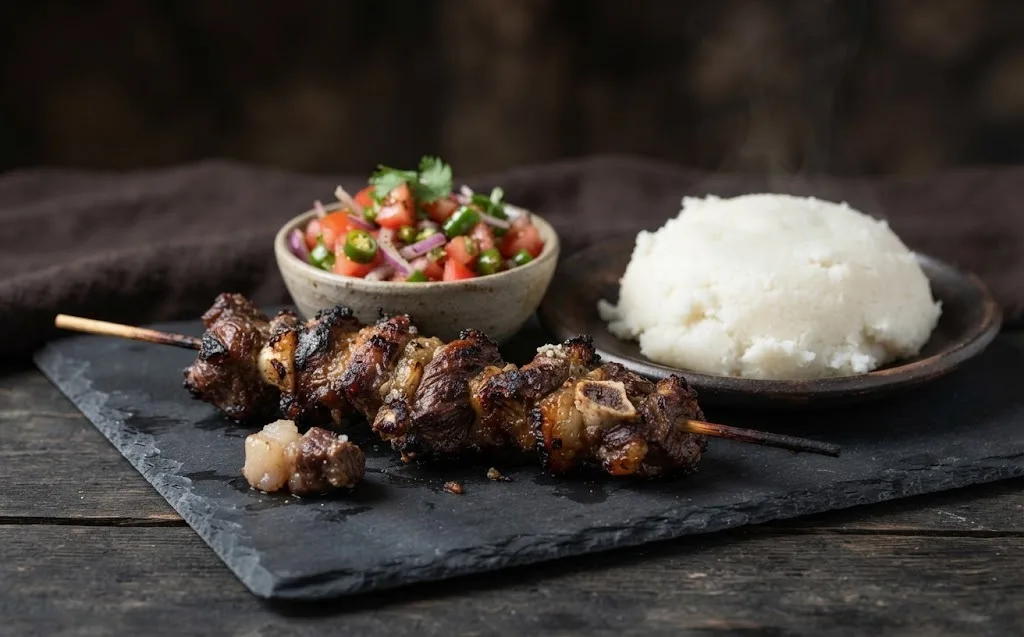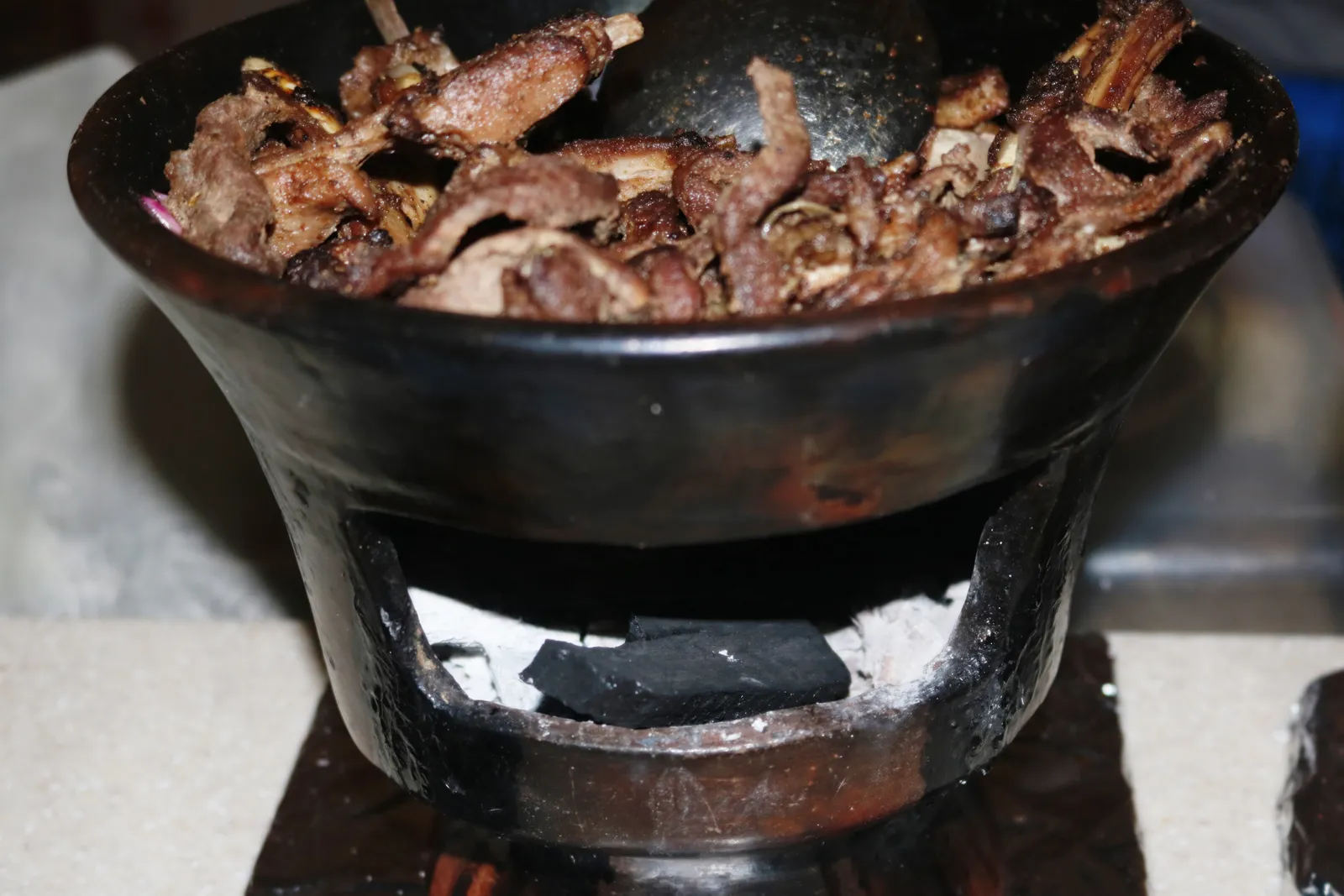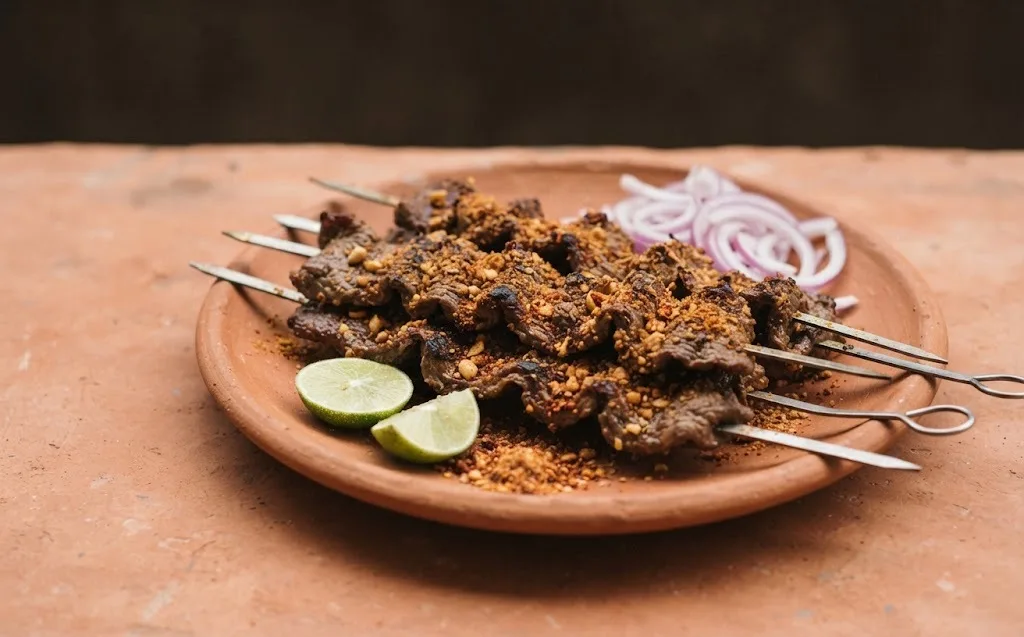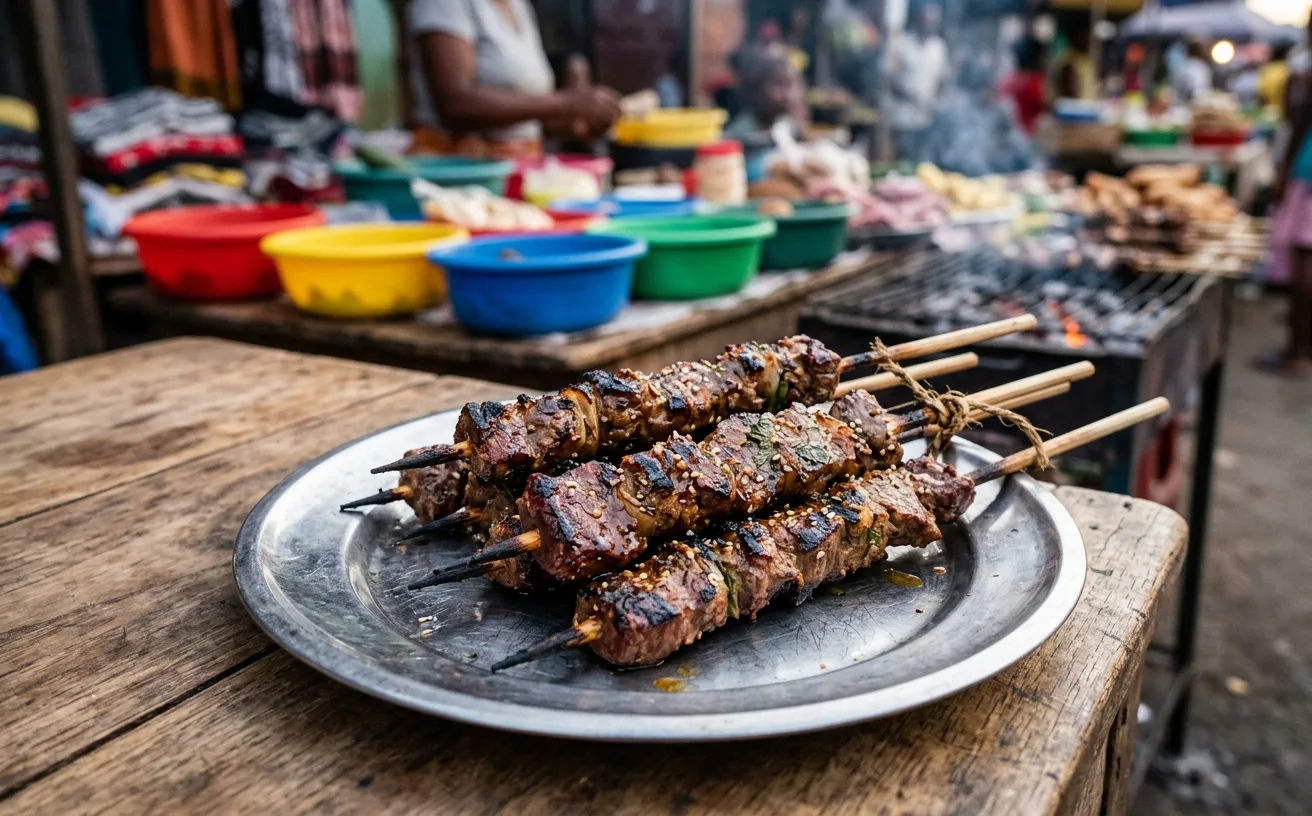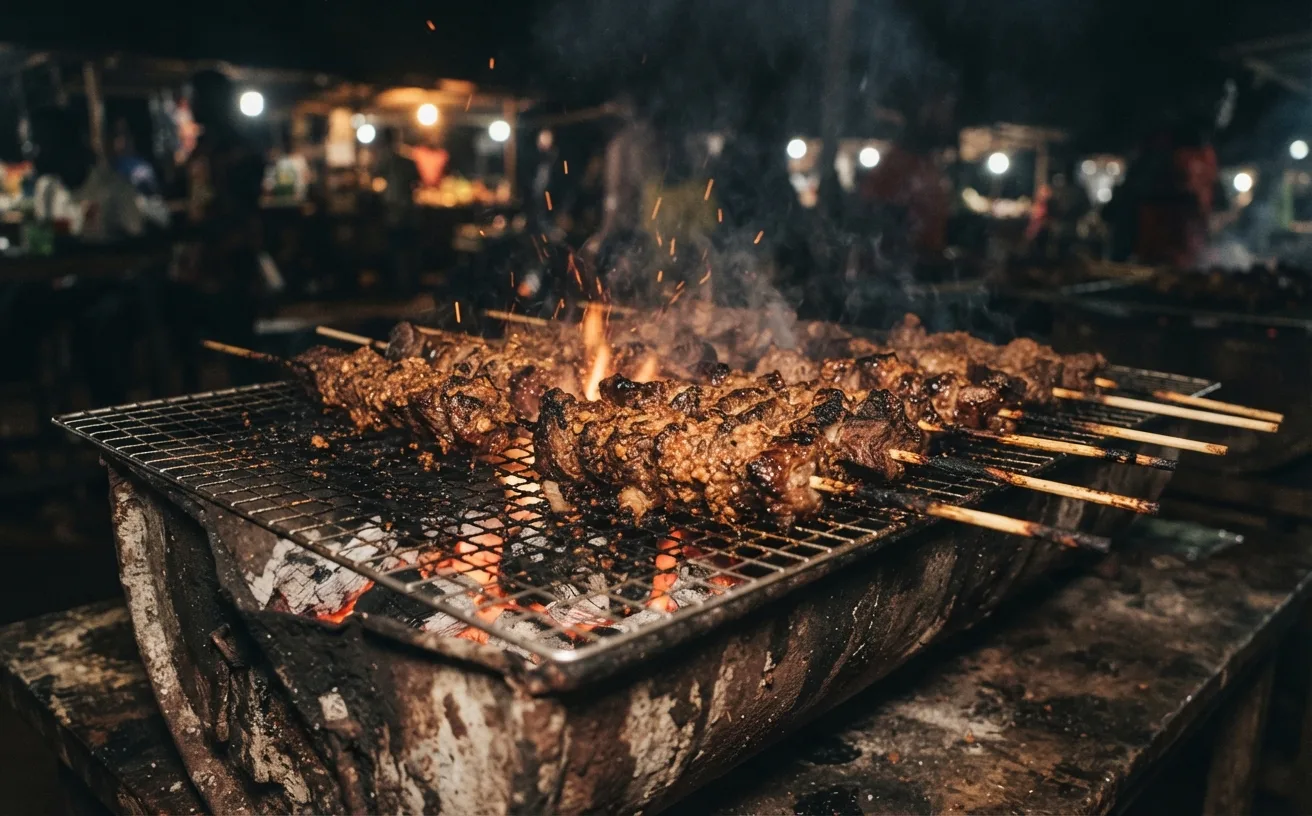
Cameroon's roadside skewer, larger-cut than Nigerian suya and rubbed with a peanut-chili spice blend before grilling over open flame; beef, goat, and gizzard versions all thrive. Sold by soya men at night markets, it is eaten with raw onion, extra pepper, and often a chilled beer.
Also known as soya, Cameroon soya, soya beef skewers.
Reference video
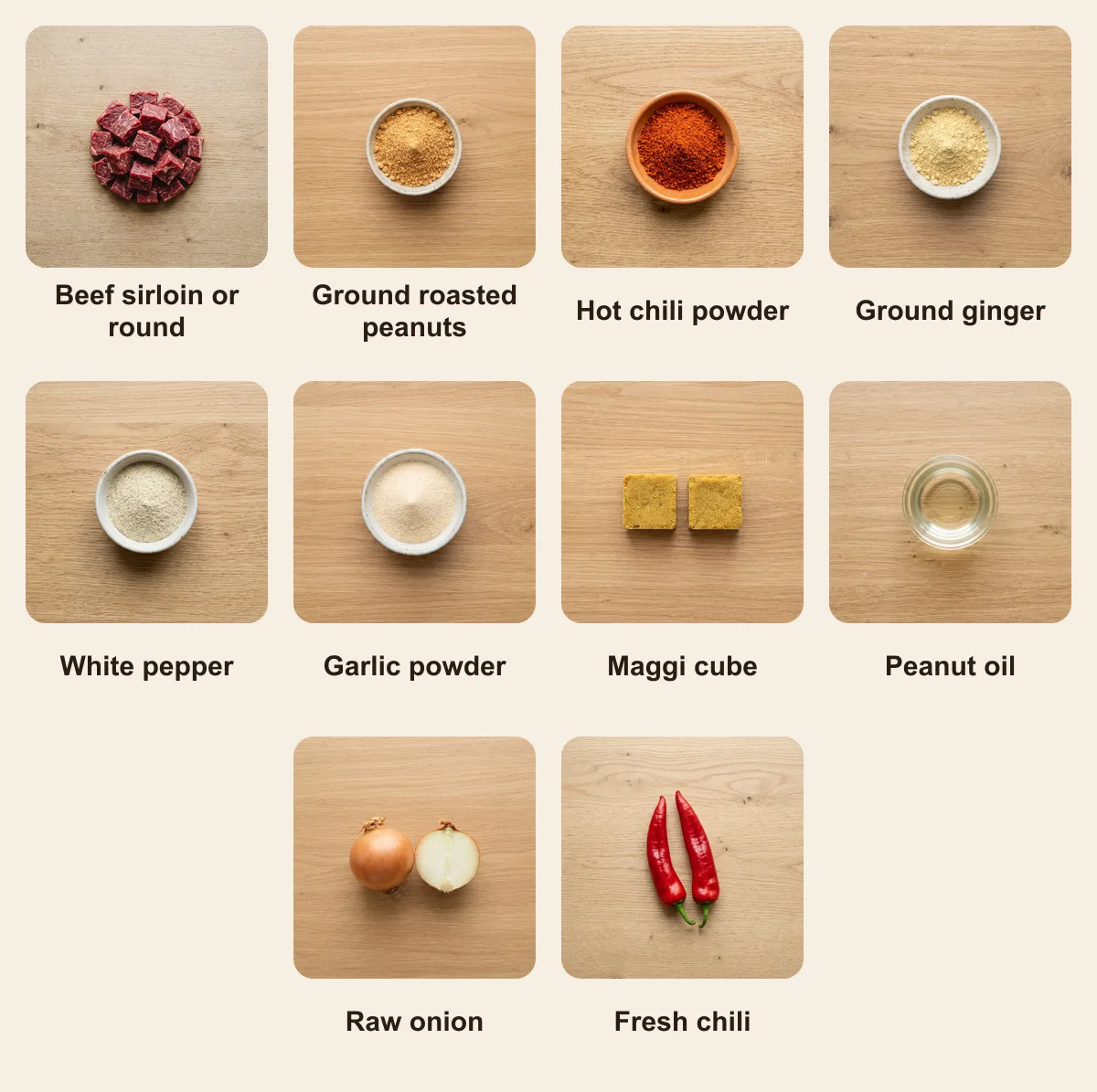
Ingredients
- 700 g beef sirloin or round, in thick strips or 3 cm chunks
- 70 g roasted peanuts, ground and pressed dry (or defatted peanut powder)
- 2 tsp hot chili powder
- 1 tbsp ground ginger
- 1 tsp white pepper
- 1 tsp garlic powder
- 1 Maggi cube, crushed
- 40 ml peanut oil
- Raw onion and fresh chili, sliced, to serve
How to make it
- 1
Blend the peanut powder with chili, ginger, white pepper, garlic and the Maggi cube.
- 2
Oil the beef, crust it lightly in the rub, and rest it uncovered in the fridge 2 hours so the coating sets.
- 3
Thread the big pieces onto sturdy skewers.
- 4
Cook over medium coals with patience, 12-15 minutes, turning every few minutes; the thicker Cameroonian cut needs time the Nigerian version does not.
- 5
Rest briefly, chop across the grain, and serve on paper with onions, chilies and more rub.
Pro tip: Match your fire to the cut. Soya runs larger than Nigerian suya, so blistering heat blackens the peanut crust to bitterness before the center cooks; roadside grillers in Douala keep the meat higher and slower than you expect.
Where Soya comes from
Hausa traders carried it east out of northern Nigeria, through the same networks that took suya to Ghana and, as agashe, across the Sahel to Sudan. Cameroon adapted it by scaling up the cut. Where a Nigerian mai suya slices paper-thin, a Cameroonian soya man works in chunks — which changes both the cooking and the eating.
Soya: Cameroon's thicker-cut suya
In Cameroon the same peanut and chilli skewer is called soya and cut bigger: thick strips or 3 cm chunks of beef, with goat and gizzard versions too. The thicker cut changes the cooking, 12 to 15 minutes over medium coals with frequent turns, where Nigerian suya's 5 mm ribbons take 3 to 4 minutes a side over hot coals. The rub leans on white pepper and a Maggi cube alongside the peanut, ginger and chilli. Ghana's kyinkyinga is the closest in shape, with 2 cm cubes and a second coat of spice added straight off the grill.
Compare: Suya · Kyinkyinga
How Soya is cooked
The larger cut means a longer, gentler cook and a different relationship between spice and meat. A thin slice of suya is almost all crust; a soya chunk has an interior, so the meat's own flavour carries more of the dish and the spice sits on the outside as a coating rather than defining the whole bite.
The spice goes on before grilling and again after, as in the whole family, but the pre-grill application is thinner because it has longer over the fire and would otherwise burn. Gizzards are a Cameroonian speciality and need the longest cook of anything on the grill — they are parboiled first at most stands.
Ingredients and shopping
Beef or goat in three-centimetre chunks, and chicken gizzards, which are genuinely popular and worth trying — parboil them for twenty minutes before skewering. Fat left on.
The spice blend is ground kuli-kuli or roasted peanut, dried chilli, ginger, white pepper and garlic powder, plus a crumbled stock cube, which Cameroonian cooking uses freely. Groundnut oil for brushing. Raw onion and extra pepper to serve.
How Soya is served
Off the skewer with raw onion, extra pepper and often a chilled beer, from a night-market stand. Sometimes with fried plantain or bread. It is evening food and the soya man is a recognised figure in Cameroonian street life.
Common mistakes
Not parboiling gizzards
They are tough and need twenty minutes of simmering before they go anywhere near a skewer.
A heavy pre-grill spice coat
Larger chunks need longer over the fire and a thick coat burns. Thin before, generous after.
Cutting as thin as suya
The Cameroonian style is chunks. Thin slices make it Nigerian suya, which is a different dish.
A fierce fire
Peanut spice burns. Moderate coals and patience, especially with larger pieces.
Soya: questions and answers
How is soya different from Nigerian suya?
The cut is much larger — chunks rather than paper-thin slices — which means a longer cook and a different balance between meat and spice crust.
Are gizzards really popular?
Yes, gizzard soya is a Cameroonian favourite. Parboil them for around twenty minutes before skewering or they are tough.
Why is the pre-grill coating thinner?
Larger chunks need longer over the fire, and a thick peanut coat burns. Most of the spice goes on after cooking.
Sources and further reading
- Cameroonian Soya (Skewered Meat) — Precious Core
- Suya (Spicy Beef on a Stick) — International Cuisine