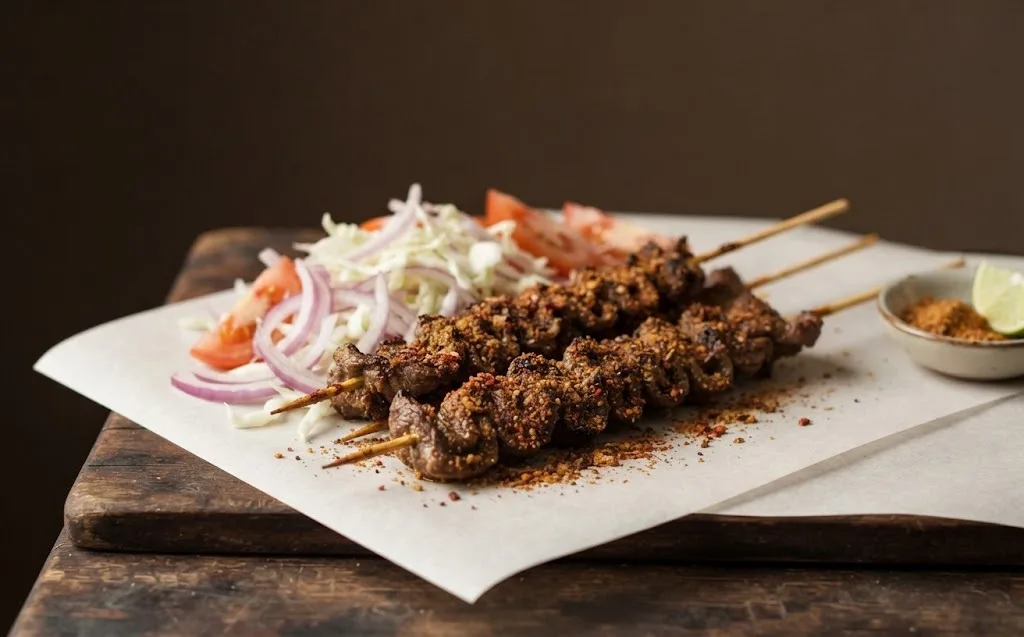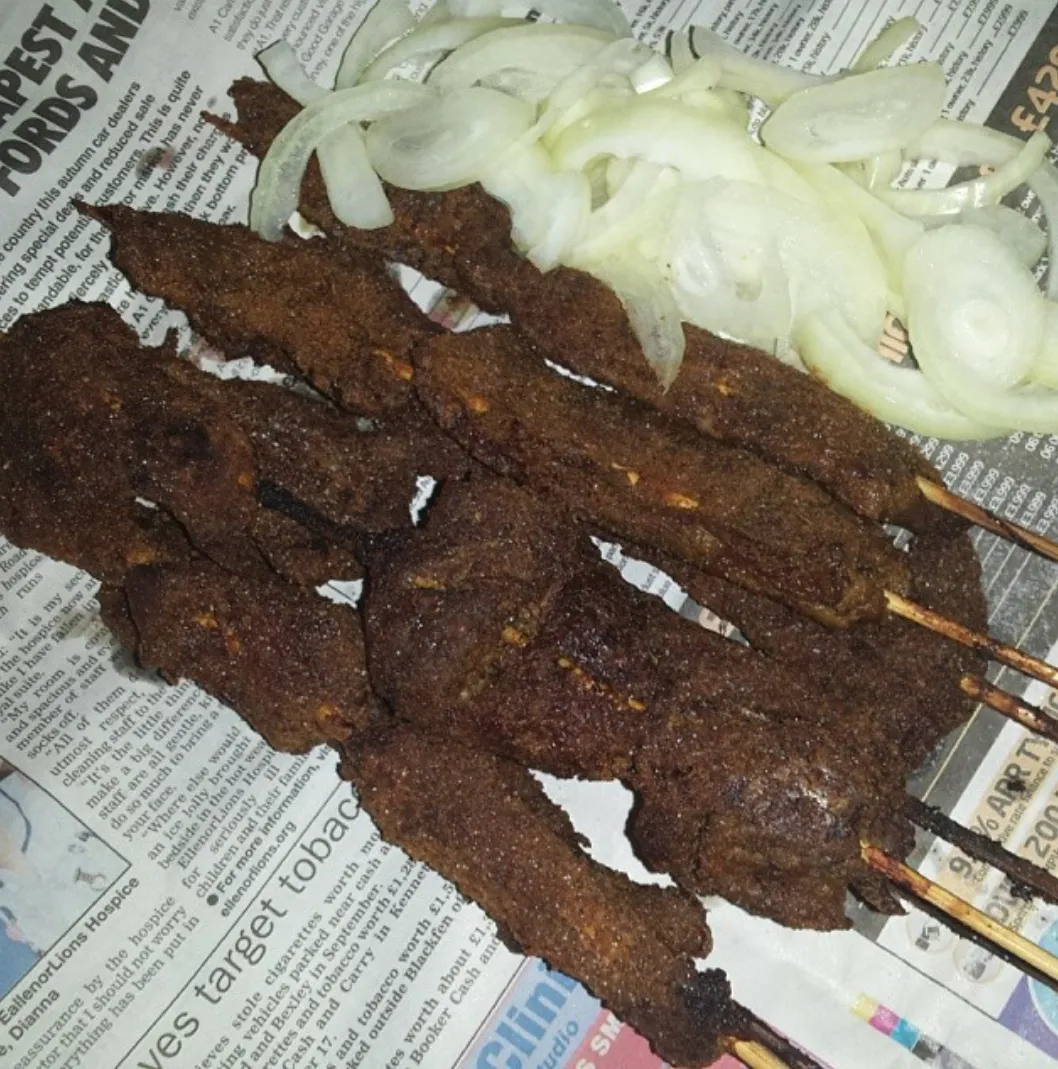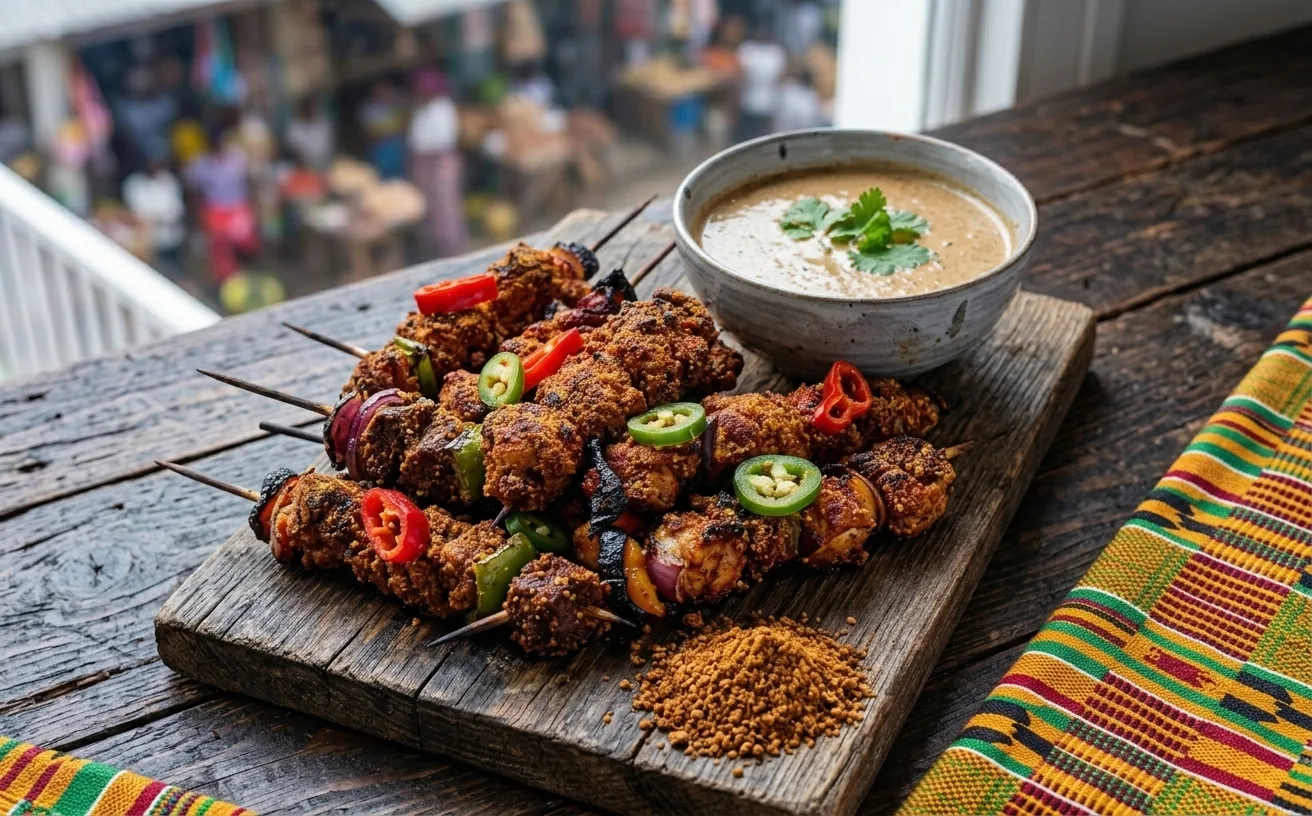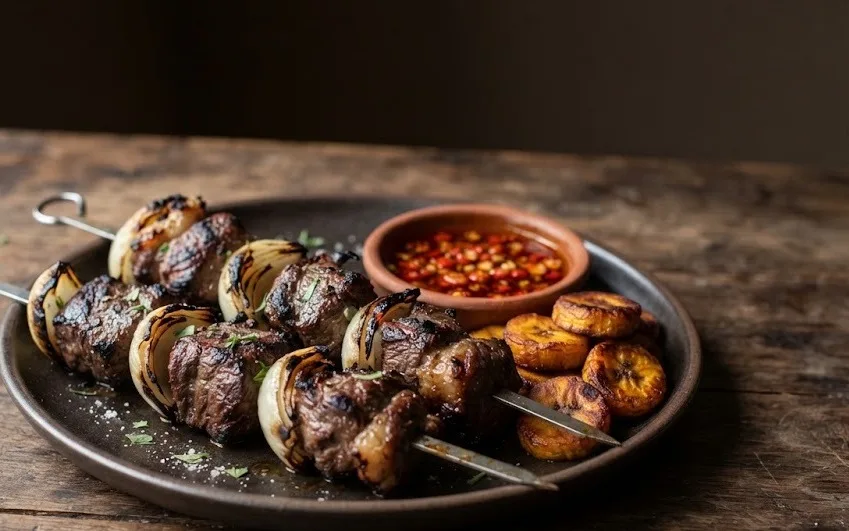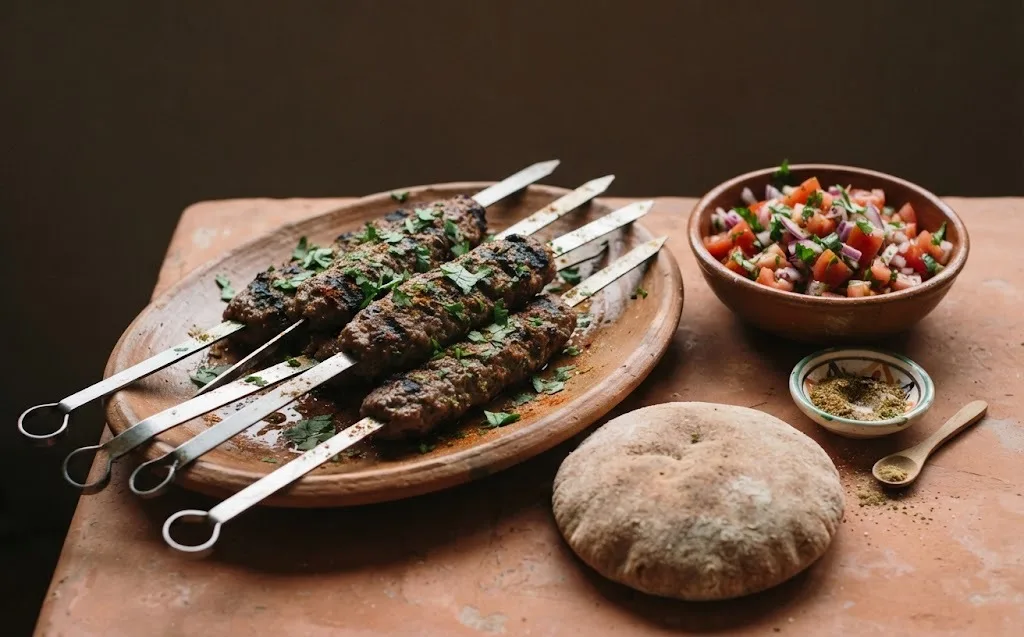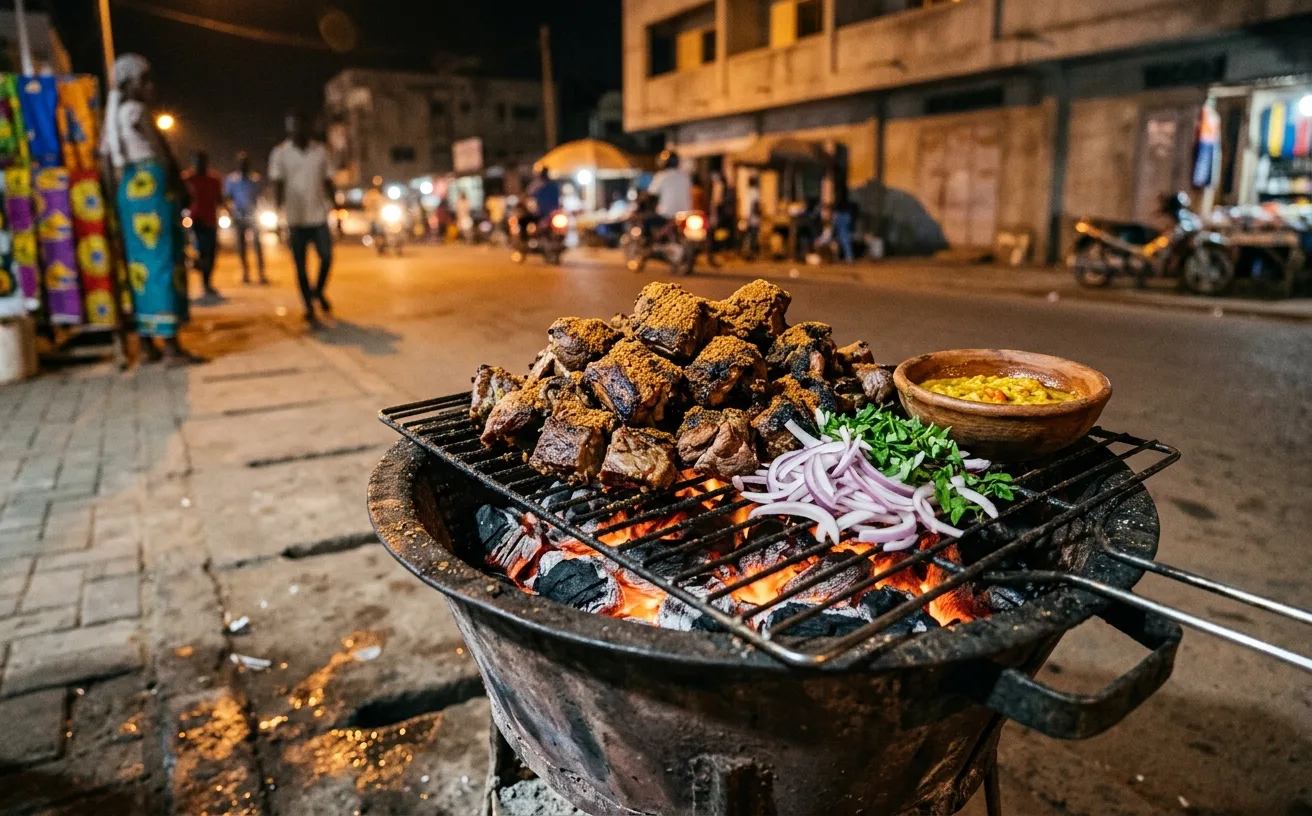
Cotonou's best-documented street-grilled meat, studied repeatedly in West African food-safety research: chicken, mutton or beef cut into pieces, skewered and roasted over charcoal by street vendors, often finished with a peanut-chilli spice rub. Togo has a close cousin under the similar name tchitchinga, but the peer-reviewed record for tchachanga/tchatchanga points specifically to Cotonou, Benin.
Also known as brochettes de Cotonou, Benin street brochettes.
Ingredients
- 800 g chicken thighs, mutton or beef, cut into bite-sized pieces
- 1.5 tsp salt
- 1 tbsp groundnut oil
- 2 tbsp ground roasted peanuts
- 1 tsp dried chili powder, or to taste
- 1 onion, thinly sliced
- Paper, to serve
How to make it
- 1
Cut the meat into bite-sized pieces, season with the salt, and toss with the groundnut oil.
- 2
Thread the pieces onto skewers and grill over hot charcoal, turning often, until charred in patches and cooked through — about 15-20 minutes depending on the meat.
- 3
Mix the ground peanuts with the chili powder into a coarse, dry spice dust.
- 4
While the skewers are still hot, sprinkle or roll them in the peanut-chili dust so it clings to the charred surface.
- 5
Serve straight off the skewer with the raw onion, wrapped in paper to eat on the move, street-vendor style.
Pro tip: Cotonou vendors sell tchachanga with whatever meat is on hand that day — chicken, mutton or beef are all authentic; there is no single fixed cut.
Where Tchachanga comes from
Tchachanga — also spelled tchatchanga — is Cotonou's best-documented street-grilled meat. It shows up repeatedly in West African food-safety literature precisely because it is so widespread: peer-reviewed studies out of the University of Abomey-Calavi sampled it directly from street vendors across Cotonou, describing it as a roasted, skewered meat product made from chicken, mutton or beef depending on the stand, sold at traditional street-food scale.
It belongs to the same wider West African tradition of grilled, spiced street meat as Nigerian suya and Ghanaian chichinga, carried along trade routes by Hausa and Fulani butchers.
How Tchachanga is cooked
Chicken, mutton or beef is cut into pieces and skewered, then roasted over charcoal by street vendors, often finished with a peanut-and-chilli spice rub in the same broad family as Nigerian yaji. Food-safety sampling of the product traced it through several distinct steps — cutting, skewering, roasting and, at some stands, wrapping the seasoned meat — each one a point where contamination can enter, which is exactly why it has drawn academic attention.
It is prepared and sold at small, traditional-scale roadside stands rather than in a controlled kitchen: cooked to order over open charcoal and handed over hot, usually wrapped in paper, in the same fast, high-heat style as other West African street-grilled meats.
Ingredients and shopping
Chicken, mutton or beef all appear in the documented street versions, cut into bite-sized pieces rather than one large cut. A charcoal fire and a simple peanut-chilli spice mix get closer to the street original than an oven or a heavier marinade — this is fast, high-heat, minimally fussed-over grilling, not a slow-marinated kebab.
How Tchachanga is served
It is eaten hot off the grill, straight from the vendor, usually wrapped in paper for eating on the move — classic West African street-food service, with no formal plating or sit-down ritual attached.
Common mistakes
Assuming a single fixed recipe
Tchachanga is a street-vendor product: the meat (chicken, mutton or beef) and the exact spicing vary from stand to stand, so there is no one official version to match precisely.
Cooking it low and slow
It is fast-grilled street food over hot charcoal, not a braise. Long, gentle cooking misses the point of the dish.
Confusing it with Togo's tchitchinga
The two names describe a similar Hausa/Fulani grilled-meat tradition, but the documented, peer-reviewed tchachanga/tchatchanga is specifically a Cotonou, Benin street food.
Tchachanga: questions and answers
Where does tchachanga come from?
Cotonou, in southern Benin. Multiple peer-reviewed food-science studies sampled it directly from street vendors across the city, describing it as a roasted, skewered meat product sold at traditional scale.
What meat is used?
Chicken, mutton or beef, depending on the vendor — it is a street-food category rather than a single fixed recipe.
Sources and further reading
- Microbial contamination associated with the processing of tchachanga, a roasted meat product — African Journal of Biotechnology (AJOL)
- Microbiological Characterization of Grilled Meat "Tchatchanga" in Cotonou (Southern Benin) — Notulae Scientia Biologicae
- Les brochettes de rue : symbole de convivialité à la togolaise — Saveurs Togo