Most kebab plates are not ruined at the grill. They are ruined at the sauce station, usually by someone reaching for the loudest option instead of the right one. Sauce has one job: to answer the meat. A fatty, char-heavy adana wants cooling and acidity. A lean chicken shish wants fat and garlic added back. Pour the same white sauce over both and you have flattened two very different kebabs into one generic wrap.
Sauce guide
Best Sauce For Kebab
By Ali Ocak
Updated 2026-09-09
Quick answer
What is the best sauce for kebab?
It depends on the meat: a fatty, char-heavy adana wants cooling and acidity, while a lean chicken shish wants fat and garlic added back. One white sauce for both flattens them.
What is toum?
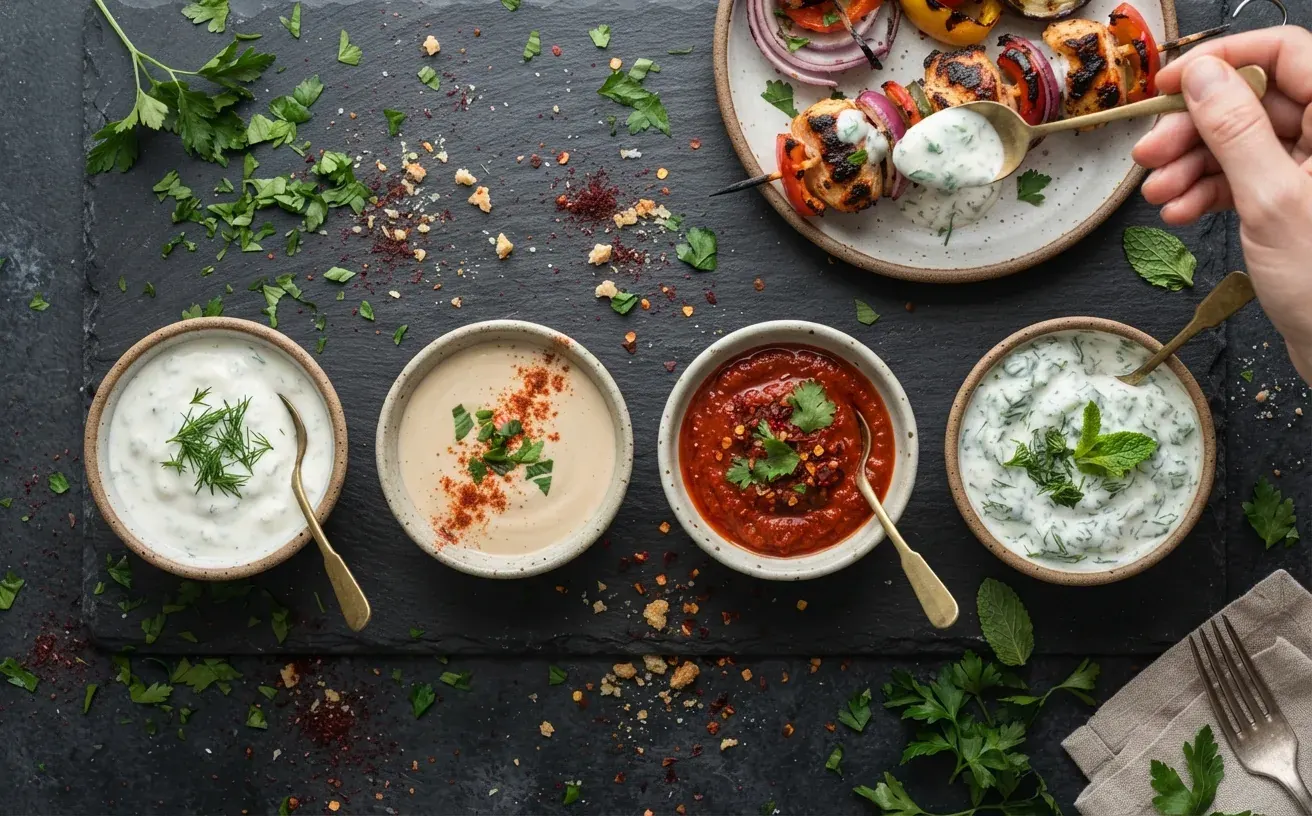
Toum is the Lebanese garlic sauce: nothing but garlic, neutral oil, lemon juice and salt whipped into a stiff white emulsion.
Key takeaways
- Before picking a sauce, answer three questions.
- The yogurt family is the workhorse of the kebab world, and the difference between its members is mostly water content.
- Toum is the Lebanese garlic sauce - nothing but garlic, neutral oil, lemon juice, and salt whipped into a stiff white emulsion.
- Tahini sauce - tarator in the Levant - is sesame paste whisked with lemon juice, water, garlic, and salt.
- Some of the best kebabs in the world are defined by the absence of sauce, and pouring white sauce over them is a category error.
- Think of every kebab build as having a moisture budget, and the bread sets it.
The good news is that sauce-matching is not taste-dependent guesswork. It runs on a short set of rules: match the sauce to the fat level of the meat, the heat level of the seasoning, and the bread it will ride on. A sauce that is perfect on a thick pita pocket will drown a thin lavash durum in ninety seconds. A sauce that sings against lamb fat tastes chalky against chicken breast.
This guide covers the four real families - yogurt, garlic emulsion, tahini, and chili - with working ratios for each, then the plates that should not be sauced at all. Get the pairings right and the meat tastes more like itself, not less.
The decision framework: fat, heat, bread
Before picking a sauce, answer three questions. First: is the meat fatty or lean? Fatty meats - adana at 25 to 30 percent fat, doner, lamb gyros - want acid and cooling, which means yogurt or chili-tomato relishes. Lean meats - chicken shish, chicken shawarma, pork souvlaki - want fat added back, which means garlic emulsions or tahini. This single rule settles most arguments.
Second: is the seasoning already hot? A properly made adana carries real pul biber heat, so stacking a chili sauce on top is redundant; it wants cool yogurt or a bright ezme, not more fire. A mildly seasoned doner or gyros, by contrast, has room for heat and benefits from it.
Third: what is the bread? A pocket pita can hold a loose, wet sauce because gravity works for you. A rolled lavash or durum wrap turns any sauce thinner than spoonable yogurt into a structural failure - the wrap goes soggy from the inside and splits at the seam. If the sauce does not hold a soft peak on a spoon, it does not belong in a roll.
Simple version: fatty meat gets acid, lean meat gets fat, hot meat gets cool, wrapped bread gets thick sauce. Everything else in this guide is detail on top of those four lines.
Yogurt sauces: cacik, tzatziki, and when thickness matters
The yogurt family is the workhorse of the kebab world, and the difference between its members is mostly water content. Greek tzatziki is built on strained yogurt around 10 percent fat, thick enough to stand a spoon in; Turkish cacik is the same idea loosened with water or a little milk into something closer to a spoonable soup. That is not a trivial distinction. Tzatziki belongs inside a gyros wrap precisely because it is thick; cacik belongs beside an adana plate as a cooling side, eaten by the spoonful between bites.
The technique that separates good from watery is the cucumber. Grate it, salt it at about 1 percent of its weight, and let it sit 15 to 20 minutes, then squeeze hard - you should press out roughly a third of its weight in water. Skip this and the cucumber keeps weeping into the sauce for hours, and your thick tzatziki is thin by dinner. Garlic goes in at one small clove per 250 grams of yogurt, no more, because raw garlic in yogurt gets sharper as it sits, not mellower.
Rest the finished sauce 30 to 60 minutes in the fridge and serve it cold, at 4 to 8 degrees Celsius, against meat coming off a grill running well past 250 degrees. That temperature gap is the whole point - it is why yogurt sauce reads as refreshment next to lamb fat. Which also means the classic takeaway mistake, ladling yogurt sauce over meat and letting the wrap sit under a heat lamp, kills exactly the contrast you built.
Verdict: tzatziki-thick for gyros and souvlaki wraps, cacik-loose as a side for adana and other Turkish plate builds, and always cold.
Garlic emulsions: toum and the halal-cart white sauce
Toum is the Lebanese garlic sauce - nothing but garlic, neutral oil, lemon juice, and salt whipped into a stiff white emulsion. The working ratio is roughly 3 to 4 parts oil to 1 part garlic by volume, with the oil added in a thin stream while the blade runs; dump it in and the emulsion breaks into a greasy soup. Everything at room temperature, because cold oil is the most common reason a toum fails. Done right it holds peaks like a mayonnaise and hits with real force - this is the sauce for chicken shawarma, where the meat is lean and the Lebanese convention is explicit: toum with chicken, tahini with beef.
The halal-cart white sauce that dominates doner and gyros carts in North America is a different animal, and it is worth being honest about what it is: a mayonnaise-based sauce loosened with a little vinegar and sugar, not a yogurt sauce. It is milder, sweeter, and far more forgiving than toum, which is exactly why carts use it - it flatters everything and offends no one. On a mixed plate of doner over rice it works. On a carefully spiced kebab it is a blanket.
Decision line: if the meat is lean chicken, reach for toum and use it sparingly - a 2 to 3 millimeter smear on the bread, not a ladle. If you are building a cart-style doner or gyros plate with rice, white sauce plus a striped line of hot sauce is the correct, time-tested combination. If the meat is well-seasoned lamb, skip the garlic emulsion entirely; lamb fat plus heavy garlic fat is fat on fat, and the plate turns monotonous.
Tahini sauces: tarator for beef and lamb
Tahini sauce - tarator in the Levant - is sesame paste whisked with lemon juice, water, garlic, and salt. It behaves strangely and scares people off: the moment lemon and water hit the tahini it seizes into a stiff, broken-looking paste. Keep whisking and adding water and it loosens again into a pale, pourable cream. A dependable starting ratio is 4 parts tahini, 1 part lemon juice, and about 3 parts water, adjusted to a consistency that ribbons off the whisk. The seizing is normal chemistry, not a failure.
Tarator is the canonical partner for beef and lamb shawarma, and the pairing logic is the same as everywhere else in this guide: sesame brings nutty richness and a faint bitterness that stands up to dark, heavily browned meat where yogurt would taste thin and toum would fight the spices. It is also the one sauce here that improves a falafel-heavy plate, which no yogurt sauce really does.
Where tahini fails is with chicken and with anything already rich in dairy. Against pale, lean chicken the bitterness dominates, which is exactly why the Lebanese split - toum for chicken, tarator for beef - exists. Do not treat that convention as folklore; it is a fat-and-flavor calculation that predates this guide by a few centuries and gets the same answer.
Chili sauces and relishes: ezme, zhug, and sumac onions
The Turkish answer to heat is not a bottled sauce but ezme: tomatoes, peppers, onion, and parsley chopped fine by knife - not blitzed, because a blender turns it into gazpacho - dressed with pomegranate molasses, lemon, and pul biber, then rested 30 minutes so the vegetables weep their juice into a dressing. Ezme next to adana is one of the great pairings in the kebab world: cold, sharp, and sweet-sour against hot, fatty, spiced lamb. It does the acidic work of a pickled side and the heat work of a chili sauce in one bowl.
Zhug, the Yemeni green chili paste of cilantro, green chilies, garlic, and cardamom, is the heat option for shawarma builds - a little goes a long way, and it belongs in a thin stripe, not a spread. And do not overlook sumac onions: thin-sliced onion tossed with sumac and a pinch of salt, rested 10 minutes. It is technically a garnish, but on a doner or shawarma wrap it delivers acidity and crunch that no wet sauce can, with zero moisture penalty for the bread.
Decision line: heat belongs on mildly seasoned meats - doner, gyros, chicken shawarma. On an already-hot adana, choose ezme, which adds acid and freshness alongside its heat, rather than a pure chili paste that only adds more of what the meat already has.
The plates you should not sauce
Some of the best kebabs in the world are defined by the absence of sauce, and pouring white sauce over them is a category error. Cevapi is the clearest case: the Balkan service is somun bread, raw chopped onion, and on the side kajmak - a clotted dairy cream - or ajvar, the roasted red pepper relish. Neither is poured over the meat. The bread is expected to soak up meat juice, not sauce, and that juice-soaked somun is half the dish.
Persian koobideh is the second case. The plate is rice with butter, a grilled tomato crushed into the rice, a shake of somagh - sumac - over the meat, and perhaps mast-o-khiar on the side, which looks like a yogurt sauce but is eaten as its own dish, by the spoon, never poured. Saucing koobideh directly reads as wrong on a Persian table for a reason: the kebab is seasoned at 100 percent strength for eating with plain rice, and a sauce breaks that calibration.
The general rule: dishes built around bread-plus-meat-juice or rice-plus-butter carry their moisture already. Sauce those plates and you are not adding flavor, you are diluting a finished system. Serve the condiment beside, let the eater dose it, and the dish stays itself.
Bread logic: pocket, wrap, and the moisture budget
Think of every kebab build as having a moisture budget, and the bread sets it. A pocket pita is the most forgiving format: the pocket holds loose sauce like a bowl, so tzatziki, even a slightly wet one, is safe. A thick Turkish pide or Balkan somun absorbs juice by design and wants almost no added sauce. A thin lavash or yufka durum has the smallest budget of all - it is maybe 1 to 2 millimeters thick, and any sauce with free water saturates it from the inside within a couple of minutes.
That is why the durum shops that know their craft do two things: they spread a thick sauce thin, 2 to 3 millimeters directly on the bread where the fat layer actually slows moisture migration, and they put wet elements - tomato, onion, ezme - in the center of the roll surrounded by meat, never against the bread. Copy both habits and your wraps stop splitting.
And a sequencing rule that costs nothing: sauce the bread, not the hot meat. Sauce hitting 70-degree meat warms instantly, thins, and runs; yogurt sauces in particular lose their body within a minute on hot meat. Sauce on bread, meat on sauce, wet garnish in the middle, roll. Same ingredients, completely different result at the last bite.
Where kebab sauces actually fail
Watery yogurt sauce is failure number one, and the mechanism is almost always unsalted cucumber. Cucumber is about 95 percent water and keeps releasing it by osmosis long after mixing, so a sauce that looked thick at noon is soup by six. Salt, rest, and squeeze the cucumber first - there is no shortcut and no amount of thicker yogurt that compensates.
Failure two is runaway garlic. Crushing garlic activates alliinase, and the pungent compounds keep developing for hours; a sauce that tasted balanced when mixed is aggressive the next day. Dose garlic for tomorrow, not for now, and if a sauce must be made far ahead, briefly blanching the garlic or using less is the fix - adding more yogurt later just makes more sauce.
Failure three is the broken toum: oil added too fast, or cold, or too much oil for the garlic to hold, and the emulsion collapses into slick liquid. Rescue it the mayonnaise way - start over with a fresh spoonful of garlic paste, or an egg-white cheat, and stream the broken batch back in slowly. Failure four is the seized tahini abandoned too early; it always looks broken halfway, and the cook who stops whisking at that stage throws away a sauce that was thirty seconds from perfect.
The last failure is not technical but editorial: one sauce on everything. If the same white sauce goes on your adana, your koobideh, and your chicken shawarma, the sauce has become the dish and the kebabs are just texture underneath it. Match the sauce to the meat - or leave the plate dry and let a proper kebab speak - and every recipe on this site tastes more distinct, not less.
Source-backed support
Sources Worth Watching
Reference material this guide draws on — each link opens with its original publisher.
Source video
The White Sauce You Can Put on Everything
A practical source video for cart-style white sauce texture, spoonability, and use in wraps and platters.
Source: YouTube source
Embedded from the original YouTube source. Not hosted locally.
Watch On SourceSources and further reading
- How to make toum (Lebanese garlic dip) at home — SBS Food
- Garlic — Linus Pauling Institute, Oregon State University
- Cucumbers — UMass Amherst Extension
Cook These Next
Pork / 9h 50m
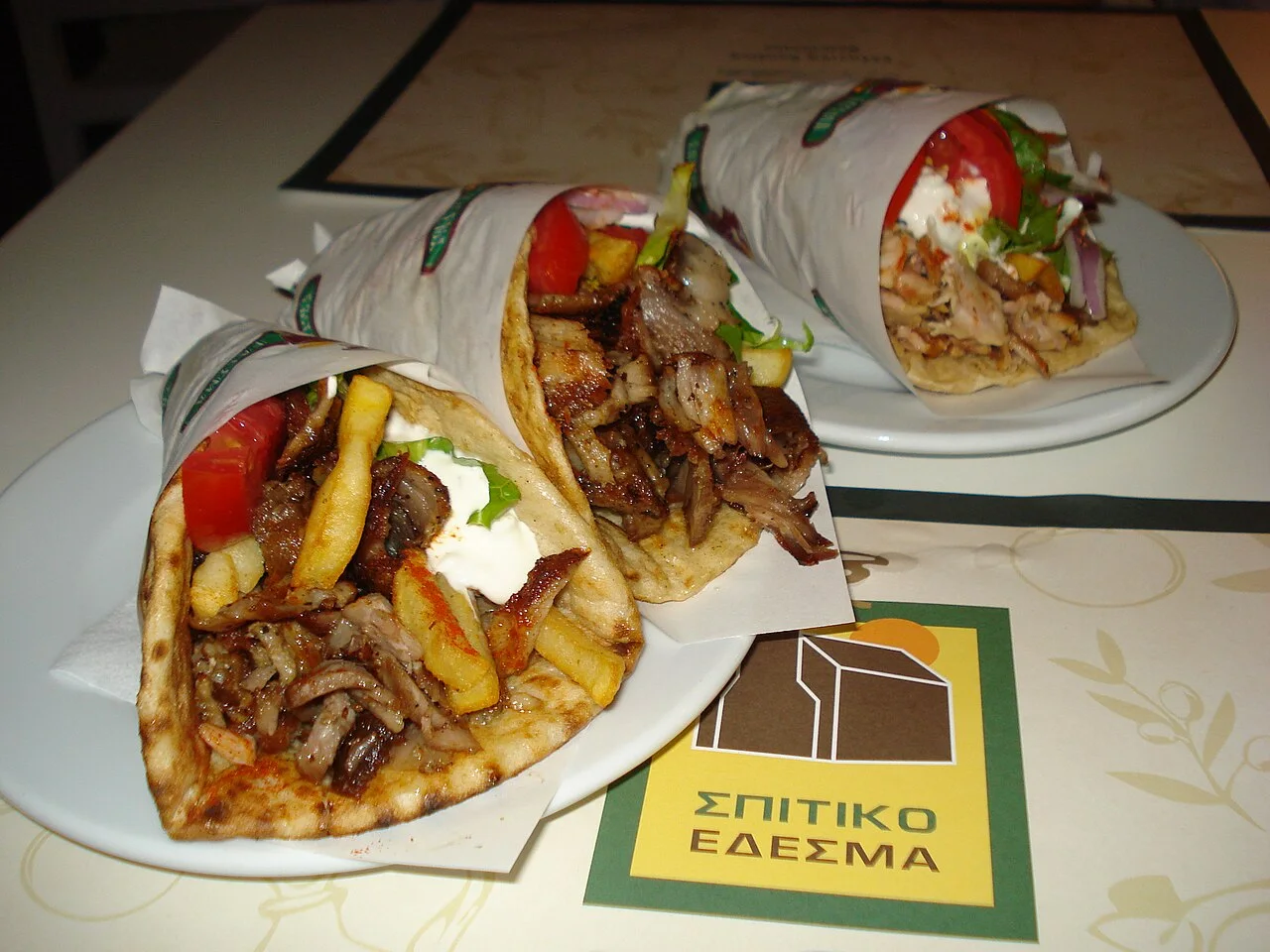
Authentic Gyros
The Greek vertical rotisserie. Pork slices stacked and shaved.
 AI illustration
Beef / 1h 25m
Halifax Donair
Canada's spiced beef masterpiece with sweet condensed milk sauce.
 AI illustration
Beef / 25h 5m
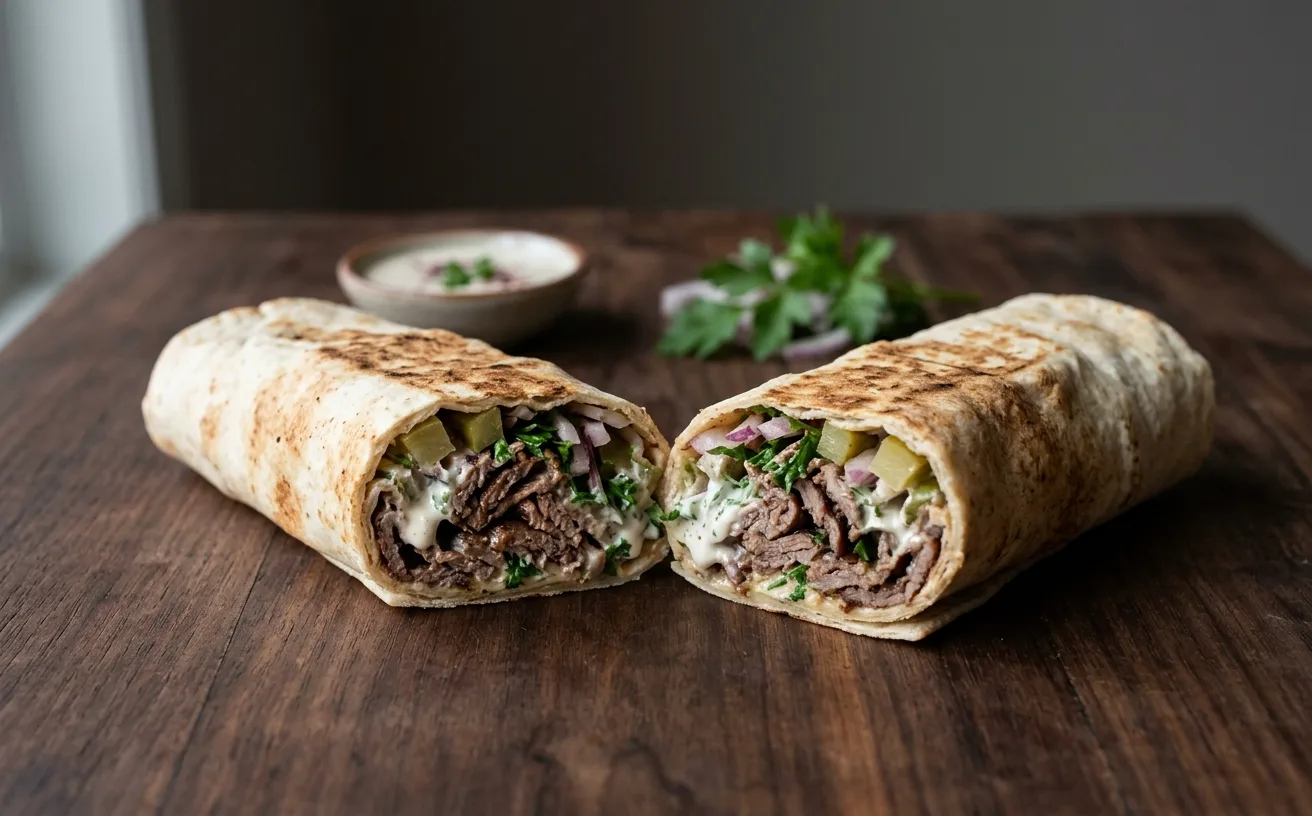
Beef Shawarma
The Levantine cousin of Gyros. Distinct Arab spices (cardamom, cinnamon) and Tahini sauce.

Lamb / 1h
Adana Kebab
The spicy gold standard of Turkish BBQ. Hand-minced lamb with tail fat.
Related Collections
Gyros, Shawarma, and Donair Guide
Compare gyros, shawarma, donair, souvlaki, and tawook with bread pairings, sauce choices, wrap assembly, and serving ideas.
Best Bread for Kebab, Shawarma, and Gyros
Learn which bread to use for kebab wraps, gyros, shawarma, doner, and grilled meat plates, including lavash, pita, pide, somun, lepinja, and durum.
More Guides
Comparison
Adana Vs Urfa Kebab
Compare Adana and Urfa kebab by heat level, fat feel, pepper use, texture, and serving style so you know which one to cook.
Serving guide
What To Serve With Cevapi
Serve cevapi properly with somun, onion, ajvar, kajmak, and practical Balkan plate-building advice for home cooks.
Meat guide
Best Cut For Shish Kebab
Choose the best cut for shish kebab with a practical guide to lamb, beef, and chicken options, cube size, fat balance, and what actually stays juicy on skewers.
Technique guide
How To Marinate Kebab Properly
Learn how to marinate kebab without making the meat mushy, watery, or flat, with clear guidance for chicken, lamb, beef, and yogurt-based marinades.
Heat guide
What Temperature to Cook Kebab
The heat each method needs, from charcoal to oven, and the internal temperature that makes chicken, minced and cubed kebabs safe: 74 °C, 71 °C and 63 °C with a rest.
Serving guide
Best Onion Salad For Kebab
Build the right onion-and-sumac side for kebab, Adana, Urfa, doner, and cevapi with a guide to slicing, seasoning, resting, and balancing sharpness.
Keep cooking
Next on the grill: shami kebab, durum kebab and testi kebab. The base method is in how to make a kebab.
How People Search for This
Readers find this page on Google with these searches:
sauce blance
In other languages:
正解は
Comments
Cooked it, changed something, or spotted a mistake? Say so here. Every comment is read before it is published.