Most kebab dinners fail on the plate, not on the grill. The meat comes off the coals at a perfect 71°C, juicy and blistered, and then it lands next to a sad pile of cold rice and a bagged salad with ranch dressing. The sides are not decoration. In every kebab culture from Sarajevo to Tehran, the sides are half the meal, and they were chosen over centuries to solve one specific problem: kebab meat is rich, fatty, smoky, and salty, and the palate tires of it by the fourth bite unless something resets it.
Serving guide
Best Side Dishes For Kebab
Serve kebab better with the right sides, salads, rice, pickles, breads, and sauces for wraps, plates, Turkish grills, Balkan spreads, and shawarma-style meals.
By Ali Ocak
Updated 2026-09-09
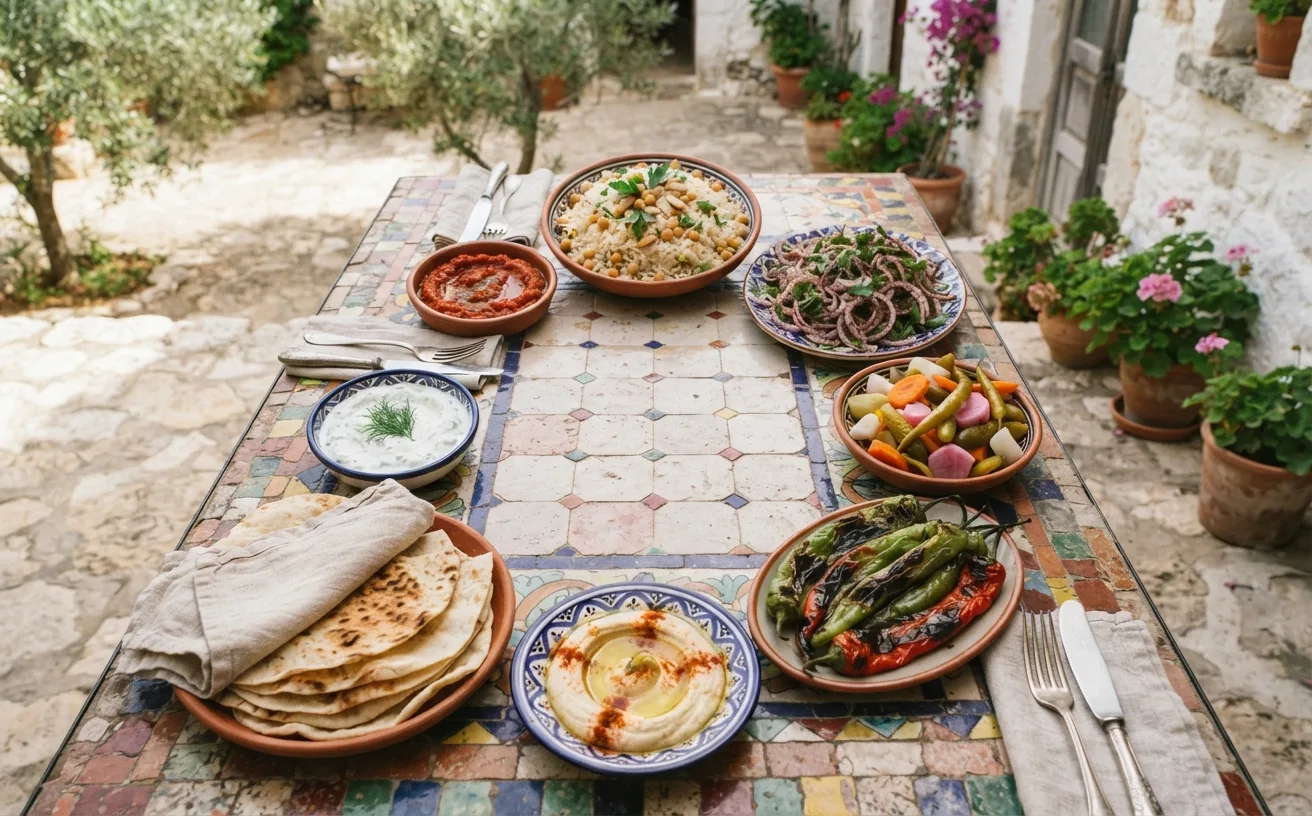
That gives you the only rule you need: every side must push against the meat, not with it. Fat wants acid. Smoke wants freshness. Salt wants cooling dairy or sweet char. Char wants soft bread. If a side does none of those jobs, it does not belong on the plate, no matter how good it is on its own. This is why buttered corn and creamy pasta salad feel wrong next to an adana, and why a fistful of raw onion with sumac feels exactly right.
The second rule is that the style of kebab decides the sides, not your habit. A koobideh without rice is a different dish. Cevapi without somun bread and raw onion is not cevapi. Doner served on a plate wants different support than doner rolled in a wrap. This guide walks through each category of side with real numbers and tells you which kebab each one belongs to, so you can build a plate that reads like it came from somewhere instead of from everywhere.
The decision tree: match the side to the meat, not the mood
Start with the fat content of your kebab, because fat dictates everything. A proper adana or cevapi runs 25 to 30 percent fat, koobideh around 20 to 25 percent, chicken souvlaki closer to 8 to 10 percent. The fattier the meat, the sharper and more acidic the sides must be. That is why the classic partners of adana are raw onion with sumac and grilled peppers, while lean chicken skewers can carry a rich, garlicky yogurt sauce without the plate turning heavy.
Next, decide the service format: wrap or plate. A wrap already contains its starch, so the sides move inside it — pickles, onion, herbs, sauce — and anything on the side of the plate beyond a few pickled peppers is clutter. A plated kebab needs a starch anchor (rice, bulgur, or bread), one fresh element, one acidic element, and at most one creamy element. Three to four components total. Five is a buffet, not a plate.
Finally, respect the region. Persian kebabs take rice, raw onion, grilled tomato, and fresh herbs — no yogurt sauce on the meat, ever. Turkish charcoal kebabs take flatbread, ezme, sumac onions, and grilled chilies. Balkan cevapi take somun, raw chopped onion, kajmak, and ajvar. Greek gyros and souvlaki take pita, tzatziki, and lemony potatoes or fries. Mixing these lanes is how you end up with a plate that tastes like a food court.
Sumac onions: the thirty-second side that outworks everything else
If you make one side from this guide, make this one. Slice two medium red or white onions into 3 to 4 millimeter half-moons, toss with 2 tablespoons of sumac, a teaspoon of salt, and a handful of roughly chopped flat-leaf parsley. Squeeze and massage the mix with your hands for 30 seconds — the salt and the mechanical pressure break the onion's cell walls, draining the harsh sulfur compounds and softening the bite. Let it sit 10 to 15 minutes and it turns from aggressive to bright.
The mechanism is why it works so well with fatty minced kebabs: sumac is around 4 percent malic acid by weight, the same acid that makes green apples tart, and it clings to the onion instead of pooling like lemon juice would. Each forkful delivers acid exactly where the fat is. This is the default companion to adana and koobideh, and a near-mandatory one under doner meat in a wrap.
Do not refrigerate it into next week. Sumac onions peak between 15 minutes and 2 hours after mixing; after that the onions weep, the parsley blackens, and the texture goes limp. Make it while the coals are ashing over and it will be perfect when the meat comes off.
Rice done properly: chelow for Persian, pilav for Turkish
Persian chelow is the non-negotiable partner of koobideh, and it is a technique, not just boiled rice. Rinse basmati until the water runs clear — you are washing off surface starch, which is what makes rice gummy — then soak 30 minutes in salted water. Parboil in heavily salted water (about 10 grams of salt per liter, pasta-water salty) for 5 to 7 minutes until the grains are soft outside with a firm core, drain, then steam over low heat for 30 to 45 minutes with a cloth-wrapped lid. The cloth absorbs condensation so the rice steams dry and separate instead of stewing. A knob of butter melted over the top and a grilled tomato on the side completes the classic plate.
Turkish pilav is a different animal: rice toasted in butter (often with a handful of orzo) until it smells nutty, then cooked by absorption at a ratio of 1 part rice to 1.5 parts hot stock, 10 minutes covered on low, then 10 minutes resting off the heat with the lid on. The resting step matters — it lets the moisture gradient equalize so the bottom is not wet while the top is dry. This is the rice for plated shish and chicken skewers.
Know when to skip rice entirely. Adana is traditionally served on flatbread, not rice — the bread catches the dripping fat and becomes the best bite of the meal. Cevapi never see rice. Gyros take fries or lemon potatoes. Serving rice with everything is the single most common habit-over-style mistake on kebab plates.
Bread as a side: warm it or do not bother
Bread served cold and dry next to grilled meat is a missed opportunity twice over. Every kebab bread wants 30 to 60 seconds on the grill grates over the dying coals, flipped once, until it is warm, floppy, and lightly marked. Better still, press the bread onto the resting meat or drag it through the drippings in the tray — lavash under resting adana absorbs the fat and juices and becomes something people fight over.
Match the bread to the kebab. Thin lavash or yufka (1 to 2 millimeters) for wraps and for lining the plate under Turkish kebabs. Pide or a thick pita (8 to 12 millimeters) when the bread is the utensil, as with gyros and souvlaki. Somun or lepinja — the airy Balkan flatbread — split and steamed over the grill for cevapi, five to a pocket with raw onion. Do not swap these casually: thin lavash disintegrates under tzatziki, and a dense pita fights the delicacy of a wrap.
One number to remember: bread stales fastest between 20°C and 40°C, held warm and wrapped it stays soft, and a 10-second reheat on the grill reverses early staling by re-gelatinizing the starch. So warm bread last, right before serving, and keep it wrapped in a clean towel at the table.
Ezme and shepherd's salad: knife work is the recipe
Ezme is the fiery Turkish relish that belongs next to every charcoal-grilled kebab: tomatoes, onion, green chilies, parsley, and garlic, all chopped by hand to a 2 to 3 millimeter mince, dressed with pomegranate molasses, a little olive oil, salt, and Aleppo pepper. The fine chop is the point — small pieces mean every element hits the tongue at once, reading as one sauce-like whole rather than a chunky salad. A food processor turns it to watery slush because the blades rupture cells instead of cutting them; if you must use one, pulse and drain, but the knife version is visibly and texturally better.
Shepherd's salad (çoban salatası) is the coarser cousin: cucumber, tomato, onion, and pepper in a 5 to 10 millimeter dice, dressed with lemon and olive oil at roughly 1:1 — much sharper than the 3:1 oil-to-acid ratio of a French vinaigrette, and deliberately so, because the salad's job here is acid delivery, not richness. Salt it no more than 15 minutes before serving; salt draws water from the tomatoes and cucumbers by osmosis, and by minute 30 you have a puddle.
Serve one or the other, not both. Ezme when the kebab is a minced, spiced style like adana; shepherd's salad when the meat is milder — chicken shish, souvlaki — and the plate wants crunch.
Pickles and quick pickles: acid you can make in an hour
Pickles are the workhorse acid of the kebab world — turşu on Turkish plates, pickled cabbage and peppers on Balkan spreads, pink pickled turnips beside shawarma. If you have no time for fermentation, a quick pickle solves it in 45 to 60 minutes: bring equal parts vinegar and water to a boil with 2 percent salt and 2 to 4 percent sugar by weight, pour hot over thinly sliced vegetables (3 millimeters for cucumber and onion, 5 for carrot and turnip), and let cool. The hot brine softens the outer cell layer so the acid penetrates fast; by the time the jar is at room temperature, the pickle is ready.
For the traditional route, a 5 percent salt brine ferments cabbage, chilies, and green tomatoes at room temperature in 5 to 10 days, and the lactic acid it produces is rounder and more complex than vinegar sharpness. Half a beet in the jar with turnips gives you the fluorescent pink pickle that belongs in every doner and shawarma wrap.
In a wrap, pickles are structural, not optional: they are the only element that stays crunchy against warm meat and soft bread, and their acidity cuts the confit-like richness of stacked doner fat. Two or three slices per wrap, sliced thin so they bend instead of tearing the bread when you bite.
Dairy and sauces: yogurt, kajmak, and where each belongs
Tzatziki and its Turkish sibling cacık live or die on one step: salting the cucumber. Grate it, toss with 1 percent salt by weight, and let it drain in a sieve for 20 to 30 minutes, then squeeze hard. Cucumber is about 95 percent water, and skipping the drain means your sauce splits into a watery pool within the hour. Start from strained yogurt (10 percent fat Greek-style is the benchmark), add the squeezed cucumber, one or two grated garlic cloves, olive oil, and for tzatziki a little dill and red wine vinegar. This is the sauce for gyros, souvlaki, and chicken kebabs.
Kajmak is the Balkan answer — a clotted, faintly tangy dairy cream that melts over hot cevapi straight out of the somun. There is no substitute that behaves the same, but a 2:1 blend of full-fat cream cheese and sour cream with a pinch of salt gets you close enough for a home plate. Pair it with ajvar, the roasted red pepper relish, and you have the complete Sarajevo trio: bread, onion, kajmak, ajvar.
Respect the boundaries. Persian kebab service uses yogurt as a drink (doogh) or a side bowl, never as a sauce poured on koobideh — the rice, butter, and grilled tomato are the moisture. And garlic-heavy white sauces belong with doner and shawarma, where the meat's spicing is built to meet them. One dairy element per plate is the ceiling; two reads as heavy and mutes the charcoal flavor you worked for.
The mistakes that actually ruin the plate, and why
Cold plates. Lamb fat begins to congeal below roughly 40°C, and a kebab landing on a cold ceramic plate develops a waxy film within two minutes — the greasy mouthfeel people blame on the meat is usually the plate's fault. Warm plates in a 60 to 80°C oven for five minutes, or stack them near the grill. This single habit changes fatty kebabs like adana and cevapi more than any marinade tweak.
Timing inversions. Cooks finish the meat first and then start assembling sides, so the kebab rests 15 minutes and hits the table lukewarm. Run it backwards: rice and pickles done before the fire is lit, salads mixed while the coals ash over, bread warmed during the meat's 5-minute rest. The meat should be the last thing finished, not the first.
Salting fresh salads early (osmotic water loss turns them to soup in 30 minutes), skipping the cucumber drain in tzatziki (a split, watery sauce), rinsing nothing off the rice (surface starch gels into gum), and saucing everything (drowning the smoke you spent an hour building). Each of these is a mechanism, not a taste opinion — which is why they fail every time, for everyone.
And the quiet one: too many sides. A plate with rice, fries, two salads, three sauces, and bread means every component was made at half attention. The great kebab houses serve three or four sides, each one exact. Copy the restraint before you copy the recipes.
Cheat sheet: the right plate for each kebab
Adana: lavash under the meat to catch the drippings, sumac onions, ezme, grilled long green peppers and tomatoes, ayran to drink. No rice needed. Koobideh: chelow rice with butter, a whole grilled tomato, raw onion quarters, fresh basil or tarragon, sumac on the table. Cevapi: warm somun, a small mountain of raw chopped onion, kajmak, ajvar — and nothing else, that is the complete dish.
Gyros and doner on a plate: fries or lemon-roasted potatoes, tzatziki or garlic sauce, tomato and onion, a few pickled chilies. In a wrap: the sauce, pickles, onion, and tomato go inside, and the only side you need is more napkins. Souvlaki: warm thick pita, tzatziki, shepherd's-style tomato and cucumber salad, half a lemon for squeezing over the skewer at the table.
Every one of these plates follows the same skeleton — starch anchor, fresh element, acid element, at most one dairy — filled in with the region's own vocabulary. Learn the skeleton once and you can plate any kebab on this site correctly, including the ones you have not cooked yet.
Cook These Next

Lamb / 45m
Adana Kebab
The spicy gold standard of Turkish BBQ. Hand-minced lamb with tail fat.
Beef / 24h
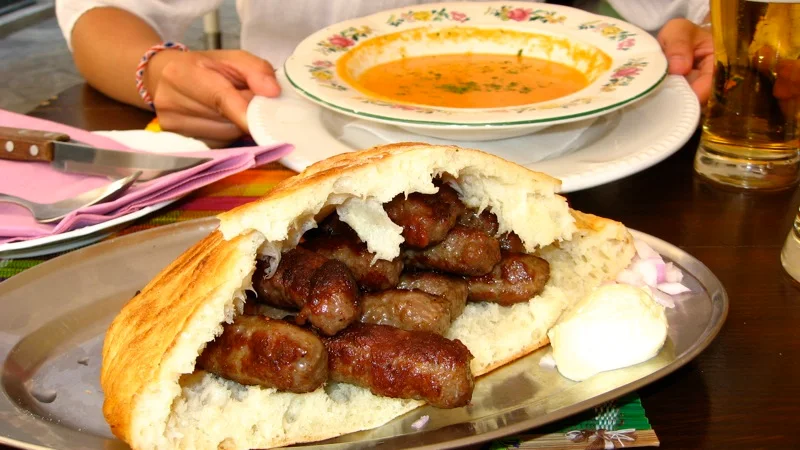
Cevapi (Cevapcici)
Small skinless grilled thick sausages. The soul food of the Balkans.
Pork / 24h
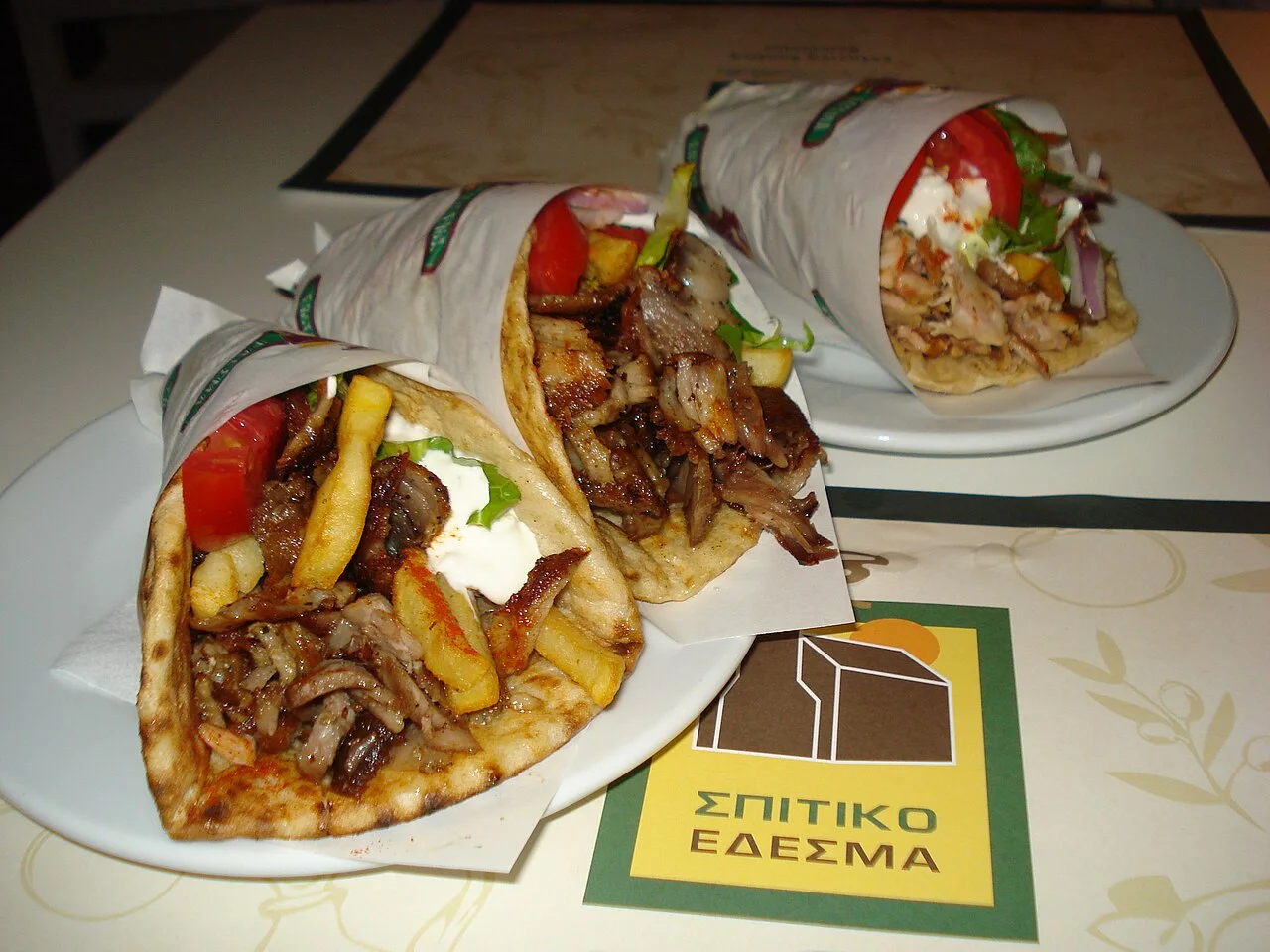
Authentic Gyros
The Greek vertical rotisserie. Pork slices stacked and shaved.
 AI illustration
Beef / 1h
Halifax Donair
Canada's spiced beef masterpiece with sweet condensed milk sauce.
Related Collections
Best Bread for Kebab, Shawarma, and Gyros
Learn which bread to use for kebab wraps, gyros, shawarma, doner, and grilled meat plates, including lavash, pita, pide, somun, lepinja, and durum.
Gyros, Shawarma, and Donair Guide
Compare gyros, shawarma, donair, souvlaki, and tawook with bread pairings, sauce choices, wrap assembly, and serving ideas.
Balkan Kebab Recipes: Cevapi, Somun, Lepinja, Raznjici
Compare Balkan kebab recipes, breads, and serving traditions including cevapi, somun, lepinja, raznjici, onion garnish, ajvar, and kajmak.
Turkish Kebab Guides
A focused collection for Turkish kebab styles including Adana, Urfa, Cag, Iskender, and supporting bread pages.
More Guides
Comparison
Shashlik vs Shish Kebab: Meat, Marinade, Cut and Fire Compared
How shashlik differs from shish kebab: the shared şiş root, 4-5 cm pieces vs 3 cm cubes, vinegar or kefir marinades, the mangal fire, and which one to cook.
Spice guide
Yaji Suya Spice: Kuli-Kuli, Ratios and How to Make It
Yaji, the Nigerian suya spice: why kuli-kuli beats whole peanuts, ginger level with the base, four working ratios, a step-by-step grind and the two coats.
Technique guide
Viral Parchment Paper Doner: Why It Works and How to Fix It
The viral parchment paper doner: why thin rolled mince imitates spit meat, what it misses (salt, fat, a dry crisp) and a step-by-step method to 71°C.
Heat guide
Charcoal vs Gas for Kebab: The Heat Matters More Than Smoke
Charcoal vs gas for kebab: why coals win for minced adana and koobideh, where gas loses almost nothing, and the settings that close the gap on a gas grill.
Greek guide
Gyro vs Souvlaki: Spit, Skewer and the Pita Between
Gyro vs souvlaki: vertical spit versus skewer, why pork rules in Greece, what goes in the pita, and how to make both properly at home without a rotisserie.
Meat guide
Best Meat For Kebab
Choose the best meat for kebab by fat ratio, cut, grind, and cooking style, whether it ends up on a skewer, in a wrap, or on a plate.