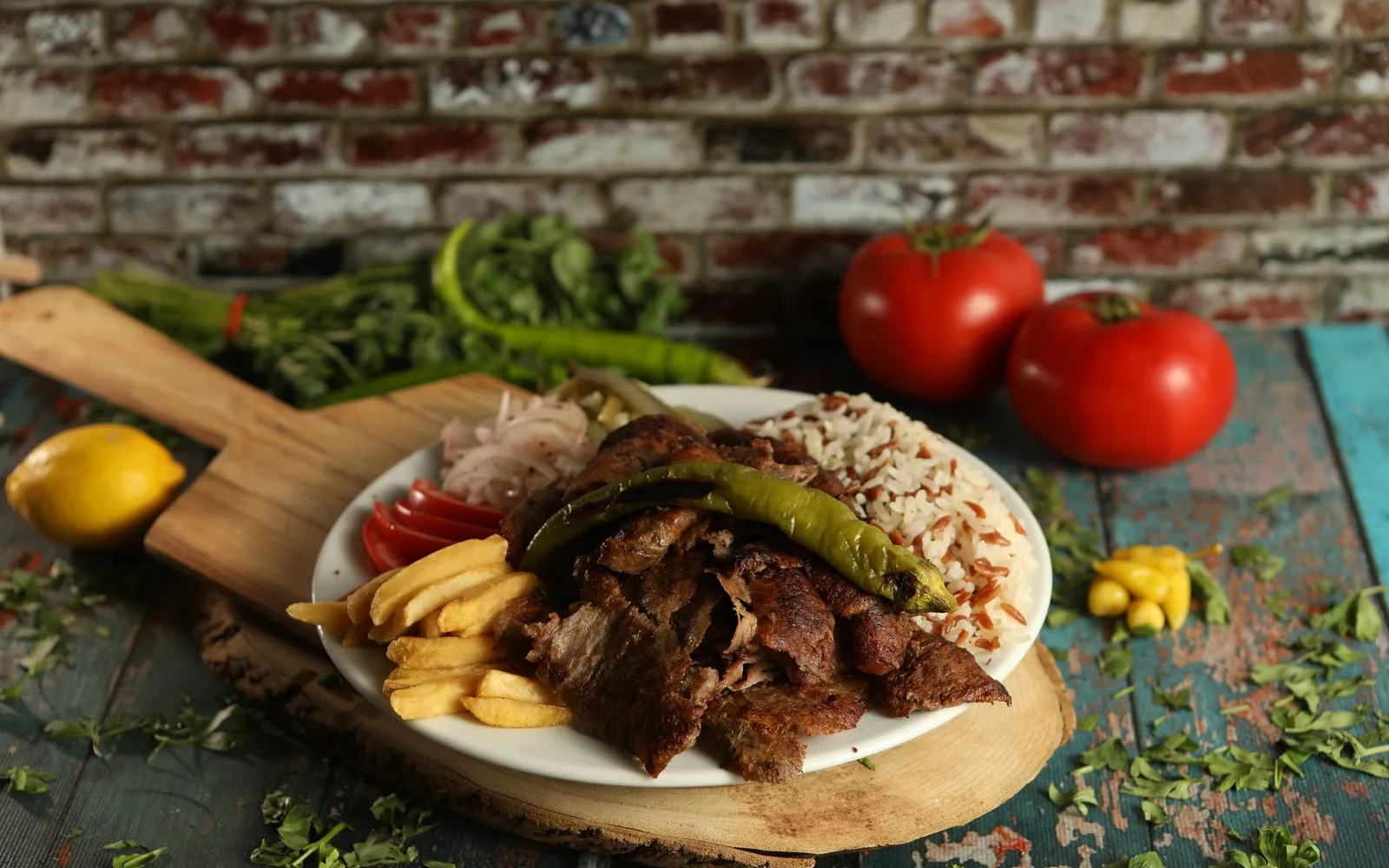
No dish on earth feeds more people from a spinning cone of meat. Döner — literally 'the one that turns' — was born in 19th-century Anatolia when cooks tipped the horizontal cağ spit upright, letting gravity baste the stack as the outside roasted. From Bursa it conquered Istanbul, and in 1970s Berlin, Turkish workers folded it into bread with salad and sauce and accidentally invented Germany's national street food. Gyros and shawarma are its children; tacos al pastor is its grandchild by way of Lebanese migrants to Mexico. The home problem is obvious: you don't own a two-metre vertical rotisserie. The fix is older than the hype — build the same marinated, fat-layered stack in a loaf tin, roast it, chill it, then shave it paper-thin and crisp the shavings in a violent pan. Same layers, same edges, no spit.
Also known as: Doner Kebap, Doner, Donner Kebab, Doner Kabob
Reference video
Reference video, embedded from YouTube: filmed by Refika's Kitchen, not by How To Make A Kebab, and not owned, relicensed or distributed by this site.
View Original Video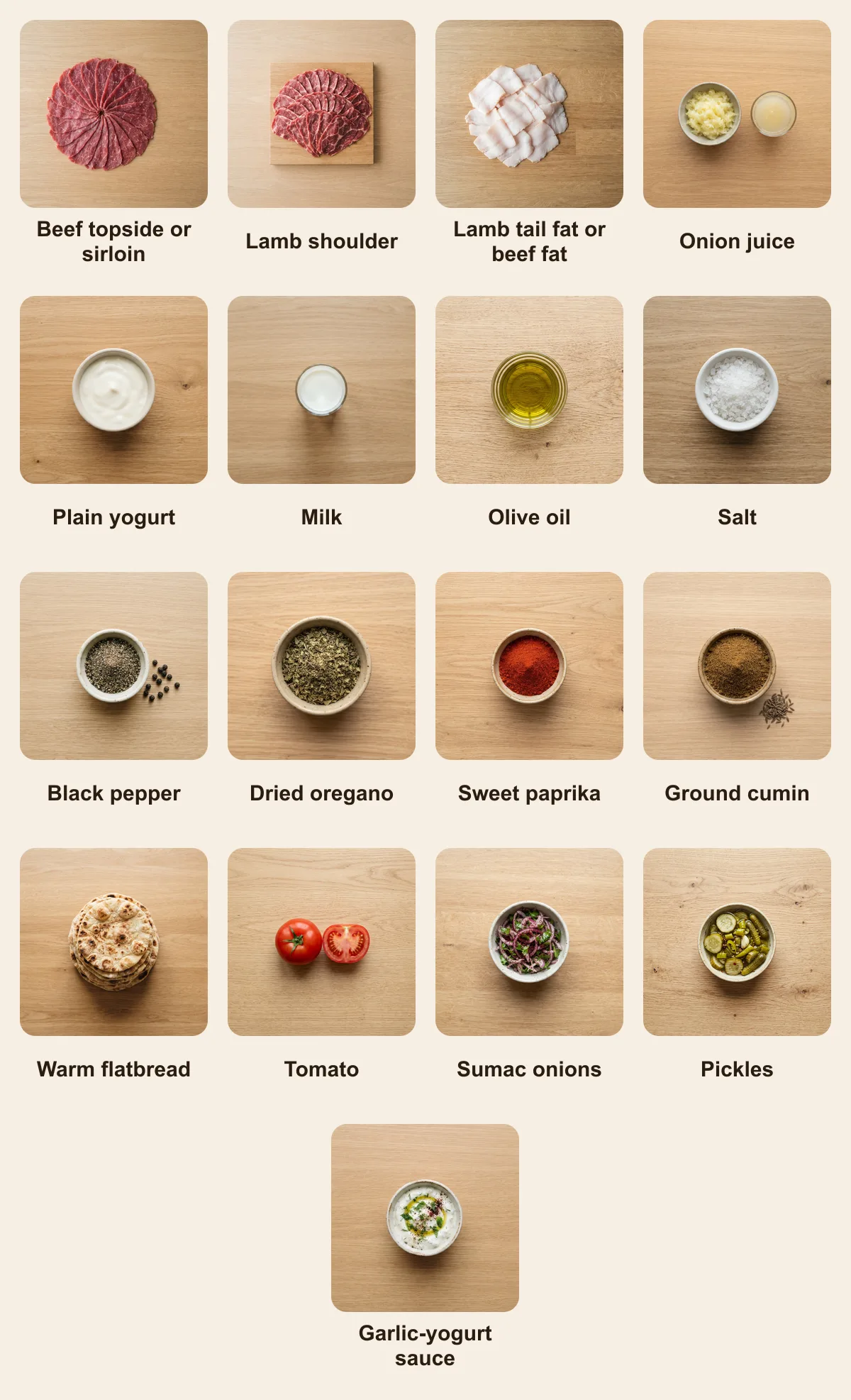
Ingredients
- 700g Beef Topside or Sirloin (sliced 3-4mm thin)
- 300g Lamb Shoulder (sliced 3-4mm thin)
- 150g Lamb Tail Fat or Beef Fat (thin slices)
- 1 large Onion (grated and squeezed for juice only)
- 150g Plain Yogurt
- 60ml Milk
- 3 tbsp Olive Oil
- 2 tsp Salt
- 1 tsp Black Pepper
- 1 tsp Dried Oregano (kekik)
- 1 tsp Sweet Paprika
- 1/2 tsp Ground Cumin
- Warm flatbread, tomato, sumac onions, pickles, and garlic-yogurt sauce for serving
How To Make Doner Kebab
-
1
Freeze the beef and lamb for about 1 hour, until firm but not frozen solid, then cut them into 3-4mm slices with a sharp knife. Pound each slice a little thinner between two sheets of cling film.
-
2
Whisk the onion juice, yogurt, milk, olive oil, salt, pepper, oregano, paprika and cumin into a smooth marinade. Coat every slice on both sides, then cover and cure in the fridge for 12-24 hours.
-
3
Line a loaf tin with cling film, leaving plenty hanging over the sides. Layer the marinated meat with the fat slices, pressing each layer down hard so no air gaps remain, then fold the film over the top, weigh the stack down with something heavy and chill it overnight.
-
4
Unmould the pressed stack onto a rack set over a tray, peel away the cling film, and roast at 180°C for about 50 minutes, until a thermometer in the centre reads 65°C. Let it cool, then chill it completely, ideally overnight, before carving.
-
5
Carve the cold loaf into paper-thin shavings with your sharpest long knife, cutting from top to bottom the way the knife works down a spit. A semi-frozen loaf shaves cleanest.
-
6
Heat a heavy dry pan until it is nearly smoking, or turn the broiler as high as it goes, and spread the shavings in a single layer. Cook until the edges catch and frizzle, which should start within about thirty seconds; this stage does the job of the vertical spit.
-
7
Stuff the hot shavings into warm bread with tomato, sumac onions, pickles and garlic-yogurt sauce. For an Iskender-style plate, lay them over buttered pide with tomato sauce and yogurt instead.
Note: The fat layers are non-negotiable: they melt between the meat sheets and are what keeps the loaf carveable instead of crumbly. Press the stack like you mean it — air gaps tear when you shave. And never skip the crisping pan; those frizzled edges are where all the spit flavour lives.
Go Deeper · the full story
About this recipe
Döner kebab is the dish this website is named for. When most of the world says "kebab", this is what they picture: a tall cone of marinated meat turning slowly against a vertical grill, a long knife shaving off the roasted outside in ribbons. It started in Ottoman Anatolia, was standing upright by the 1860s in Bursa, and today it feeds more people daily than any other kebab on the planet — as the Turkish plate döner, the German sandwich, the British late-night donner, and through its descendants gyros, shawarma, and al pastor.
Every serious döner rests on the same three decisions. First, the meat: thin sheets, never mince, from cuts with real flavour — beef topside and lamb shoulder is the classic pairing. Second, the marinade: onion juice, yogurt, milk, and oil, seasoned quietly, because döner is about roasted meat, not spice paste. Third, the architecture: sheets stacked with layers of fat between them, so the whole column bastes itself as it turns.
A home kitchen cannot turn a two-metre spit, and this page does not pretend otherwise. Instead it rebuilds the stack at loaf-tin scale: the same marinated layers pressed tight, roasted gently, chilled hard, then shaved thin and crisped in a brutally hot pan. The pan stage is not garnish — it is the substitute for the vertical flame, and it is what separates real homemade döner from sad oven-baked meatloaf in bread.
Why this recipe works
Why This Recipe Works
- Whole thin slices, not mince, are what give döner its signature pull-apart ribbons. Ground meat compacts into pâté and slices like bologna; layered sheets separate along their seams into exactly the shreds a spit produces.
- Onion juice is the quiet engine of the marinade. Its enzymes tenderize the surface of every slice overnight, while yogurt's acidity works more slowly and gently than vinegar or lemon, so the meat softens without turning mushy.
- Pressing the stack hard and chilling it before roasting fuses the layers, so the loaf carves in whole slices instead of crumbling. The rest in the fridge is structural, not optional.
- Roasting stops at 65°C because the meat cooks a second time in the crisping pan. Two gentle cooks land juicier than one aggressive one — the same logic as a twice-cooked pork belly.
Equipment you need
Equipment
- A loaf tin (roughly 25cm) and cling film for pressing the stack
- Your sharpest long knife — carving thinness decides the final texture
- A heavy pan or broiler that can get properly, violently hot for the crisping stage
- A meat thermometer to stop the roast at 65°C
Serving & make-ahead
Serving Notes
The Turkish plate: shaved döner over rice or bulgur with grilled peppers, tomato, and a spoon of yogurt. The Berlin sandwich: crusty bread, salad, red cabbage, onions, and garlic-yogurt sauce packed around the hot meat. Both are correct; they are two different meals sharing one spit.
Sumac onions are the near-mandatory companion — thin-sliced onion rubbed with sumac and a pinch of salt. Their sharpness cuts the richness of the fat-basted meat better than any sauce.
Serve the meat straight from the crisping pan. Döner that sits loses its frizzled edges within minutes, which is why the shop only shaves what it sells.
Make Ahead, Store, and Reheat
- The roasted, chilled loaf is a meal-prep dream: it keeps 4 days wrapped in the fridge and freezes for 3 months. Shave what you need and crisp it to order — exactly how a kebab shop treats its spit, just colder.
- Shavings carved from the frozen roasted loaf can also go straight from freezer to hot pan; they thaw and crisp in the same two minutes.
Common mistakes to avoid
Common Mistakes
- Using minced meat because slicing feels like work. Mince makes donair or a meatloaf — pleasant, but it will never shred into ribbons. The slicing is the dish.
- Skipping the fat layers to be virtuous. A lean stack roasts into dry cardboard sheets that shatter when carved. The fat is the mortar and the baste at once.
- Carving the loaf warm. It smears and shreds. Chill it completely — overnight is best — and it shaves into clean, thin, whole slices.
- A timid crisping pan. Medium heat steams the shavings grey. You want the pan nearly smoking, the slices in one layer, and edges catching within thirty seconds.
Döner vs Shawarma vs Gyros
All three are children of the same Ottoman vertical spit, and the family resemblance is obvious: marinated meat stacked into a cone, roasted from the side, shaved thin. What separates them is seasoning and serving. Döner leans on onion, yogurt, and oregano and lands in pide or dürüm; shawarma travelled south through the Levant and picked up cumin, coriander, cardamom, and tahini or toum; gyros crossed to Greece, swapped in pork, doubled down on oregano, and met tzatziki and fries in the pita.
If you learn the döner method on this page you have effectively learned all three — the stack, roast, shave, and crisp are identical. Swap the spice profile and the sauce and you can walk the whole family tree from one loaf tin.
A short history of the turning kebab
Horizontal spit-roasting is ancient in Anatolia — cağ kebabı still cooks that way in Erzurum. The upright turn is credited to 19th-century Bursa, where İskender Efendi stood the spit vertical so the fat would baste the meat instead of feeding the fire, then laid the shavings over pide with tomato sauce and brown butter: the İskender kebap.
The second revolution happened in 1970s West Berlin, where Turkish guest workers — Kadir Nurman is the name most often cited — began packing the shaved meat into bread with salad to feed people in a hurry. In a 2022 YouGov poll, German adults picked the döner sandwich over currywurst by 45 percent to 37, and Berlin has well over a thousand döner shops.
Frequently Asked Questions
What is döner kebab actually made of?
Proper döner is thin slices of beef and lamb (or chicken), marinated in onion juice, yogurt, milk, and oil with restrained seasoning, stacked with layers of fat and roasted on a vertical spit. The cheap late-night version is often a processed minced-meat cone — closer to a giant sausage. This recipe makes the sliced, layered kind, which is why it asks you to slice rather than grind.
How do you make döner kebab at home without a rotisserie?
Rebuild the spit horizontally: layer the marinated slices and fat in a cling-film-lined loaf tin, press hard, chill, roast gently to 65°C, chill again, then shave paper-thin and crisp the shavings in a screaming-hot dry pan. The pan stage recreates the roasted edge the vertical flame gives every slice, and it is the single most important step in this recipe.
What is the difference between döner, shawarma, and gyros?
Same technique, three cuisines. Döner is the Turkish original — onion-yogurt marinade, oregano, served in pide or dürüm. Shawarma is the Levantine branch with warm spices like cumin, cardamom, and cinnamon, served with tahini or garlic toum. Gyros is the Greek branch, traditionally pork, heavy on oregano, served in pita with tzatziki. Master one and you can cook all three by changing the spices and the sauce.
Why did my homemade döner come out dry or crumbly?
Almost always one of three things: you skipped or skimped the fat layers, you roasted past 65°C, or you carved the loaf warm. The fat bastes the stack from inside, the low target temperature leaves room for the second cook in the pan, and a fully chilled loaf carves into intact slices instead of crumbs.
Is döner kebab the same thing as a kebab?
Döner is one member of a huge family. "Kebab" covers everything from Adana's minced skewers to shish cubes to pit-roasted tandır — our Kebab Atlas maps more than 260 of them. But in Germany, the UK, and much of Europe, "a kebab" in everyday speech means precisely this dish: shaved spit meat in bread. It is the family's most famous child.
Sources and further reading
- Döner kebab — Wikipedia
- İskender kebab — Wikipedia
- What is doner kebab and where to eat it — National Geographic
- Traditional Food of Turkish Cuisine: Doner Kebap — Atatürk Supreme Council for Culture, Language and History (AYK)
Keep Cooking
Build The Full Plate
Iskender Kebab
The Bursa plate that started vertical roasting: döner over pide, tomato sauce, brown butter.
Cag Kebab
The horizontal ancestor from Erzurum — döner before it stood up.
Authentic Gyros
The Greek branch of the family: pork, oregano, tzatziki, and fries in the pita.
Balloon Lavash
Make the dürüm wrap bread that turns shaved döner into a proper roll.
Technique And Support Guides
Viral Parchment Paper Doner: Why It Works and How to Fix It
The viral parchment paper doner: why thin rolled mince imitates spit meat, what it misses (salt, fat, a dry crisp) and a step-by-step method to 71°C.
Best Meat For Kebab
Choose the best meat for kebab by fat ratio, cut, grind, and cooking style, whether it ends up on a skewer, in a wrap, or on a plate.
How To Keep Kebab On The Skewer
Learn how to keep kebab on the skewer with the right fat level, onion handling, kneading, skewer shape, and grill timing.
How To Cook Kebab In The Oven
Learn how to cook kebab in the oven with better browning, broiler timing, pan setup, and moisture control for minced and chunked kebabs.