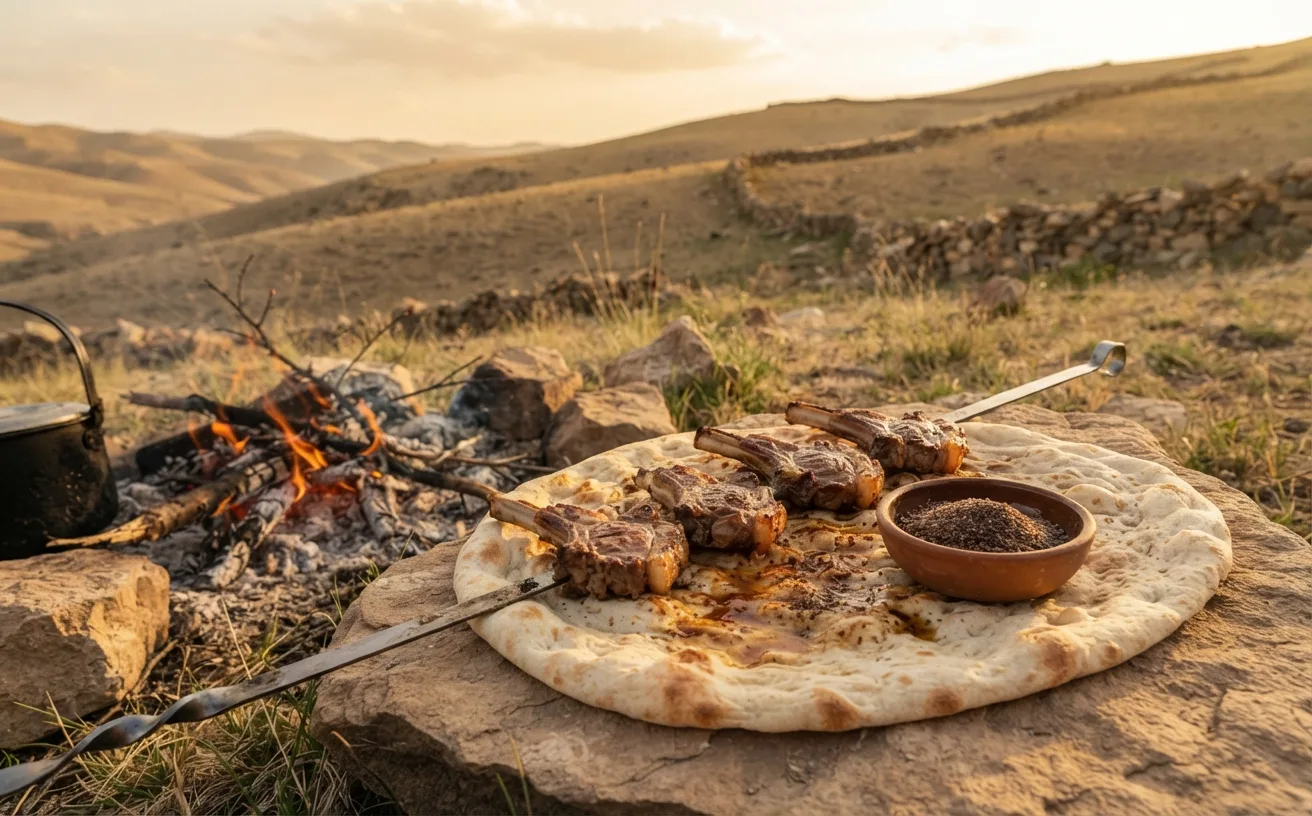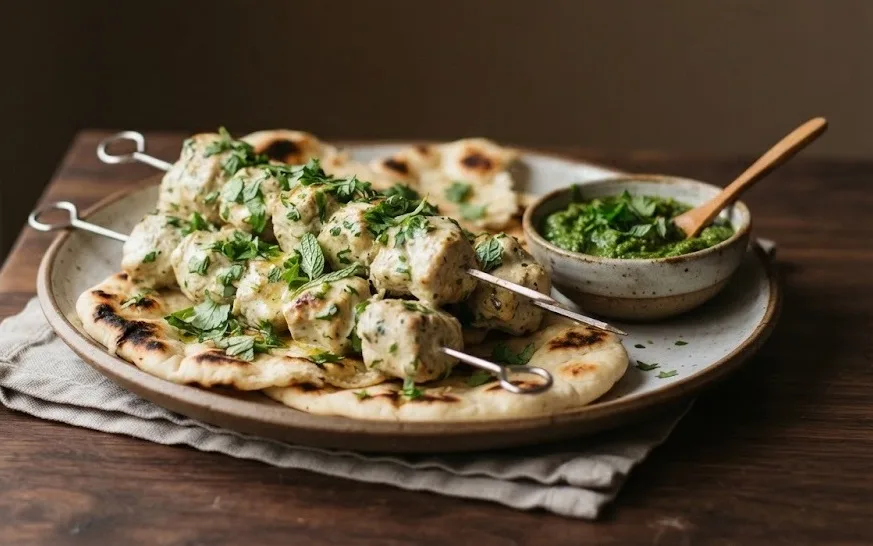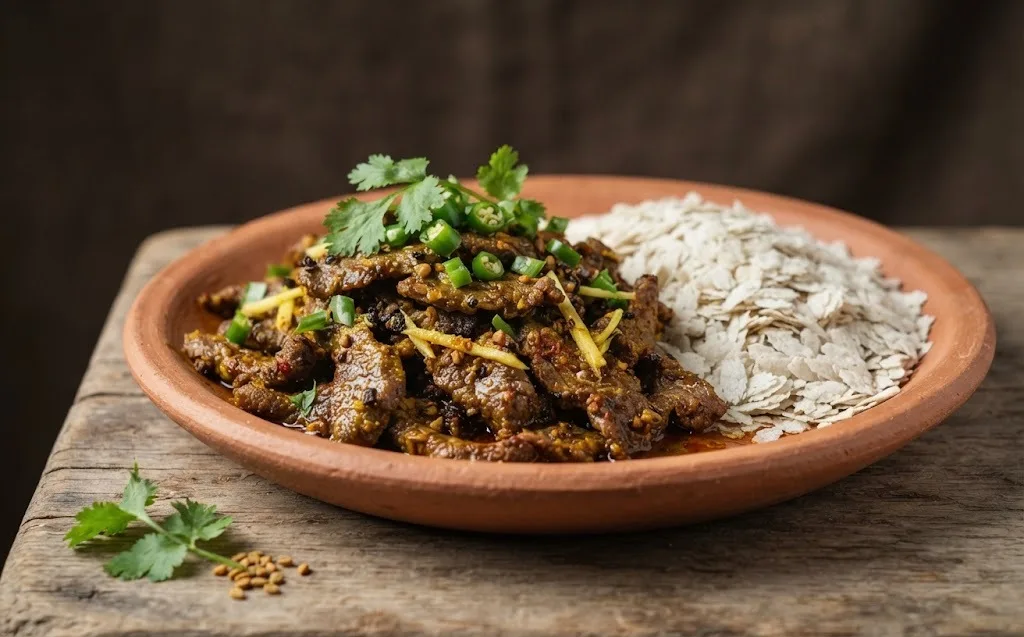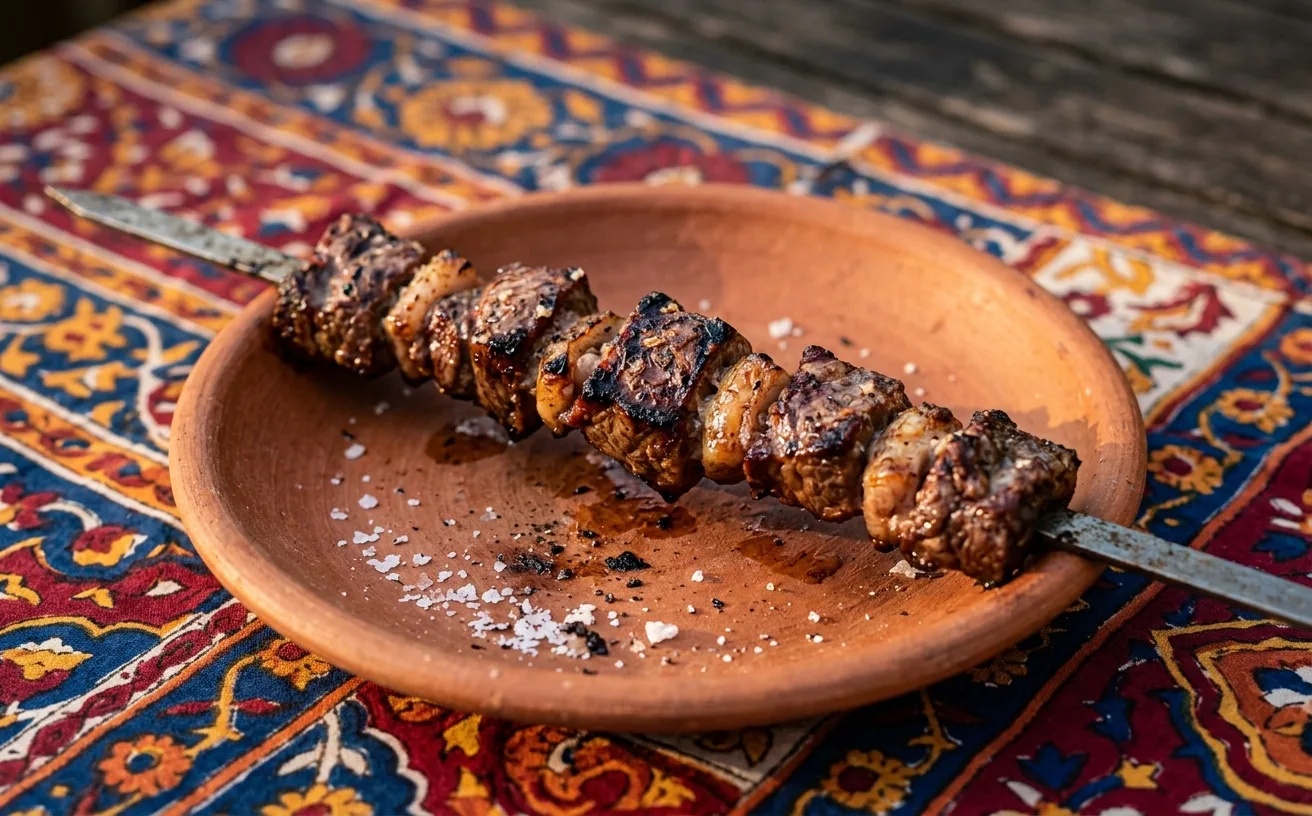
The Pashtun purist's kebab from the Shinwari tribal belt: fresh fat-tail lamb cubes seasoned with nothing but salt (and sometimes animal fat), grilled over wood. Its entire premise is that meat this fresh needs no spice at all.
Also known as shinwari kebab, namkeen tikka, namkeen gosht.
Reference video
Ingredients
- 800 g fat-tail lamb shoulder or leg, in 4 cm cubes
- 150 g lamb tail fat, cubed (or the fattiest trim you can get)
- 1.5 tbsp coarse rock salt
- 1 tsp cracked black pepper (optional, and already controversial)
- 4 naan or roti
- 2 onions, cut into wedges, and 4 whole green chilies
How to make it
- 1
Salt the lamb just before it goes on the skewers; that is the entire marinade.
- 2
Alternate meat and fat on sturdy skewers so each cube has a neighbor of pure fat.
- 3
Cook over medium wood embers, not a roaring fire, 15-18 minutes, turning unhurriedly while the fat renders and self-bastes the meat.
- 4
Rest the skewers wrapped in naan for 4 minutes.
- 5
Eat with the softened naan, raw onion and green chilies bitten between mouthfuls.
Pro tip: Shinwari cooking is a wager on the sheep, not the spice tin. If fat-tail lamb is unobtainable, buy the fattiest shoulder in the shop; lean meat with only salt to hide behind will taste like penance.
Where Shinwari Tikka comes from
It is a purist tradition and its practitioners are proud of it. Shinwari restaurants along the Peshawar and Jalalabad roads keep live animals or slaughter daily, and the argument they make is straightforward: marinade is what you use to disguise meat that has been sitting. It is the same argument made in Gaziantep about küşleme and in Sana'a about shiyah.
Shinwari tikka strips the method down to salt, fat and wood
Salt is the entire seasoning, with black pepper as an optional and disputed extra, and fat-tail lamb is a requirement rather than a preference. The same meat-and-fat threading appears in Iraqi Tikka, but there the lamb soaks in onion juice and pepper for hours first, and Chicken Tikka and Paneer Tikka go further still under spiced yogurt. Cooking pace differs as well: these skewers turn slowly over medium wood embers for 15 to 18 minutes, against 8 to 10 minutes over the fierce Iraqi charcoal. The strict plate is naan, raw onion and green chilli, with no chutney and no yogurt.
Compare: Iraqi Tikka · Chicken Tikka · Paneer Tikka
How Shinwari Tikka is cooked
There is no marinade and no rub. Cubes of lamb, generously fatty, are threaded with pieces of tail fat and salted, sometimes only after they come off the fire. Wood rather than charcoal is traditional and contributes the only flavour the dish has beyond lamb and salt.
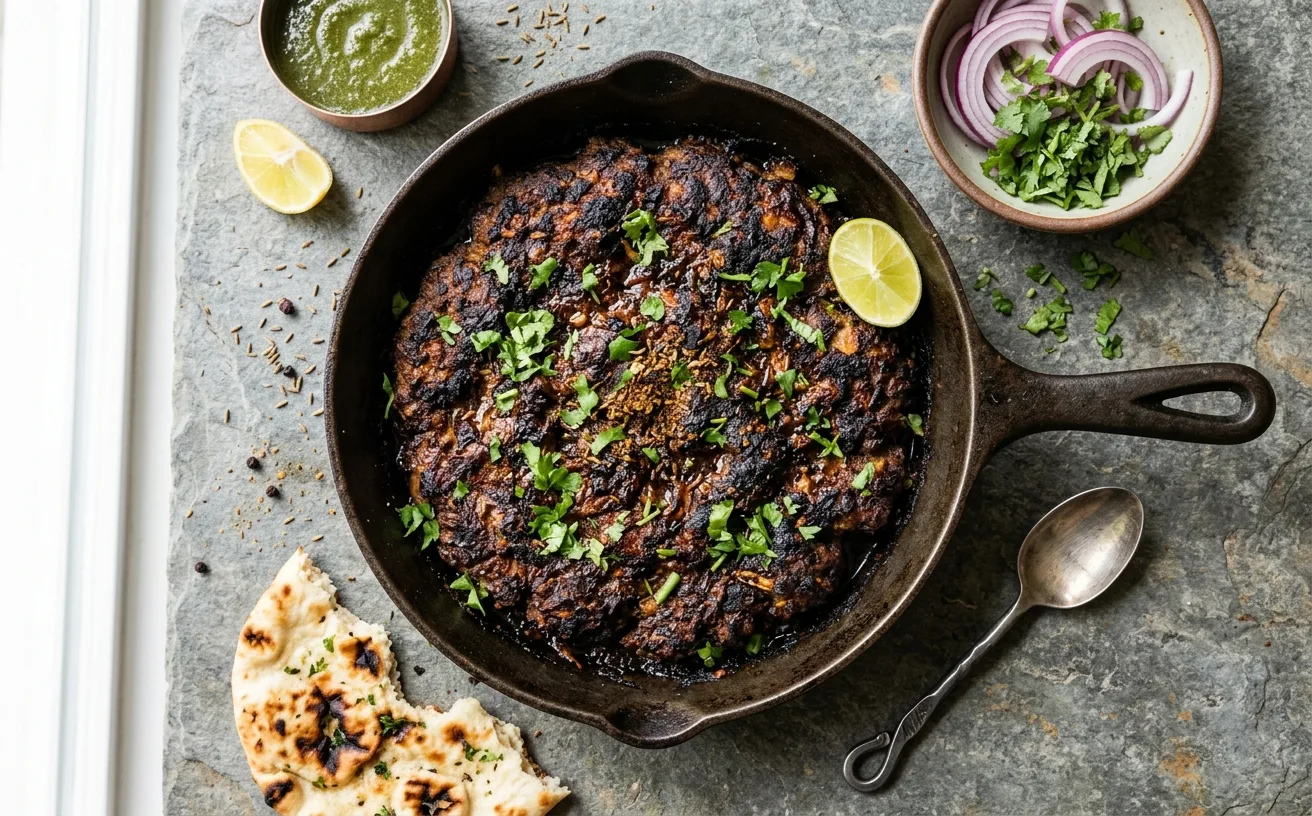
The dish extends beyond skewers into the karahi form, in which the same salted lamb is cooked in a wide flat pan in its own rendered tail fat with nothing but tomato added. Both versions share the same logic: fat is the cooking medium and the flavour, and everything else is subtraction.
Ingredients and shopping
Fat-tail lamb is genuinely the requirement here. Ordinary lean lamb produces something plain and dry rather than plain and rich, and there is no marinade to hide behind. If dumba or liyya is unavailable, use the fattiest shoulder you can find and thread extra fat between the cubes.
Salt, and possibly a crack of black pepper. That is the ingredient list. Wood for the fire if you can — fruitwood or any hardwood — since without spice the smoke is doing a large share of the work. Afghan or Peshawari naan for serving.
How Shinwari Tikka is served
On Afghan naan with sliced raw onion and green chilli, and green tea. There is no chutney, no yoghurt and no salad in the strict version. The plainness is the statement and the restaurants that serve it do not soften it.
Common mistakes
Adding spice
The tradition is salt only. Spicing it makes a perfectly good kebab, but not this one, and misses what the dish is demonstrating.
Lean lamb
With no marinade and no spice, fat is the only thing carrying the dish. Lean cuts give a dry, dull result.
Salting hours ahead
Salt at the fire or after. Early salting draws moisture to the surface and steams the meat.
Charcoal briquettes
Wood smoke is a large part of the flavour here. Use real wood or lump charcoal, not compressed briquettes.
Shinwari Tikka: questions and answers
Is Shinwari tikka really only salted?
Yes. The tradition holds that fresh fat-tail lamb needs nothing else, and Shinwari restaurants stake their reputation on that.
What is fat-tail lamb?
A breed of sheep with a large fat deposit in the tail, common across Central and South Asia. That fat is the cooking medium and the flavour of the dish.
Sources and further reading
- 'Beware of imposters, there is only one authentic Shinwari' — Dawn (Pakistan)