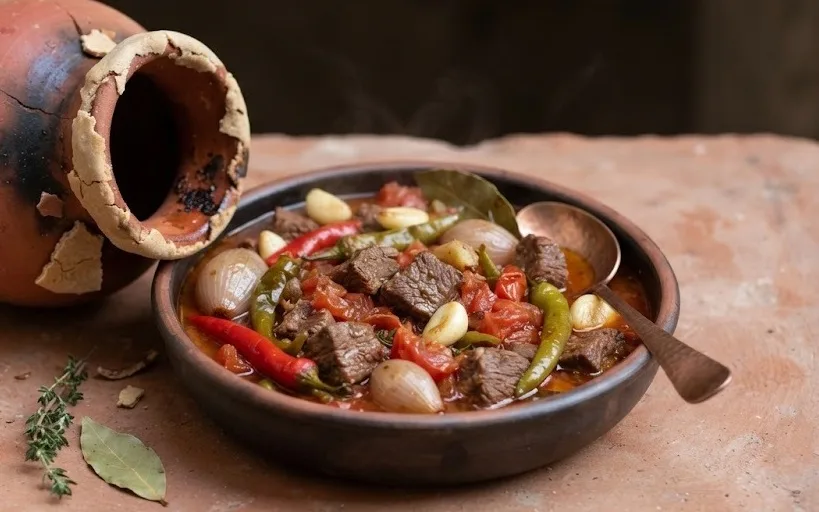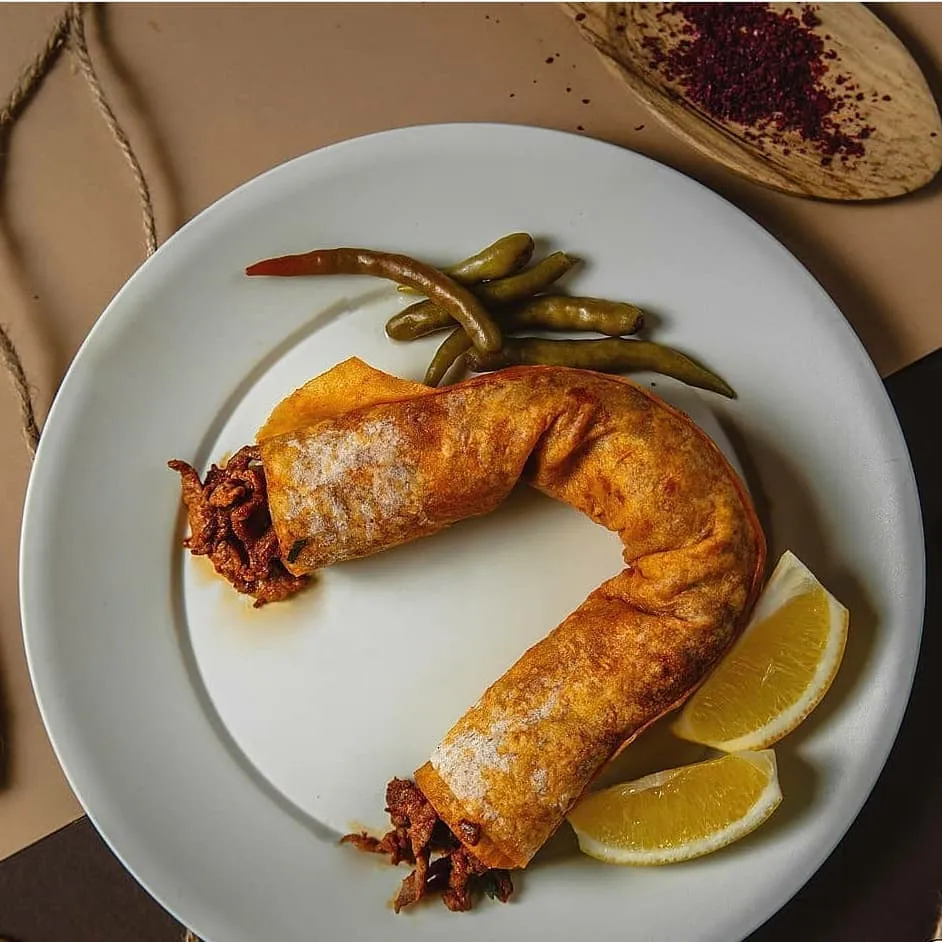
Mersin's street-food signature: finely chopped beef or lamb flash-fried on a domed sac griddle with cottonseed oil, then rolled in thin bread with tomato, parsley, and a squeeze of lemon. The meat is boiled before frying, which keeps it tender enough to cook in seconds.
Also known as tantuni kebabı, Mersin tantuni, tantuni wrap.
Reference video
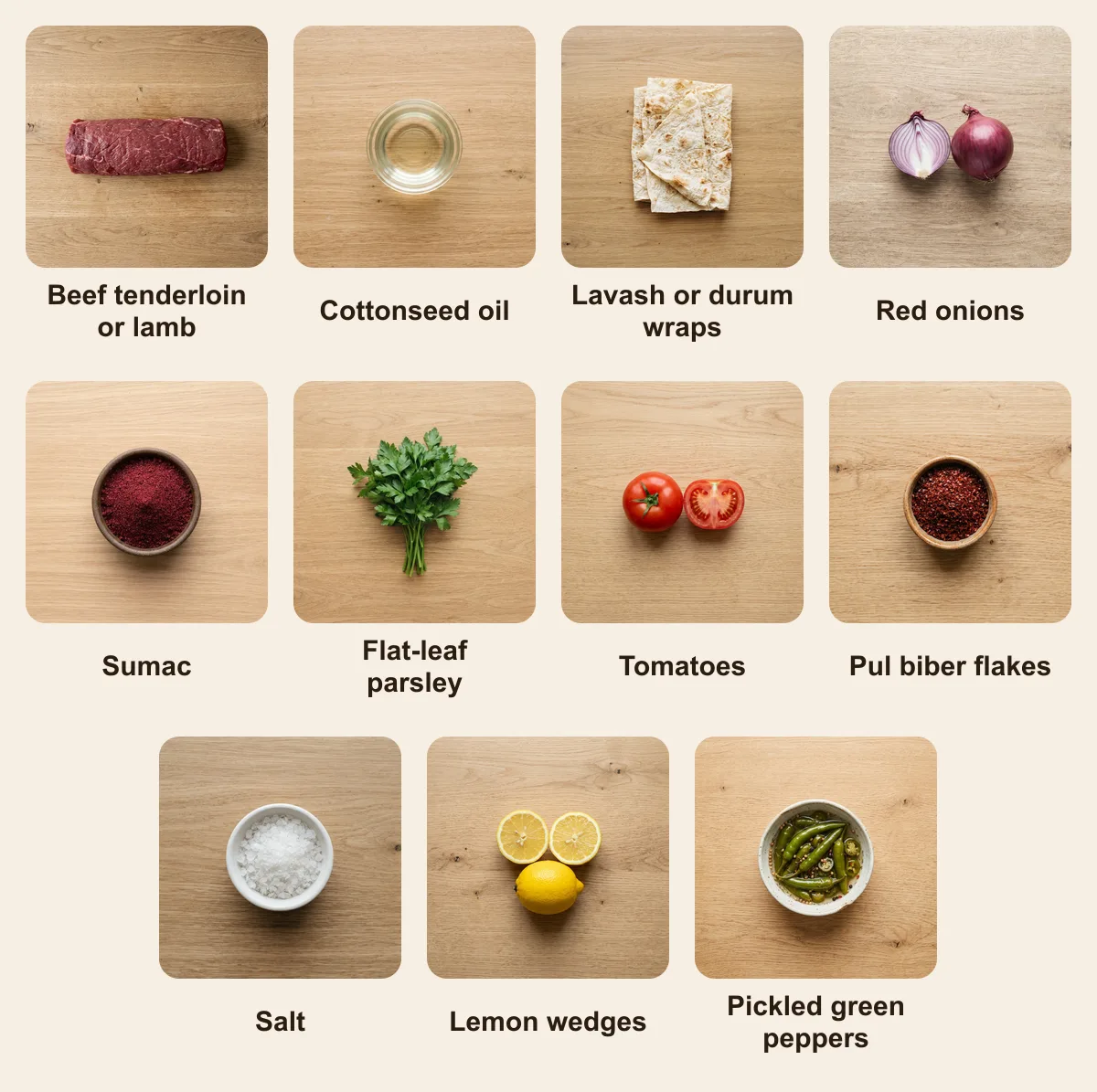
Ingredients
- 500 g beef tenderloin or lean lamb, knife-chopped almost to a mince
- 100 ml cottonseed oil (sunflower is the fallback)
- 4 thin lavash or durum wraps
- 2 red onions, sliced and tossed with 2 tsp sumac
- 30 g flat-leaf parsley, roughly picked
- 2 tomatoes, diced
- 1 tsp pul biber (Aleppo-style pepper)
- Salt, plus lemon wedges and pickled green peppers to serve
How to make it
- 1
Simmer the chopped beef in just enough salted water to cover, about 15 minutes, until tender and the liquid has nearly cooked away. It can wait at this stage, as it does on a real sac griddle.
- 2
Get a wide steel pan or wok smoking hot, pour in a quarter of the oil, and throw in a portion of meat with a pinch of salt and pul biber.
- 3
Flash-fry for 60-90 seconds, splashing in a spoon of the reserved cooking liquid so the oil crackles and stains red.
- 4
Dab one face of a lavash into the spiced oil in the pan, then load it with meat, sumac onions, tomato and parsley.
- 5
Roll tight, halve on the bias, and eat straight away with lemon and pickled peppers.
Pro tip: Cottonseed oil is not a garnish detail, it is the flavor: its high smoke point lets you flash-fry violently. If the meat sizzles for more than two minutes it turns to pellets.
Where Tantuni comes from
Tantuni belongs to Mersin, on Turkey's Mediterranean coast, and the city defends it the way Adana defends its own kebab. It is a twentieth-century street food rather than an ancient one, built around the sac — the domed steel griddle that sits over a gas ring in every tantuni shop — and around cottonseed oil, a by-product of the cotton fields that dominated the Çukurova plain.
It spread across Turkey as a fast, cheap lunch and is now sold nationwide, but the Mersin version remains the reference: leaner, sharper, and defined by that oil. Locals will tell you that a tantuni made with sunflower oil is simply a beef wrap, which is technically unfair and emotionally correct.
How Tantuni is cooked
The meat is cooked twice, and this is the whole trick. Finely chopped beef is first simmered in lightly salted water until tender and the liquid has almost gone, which can be done hours in advance. That pre-cooked meat then waits beside the griddle, and only meets the fire at the moment of ordering.
The second cooking lasts under two minutes. A ladle of cottonseed oil hits the hot sac, the meat goes in with salt and pul biber, and a splash of the reserved cooking water is thrown in so the oil spits and stains red. The bread is then dragged face-down through that stained oil before being filled — which is why a real tantuni tastes of the pan and not just of the meat.
Ingredients and shopping
Beef tenderloin or a lean cut of lamb, knife-chopped almost to a mince, is the standard. The pieces must be small: this is not a stir-fry with strips but something closer to a coarse hash. Fat is added by the cooking oil rather than by the cut, which is unusual in the kebab world and explains the dish's relative lightness.
Cottonseed oil is worth seeking out from a Turkish grocer; sunflower is the workable fallback. The bread should be thin lavash or a durum sheet — a thick flatbread cannot be dipped in oil without going soggy. Sumac-tossed onion and a great deal of parsley are not garnishes but structural components of the flavour.
How Tantuni is served
It is rolled tight, cut on the bias, and eaten immediately with lemon wedges, pickled green peppers and turnip juice (şalgam) — the sour, salty purple drink that Mersin and Adana consider the only correct partner. Ayran is the mild alternative. A tantuni that has sat for ten minutes has already lost the contrast between the hot meat and the crisp raw onion.
Common mistakes
Skipping the boiling stage
Raw chopped beef flash-fried for ninety seconds is chewy. The pre-simmer is what allows the final cook to be so short.
Cooking it too long in the pan
Past about two minutes on the griddle the meat tightens into dry pellets. Fast and violent is correct.
A cold or crowded pan
The oil must be smoking and the batch small. A cool pan steams the meat instead of frying it.
Not dipping the bread
The bread passing through the spiced oil is half the dish. Filling a dry wrap gives you something else entirely.
Tantuni: questions and answers
What meat is tantuni made from?
Beef is the standard in Mersin, usually tenderloin or another lean cut chopped very fine. Lamb versions exist and are common in the south-east, but beef is the reference.
Why is cottonseed oil used?
It has a very high smoke point, which lets the meat be flash-fried at aggressive heat, and it carries a distinct grassy note that Mersin cooks consider part of the dish's identity.
Is tantuni a kebab?
It is usually counted in the kebab family because it is grilled meat in bread, but it is cooked on a griddle rather than a skewer. In Turkey it is normally listed as its own category.
Can I make tantuni without a sac griddle?
Yes. A wide carbon-steel wok or a heavy cast-iron pan gets hot enough. What you cannot fake is the heat — a domestic pan must be genuinely smoking before the meat goes in.
Sources and further reading
- Tantuni — Wikipedia
- Perfectly Spiced Tantuni in Mersin, Its Place of Origin — Culinary Backstreets