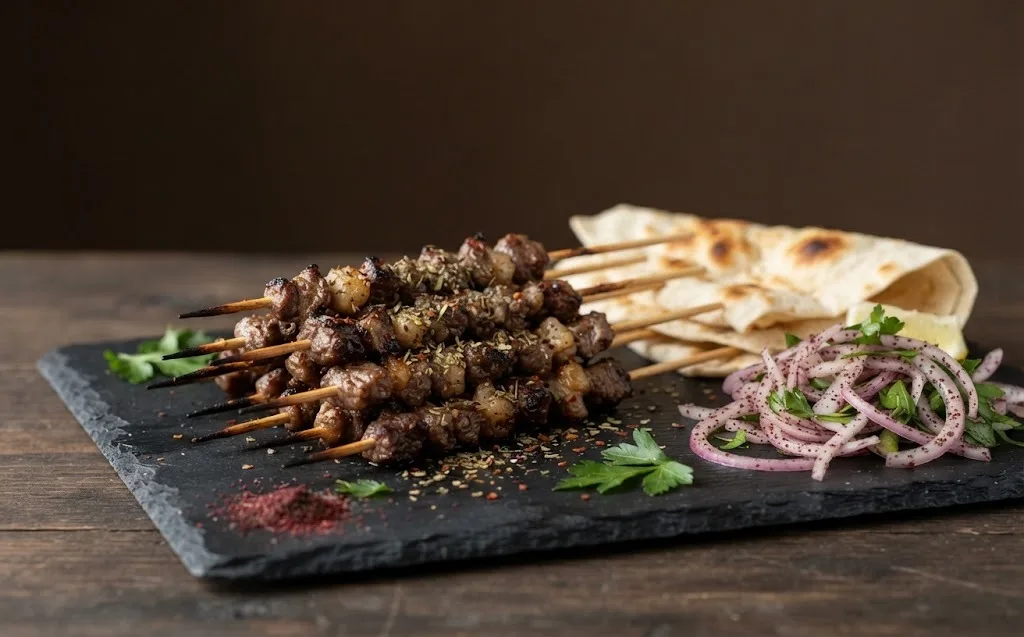
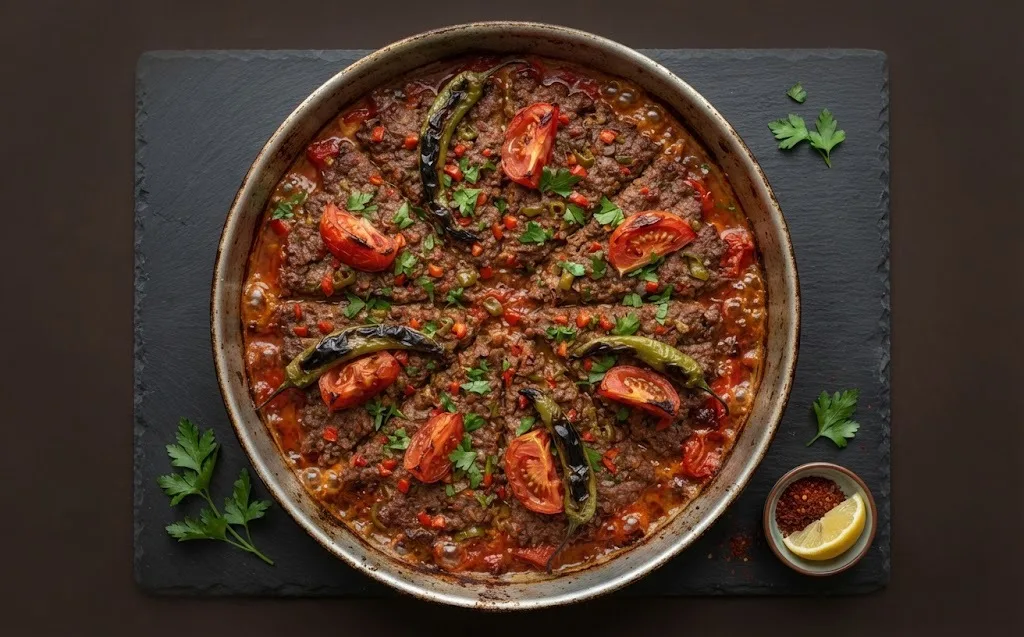
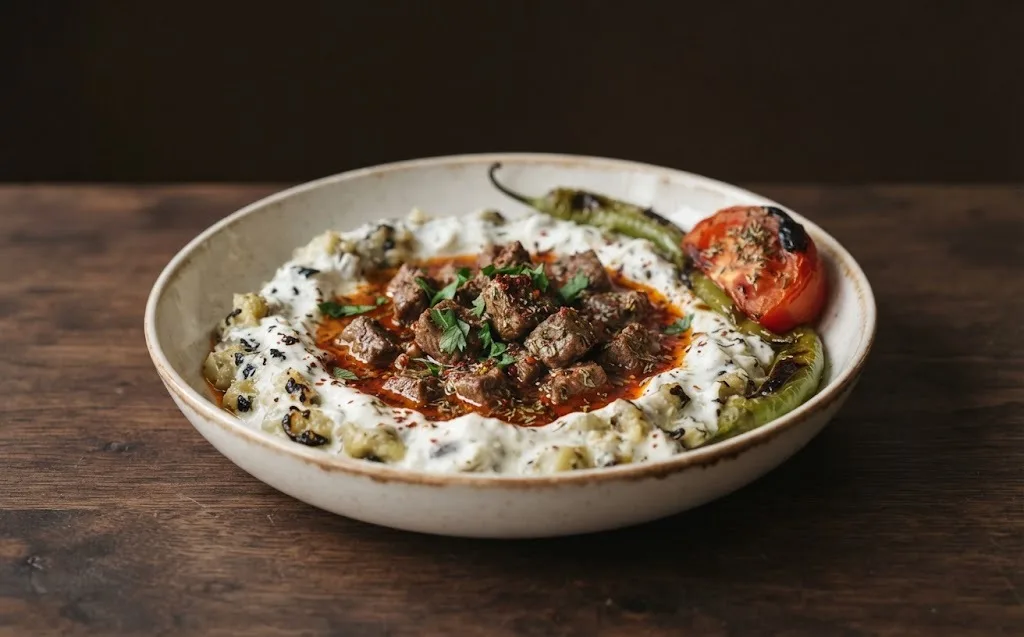
The archetype of the family: marinated cubes of lamb (or beef) threaded on a sword-like metal skewer and grilled over open coals. The Turkish word şiş simply means skewer, and the dish's format spread with Turkic peoples across three continents.
Also known as şiş kebap, sis kebab, shish kabob.
Reference video
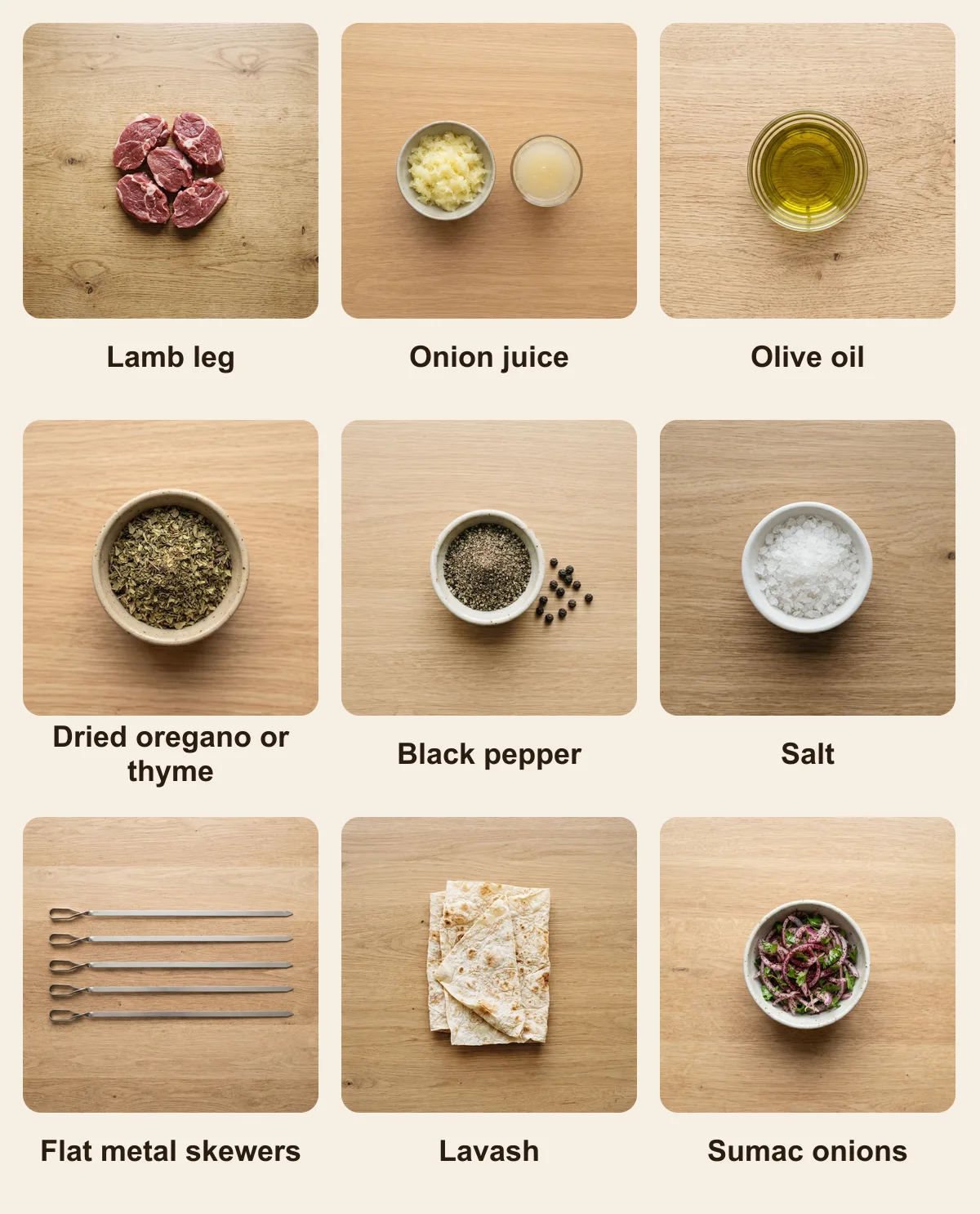
Ingredients
- 800 g boneless lamb leg, cut into 3 cm cubes
- 1 large onion, grated, then squeezed for its juice only
- 45 ml olive oil
- 1 tsp dried oregano or thyme
- 1 tsp freshly ground black pepper
- 1.5 tsp salt (added just before grilling)
- 4 flat metal skewers
- Lavash and sumac onions, to serve
How to make it
- 1
Grate the onion into a sieve and press hard: you want the juice, nothing else. Combine it with the oil, oregano and pepper.
- 2
Turn the lamb through the marinade and refrigerate 4 hours.
- 3
Salt the cubes, then thread them onto flat skewers with a finger's width between pieces so every face browns.
- 4
Cook over hot charcoal 8-10 minutes total, giving each of the four sides about 2 minutes without fiddling.
- 5
Rest the skewers on lavash under a loose cover for 3 minutes; the bread drinks the juices and becomes part of the meal.
Pro tip: Onion juice tenderizes; onion pulp burns. Any shred of pulp left clinging chars bitter on the coals before the lamb has even colored.
Where Shish Kebab comes from
Şiş simply means skewer in Turkish, and şiş kebabı is the plainest and oldest idea in the entire family: meat on a metal rod over fire. Its written history in Anatolia goes back to the Ottoman kitchen, and its practical history goes back much further, to nomadic Turkic cooking where a sword or a rod was the only equipment available.
Because it is the most portable idea in this atlas, it travelled further than any other kebab. Every cubed-meat skewer from the Balkans to Central Asia to the American backyard descends from the same format, and the English word shish kebab entered the language through Ottoman Turkish before spreading worldwide as the generic term for meat on a stick.
The lamb prototype behind every other shish
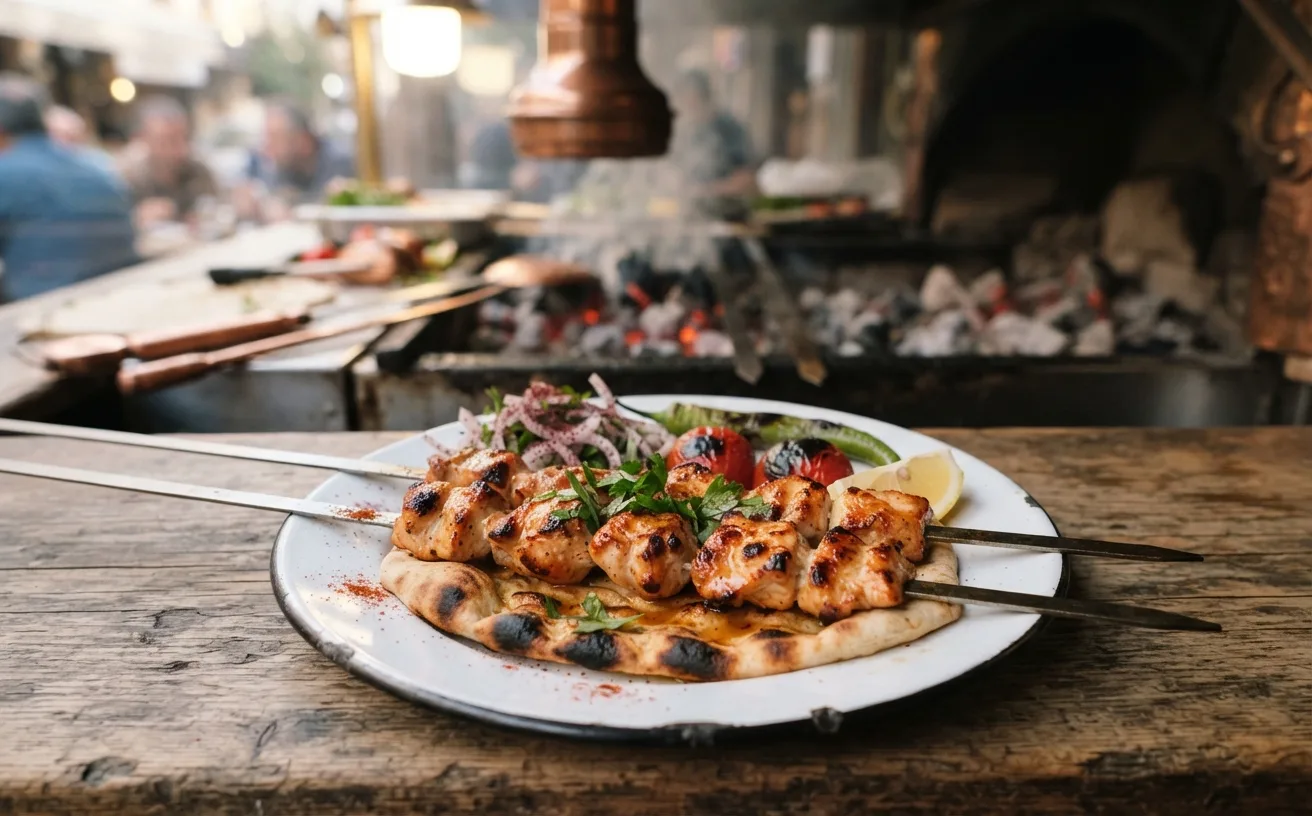
All four other skewers in this group start from this one: three-centimetre cubes of lamb shoulder or leg, a short onion-juice and olive-oil marinade, flat metal skewers and grey, glowing coals for eight to twelve minutes. Cop Shish shrinks the meat to thumbnail nuggets of lamb and fat on thin wooden sticks. Chicken Shish (Tavuk Shish) uses thigh meat in yogurt and tomato paste over a gentler fire. Shishcheta and Shish Kebab (North American) put peppers and onion on the meat skewer, something Turkish grill houses avoid by giving vegetables their own; the Bulgarian version runs on pork and savory, the American one on beef or chicken.
Compare: Cop Shish · Chicken Shish (Tavuk Shish) · Shishcheta · Shish Kebab (North American)
How Shish Kebab is cooked
Cubed meat, unlike minced kebab, has nowhere to hide. The marinade does two jobs — tenderising with acid or dairy, and carrying flavour into the surface — but the real work happens in the cutting and the threading. Cubes should be roughly the same size, around three centimetres, and they should be threaded with a little air between them, so the sides brown too while the insides stay short of well done.
The fire matters more here than in any minced kebab. Coals should be glowing and grey, not flaming, and the skewers sit close enough that a cube takes eight to twelve minutes in total with regular quarter-turns. Fat cubes threaded between the lean ones are the traditional basting system, and they work better than any brush.
Ingredients and shopping
Lamb shoulder or leg is the classic; beef sirloin or rump works and is common in Turkish restaurants that serve both. The cut must have some intramuscular fat — lean fillet is a waste here, because it has nothing to render and dries out in the last two minutes. If you like, ask the butcher for a piece of lamb tail fat to thread between the cubes.
The marinade should be short and simple: grated onion juice, olive oil and pepper, sometimes a spoon of yoghurt or tomato paste, with the salt held back until just before grilling. Long acidic marinades break the surface into mush. Two to four hours is plenty; overnight is already too much if there is lemon in it.
How Shish Kebab is served
It arrives on a bed of flatbread that soaks the juices, with grilled tomato and long green pepper, sumac onions and parsley. Bulgur pilav or rice sits alongside, and a bowl of cacık or plain yoghurt cools the plate. In a full mixed grill it shares the platter with minced Adana and chicken şiş, which is how most Turkish restaurants expect you to order it.
Common mistakes
Uneven cubes
Different sizes cook at different rates, so half the skewer is dry before the other half is safe. Cut deliberately.
Cramming the cubes together
Packed tight, the cubes cook like one thick piece: the ends overcook, the middle lags and the sides never brown. Leave a finger's width between them.
Vegetables on the same skewer
Peppers and onions cook far faster than lamb. Give them their own skewer, which is what Turkish grill houses do.
Flaming coals
Flames scorch the outside and leave the middle raw. Wait until the coals are grey and glowing.
Lean fillet
Expensive and wrong. Shoulder is cheaper and better here.
Shish Kebab: questions and answers
What is the difference between shish kebab and Adana kebab?
Shish is cubes of whole meat on a skewer. Adana is hand-minced lamb pressed onto a flat skewer and seasoned for heat. Different cut, different technique, different texture.
How long should you marinate shish kebab?
Two to four hours is enough. Yoghurt-based marinades can go overnight; acidic ones with lemon should not, because they turn the surface of the meat mealy.
What is the best meat for shish kebab?
Lamb shoulder or leg for flavour, beef sirloin or rump if you prefer beef. Avoid very lean cuts such as fillet — they have no fat to render and dry out fast.
Should you put vegetables on the skewer?
Not on the same one. Meat and vegetables cook at different speeds, so grill them on separate skewers and combine on the plate.
Sources and further reading
- Shish kebab — Wikipedia
- A Summertime Treat with a Long History — Boom Magazine (Athens)