Every kebab tradition that uses yogurt sauce has already made a decision for you: gyros gets tzatziki, adana gets plain garlic yogurt, koobideh gets mast-o khiar, and cevapi gets no yogurt at all. Most home cooks ignore those decisions, make one all-purpose cucumber sauce, and put it on everything. That is how you end up with a watery green puddle diluting a doner wrap that only ever wanted garlic, salt, and thick dairy.
Sauce guide
Best Yogurt Sauce For Gyro And Kebab
Compare tzatziki-style, Turkish-style, and garlic-yogurt sauces for kebab wraps and plates so you know which cooling sauce fits each meat and bread style.
By Ali Ocak
Updated 2026-09-09
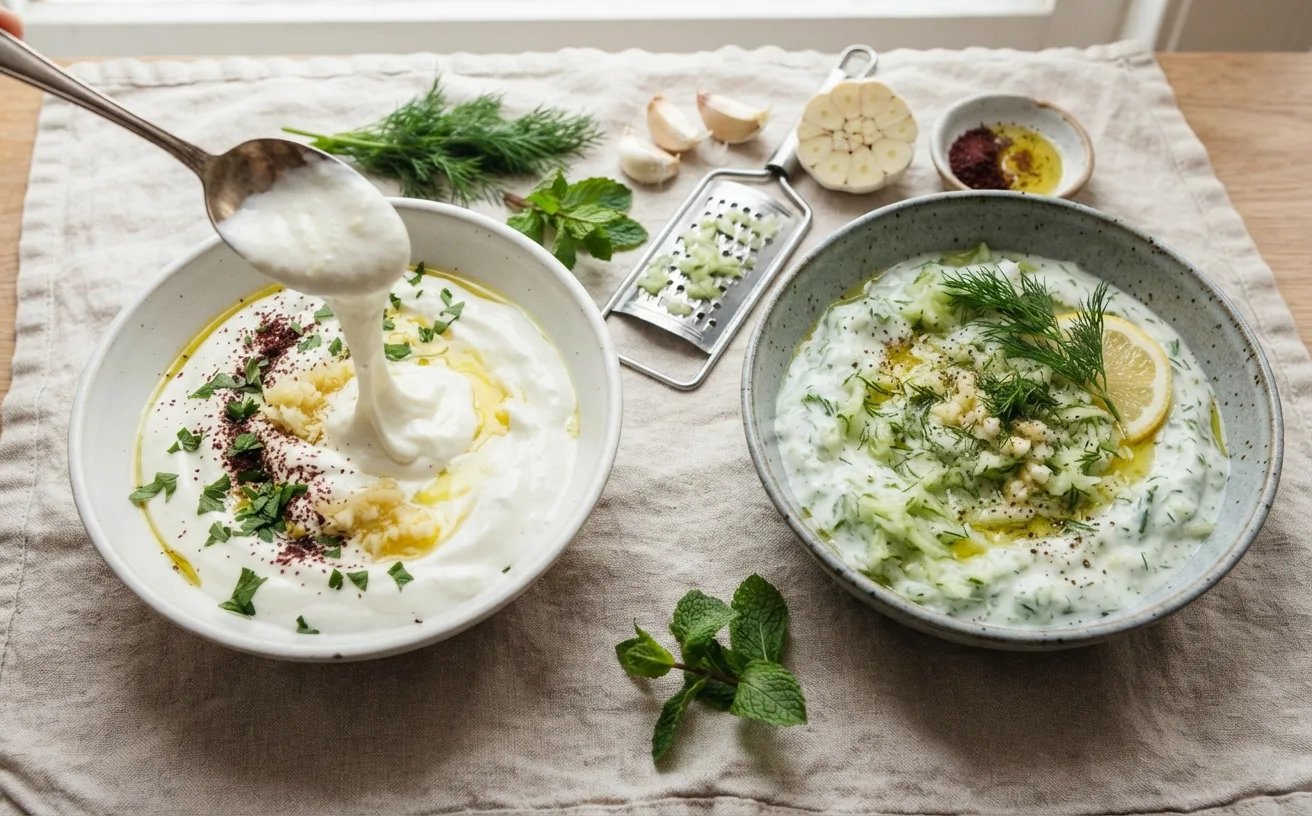
The differences are not decorative. Tzatziki is a salad in sauce form: cucumber, dill, vinegar, olive oil, built to cut through fatty pressed meat in a soft pita. Turkish garlic yogurt is the opposite philosophy: strip everything out so the char and pepper of the meat stay in front. Choosing between them is a real cooking decision with a real mechanism behind it, and getting it right makes the meat taste sharper, not just wetter.
This guide covers the yogurt itself, the two master sauces and their regional cousins, the numbers that keep them thick instead of soupy, and a straight verdict for each dish on this site: which sauce, or none.
Start with the yogurt, not the recipe
The single biggest factor in any yogurt sauce is water content, and you control it before you add a single flavoring. Regular stirred yogurt is roughly 85 percent water; strained yogurt (Greek-style, or Turkish süzme) has had about half its whey drained off. A sauce built on unstrained yogurt starts loose and only gets looser once salt pulls moisture out of cucumber and garlic. If your supermarket only sells thin yogurt, strain it yourself: line a sieve with cheesecloth, add the yogurt, and give it 2 to 4 hours in the fridge. You will lose about a third of the weight as whey and gain a sauce that actually clings to meat.
Fat matters almost as much. A 10 percent fat Greek-style yogurt gives you a sauce that coats and carries garlic smoothly; 5 percent is the practical floor for kebab work. Zero-fat yogurt turns chalky and aggressively sour because there is no fat to buffer the lactic acid, and no amount of olive oil stirred in afterward fully fixes the texture. Fat is doing structural work here, the same way it does inside an adana kofta.
Acidity is the last variable. Fresh yogurt sits around pH 4.4 and tastes gently tangy; yogurt near its date drops lower and reads sharp. For tzatziki that sharpness is welcome because vinegar is coming anyway. For Turkish garlic yogurt, which has nothing to hide behind, use the freshest, mildest yogurt you can get.
Tzatziki: the loaded sauce, built so it stays thick
Real tzatziki is engineered around one problem: cucumber is about 96 percent water and it will surrender that water into your sauce. The fix is salt and pressure, in that order. Grate the cucumber coarsely, toss it with about 1 percent of its weight in salt (a teaspoon for a large cucumber), and let it sit 15 to 20 minutes. Osmosis pulls the water out; then squeeze hard in a clean towel. A properly squeezed cucumber loses 40 to 50 percent of its weight. Skip either step and your tzatziki is soup by dinner.
The working ratio is 2 parts strained yogurt to 1 part squeezed cucumber by weight, plus 2 to 3 grated garlic cloves, a tablespoon of olive oil, and 1 to 2 teaspoons of red wine vinegar or lemon juice per 500 grams of yogurt. Dill is the classic herb; mint works; both together is fine at about 2 tablespoons chopped, total. More than that and you have made a herb sauce that happens to contain yogurt.
Rest it 30 to 60 minutes in the fridge before serving. This is not optional ceremony: the garlic needs time to disperse and mellow, and the salt needs time to equalize. Tzatziki eaten immediately tastes disjointed, with raw garlic heat sitting on top of bland dairy. The same sauce an hour later tastes like one thing.
Tzatziki belongs where it evolved: with gyros and souvlaki. Broad soft pita, sliced or skewered pork or chicken, tomato and onion — the cucumber and vinegar are pulling the same weight the salad is, and the whole wrap is designed around that freshness.
Turkish garlic yogurt: three ingredients, on purpose
Sarımsaklı yoğurt — garlic yogurt — is strained yogurt, raw garlic, and salt. That is the whole recipe: one crushed clove per 250 grams of yogurt, a quarter teaspoon of salt, and if the yogurt is very thick, a spoonful of cold water to loosen it to a heavy-cream flow. The restraint is the point. An adana kebab is already carrying pul biber, lamb fat, and hard char; a doner wrap is already dense with seasoned meat and onion. Cucumber and dill in that context are noise. The garlic yogurt exists to cool the chili heat and reset your palate between bites, nothing more.
The famous escalation of this sauce is Iskender kebab: sliced doner laid over cubes of pide bread, garlic yogurt on the side or underneath, and foaming brown butter with tomato sauce poured over the top at the table. Hot butter over cold yogurt over bread soaked in meat juices — it works precisely because the yogurt is plain. Put tzatziki under that butter and the cucumber water bleeds into everything.
Turkey also has cacık, which foreigners constantly confuse with tzatziki. Cacık is deliberately thinner — often thinned with water or even ice to a drinkable consistency — with cucumber and dried mint, and it is served as a side dish or almost a cold soup alongside the meal, not spread inside a wrap. If you load cacık into a dürüm you have misunderstood its job: it is a beverage-adjacent cooler, not a condiment.
The wider family: Iran, the Balkans, and the sauces that are not yogurt
Persian koobideh comes with mast-o khiar: yogurt with cucumber, dried mint, and often a little dried rose petal or raisin and walnut in fancier versions. It looks like tzatziki but behaves differently — no vinegar, no olive oil, no raw garlic punch, and it is eaten by the spoonful alongside rice and grilled meat rather than spread in bread. With saffron rice, grilled tomato, and a pat of butter, koobideh wants that gentler, mint-led coolness. Tzatziki's vinegar would fight the saffron.
The Balkans give you the clearest lesson that yogurt is not universal. Cevapi are traditionally served in somun flatbread with raw onion, ajvar (roasted red pepper relish), and kajmak — a clotted-cream dairy that is rich and barely tangy, the opposite of sour yogurt. Drowning cevapi in tzatziki is a tourist move; the dish's balance comes from sweet-smoky ajvar against fatty kajmak, not from acid and cucumber.
And know the impostor: the blinding white sauce on Levantine chicken shawarma is usually toum — an emulsion of garlic, oil, and lemon that contains no dairy at all — and the white sauce on many British doner wraps is closer to garlic mayonnaise thinned with yogurt. If you are chasing a specific shop's flavor, first work out which of these three families you actually ate, because they are not interchangeable and they are not built the same way.
The decision table: which sauce for which kebab
Gyros or souvlaki in pita: tzatziki, no debate. The dish is constructed around it, and the vinegar-cucumber freshness is doing the acid work the plate needs.
Doner, adana, or any spiced Turkish kebab in dürüm or over rice: plain garlic yogurt. If the kebab is very hot with chili, increase the yogurt quantity, not its complexity — a bigger pool of plain cold dairy beats a busier sauce, because casein binds capsaicin and cucumber does not. For shish kebab from lamb leg, either sauce works; let the marinade decide — an oregano-lemon Greek marinade points to tzatziki, a pepper-paste Turkish one points to garlic yogurt.
Koobideh with rice: mast-o khiar or even plain yogurt with dried mint. Keep vinegar and raw garlic out of it.
Cevapi: skip yogurt entirely. Ajvar and kajmak with raw onion is the correct answer, and a garlicky yogurt is an acceptable substitute only if you genuinely cannot find or make either.
When in doubt, use this rule: the more seasoning the meat carries, the plainer the sauce should be. Heavily spiced meat plus loaded sauce equals mud; simply seasoned meat plus loaded sauce equals balance.
Garlic: the variable that makes or breaks the sauce
Raw garlic in yogurt is a chemistry problem on a timer. Crushing garlic ruptures cells and creates allicin, the compound behind raw garlic's burn, and the finer you process it, the more you make — garlic blitzed in a food processor is dramatically harsher than the same clove grated on a microplane, which is harsher than one crushed with the flat of a knife. Match the processing to the sauce: grate for tzatziki, where other flavors share the load; crush or pound with salt to a paste for Turkish garlic yogurt, where the garlic stands alone and evenness matters.
Time is your second control. Allicin's aggression peaks in the first 10 minutes and mellows steadily as it reacts onward; a garlic yogurt that tastes borderline aggressive at hour one is usually right at hour three and can tip past pleasant into pervasive by day two. This is why you under-garlic slightly when making sauce ahead: one clove per 250 grams for same-day service, and consider three-quarters of that if the sauce will sit overnight.
If raw garlic wrecks your stomach or you want sweetness instead of heat, steep the crushed clove in the lemon juice or vinegar for 10 minutes and strain it out — the acid extracts flavor while denaturing the enzyme that keeps producing allicin — or swap in confit garlic at double the quantity. Both give you garlic presence without the burn, at the cost of the sharp edge that makes Turkish garlic yogurt sing against adana.
Consistency, temperature, and keeping
Thickness should match the format. For a wrap, the sauce must hold a line when piped or spooned — think thick sour cream — because anything looser migrates to the bottom fold and soaks through the bread; a dürüm has maybe ten minutes of structural life and a wet sauce halves it. For a plate or rice service, thin the same sauce with a tablespoon of cold water or whey per cup until it flows off the spoon in a ribbon, so it can be dragged through with each forkful.
Serve yogurt sauce at fridge temperature, 4 to 8 degrees Celsius, and add it at the last moment. The cold-against-hot contrast is most of the pleasure, and it is also protective: yogurt is an acidic dairy, and direct sustained contact with meat fresh off the grill will curdle it — the proteins tighten and the sauce splits into grainy solids and clear whey somewhere above 65 degrees. On plates like Iskender where hot fat is poured over yogurt on purpose, the yogurt survives because it is thick, cold, and cushioned by bread. On your cutting board, rest the meat 5 minutes before saucing.
Storage: an airtight container at 4 degrees keeps any of these sauces 3 to 4 days, with two caveats. Garlic keeps getting louder, so a day-three tzatziki is noticeably more pungent than a day-one batch. And cucumber keeps weeping, so expect a spoonful of pooled liquid on top — pour it off rather than stirring it back in, or the sauce loosens permanently. Never freeze yogurt sauce; the ice crystals break the gel and it thaws grainy and split.
The five ways yogurt sauce fails, and the mechanism behind each
Watery sauce. Cause: unsalted, unsqueezed cucumber, or unstrained yogurt. The cucumber's water was always going to come out — salt just decides whether it comes out in your towel or in your serving bowl. Fix: salt, wait 15 minutes, squeeze until nothing more drips.
Bitter, burning garlic. Cause: over-processing (a blender creates maximum allicin plus bitter oxidation from the heat of the blades) or old sprouting garlic, whose green germ is markedly bitter. Fix: grate or crush by hand, halve the clove and strip the germ if it has one, and give the sauce its resting hour.
Chalky, harsh texture. Cause: fat-free yogurt, or yogurt stabilized with starch and gums that break under salt and acid. Fix: buy yogurt whose label reads milk and cultures, at 5 percent fat or more.
Split, grainy sauce on the plate. Cause: heat. Yogurt proteins coagulate when the sauce sits against meat or bread well above 65 degrees Celsius, and acid accelerates it — which is why lemon-heavy tzatziki splits faster than plain garlic yogurt. Fix: cold sauce, rested meat, sauce added at service.
A wrap where everything tastes the same. Cause: the sauce is overloaded relative to the meat — usually tzatziki with too many herbs on an already spiced kebab. This is a seasoning collision, not a quantity problem. Fix: go back to the decision table and give the spiced meat the plain sauce it was designed to sit next to.
Cook These Next
Pork / 24h
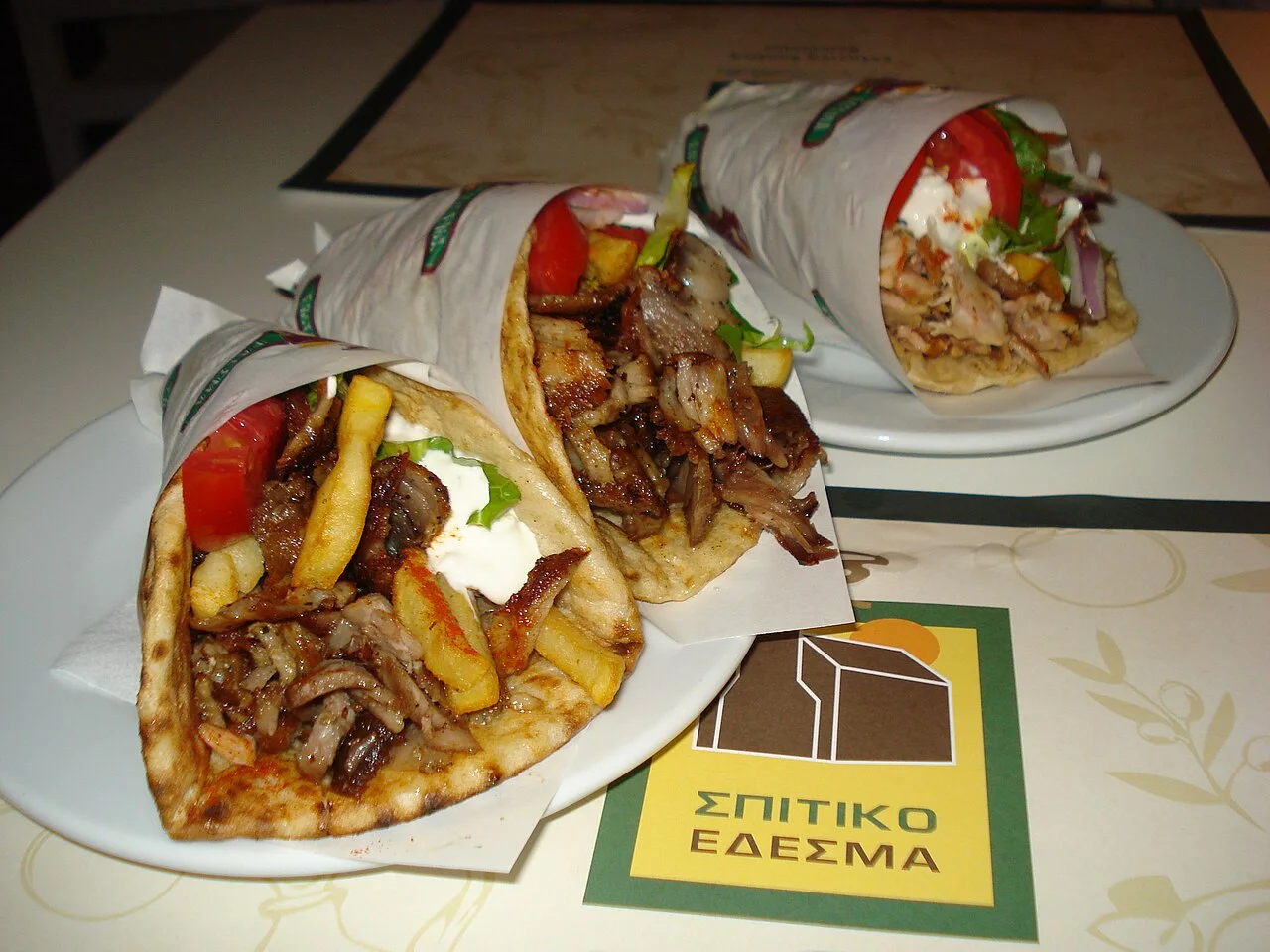
Authentic Gyros
The Greek vertical rotisserie. Pork slices stacked and shaved.
Pork / 2h
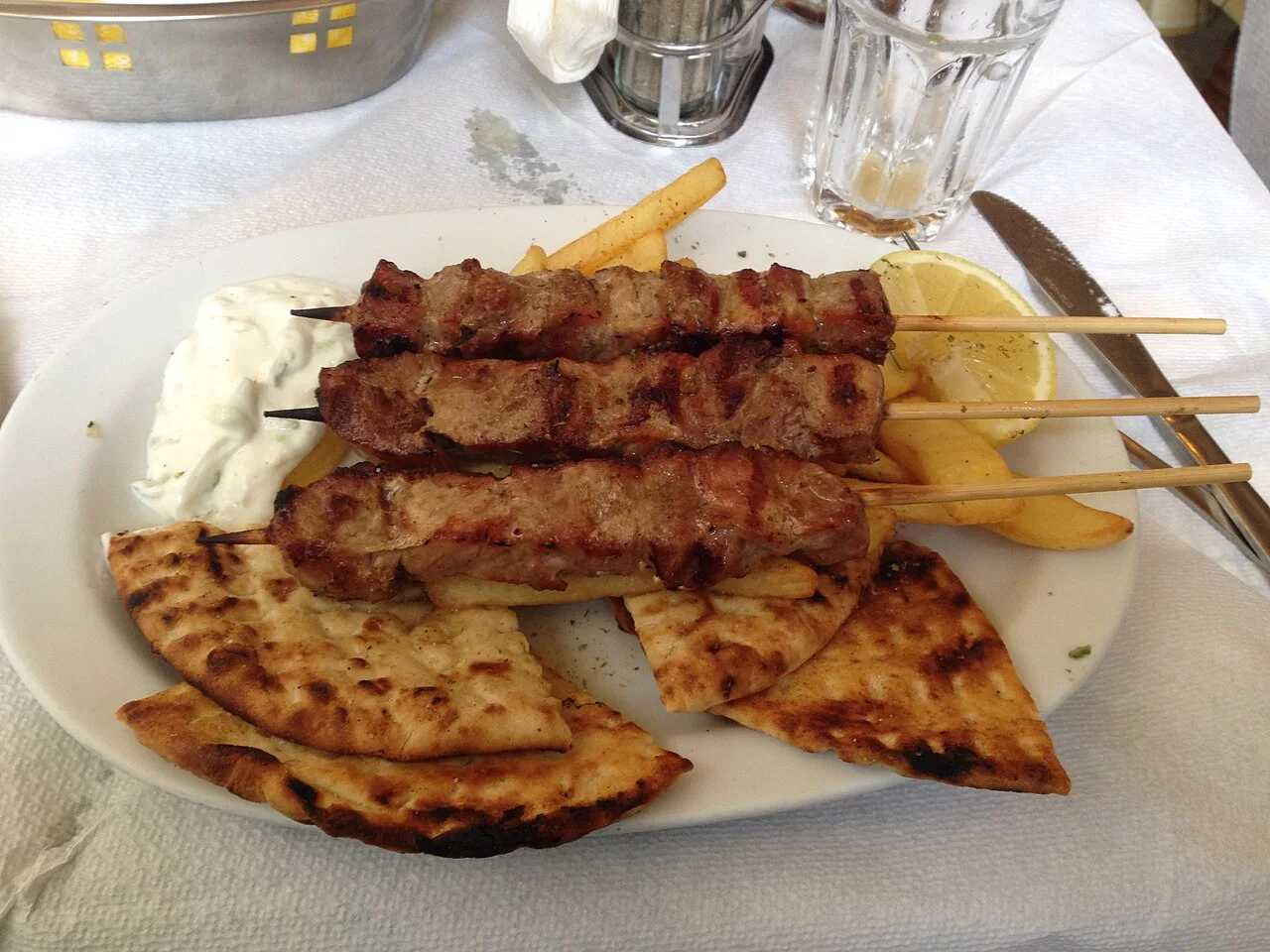
Souvlaki
Classic Greek skewers. Traditionally Pork, marinated in lemon and oregano.

Lamb / 45m
Adana Kebab
The spicy gold standard of Turkish BBQ. Hand-minced lamb with tail fat.
 AI illustration
Beef / 1h
Halifax Donair
Canada's spiced beef masterpiece with sweet condensed milk sauce.
Related Collections
Gyros, Shawarma, and Donair Guide
Compare gyros, shawarma, donair, souvlaki, and tawook with bread pairings, sauce choices, wrap assembly, and serving ideas.
Best Bread for Kebab, Shawarma, and Gyros
Learn which bread to use for kebab wraps, gyros, shawarma, doner, and grilled meat plates, including lavash, pita, pide, somun, lepinja, and durum.
Turkish Kebab Guides
A focused collection for Turkish kebab styles including Adana, Urfa, Cag, Iskender, and supporting bread pages.
More Guides
Terminology guide
Kebab Vs Kabob Vs Kabab
Understand the difference between kebab, kabob, and kabab spellings, what people usually mean by each, and which dishes fall under the broader kebab family.
Serving guide
Best Side Dishes For Kebab
Serve kebab better with the right sides, salads, rice, pickles, breads, and sauces for wraps, plates, Turkish grills, Balkan spreads, and shawarma-style meals.
Comparison
Shashlik vs Shish Kebab: Meat, Marinade, Cut and Fire Compared
How shashlik differs from shish kebab: the shared şiş root, 4-5 cm pieces vs 3 cm cubes, vinegar or kefir marinades, the mangal fire, and which one to cook.
Spice guide
Yaji Suya Spice: Kuli-Kuli, Ratios and How to Make It
Yaji, the Nigerian suya spice: why kuli-kuli beats whole peanuts, ginger level with the base, four working ratios, a step-by-step grind and the two coats.
Technique guide
Viral Parchment Paper Doner: Why It Works and How to Fix It
The viral parchment paper doner: why thin rolled mince imitates spit meat, what it misses (salt, fat, a dry crisp) and a step-by-step method to 71°C.
Heat guide
Charcoal vs Gas for Kebab: The Heat Matters More Than Smoke
Charcoal vs gas for kebab: why coals win for minced adana and koobideh, where gas loses almost nothing, and the settings that close the gap on a gas grill.