A marinade has two honest jobs: season the meat and protect its surface on a violent grill. Everything else people claim for it — tenderizing to the core, flavor soaking deep inside — is mostly myth. Marinades work on the outer 2 to 3 millimetres of the meat; only salt genuinely travels deeper. Once you accept that, every decision gets simpler, because you stop trying to transform the meat and start trying to build a great surface on it.
Technique guide
How To Marinate Kebab Properly
By Ali Ocak
Updated 2026-11-03
Quick answer
How long should you marinate kebab?
It depends on the acid: a yogurt marinade suits an 8-to-12-hour window, while lemon juice brightens flavor in 30 to 60 minutes and damages cubed chicken after 2 to 3 hours.
Should minced kebab be marinated?
No. Adana, cevapi, koobideh and seekh never sit in a liquid marinade, and pouring one over ground meat ruins them.
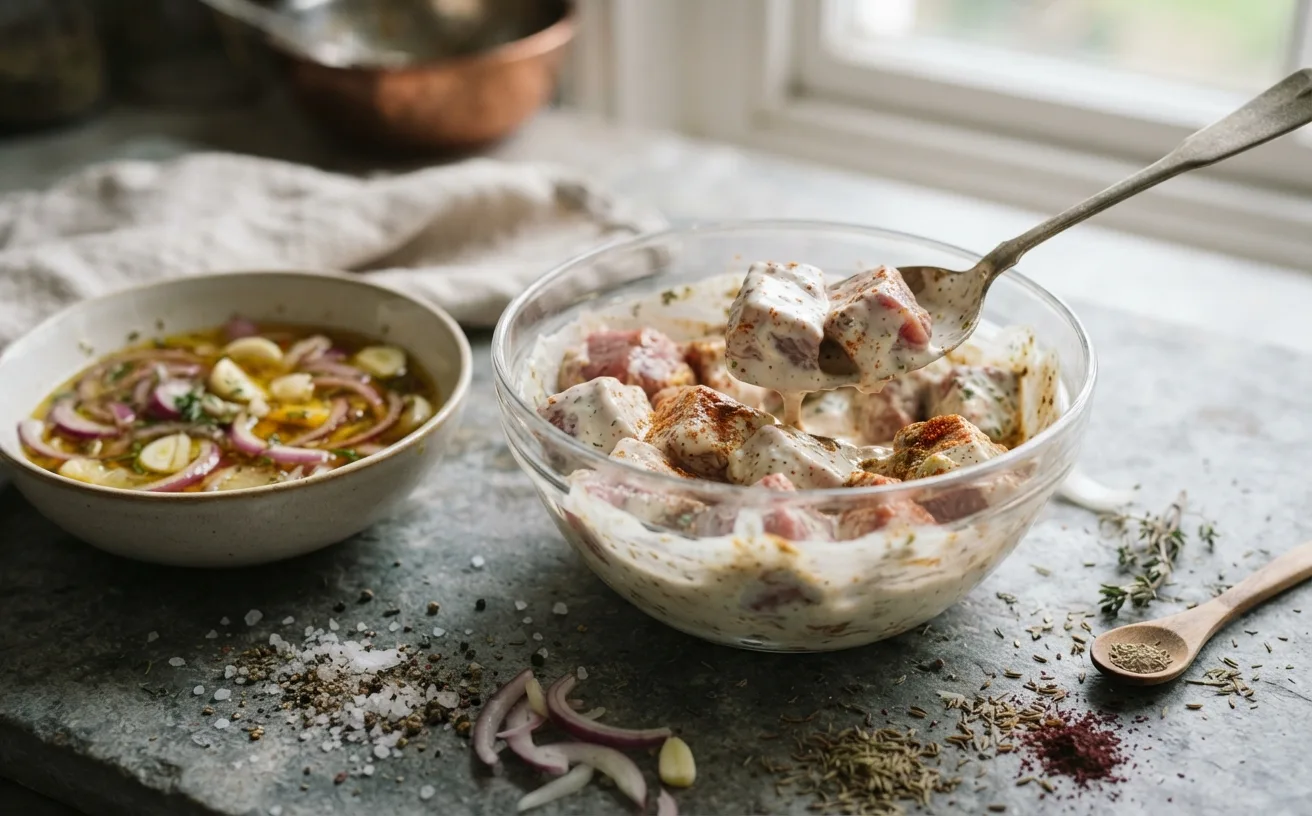
Key takeaways
- Think of a marinade as three layers with fixed proportions.
- Yogurt is the gentlest acid you can use, and that is exactly its virtue.
- Chicken thigh is the most forgiving kebab meat there is.
- Adana, cevapi, koobideh, seekh: none of these sit in a liquid marinade, and pouring one over ground meat actively ruins them.
- If you are making tawook or a chicken shawarma-style skewer: full-fat yogurt base, 2 to 3 tablespoons per 500 grams of meat, with garlic, paprika, tomato paste if you like depth, a small squeeze of lemon, and an 8-to-12-hour window.
- Take the meat out of the refrigerator 20 to 30 minutes before grilling.
The most common failure at home is not under-seasoning. It is over-marinating in a wet, acidic mixture that turns the outside of the meat slack and mealy before it ever touches a skewer. Acid does not tenderize the way slow cooking does; it denatures surface proteins, and past a point they lose the ability to hold water. The result reads as mushy raw and dry cooked — the worst of both.
This guide gives you working ratios, real times per protein, and the decision logic behind yogurt, lemon, onion, and oil. It also draws the line that most kebab advice skips entirely: chunked kebabs like souvlaki, tawook, and boti are marinated, while minced kebabs like adana, cevapi, and koobideh are not marinated at all — they are seasoned and kneaded, which is a different craft with its own rules.
The base ratio that almost never fails
Think of a marinade as three layers with fixed proportions. Fat is the body: roughly 3 parts oil (or full-fat yogurt standing in for it). Acid is the accent: no more than 1 part — lemon juice, vinegar, or the lactic acid already inside the yogurt. Aromatics ride on top: garlic, grated onion, dried spices, fresh herbs, in whatever character the dish demands. If your mixture is half lemon juice, it is not a marinade, it is a cure, and it will behave like one.
Salt is calculated separately, against the meat, not the liquid: 1.5 to 2 percent of the meat's weight. For a kilo of chicken thigh that is 15 to 20 grams — about a level tablespoon of fine salt. This number matters more than any spice choice, because salt is the one ingredient that actually migrates into the interior, dissolving some of the muscle proteins near the surface so they grip moisture during cooking instead of squeezing it out.
Sugar, honey, or pomegranate molasses can go in, but keep them under about 1 tablespoon per kilo if you cook over live fire. Sugars begin to scorch around 160 to 180 °C, and a kebab surface goes far past that. A touch deepens color; more than a touch gives you black stripes before the meat is done.
Yogurt, lemon, onion, oil: what each one actually does
Yogurt is the gentlest acid you can use, and that is exactly its virtue. Its lactic acid sits around pH 4.4 — mild compared with lemon juice near pH 2 — so it firms and seasons the surface slowly instead of attacking it. Its milk solids also brown beautifully, which is why yogurt-marinated chicken colors the way it does on tawook and shawarma. The rule: if the meat will sit longer than 4 hours, yogurt is the acid you want, because it is the only one that forgives a long window.
Lemon juice is fast and aggressive. It brightens flavor in 30 to 60 minutes and does visible damage after 2 to 3 hours on cubed chicken, sooner on fish. Use it when the marinating window is short — a same-day souvlaki, for instance — or hold it back entirely and squeeze it over the cooked skewer, where it delivers more brightness with zero texture cost.
Onion is the sleeper hazard. Grated onion and onion juice carry proteolytic enzymes that break down muscle protein — the same category of enzyme that makes fresh pineapple and papaya turn meat to paste. A few hours of onion juice on lamb is a classic move for good reason; overnight, and the surface of the meat starts to smear rather than sear. If you want onion flavor with a long marinade, use the grated pulp squeezed fairly dry, or onion powder, and keep the raw juice for short windows of 2 to 4 hours.
Oil is the carrier, not a flavor. Most of the spices that define a kebab — paprika, cumin, pepper flake, coriander — are fat-soluble, so without oil they sit on the meat as gritty powder instead of dissolving into a coating. Oil also insulates the surface for the first seconds over the coals, buying color before moisture loss. If a marinade has no acid at all, it never expires the meat's texture: an oil-and-spice paste can sit on beef or lamb for 24 hours with nothing but upside.
Timing by protein: the actual numbers
Chicken thigh is the most forgiving kebab meat there is. In a yogurt-based marinade it is properly seasoned at 4 hours, excellent at 8 to 12, and still fine at 24. In a lemon-forward marinade, cap it at 2 hours. Chicken breast is leaner and tighter: 1 to 4 hours in yogurt, and honestly it needs the yogurt, because breast has little intramuscular fat to protect it on the grill.
Beef and lamb cubes — the souvlaki, boti, and shish family — want 2 to 8 hours in anything acidic, and up to 24 in a plain oil-and-spice coating. Good cuts need less than people give them: a well-marbled lamb shoulder cube cut to 3 centimetres carries its own flavor, and a heavy marinade only masks it. If the cut is good, marinate light and short; if the cut is lean and cheap, go longer with yogurt and lean on salt, not acid.
Fish and shrimp are the extreme case: 15 to 30 minutes, never more, and skip acid entirely or the surface is ceviche before the skewer is loaded. And always marinate in the refrigerator at 4 °C or below. The old advice to let meat sit out in its marinade trades a marginal cooking benefit for real bacterial growth — the 4 to 60 °C band is exactly where you do not want raw chicken resting for three hours.
One structural note that outranks any timing chart: cut the meat first, then marinate. A marinade that touches 2 millimetres of surface does far more work on 3-centimetre cubes than on a whole piece you cube afterward. Uniform cubes — 2.5 to 3 centimetres for red meat, slightly larger for chicken thigh — also mean uniform doneness on the skewer, which no marinade can fix later.
Minced kebabs are not marinated — stop trying
Adana, cevapi, koobideh, seekh: none of these sit in a liquid marinade, and pouring one over ground meat actively ruins them. Minced kebab structure comes from the opposite direction — salt worked into the meat by hand until the proteins turn tacky and bind. Added liquid, especially acidic liquid, interferes with that bind, and a kebab that does not bind slides off the skewer into the coals.
The numbers that matter here are fat and rest, not marinade time. Adana-style lamb wants 20 to 25 percent fat, traditionally from tail fat; koobideh runs similar with grated onion squeezed almost dry folded in; cevapi is leaner meat but gets its juiciness from a firm knead and sometimes a little water or sparkling water worked in — a few tablespoons per kilo, added after the salt-knead, never before. Salt stays at the same 1.5 to 2 percent, but it goes in early and gets kneaded for a solid few minutes, because the knead is the technique.
Then the mixture rests, covered, at fridge temperature: 1 to 2 hours minimum, overnight if you can. The rest lets the salt finish dissolving protein and lets the fat firm back up so the meat grips a flat skewer. Cold hands and a cold bowl matter for the same reason — above roughly 15 °C the fat starts to smear, and smeared fat leaks out over the fire instead of basting the kebab from inside. If your seekh or adana keeps falling off the skewer, the answer is almost never a binder; it is more knead, more cold, more rest.
Decision guide: match the marinade to the kebab
If you are making tawook or a chicken shawarma-style skewer: full-fat yogurt base, 2 to 3 tablespoons per 500 grams of meat, with garlic, paprika, tomato paste if you like depth, a small squeeze of lemon, and an 8-to-12-hour window. The yogurt is doing triple duty — mild acid, browning agent, and spice carrier — which is why this family of kebabs is the most tolerant for beginners.
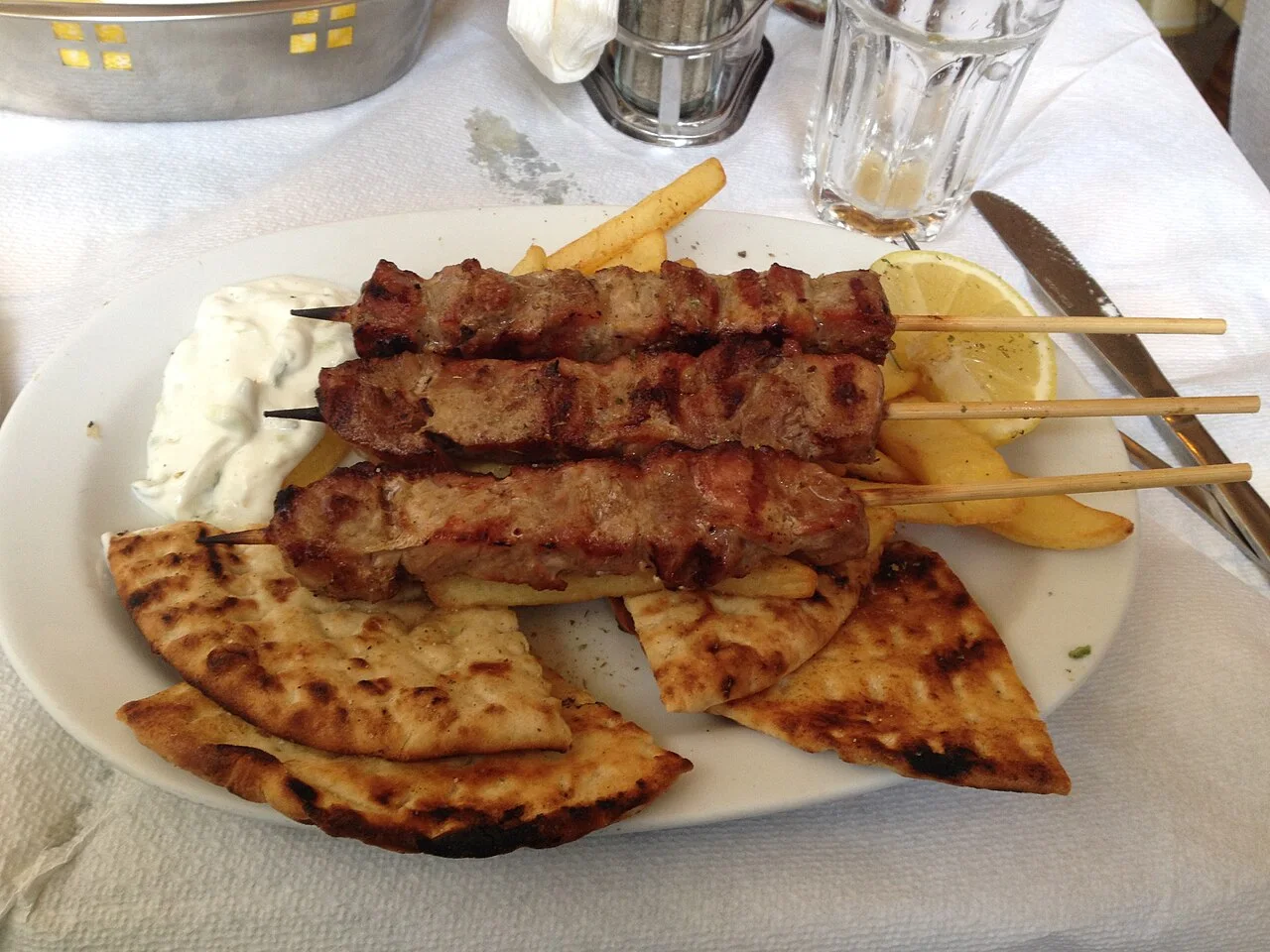
If you are making souvlaki: this is the oil-lemon-oregano end of the spectrum, and the acid discipline matters most here because there is no yogurt buffering it. Keep lemon to a quarter of the liquid, marinate pork or chicken 2 to 4 hours, and save half the lemon for after the grill. Souvlaki that tastes flat usually did not need more marinade time — it needed salt at 2 percent and a hotter fire.
If you are making boti or another spice-heavy chunked kebab: yogurt again, but thicker — hang or strain it, or use Greek-style — so the coating clings instead of dripping into the flames. A watery marinade on a spiced kebab drips, flares, and deposits soot; a thick one chars into a crust. This is also where a long window pays off most, 8 to 24 hours, because the spice load needs time to bloom into the fat.
If your meat is already excellent — well-marbled lamb, good beef — default to the minimum: oil, salt at 1.5 percent, black pepper, maybe cumin, 2 hours. The better the meat, the more a marinade should get out of its way. Heavy marinades were historically a tool for tough, lean, or old meat; applying them to prime cuts is solving a problem you do not have.
The last 30 minutes: from bowl to skewer
Take the meat out of the refrigerator 20 to 30 minutes before grilling. Cubes going onto a fire at 4 °C in the center will char outside before the middle moves; a short temper narrows that gap without entering food-safety territory.
Then do the step almost everyone skips: wipe the excess off. Scrape yogurt marinade down to a thin film with your fingers; pat oil-lemon marinades with a paper towel until the surface is merely damp. Browning — the Maillard reaction — does not begin in earnest until the surface passes roughly 140 to 150 °C, and a wet surface is pinned at 100 °C until the water boils away. Every gram of clinging liquid is time spent steaming instead of searing. The flavor is already where it can go; the puddle in the bowl is spent.
Pack the skewers with cubes touching but not crushed, and discard the used marinade or boil it hard for a few minutes if you insist on brushing with it. Raw-chicken marinade painted onto nearly-cooked meat is the least visible and most genuinely dangerous mistake on this page.
The failure modes, and the mechanism behind each
Mushy, mealy surface: too much acid or too much onion juice for too long. Acid denatures surface proteins until they can no longer hold water; onion enzymes cut the proteins outright. The fix is structural, not incremental — drop the lemon to a quarter of the liquid or switch the acid to yogurt, and halve the time. You cannot rescue over-marinated meat; you can only cook it hot and fast and season the plate well.
Gray, steamed meat with no crust: the surface went to the fire wet, or the fire was weak, or both. Water caps the surface at 100 °C; crust chemistry needs 140-plus. Wipe the meat, dry the surface, and get the coals to a hard high heat — for chunked kebabs you want the zone where you can hold a hand at grate level for only 2 to 3 seconds.
Burnt stripes on undercooked meat: sugar in the marinade meeting live flame. Honey, molasses, and sweet pastes scorch from around 160 °C, long before a 3-centimetre cube is done inside. Cut the sugar, or apply sweet glazes only in the last 2 to 3 minutes of cooking.
Meat that tastes marinated only on the outside: nothing went wrong — that is what marinades do. If you want interior seasoning, the levers are salt at 1.5 to 2 percent with enough hours to travel, smaller cubes, or shifting flavor to after cooking: sumac onions, a garlic-yogurt sauce, lemon over the finished skewer. A kebab plate seasons the bite, not just the meat.
Watery marinade pooling in the bowl and slack, wrung-out cubes: salt did its early work, pulled surface moisture out, and an over-long window never let the meat reabsorb it — or the acid got there first. Long windows are for yogurt marinades and salt-plus-oil coatings; wet acidic mixtures are short-window tools. Match the window to the chemistry and this failure disappears.
Sources and further reading
- Marinating Myths — America's Test Kitchen
- Grilling and Food Safety — USDA Food Safety and Inspection Service (FSIS)
- "Danger Zone" (40°F - 140°F) — USDA Food Safety and Inspection Service (FSIS)
- pH Values of Common Foods and Ingredients — Clemson University Cooperative Extension
- Microbial dynamics biochemical transformation and nutritional implications of lactic acid fermentation in yoghurt — Discover Food (Springer Nature)
Cook These Next
 AI illustration
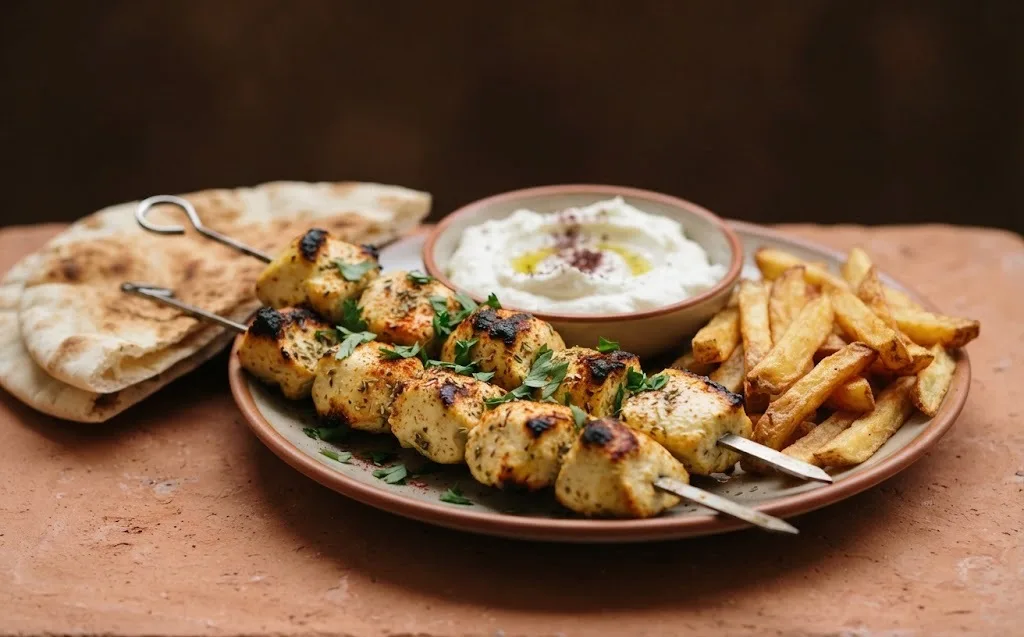
Chicken / 6h 35m
Shish Tawook
Levantine grilled chicken skewers. White marinade of yogurt, lemon, and garlic.
 AI illustration
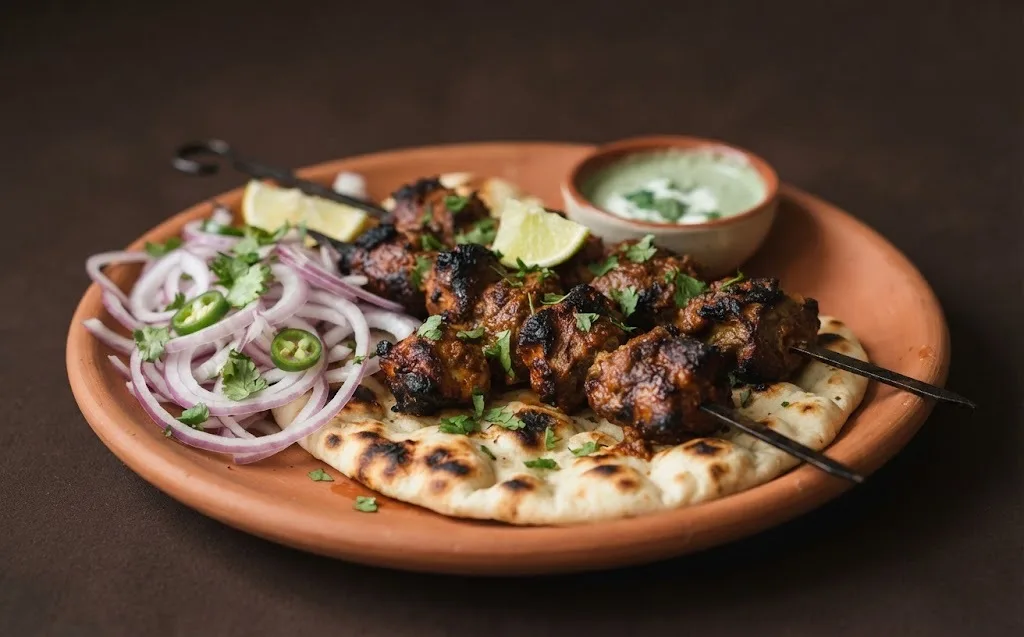
Lamb / 5h 40m
Boti Kebab
Marinated chunks of spiced meat. The chunk version of the minced Seekh.
 AI illustration
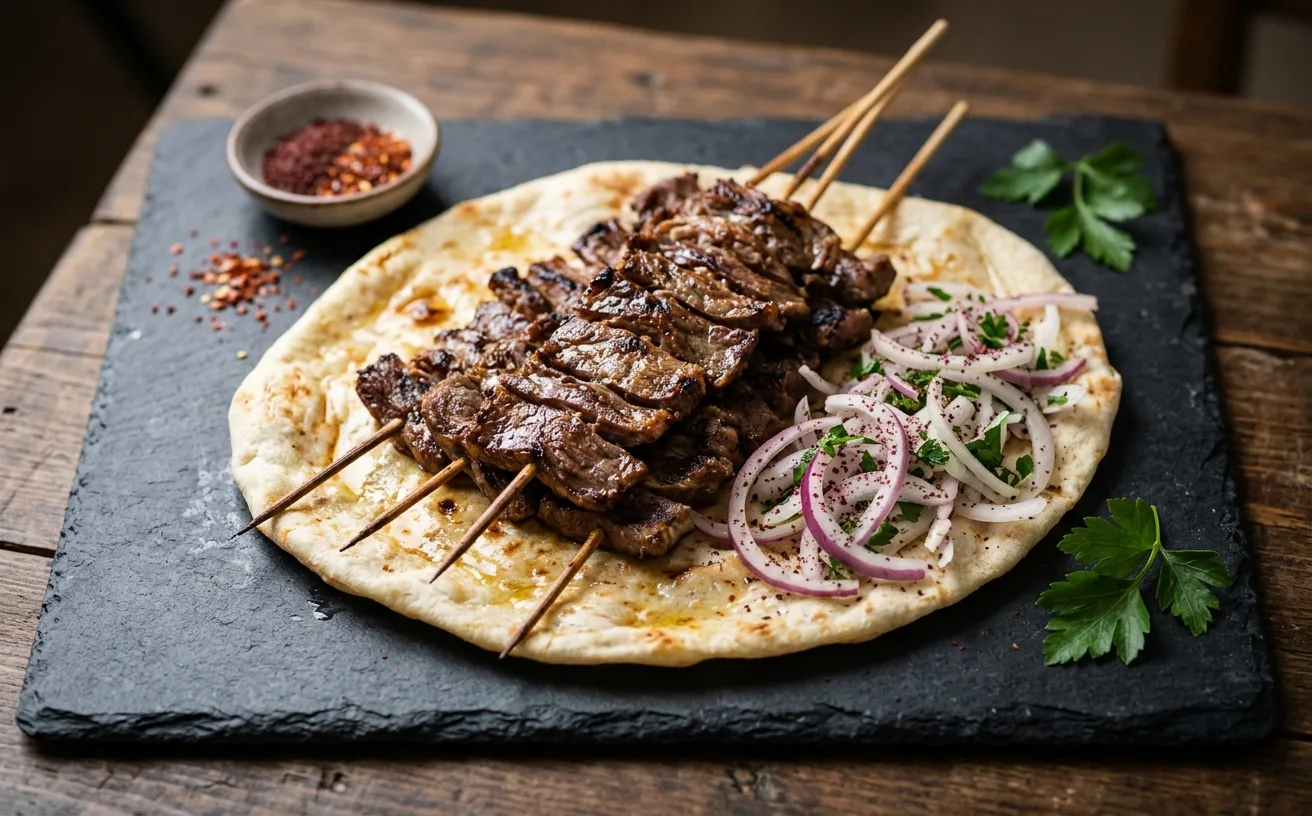
Lamb / 12h
Cag Kebabi
The horizontal ancestor of Doner. Marinated lamb slices on a wood fire.
Pork / 2h 30m
Souvlaki
Classic Greek skewers. Traditionally Pork, marinated in lemon and oregano.
Related Collections
Gyros, Shawarma, and Donair Guide
Compare gyros, shawarma, donair, souvlaki, and tawook with bread pairings, sauce choices, wrap assembly, and serving ideas.
Indian Kebab Recipes
A collection of Indian kebab styles, from seekh and galouti to boti, reshmi, and green-marinated skewers.
Turkish Kebab Guides
A focused collection for Turkish kebab styles including Adana, Urfa, Cag, Iskender, and supporting bread pages.
More Guides
Heat guide
What Temperature to Cook Kebab
The heat each method needs, from charcoal to oven, and the internal temperature that makes chicken, minced and cubed kebabs safe: 74 °C, 71 °C and 63 °C with a rest.
Serving guide
Best Onion Salad For Kebab
Build the right onion-and-sumac side for kebab, Adana, Urfa, doner, and cevapi with a guide to slicing, seasoning, resting, and balancing sharpness.
Technique guide
How To Shape Minced Kebab On Skewers
Shape Adana-style, koobideh, and seekh kebabs correctly with better hand pressure, skewer coverage, thumb patterning, and grill-ready thickness.
Sauce guide
Best Yogurt Sauce For Gyro And Kebab
Compare tzatziki-style, Turkish-style, and garlic-yogurt sauces for kebab wraps and plates so you know which cooling sauce fits each meat and bread style.
Terminology guide
Kebab Vs Kabob Vs Kabab
Understand the difference between kebab, kabob, and kabab spellings, what people usually mean by each, and which dishes fall under the broader kebab family.
Serving guide
Best Side Dishes For Kebab
Serve kebab better with the right sides, salads, rice, pickles, breads, and sauces for wraps, plates, Turkish grills, Balkan spreads, and shawarma-style meals.
Keep cooking
Next on the grill: lula kebab, kebab pizza and patlican kebab. The base method is in how to make a kebab.
Comments
Cooked it, changed something, or spotted a mistake? Say so here. Every comment is read before it is published.