Kebab, kabob, and kabab are the same word wearing three passports. All of them descend from the Arabic kabab, meaning roasted meat, which reached English partly through Persian, Urdu and Turkish, and none of them is more correct than the others. But the spelling you see on a menu is rarely random: it tells you which kitchen the dish walked out of, and that changes the meat, the spice, the bread, and how the whole thing lands on your plate.
Terminology guide
Kebab Vs Kabob Vs Kabab
By Ali Ocak
Updated 2026-11-03
Quick answer
What is the difference between kebab and kabob?
They are the same word. Kebab is the spelling used across Turkey, the Balkans and Europe, while kabob is the dominant American spelling and usually means cubes of meat and vegetables grilled on a skewer.
Is it spelled kebab or kabab?
Neither is more correct: both descend from the Arabic kabab, meaning roasted meat. Kabab is the spelling used on Persian, Pakistani, Indian and Afghan menus, where it usually means minced preparations.
Key takeaways
- The root is Arabic, passed on through Persian and Turkish: kabab, written in a script with no fixed vowel marks for short vowels.
- See kebab and think Turkey, the Balkans, and the doner economy of Europe.
- Forget the vowels; the family actually splits on whether the meat is whole-muscle or ground, because the two demand opposite techniques.
- Turkish kebab spicing is confident but short: salt, pul biber (Aleppo-style red pepper flakes), maybe cumin, and for adana a serious dose of red pepper worked directly into the mince.
- Turkish and Balkan kebab is bread-first.
- If you want cubes of marinated meat on a stick, the classic backyard skewer, follow the shish and souvlaki path.
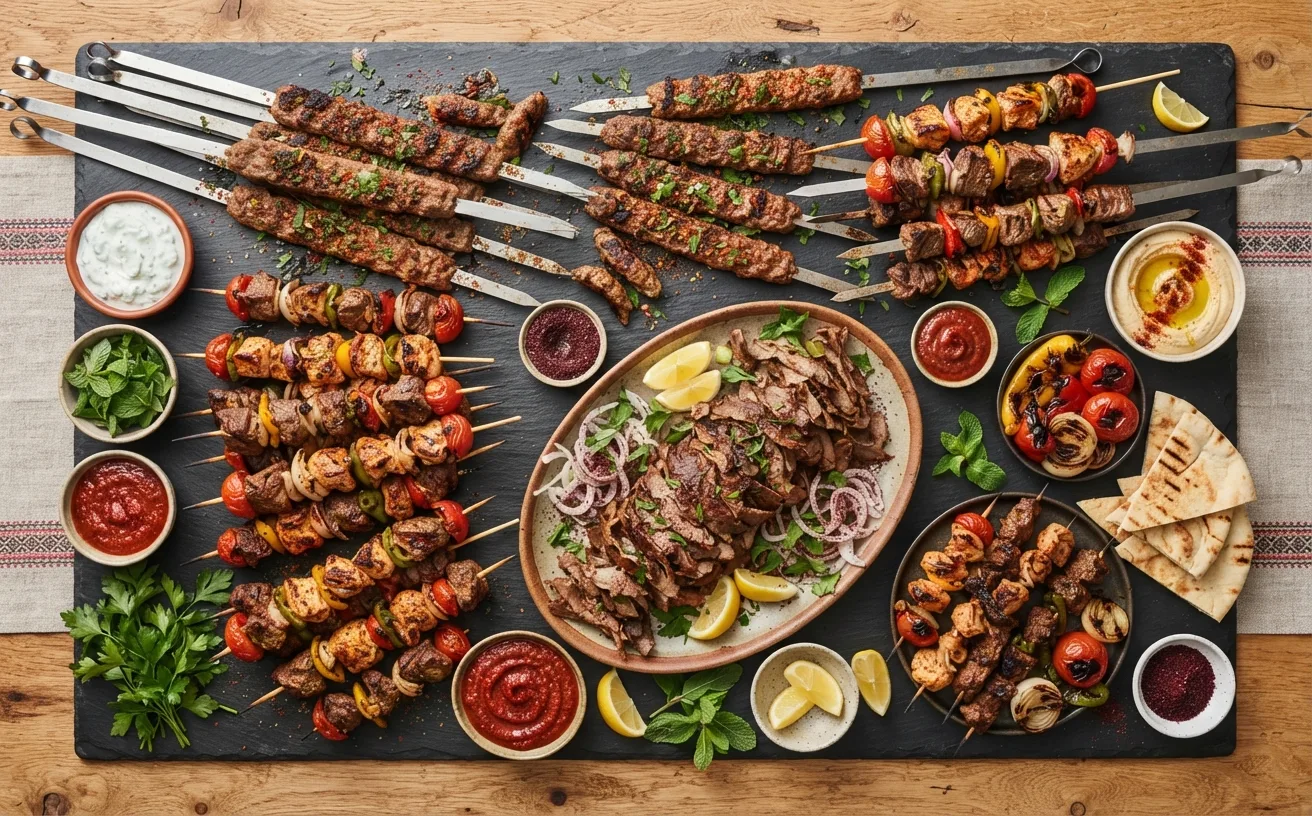
Here is the short version. Kebab is the spelling used across Turkey, the Balkans, Europe, and most of the English-speaking world outside North America, and it covers an enormous family, from hand-minced adana on flat skewers to doner shaved off a vertical spit. Kabob is the dominant American spelling, and in the United States it almost always means one specific thing: cubes of meat and vegetables threaded on a skewer and grilled. Kabab is the transliteration you meet on Persian, Pakistani, Indian, and Afghan menus, where the word leans heavily toward minced or ground preparations like koobideh, seekh, chapli, and shami.
So the spelling is not a spelling question at all. It is a routing question. This guide lays out the real differences behind each version of the word, then tells you exactly which cooking path to take depending on what you actually want to eat.
One word, three alphabets
The root is Arabic, passed on through Persian and Turkish: kabab, written in a script with no fixed vowel marks for short vowels. When a word like that gets dragged into the Latin alphabet by Ottoman clerks, British colonial administrators, and American diner owners, each of them hears the vowels slightly differently and writes down what they hear. Turkish standardized it as kebap (the final p is a Turkish spelling convention; it softens back to b before a vowel, which is why you see iskender kebabi). English took the Turkish route and settled on kebab.
Kabob is largely an American artifact. It shows up in US newspapers and cookbooks from the mid-twentieth century onward, in the era when shish kabob became backyard-grill vocabulary. The a-o vowel pattern matches how American English speakers actually pronounce the word, and grocery stores, skewer packaging, and recipe cards locked it in. Kabab, meanwhile, is the more faithful transliteration of both the Persian and the Urdu-Hindi pronunciation, which is why it dominates on menus from Tehran to Lahore to the Afghan and Indian restaurants of any Western city.
None of this is trivia for its own sake. A menu that says chapli kabab and a menu that says beef kabobs are describing different animals, different cuts, different fat levels, and different fires. The spelling is the first clue about everything that follows.
What each spelling signals on a menu
See kebab and think Turkey, the Balkans, and the doner economy of Europe. This is the biggest branch of the family by far: adana and urfa (hand-minced lamb on wide flat skewers), shish (cubes), doner (a stacked vertical spit, shaved to order), iskender (doner over bread with tomato butter and yogurt), and the Balkan cousins like cevapi, which are caseless minced-meat fingers grilled by the dozen. Greek gyros and souvlaki live next door to this branch and follow the same logic: gyros is the vertical-spit answer, souvlaki is the cube-on-a-stick answer.
See kabob and think American backyard: 2.5 to 3 cm cubes of beef sirloin, chicken breast, or lamb leg, usually alternated with peppers, onions, and sometimes mushrooms, grilled over gas or charcoal. It is a genuine tradition with its own strengths, mainly speed and vegetables built into the skewer, and its own structural flaw, which we deal with in the mistakes section: meat and vegetables do not cook at the same rate, and threading them together forces one of them to be wrong.
See kabab and think mince first. Persian kabab koobideh is seasoned ground lamb or lamb-beef pressed by hand along a flat skewer 2 to 3 cm wide. Pakistani and North Indian seekh kabab is spiced mince on a skewer in a tandoor or over coals; chapli kabab is a wide, flat, pan-fried patty from Peshawar; shami kabab is mince cooked down with chana dal, ground smooth, and shallow-fried. Cubes exist in this world too, notably Persian kabab barg, thin marinated strips of lamb fillet, but if a menu says kabab, the smart default guess is ground meat, not cubes.
The meat: cubes versus mince is the real dividing line
Forget the vowels; the family actually splits on whether the meat is whole-muscle or ground, because the two demand opposite techniques. Whole-muscle skewers (shish, souvlaki, American kabobs, kabab barg) want tender cuts, uniform 2.5 to 3 cm cubes so everything finishes together, and a hot direct fire. Lamb leg and shoulder, beef sirloin, and chicken thigh are the reliable choices. Pull lamb and beef at 63 to 71 degrees C internal for medium-rare to medium, chicken thigh at 74 degrees C, and rest everything 5 minutes.
Ground-meat skewers (adana, koobideh, seekh, cevapi) are a different craft entirely. The meat is deliberately fatty, 20 to 25 percent fat for adana made with lamb and tail fat, around 20 percent for koobideh, because on a grill the fat is the basting system: it renders, drips, flares, and smokes the meat from below. Lean mince makes a dry, crumbly kebab and no amount of sauce rescues it.
Ground kebabs also depend on mechanics that cube kebabs never think about. The mince must be kneaded 10 to 15 minutes by hand until it turns tacky and paste-like, which develops myosin, the sticky protein that glues the meat to the skewer. Everything must stay cold, below roughly 10 degrees C, because lamb fat starts smearing and separating as it warms, and warm, greasy mince is exactly the mince that rotates on the skewer and drops into the coals. This is why adana and koobideh use wide flat skewers, 1.5 to 2.5 cm across, rather than round ones: the flat blade gives the meat something to grip and lets you press finger dents along its length, increasing surface area and hold. If your only skewers are thin and round, make cevapi instead and grill the fingers directly on the grate; that dish was designed for exactly this situation.
Spice and marinade: four traditions, four philosophies
Turkish kebab spicing is confident but short: salt, pul biber (Aleppo-style red pepper flakes), maybe cumin, and for adana a serious dose of red pepper worked directly into the mince. Whole-muscle Turkish and Greek skewers take an oil-based marinade, olive oil, lemon, oregano, garlic for souvlaki, rarely longer than 2 to 8 hours. Sumac arrives at the table, on the onions, not in the marinade.
Persian kabab is the most restrained of all: koobideh is essentially meat, grated onion (squeezed hard, because onion water is another cause of skewer-slip), salt, and pepper. The luxury lives elsewhere, in saffron. Joojeh (chicken) kabab marinates in yogurt, onion, and bloomed saffron for 4 to 24 hours, and the finished skewer gets saffron butter. If a recipe for Persian kabab lists fifteen spices, it is not a Persian recipe.
South Asian kabab goes the other direction: ginger-garlic paste, green chile, garam masala, coriander seed, cumin, and in chapli kabab, crushed pomegranate seeds and whole coriander that crackle in the fry. Yogurt-based marinades dominate for whole-muscle and tandoori-style pieces, and they earn their long times, 4 to 24 hours, because yogurt tenderizes gently. Acidic citrus or vinegar marinades are a different tool: past about 2 hours they stop tenderizing and start making the surface mushy, so keep them short. The American kabob tradition mostly borrows, teriyaki, Italian dressing, barbecue-adjacent rubs, and that is fine; the meat mechanics matter far more than the flag on the marinade.
Bread, rice, and service: how each word gets to the table
Turkish and Balkan kebab is bread-first. Adana arrives on lavash or pide that has been laid under the skewer to catch the drippings, with grilled peppers and tomatoes, raw onion dusted with sumac, and parsley. Doner goes into bread or over it, iskender-style, with tomato sauce and yogurt. Cevapi goes into somun or lepinja with raw onion and kajmak. Greek gyros and souvlaki go into pita with tzatziki. In this world, a kebab without its bread is an unfinished sentence.
Persian kabab is rice-first. Koobideh and barg are served over chelow, buttered saffron basmati, with a grilled tomato, a pat of butter melting into the rice, and sumac on the side for the meat. Bread (lavash or sangak) appears, but as a supporting player. If you are cooking koobideh and serving it in a wrap, nothing terrible happens, but you are eating a Turkish service style with Persian meat.
American kabobs are plate-first: skewer over rice pilaf or beside potatoes, vegetables already attached. South Asian kababs split by dish: seekh slides into naan or roti with green chutney and sliced onion; chapli is eaten with naan and yogurt; shami works as a patty beside rice or inside a bun. The practical rule: match the bread and sides to the meat's homeland and the plate composes itself, because each tradition already solved the balance of fat, acid, and starch centuries ago.
Which page to open: the decision guide
If you want cubes of marinated meat on a stick, the classic backyard skewer, follow the shish and souvlaki path. Choose souvlaki for pork or chicken with lemon and oregano in pita; choose Turkish shish for lamb with a plainer, pepper-forward profile. This is also the right path if you typed kabob, whatever the spelling on your skewer packet says.
If you want the juicy, smoky, hand-minced experience, the one most people are actually chasing when they fall in love with kebab shops, go to adana for the spicy Turkish version, koobideh for the buttery, saffron-adjacent Persian version, and cevapi for the easiest entry point, since it needs no skewers at all. Rank them by effort: cevapi is the most forgiving, koobideh demands cold discipline and flat skewers, adana adds hand-mincing and pepper work on top.
If you want the shaved rotating-spit style from the takeaway, that is doner and gyros territory, and it is honestly a different discipline: a stacked cone, a vertical broiler, and shaving technique. At home you approximate it with a stacked loaf on a rotisserie or thin-sliced marinated meat under a very hot broiler; do not expect a skewer recipe to get you there. And if you saw kabab on a Pakistani menu and want that flavor, start with seekh or chapli, which deliver the garam masala and green-chile profile that no Turkish or Persian recipe will give you.
The mistakes that ruin every spelling
Meat and vegetables on the same skewer. Peppers and onions are done and starting to char in 6 to 8 minutes over a hot fire; a 3 cm beef cube wants 8 to 10 minutes for medium; chicken needs to reach 74 degrees C. Thread them together and you either serve raw-crunchy onion or grey, overcooked beef. The fix costs nothing: separate skewers for meat and vegetables, then combine on the plate. Every tradition that grills vegetables with kebab, Turkish grilled peppers and tomatoes included, grills them separately.
Mince that falls off the skewer. This is a mechanism failure, not bad luck, and it has three causes: the meat was not kneaded long enough to turn sticky (myosin never developed), the meat got warm so the fat smeared and lubricated the skewer instead of gripping it, or the skewer is thin and round so there is nothing to grip. Knead 10 to 15 minutes by hand, chill the shaped skewers 30 minutes before grilling, use flat blades, and squeeze grated onion nearly dry before it goes in. If you cannot fix the skewer problem, grill the mince as cevapi-style fingers or chapli-style patties and lose nothing.
The wrong fire. Kebab wants hot, direct, close heat, coals ashed over, grate or skewer rests 8 to 10 cm above them, hot enough that you can hold your hand at meat height for only 2 to 3 seconds. A timid fire steams the meat in its own juices before any crust forms, and with fatty mince it also fails to render the fat fast enough, giving you greasy instead of smoky. The opposite failure, dripping fat igniting into a sustained flame that coats the meat in soot, is managed by leaving a coal-free zone to shift skewers onto for a few seconds, not by spraying water into your fire.
Overcooking out of fear, and over-marinating out of hope. Lamb and beef skewers pulled at 70 degrees C plus are dry, full stop; pull at 63 to 65 and rest 5 minutes. Citrus and vinegar marinades past 2 hours make the surface pasty. And lean mince, anything under about 15 percent fat, produces the dry, sawdust kebab that convinces people they do not like koobideh. They do not dislike koobideh; they dislike 5 percent fat.
Sources and further reading
- kebab noun - Definition, pictures, pronunciation and usage notes | Oxford Advanced Learner's Dictionary at OxfordLearnersDictionaries.com — Oxford University Press (Oxford Learner's Dictionaries)
- KEBAB Definition & Meaning | Dictionary.com — Dictionary.com
- Kebab - Wikipedia — Wikipedia
- Safe Minimum Internal Temperature Chart — USDA Food Safety and Inspection Service (FSIS)
Cook These Next

Lamb / 1h
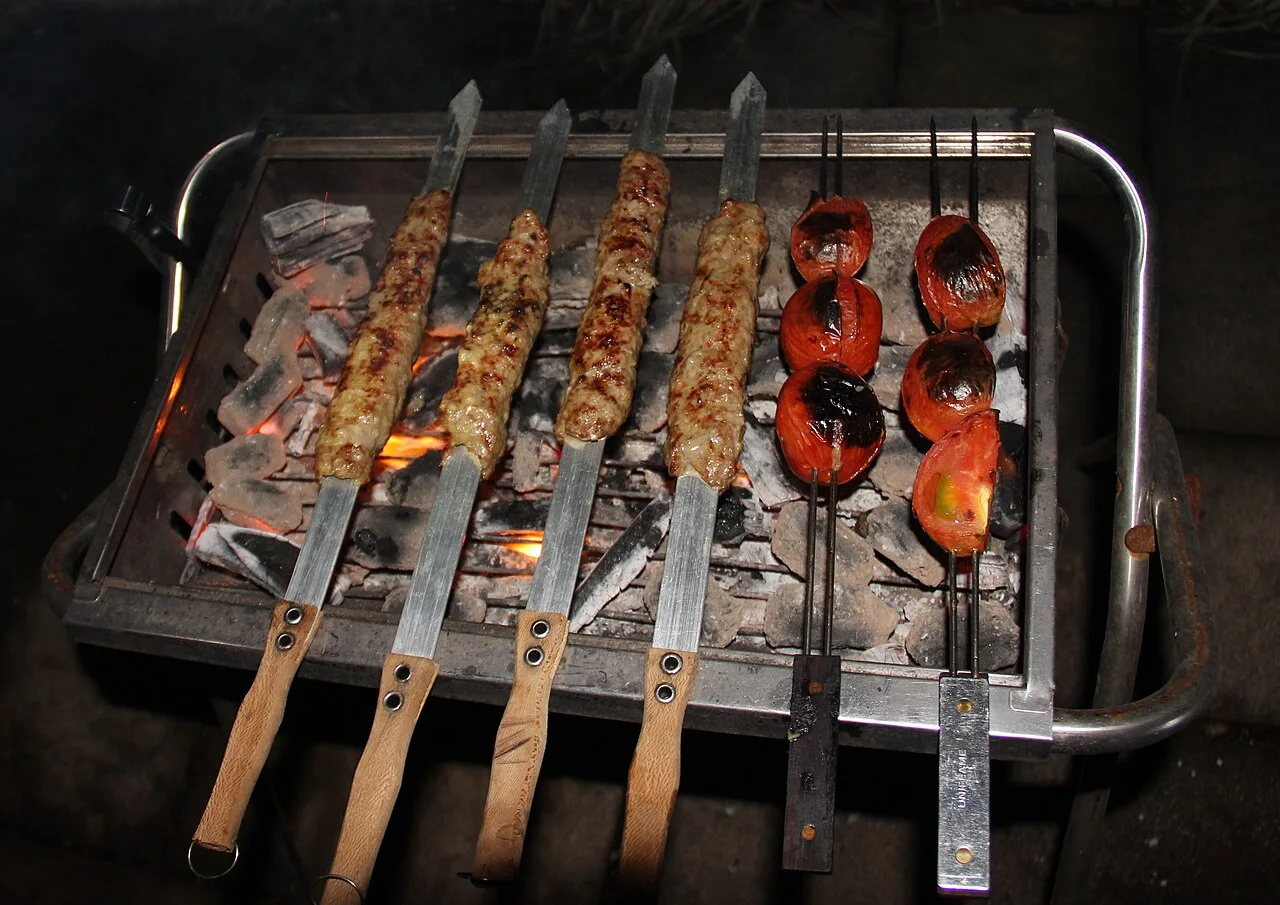
Adana Kebab
The spicy gold standard of Turkish BBQ. Hand-minced lamb with tail fat.
Beef / 2h 40m
Kabab Koobideh
Often called the national dish of Iran: ground meat and grated onion, pressed onto wide flat skewers and grilled.
Pork / 9h 50m
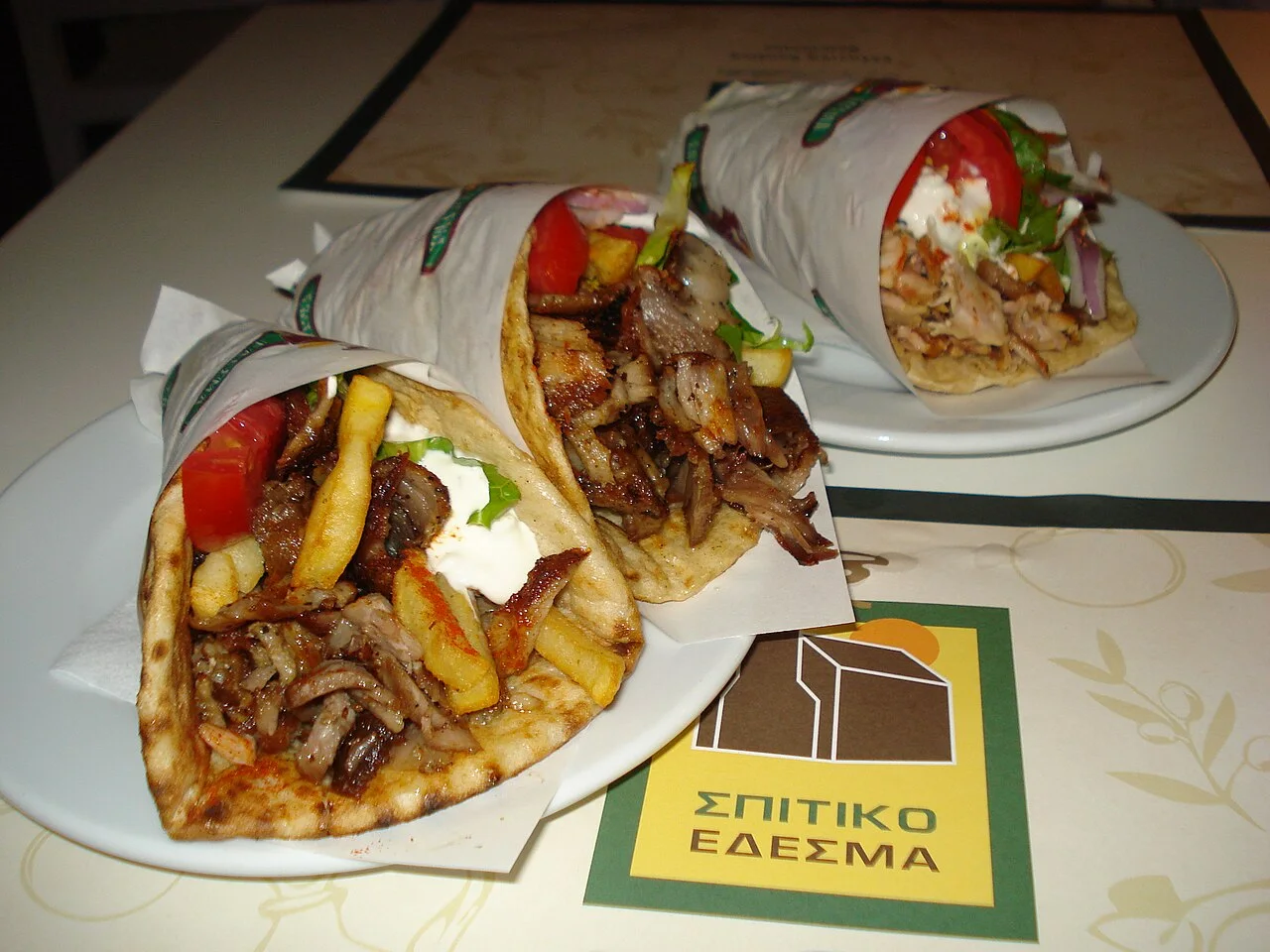
Authentic Gyros
The Greek vertical rotisserie. Pork slices stacked and shaved.
Beef / 24h 40m
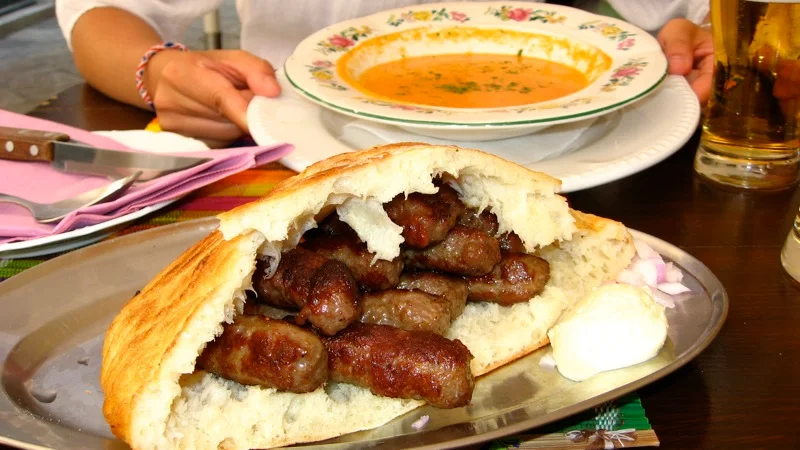
Cevapi (Cevapcici)
Small skinless grilled thick sausages. The soul food of the Balkans.
Related Collections
Turkish Kebab Guides
A focused collection for Turkish kebab styles including Adana, Urfa, Cag, Iskender, and supporting bread pages.
Persian Kebab Recipes
A collection of Persian grilling styles, from koobideh and barg to joojeh and other skewer traditions.
Gyros, Shawarma, and Donair Guide
Compare gyros, shawarma, donair, souvlaki, and tawook with bread pairings, sauce choices, wrap assembly, and serving ideas.
More Guides
Serving guide
Best Side Dishes For Kebab
Serve kebab better with the right sides, salads, rice, pickles, breads, and sauces for wraps, plates, Turkish grills, Balkan spreads, and shawarma-style meals.
Comparison
Shashlik vs Shish Kebab: Meat, Marinade, Cut and Fire Compared
How shashlik differs from shish kebab: the shared şiş root, 4-5 cm pieces vs 3 cm cubes, vinegar or kefir marinades, the mangal fire, and which one to cook.
Spice guide
Yaji Suya Spice: Kuli-Kuli, Ratios and How to Make It
Yaji, the Nigerian suya spice: why kuli-kuli beats whole peanuts, ginger level with the base, four working ratios, a step-by-step grind and the two coats.
Technique guide
Viral Parchment Paper Doner: Why It Works and How to Fix It
The viral parchment paper doner: why thin rolled mince imitates spit meat, what it misses (salt, fat, a dry crisp) and a step-by-step method to 71°C.
Heat guide
Charcoal vs Gas for Kebab: The Heat Matters More Than Smoke
Charcoal vs gas for kebab: why coals win for minced adana and koobideh, where gas loses almost nothing, and the settings that close the gap on a gas grill.
Greek guide
Gyro vs Souvlaki: Spit, Skewer and the Pita Between
Gyro vs souvlaki: vertical spit versus skewer, why pork rules in Greece, what goes in the pita, and how to make both properly at home without a rotisserie.
Kebab vs kabob: is it kabab or kebab?
Kebab vs kabob is a question of spelling, not of recipe. Kebab is used across Turkey, the Balkans and Europe, kabob is the dominant American spelling, and kabab appears on Persian, Pakistani, Indian and Afghan menus. Kabab or kebab, neither is more correct.
Keep cooking
New to kebab? Start with how to make kebab at home, then read about testi kebab, kilishi or tunday kababi.
How People Search for This
Readers find this page on Google with these searches:
kaboob · spelling of kabab · kabab meaning in english · kabob vs shish kabob · american kebab · difference between kebab and skewer · how to spell kabobs · in english · kabab meaning in urdu · kabop · kakab · kebabs vs skewers · kebap vs kebab · shish kabob spelling
Comments
Cooked it, changed something, or spotted a mistake? Say so here. Every comment is read before it is published.