Yaji, also sold as suya spice or suya pepper, is the dry spice blend that coats suya, the Hausa street kebab of northern Nigeria. Its core is kuli-kuli, the defatted groundnut cake left after peanut oil is pressed out, ground with dried hot chilli, ginger, dried onion and salt; most cooks add garlic powder, and many a stock cube, cloves or negro pepper. It goes on twice. The first coat, pressed onto oiled meat, toasts into a crust on the fire; the second goes on as the meat leaves the heat and stays raw and pungent, with more served on the side for dipping.
Spice guide
Yaji Suya Spice: Kuli-Kuli, Ratios and How to Make It
Yaji, the Nigerian suya spice: why kuli-kuli beats whole peanuts, ginger level with the base, four working ratios, a step-by-step grind and the two coats.
By Ali Ocak
Updated 2026-09-12
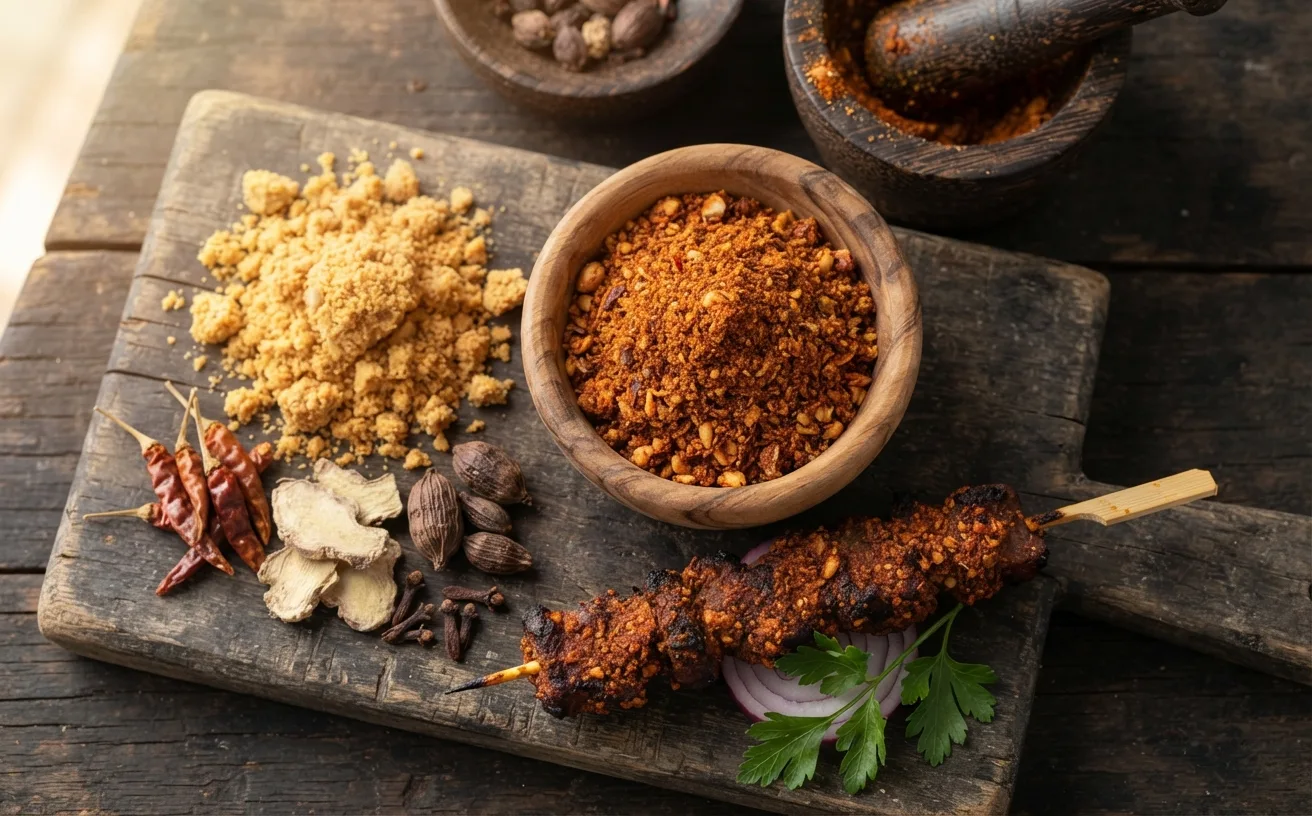
There is no single formula, any more than there is one curry powder. Two choices decide whether yours tastes like a suya man's or like a supermarket jar. The first is the base: kuli-kuli grinds dry, while oily whole peanuts turn to paste and give a greasy rub that burns. The second is ginger. Two Nigerian kuli-kuli recipes, All Nigerian Recipes and 9jafoodie, put ground ginger level with the kuli-kuli, spoon for spoon; Western peanut-based versions cut it to about a teaspoon per half cup of nuts. That gap is the clearest difference between the Nigerian kuli-kuli blends and most Western recipes.
The full dish is on the site's Suya page; here the powder comes first, then how it goes on the meat.
Source-backed support
Sources Worth Watching
Reference material this guide draws on — each link opens with its original publisher.
Source video
How To Make Authentic And Flavourful Suya Spice | Hausa Yaji Recipe
A short Hausa yaji demonstration: the ingredients of the blend laid out and measured one by one, then ground together into a finished suya rub.
Source: Remremdfoodie
Embedded from the original YouTube source. Not hosted locally.
Watch On SourceIngredient reference
Yaji (spice blend) - Wikipedia
https://en.wikipedia.org/wiki/Yaji_(spice_blend)
Ingredient background
Kuli-kuli - Wikipedia
https://en.wikipedia.org/wiki/Kuli-kuli
Nigerian recipe reference
How to Make Suya Spice (Suya Pepper) - All Nigerian Recipes
https://www.allnigerianrecipes.com/howto/suya-spice/
Spice reference
Grains of Selim - Wikipedia
https://en.wikipedia.org/wiki/Grains_of_Selim
History
Suya - Wikipedia
https://en.wikipedia.org/wiki/Suya
Kuli-kuli: the base that makes it yaji
Kuli-kuli is a by-product of making groundnut oil. Peanuts are roasted and ground to a paste, the oil is worked out by stirring or kneading with small additions of water and squeezing, and what is left is seasoned, shaped into balls, sticks or rings and fried hard, traditionally in the oil just extracted. It is a snack in its own right, and ground up it is the base of both suya spice and the kilishi coating.
9jafoodie says kuli-kuli is why a suya man's yaji beats shop-bought and homemade mixes, and the reason is oil. Fresh or roasted peanuts are so oily that a grinder turns them to paste before it gets them to powder, and on the fire that oil makes the rub greasy and lets it burn, where the defatted cake forms a crust.
That does not make roasted peanuts a failure. Wikipedia lists kuli-kuli or roasted peanuts as alternatives, and widely used recipes such as Dash of Jazz and Chili Pepper Madness are built on roasted peanuts, ground briefly and stopped early. Buy kuli-kuli from an African grocery when you can; when you cannot, peanuts make good yaji, just not the street version.
The spices: ginger first, then chilli, uda and the extras
Ginger is the dominant aromatic, in quantity. All Nigerian Recipes makes it a rule: dry ginger always equals the kuli-kuli measured in spoons. That is by volume, not weight, so 5 tablespoons of each come to 110 g of kuli-kuli and 75 g of ginger. 9jafoodie uses half a cup of each.
The heat is dried hot chilli: cayenne or dried bird's-eye, with scotch bonnet as an option. Recipes run from about 1 to 3 tablespoons of cayenne per half cup of peanut base, and all say to adjust to taste.
Negro pepper is the traditional aromatic most Western recipes leave out. Uda, its Igbo name, grains of selim, kimba, Senegal pepper and Ethiopian pepper are one spice: the dried pods of the tree Xylopia aethiopica. It tastes musky, pungent and slightly bitter, often described as cubeb pepper crossed with nutmeg, with a resinous edge. Many batches are smoked while drying, which adds a smoky note. Recipes count it by the pod: 10 strands of uda in All Nigerian Recipes, 8 grains of selim in Eat Well Abi.
The rest are supporting players. Dried onion is on Wikipedia's core list, though the All Nigerian Recipes blend below leaves it out; garlic powder is in most modern recipes. Cloves are a common extra, always small: about half a teaspoon of cloves or nutmeg per half cup of peanuts. A Maggi or Knorr stock cube is a normal modern addition, crumbled and ground with the rest. Smoked paprika, from 2 teaspoons to 6 tablespoons a batch in modern recipes, and white pepper are modern too: neither is in the traditional core or the ginger-heavy All Nigerian Recipes blend. Fine to use; not what makes it yaji.
Yaji ratios: four working blends
For about 190 g of street-style yaji, from All Nigerian Recipes: 5 tablespoons of crushed kuli-kuli (110 g), 5 tablespoons of ginger powder (75 g), 2 tablespoons of cayenne flakes (6 g), 10 strands of uda, 1 small stock cube (4 g) and half a teaspoon of salt. Make this one first: few ingredients, ginger level with the base, no paprika.
For a rounder kuli-kuli batch, from 9jafoodie: half a cup each of ground kuli-kuli and ginger powder, a quarter cup each of chilli powder, paprika, onion powder and garlic powder, and 1 tablespoon of sea salt. The ginger rule holds; the extra powders make it more savoury.
For a roasted-peanut blend, from Chili Pepper Madness: half a cup of roasted unsalted peanuts, or a quarter cup of peanut powder, with 3 tablespoons of cayenne, 1 tablespoon each of paprika, garlic powder and onion powder, 2 teaspoons of white pepper, 1 teaspoon of ground ginger, half a teaspoon of cloves or nutmeg, and 1 teaspoon of salt. Dash of Jazz's version, on a full cup of peanuts, uses about 3 crushed Maggi cubes and 2 tablespoons of smoked paprika. Both are far less gingery than the Nigerian blends.
For Ghanaian tankora, from My Burnt Orange: half a cup of peanut powder, 1 teaspoon to 1 tablespoon of cayenne, 1 tablespoon of ground coriander, 1 teaspoon each of ground ginger and garlic powder, a chicken stock cube, a pinch each of cloves and allspice, and salt to taste. Like the two roasted-peanut blends, it is far lighter on ginger than the Nigerian ones.
How to make yaji, step by step
Step one: pound the kuli-kuli coarse until you have 5 tablespoons of crumbs, about 110 g. Why: kuli-kuli is fried hard, and a small grinder handles crumbs far better than whole sticks. The trap is salt: kuli-kuli is seasoned before frying, so taste the crumbs before adding the half teaspoon.
Step two: prepare the chilli. Crush whole dried cayenne pods, keep the flakes of skin and leave the seeds behind, as All Nigerian Recipes does; 2 tablespoons of flakes weigh only about 6 g. Why: flakes grind evenly with the rest and let you measure heat by the spoon. The trap is swapping in fine cayenne powder spoon for spoon, since a spoon of powder packs in more chilli. With powder, start at 1 tablespoon per half cup of base.
Step three: crush the hard spices separately. Break up the 10 strands of uda, or your grains of selim, and crumble the 4 g stock cube. Why: they are harder than everything else and grind unevenly whole. The aroma of negro pepper is in the husk and the bite is in the seeds, so the whole pod gives both. The trap is a heavily smoked batch: sniff a pod first, and if smoke is all you smell, use fewer.
Step four: combine and grind in small batches, a few spoons at a time, in a dry mill or coffee grinder. Why: small batches grind evenly. With a peanut base, grind the peanuts alone first: pulse them for about 30 seconds in total, checking often, stop while they are still powdery, blot them, then add the spices. The trap is one pulse too many, which turns peanuts to paste; defatted kuli-kuli does not do this.
Step five: sieve out the fibres and any bits that did not grind. Why: the second coat goes onto cooked meat raw, so every gritty piece of pod or ginger fibre ends up in someone's mouth. The trap is throwing out flavour with the fibres; regrind what the sieve catches once, then discard the rest.
Step six, optional: toast. Chef Immaculate Ruému tosses the finished blend in a dry pan over medium heat for about 5 minutes, until it smells pungent, then cools it completely before storing. Why: gentle heat wakes up spices that have sat on a shelf. The trap is walking away, because peanut scorches fast and burnt yaji tastes bitter on both coats.
Putting yaji on suya: slice, oil, two coats, fast fire
Use lean, tender beef: topside, sirloin, flank or skirt, trimmed of as much fat as you can. Partly freeze it and slice very thin, 2 to 3 mm as on the site's Tsire page; thick slices make a different dish. Thread each strip as a ribbon, woven in an S, so both faces meet the fire. Beef is standard; lamb, goat, chicken and offal take the same method.
Oil comes before spice. All Nigerian Recipes brushes the meat with groundnut oil and a little salt; the oil makes the powder stick and stops the peanut scorching against dry meat. Press on the first coat of yaji, both faces, and rest the meat 30 minutes to an hour, or overnight in the fridge.
The fire is hot and the cooking short: 3 to 5 minutes per side on a hot grill, about 5 minutes per side under a broiler, or 12 to 20 minutes in an oven at 200 to 230 °C, turned once. Thin strips over a slow fire dry out.
Then the second coat. As the skewers come off the heat, dust them again with fresh yaji. This coat never sees the fire, so it stays bright and pungent where the first has toasted into crust. 9jafoodie's author prefers to add it midway through or at the end of cooking; skip it altogether and the suya tastes muted. Slide the meat off, cut it into bite-size pieces and serve with raw onion and tomato and a heap of extra yaji, wrapped in paper.
No kuli-kuli, no uda, no peanuts: what to use instead
No kuli-kuli: pulse roasted, unsalted peanuts for about 30 seconds, stop before they turn oily, then blot the ground peanut hard between paper towels before the spices go in. The texture is never quite the kuli-kuli crust, but it works. Better is a defatted product, peanut-butter powder or peanut flour; Peanut butter from a jar does not work; it is the oily paste the method avoids.
No negro pepper: nothing tastes quite like it, so do not force a swap. Chili Pepper Madness uses half a teaspoon of cloves or nutmeg per half cup of peanuts for the warm note. No stock cube: salt to taste; Wikipedia lists it as optional.
Peanut allergy: none of the recipes cited here gives a peanut-free yaji. Peanut is the structure of the blend, so without it you have a chilli-and-ginger rub, not yaji. The only non-peanut base among them is soybean flour, listed by Kitchen Butterfly for the kilishi coating, not yaji, and soy is a common allergen too. Treat kuli-kuli, every jar of suya spice and every stall-bought suya as peanut food.
Storing yaji: airtight, cool, dry, or frozen
Keep yaji airtight, cool and dry. Chili Pepper Madness gives about a month in the cupboard, longer in the fridge; Dash of Jazz gives a whole-peanut blend at least 3 weeks, kept cool or refrigerated; All Nigerian Recipes freezes it in bags or tubs and says it keeps its flavour for years.
The peanut limits keeping time, so roasted-peanut blends, with more oil, deserve the short end of those estimates. Let a frozen portion come to room temperature before use, so moisture does not settle on cold powder.
Where yaji travels: the suya family and beyond
Suya is Hausa street food, made mostly by Hausa men called mai suya or mai tsire, who set up grills wherever Hausa communities settled across West Africa. In Hausa the skewered form is tsire, and the site's Tsire page covers the ribbon-threaded skewer.
Ghana's kyinkyinga, pronounced chin-chin-GA and also called chichinga, spread from the Zango, the Hausa quarter of Ghanaian towns, with onion and bell pepper threaded between the pieces of meat. Its spice, tankora, is ground red pepper, ginger, black or white pepper, salt and peanut powder, and in Ghana it commonly includes toasted corn flour, which none of the Nigerian recipes above use. The site's Kyinkyinga page has the dish.
Cameroon's soya rub is ginger, garlic, white pepper, cayenne and a Maggi cube, with ground roasted peanut in many versions, marinated 30 minutes to 2 hours and served with onions and pepper sauce. Sudan's agashe, which arrived through Nigeria, Niger and Chad, soaks thin beef, chicken or even fish in oil and rolls it in crushed peanuts with hot pepper, ginger and a warm spice such as cinnamon. See the site's Soya and Agashe pages.
Kilishi, the dried cousin from Hausaland covered on the site's Kilishi page, is thin sun-dried beef dipped in labu, a slurry of defatted groundnut paste thinned with water plus spices, onion and salt, dried again and roasted briefly; properly made it keeps for weeks, and sealed, for months. Balangu is meat grilled plain, with yaji heaped on the side as a dipping dust.
Beyond the grill, yaji goes on rice, beans, eggs, fried plantain and roasted vegetables.
Quick answers
What is yaji? The Hausa dry spice blend for suya: ground kuli-kuli or roasted peanuts with dried hot chilli, ginger, dried onion and salt, often with garlic, a stock cube, cloves or negro pepper. It goes on oiled meat before grilling and again after.
Is suya spice the same as yaji? Yes. Suya spice and suya pepper are the names it is sold under; yaji is the Hausa name. Ghana's tankora is a close relative, not the same blend.
Can I use peanut butter? Not from the jar: its oil makes the rub greasy and it burns. Defatted peanut-butter powder or peanut flour works, and so do roasted peanuts pulsed briefly and blotted hard.
How long does yaji keep? About a month airtight in a cool cupboard, longer in the fridge, and years in the freezer by All Nigerian Recipes' account. Roasted-peanut blends sit at the short end.
Cook These Next
 AI illustration
Beef / 12h
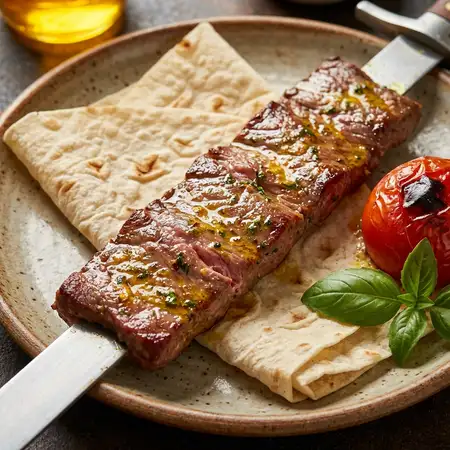
Kabab Barg
The "Leaf" kebab. Thinly pounded filet mignon marinated in aromatic onion juice.
 AI illustration
Lamb / 6h
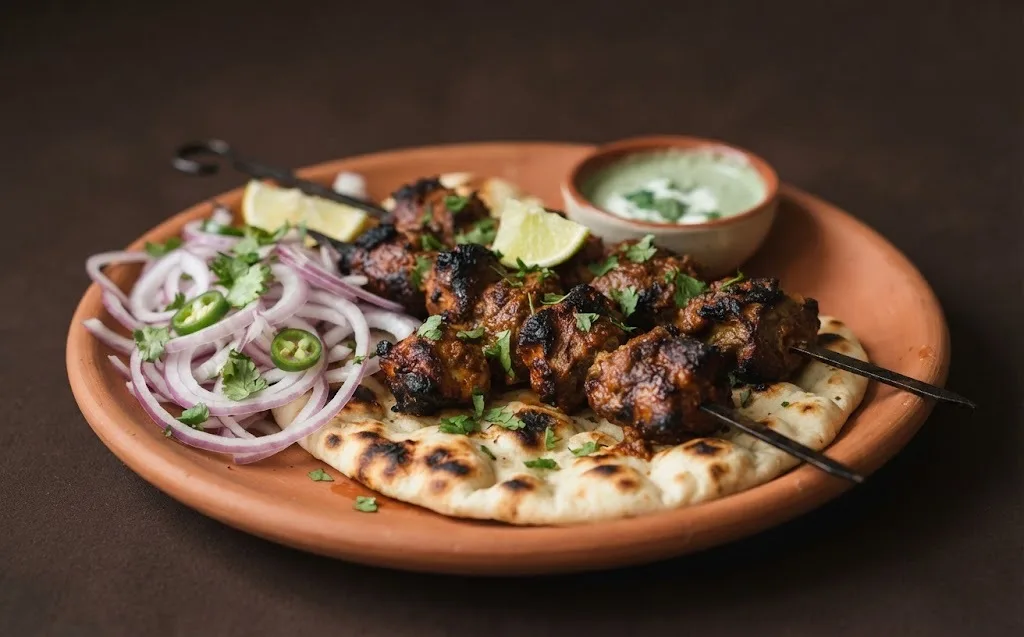
Boti Kebab
Marinated chunks of spiced meat. The chunk version of the minced Seekh.
 AI illustration
Pork / 1h
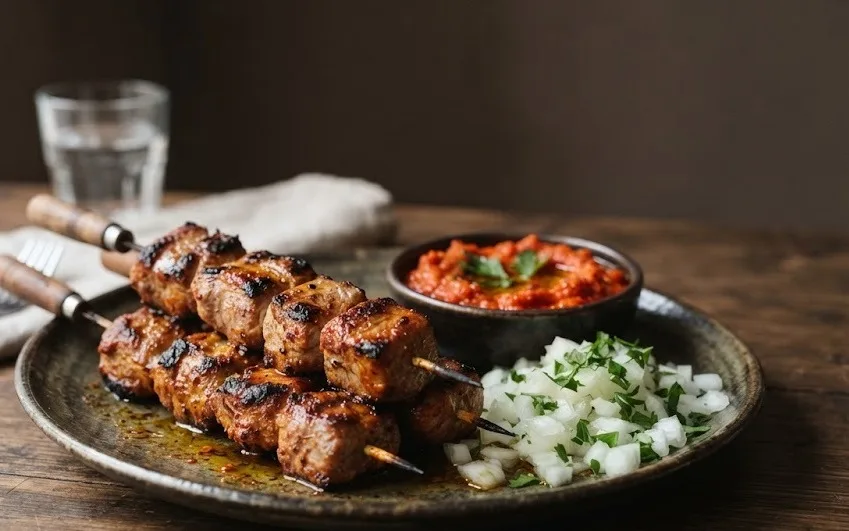
Raznjici
Simple Balkan skewers. Pork or chicken cubes simply seasoned and grilled.
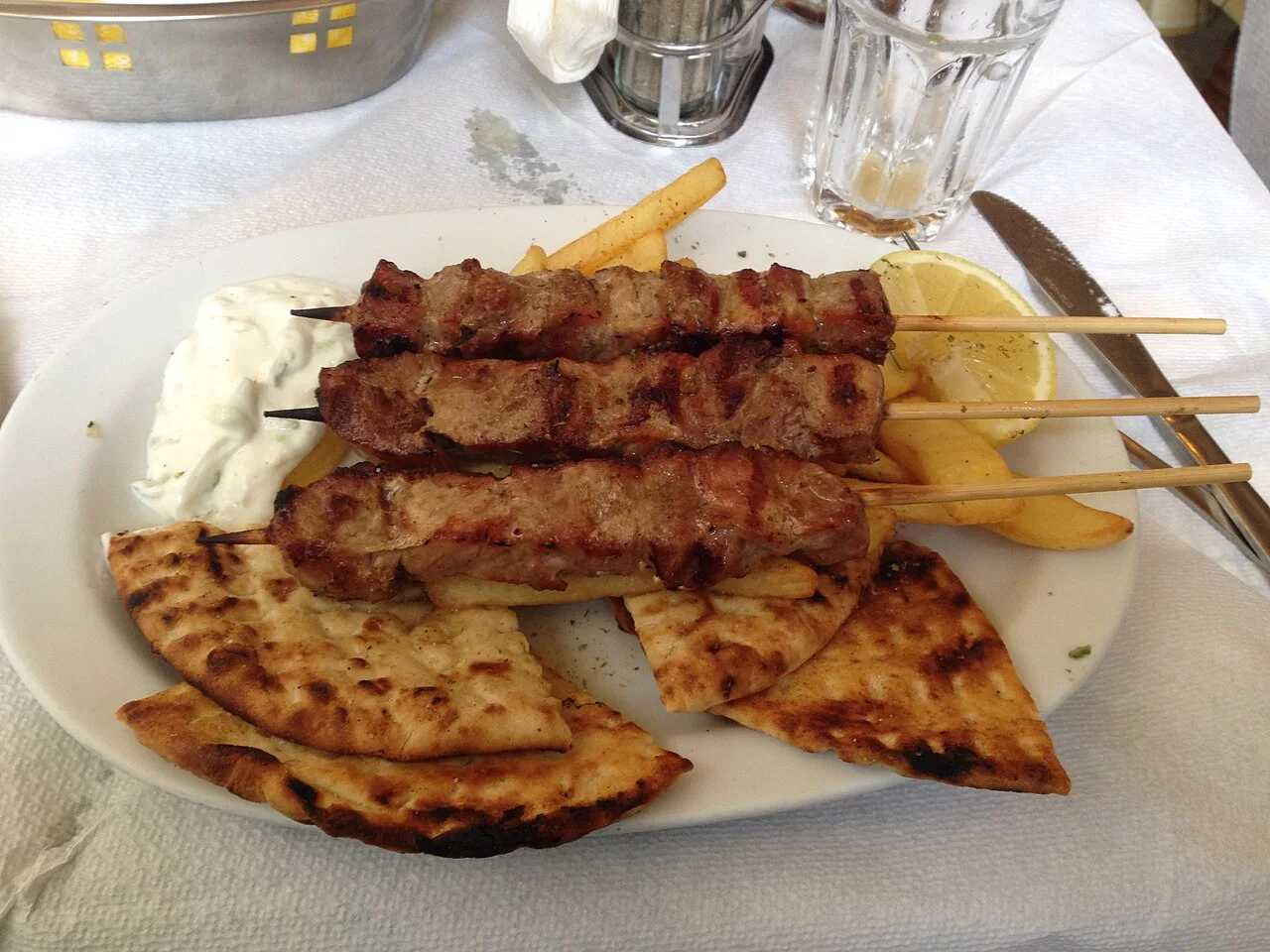
Pork / 2h
Souvlaki
Classic Greek skewers. Traditionally Pork, marinated in lemon and oregano.
Related Collections
Persian Kebab Recipes
A collection of Persian grilling styles, from koobideh and barg to joojeh and other skewer traditions.
Indian Kebab Recipes
A collection of Indian kebab styles, from seekh and galouti to boti, reshmi, and green-marinated skewers.
Balkan Kebab Recipes: Cevapi, Somun, Lepinja, Raznjici
Compare Balkan kebab recipes, breads, and serving traditions including cevapi, somun, lepinja, raznjici, onion garnish, ajvar, and kajmak.
More Guides
Technique guide
Viral Parchment Paper Doner: Why It Works and How to Fix It
The viral parchment paper doner: why thin rolled mince imitates spit meat, what it misses (salt, fat, a dry crisp) and a step-by-step method to 71°C.
Heat guide
Charcoal vs Gas for Kebab: The Heat Matters More Than Smoke
Charcoal vs gas for kebab: why coals win for minced adana and koobideh, where gas loses almost nothing, and the settings that close the gap on a gas grill.
Greek guide
Gyro vs Souvlaki: Spit, Skewer and the Pita Between
Gyro vs souvlaki: vertical spit versus skewer, why pork rules in Greece, what goes in the pita, and how to make both properly at home without a rotisserie.
Meat guide
Best Meat For Kebab
Choose the best meat for kebab by fat ratio, cut, grind, and cooking style, whether it ends up on a skewer, in a wrap, or on a plate.
Technique guide
How To Keep Kebab On The Skewer
Learn how to keep kebab on the skewer with the right fat level, onion handling, kneading, skewer shape, and grill timing.
Bread guide
Best Bread For Kebab Wraps
Choose the best bread for kebab wraps, gyros, shawarma, doner, and plate service with lavash, pita, somun, pide, and durum explained clearly.