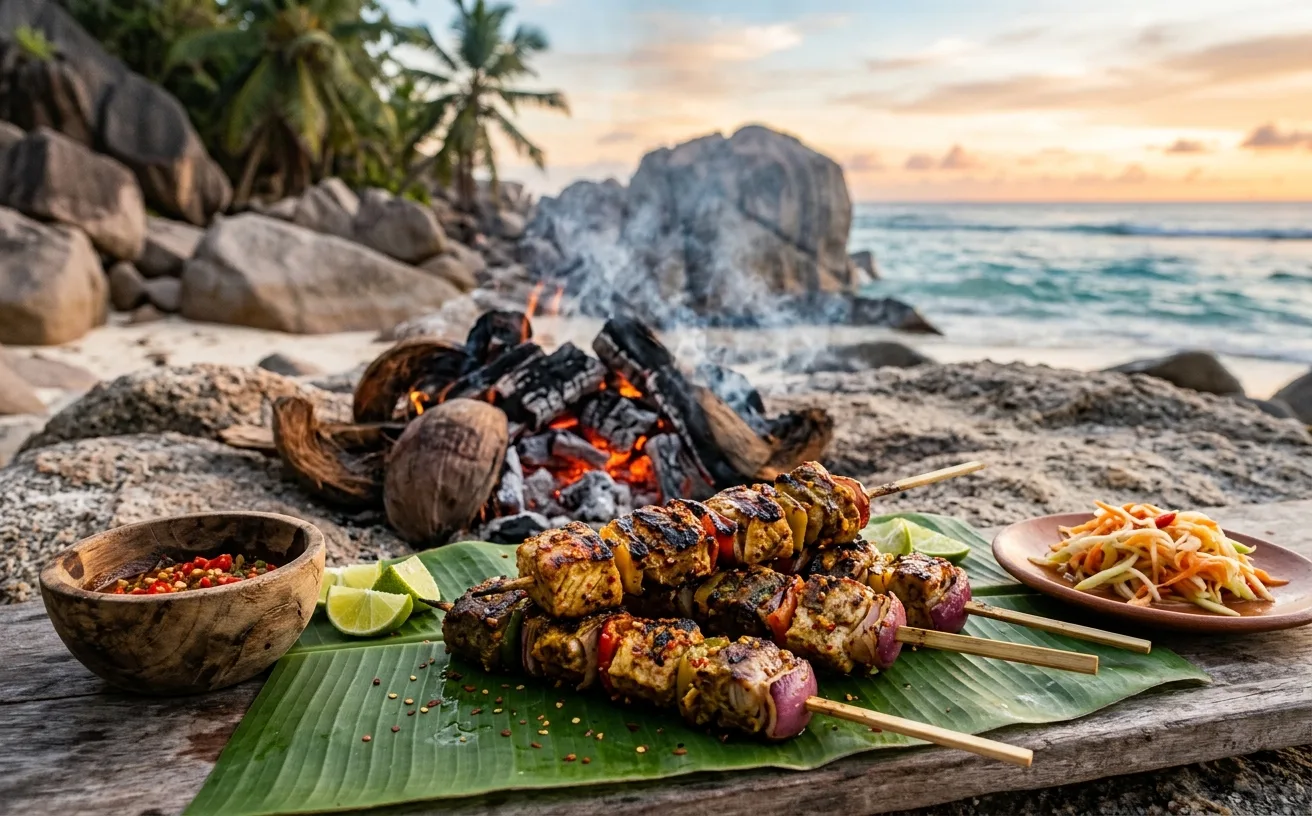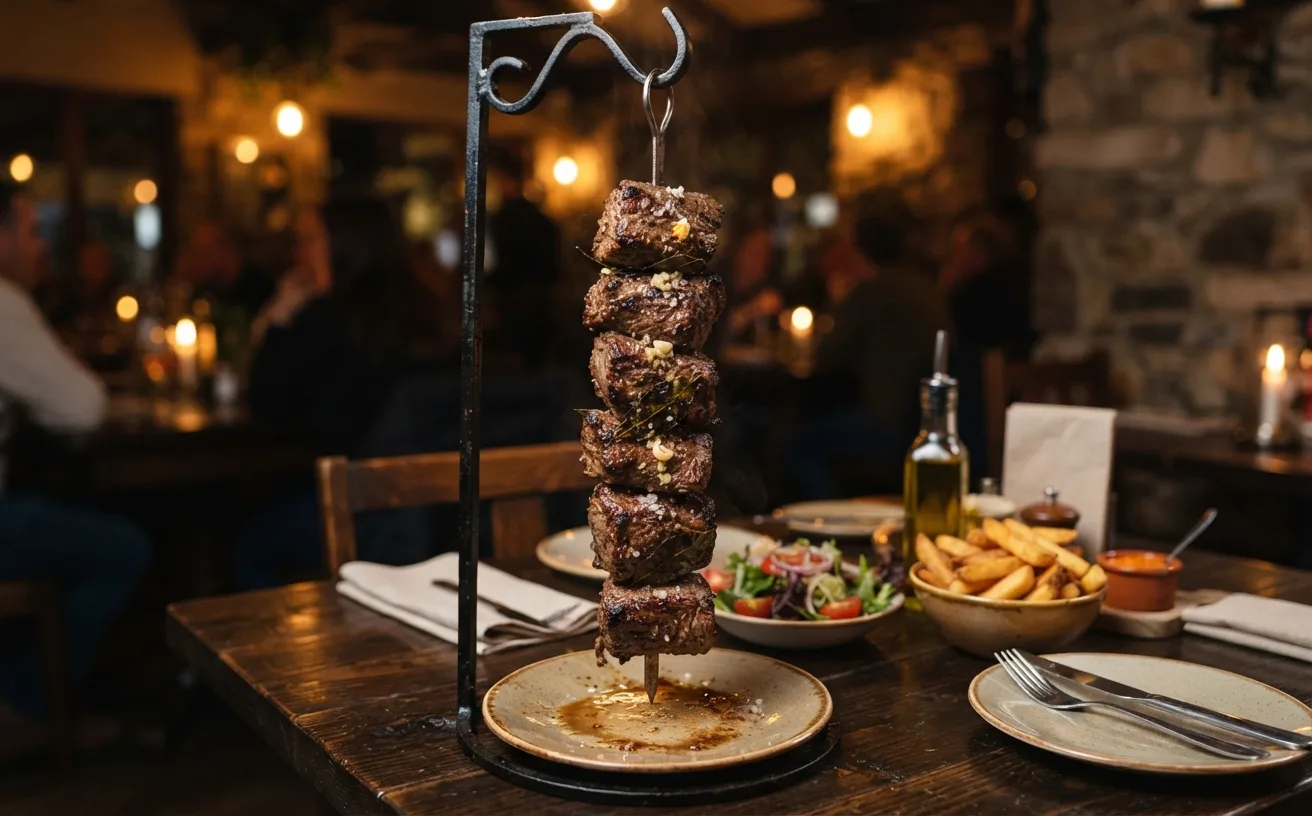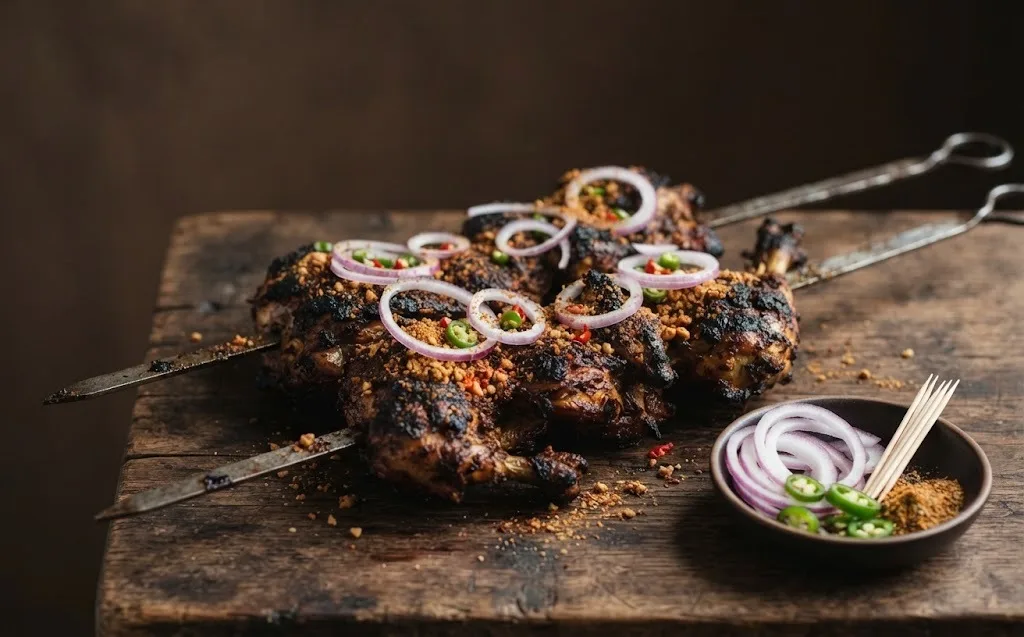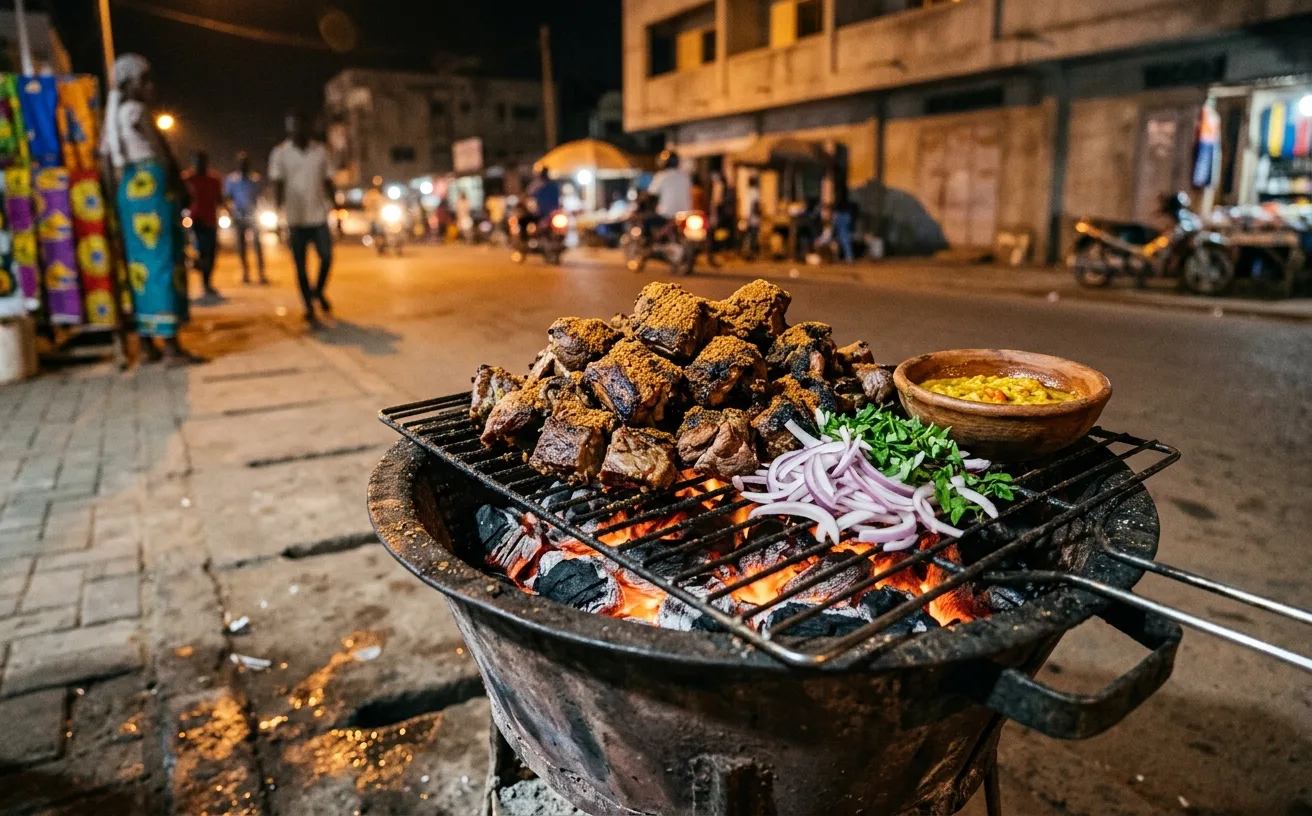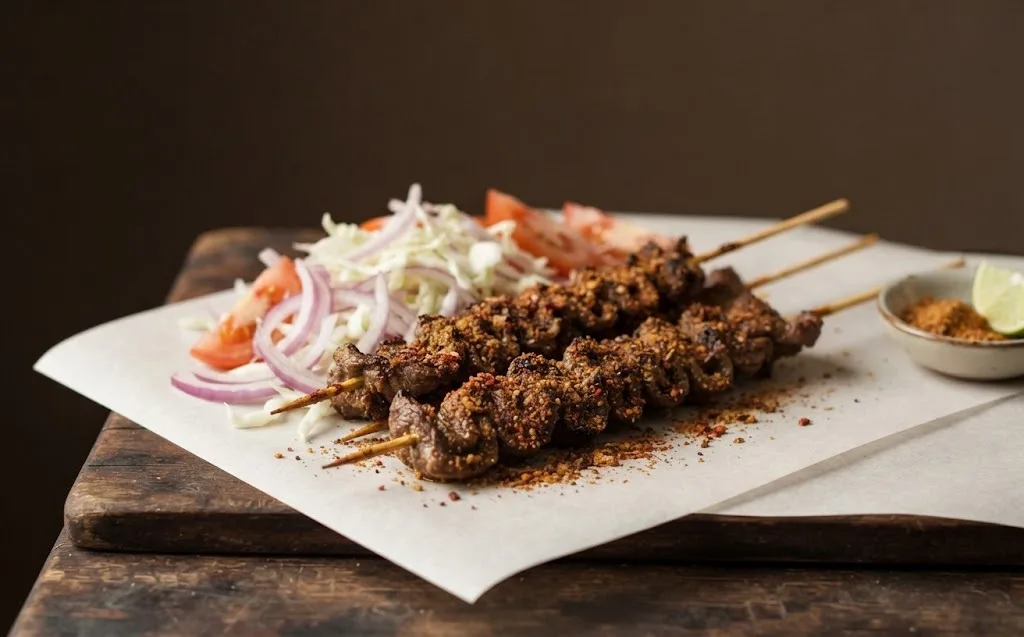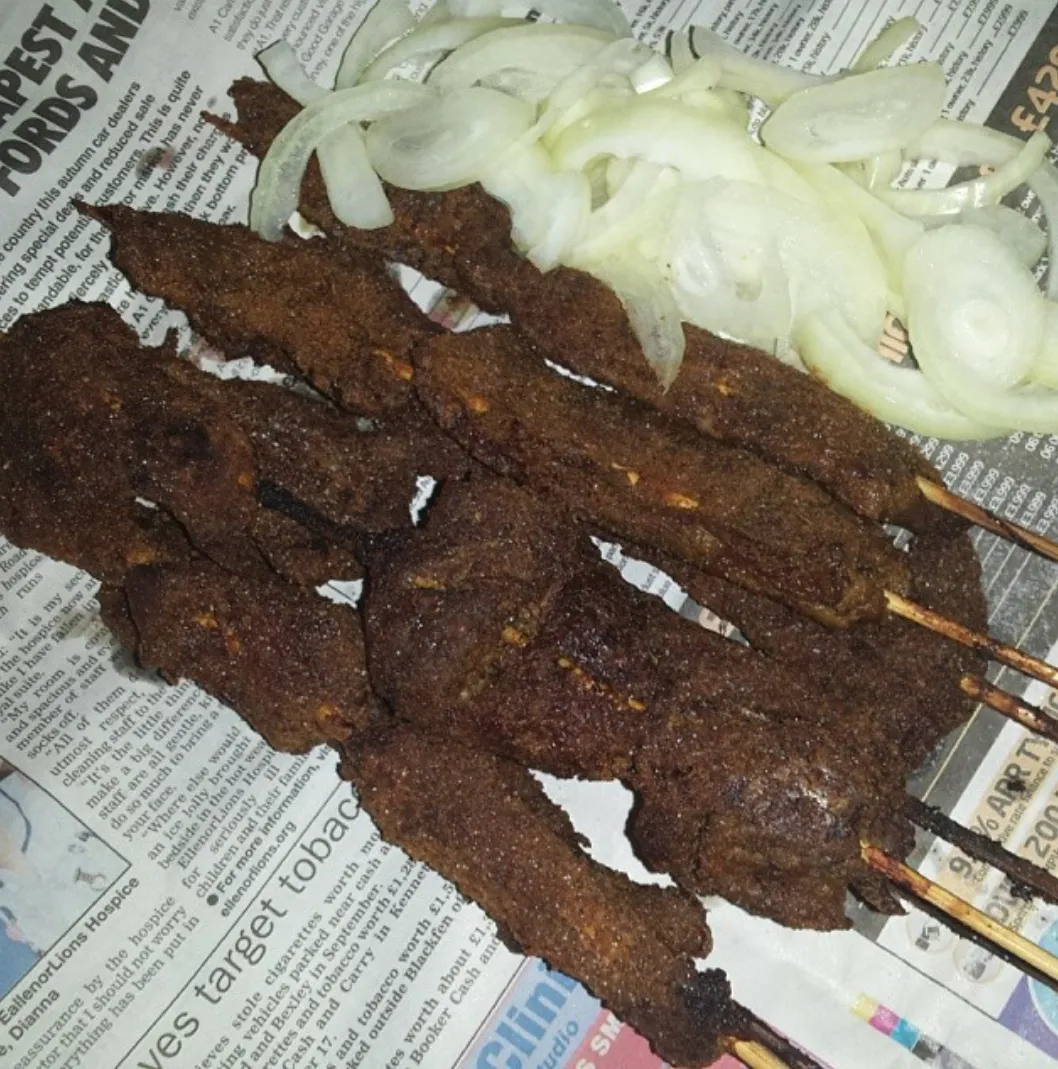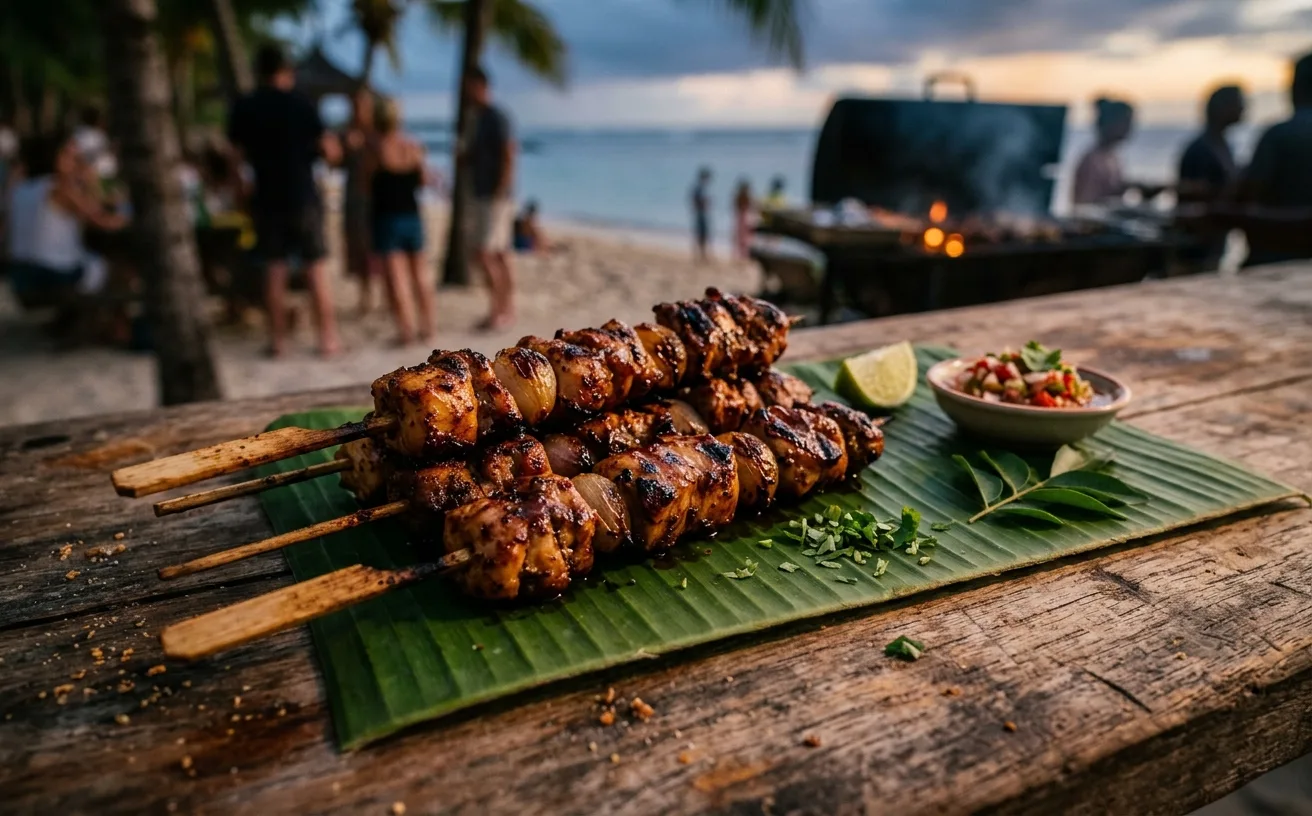
The Mascarene islands' picnic kebab: pork or chicken cubes marinated in siave (soy sauce), ginger, garlic and honey — a Sino-Creole signature — grilled at Réunion's beloved weekend pique-niques along the coast and at Mauritian family barbecues, where Indo-Mauritian massalé versions run alongside. The soy-honey marinade distinguishes it from both French bistro brochettes and mainland African skewers.
Also known as brochette réunionnaise, brochettes créoles mauriciennes, brochettes pique-nique.
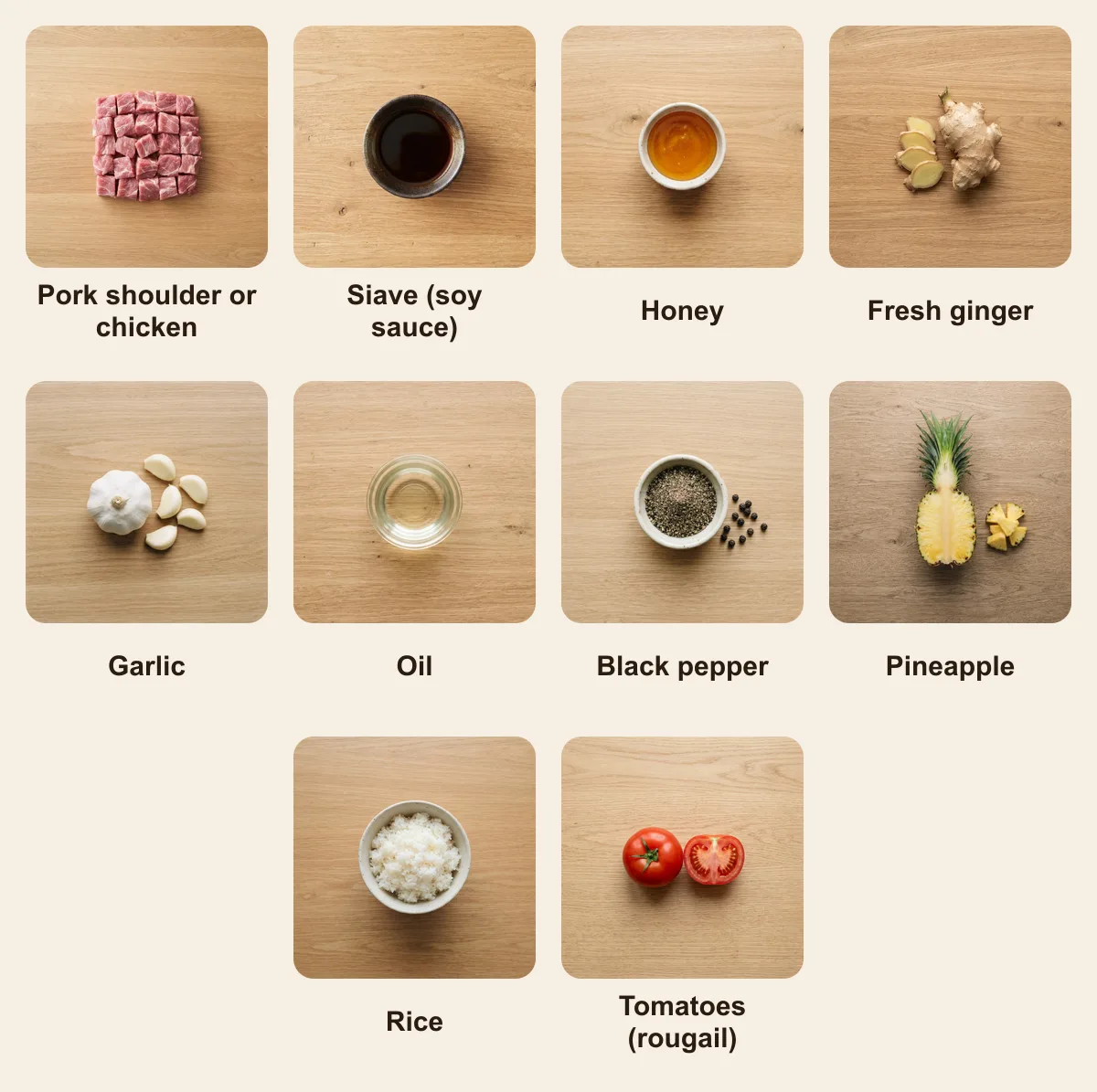
Ingredients
- 700 g pork shoulder or chicken thigh, 3 cm cubes
- 4 tbsp siave (soy sauce)
- 2 tbsp honey
- 3 cm fresh ginger, grated
- 4 garlic cloves, crushed
- 1 tbsp oil
- 0.5 tsp black pepper
- 1 small pineapple, chunks (optional, picnic favorite)
- rice and rougail tomate, to serve
How to make it
- 1
Stir the siave, honey, ginger, garlic, oil and pepper into the Mascarene sweet-salt base, set 2 tbsp aside for glazing, and marinate the meat in the rest for 4 hours.
- 2
Thread the cubes — with pineapple chunks between, if you like — onto skewers for the beach or garden fire.
- 3
Grill over medium coals 10-12 minutes; the honey-siave coat wants steady heat and a turn every 3 minutes to lacquer, not blacken.
- 4
Brush once with the reserved marinade in the last minute or two, then let the glaze set dry and glossy.
- 5
Serve pique-nique style over rice with a sharp tomato rougail against the sweetness.
Pro tip: Siave plus honey caramelizes at pan-sugar speed — the moment the glaze puffs tiny bubbles at the edges, move the skewer to the cooler rail.
Where Brochettes créoles come from
On Mauritius, Indo-Mauritian massalé versions run alongside, so the same barbecue often carries two entirely different marinades.
Soy, honey and ginger: the Mascarene picnic skewer
If you want sweet and salty, this is the brochette to make. Pork shoulder or chicken thigh marinates for hours in siave (soy sauce), honey, ginger and garlic, and the soy supplies all the salt; Brocheta de asado, by contrast, gets coarse salt and nothing else before the fire. The honey means moderate coals and a glaze brushed on only in the last minute or two. Seychellois fish brochettes share the ginger and garlic, but their rub goes on shortly before grilling over hot coconut-husk coals. Rice and a sharp rougail come alongside, and on Mauritius a curry-style massalé version often turns up at the same barbecue.
Compare: Brocheta de asado · Seychellois fish brochettes
How Brochettes créoles are cooked
Soy and honey together caramelise fast and burn faster, which sets the whole cooking approach: moderate coals, frequent turning, and the reserved marinade brushed on only in the last minute or two. A hot fire produces black skewers with raw centres and it is the standard first-attempt failure.
The marinade is left on for several hours or overnight, and its salt content means it seasons through rather than only on the surface — which is why brochettes créoles need no additional salt and are often over-salted by cooks who add it out of habit.
Ingredients and shopping
Pork shoulder or chicken thigh in three-centimetre cubes. Both suit the sweet-salty marinade; pork is the more traditional on Réunion. Some versions thread pineapple or pepper between.
Siave — the local soy sauce — ginger, garlic, honey and a little oil. For the Mauritian massalé version: a curry-style spice blend with yoghurt or oil instead. Rougail — the Creole tomato-and-chilli relish — on the side, and rice or bread.
How Brochettes créoles are served
At a pique-nique on the beach with rice, rougail, lentils and a salad, or at a family barbecue with bread. Phoenix beer on Mauritius, Dodo or a rum punch on Réunion. The weekend beachside picnic is a genuine institution and the brochette is its centrepiece.
Common mistakes
A hot fire
Soy and honey caramelise and burn quickly. Moderate coals with constant turning.
Adding salt
Soy sauce supplies plenty. Additional salt makes the skewers inedible.
Glazing early
Reserved marinade brushed on at the start blackens. It goes on in the last minute or two.
Mixing the two marinades
The Sino-Creole soy-honey and the Indo-Mauritian massalé are separate traditions. Combining them muddles both.
Brochettes créoles: questions and answers
What is siave?
The local Mascarene name for soy sauce, reflecting the islands' long-established Chinese communities. It is the base of the classic Creole brochette marinade.
Do I need to add salt?
No — the soy sauce supplies plenty. Adding more is the commonest error.
What is the massalé version?
The Indo-Mauritian alternative, using a curry-style spice blend instead of soy and honey. Both appear at the same barbecues.
Sources and further reading
- La cuisine réunionnaise : plats et recettes créoles — Office de Tourisme de l'Ouest 974 (Réunion)
- Brochettes mauriciennes de poulet, crevettes & ananas Victoria — L'atelier de Kristel
- Les vendeurs de poulets grillés sont de retour — Réunion La 1ère (France Télévisions)