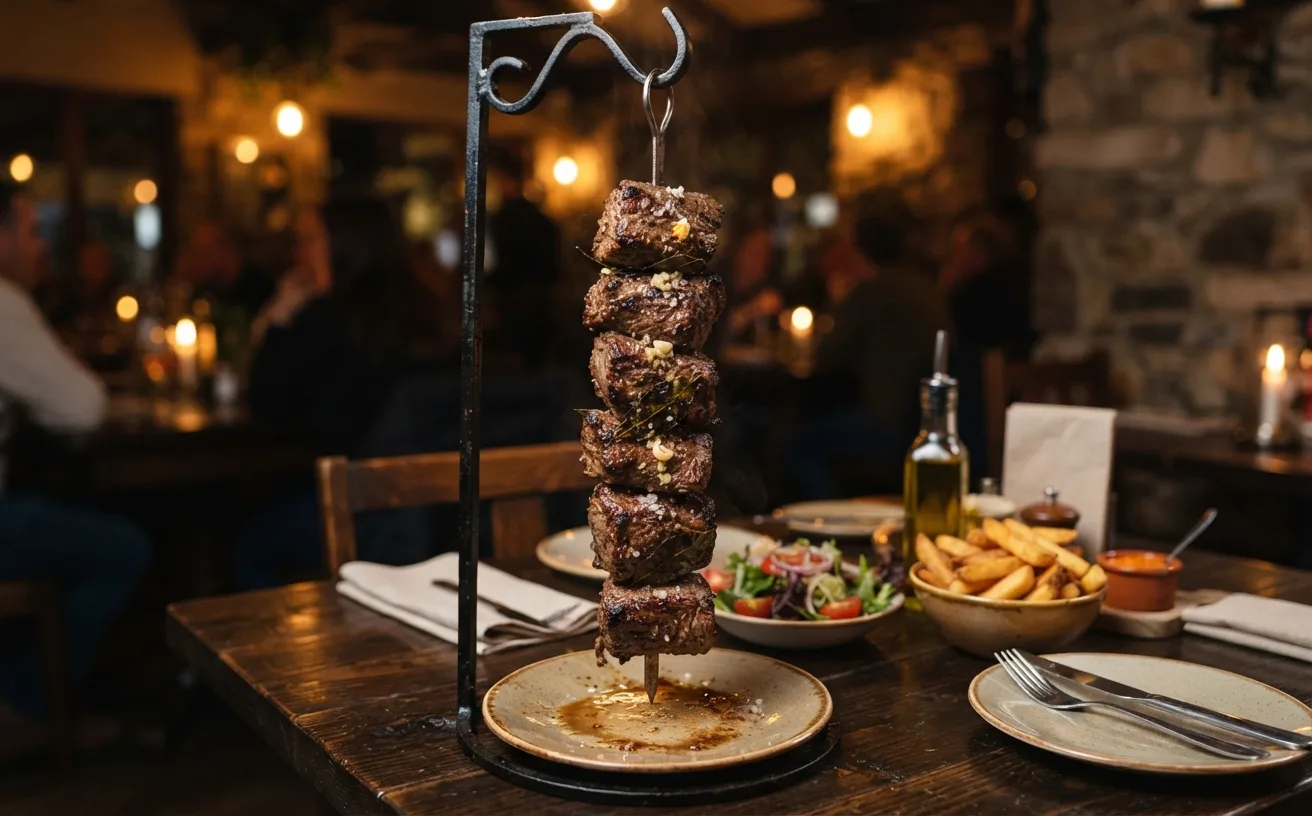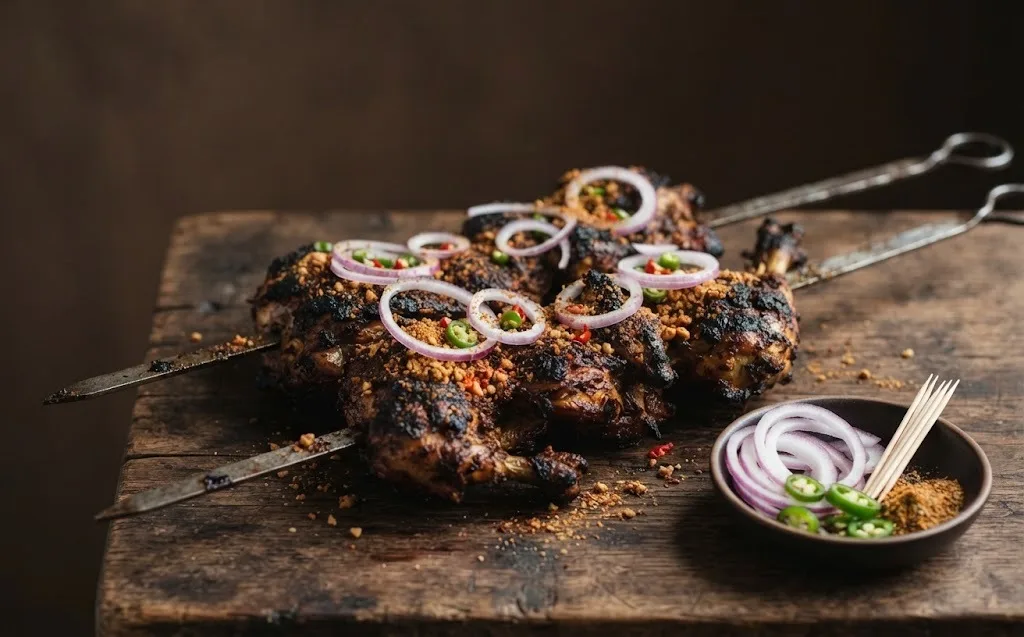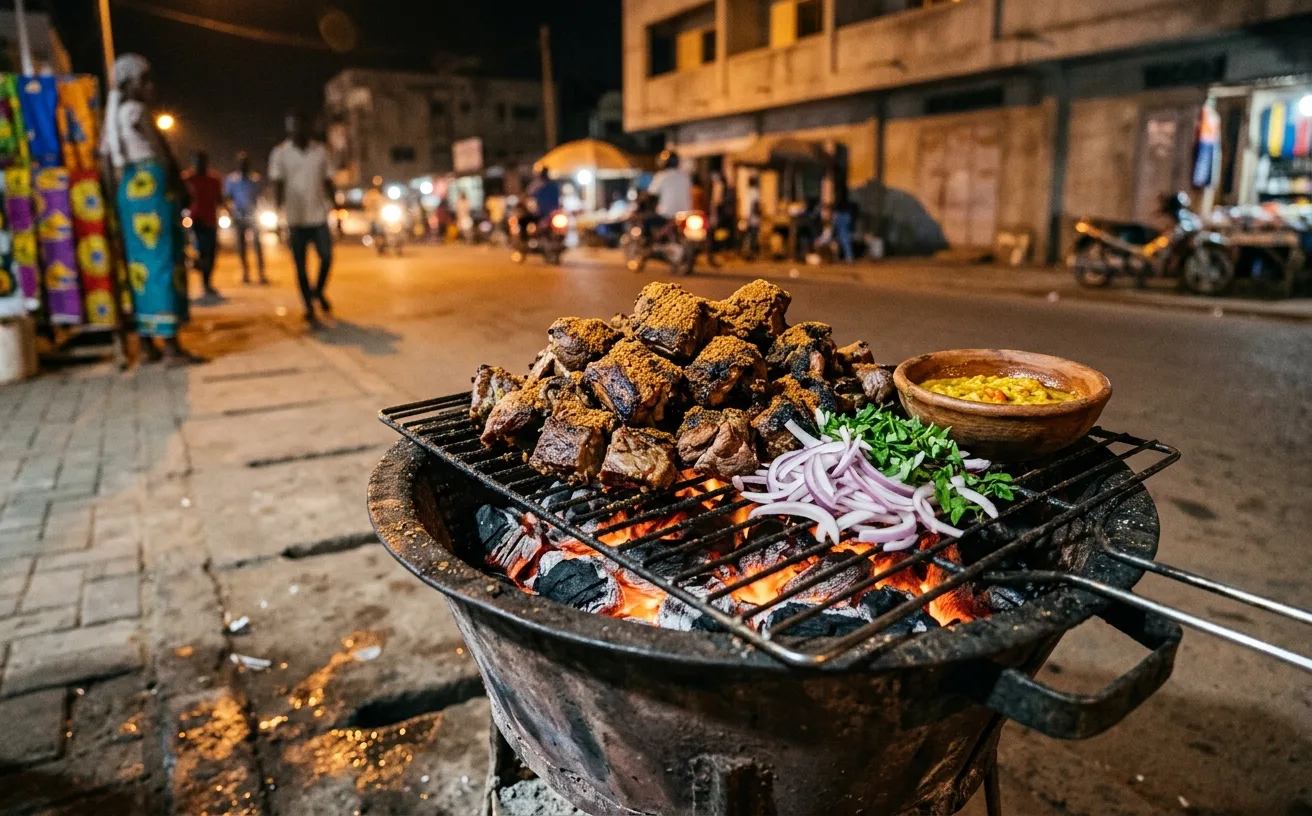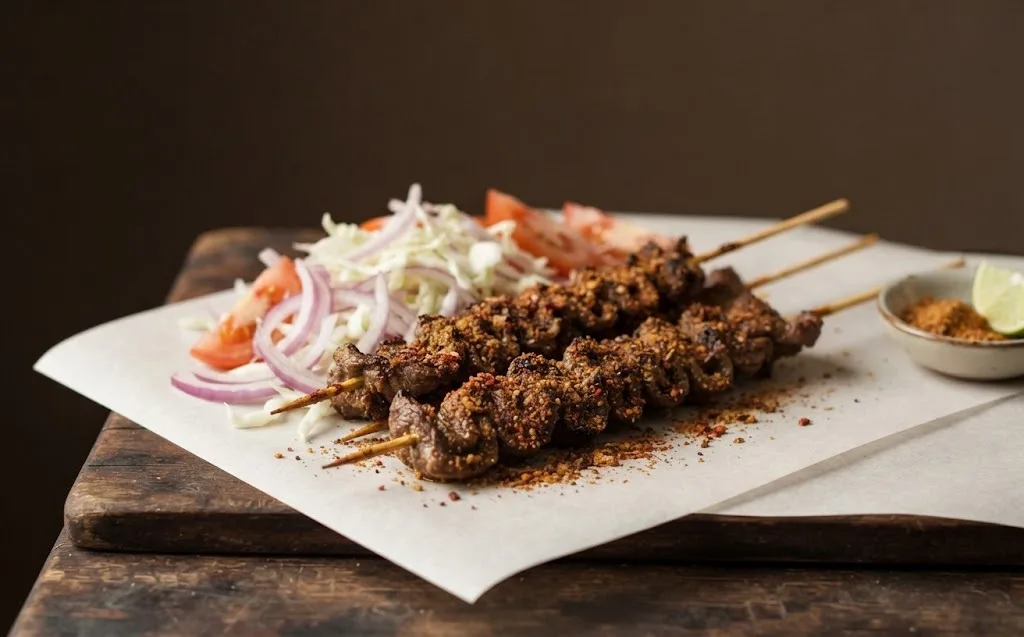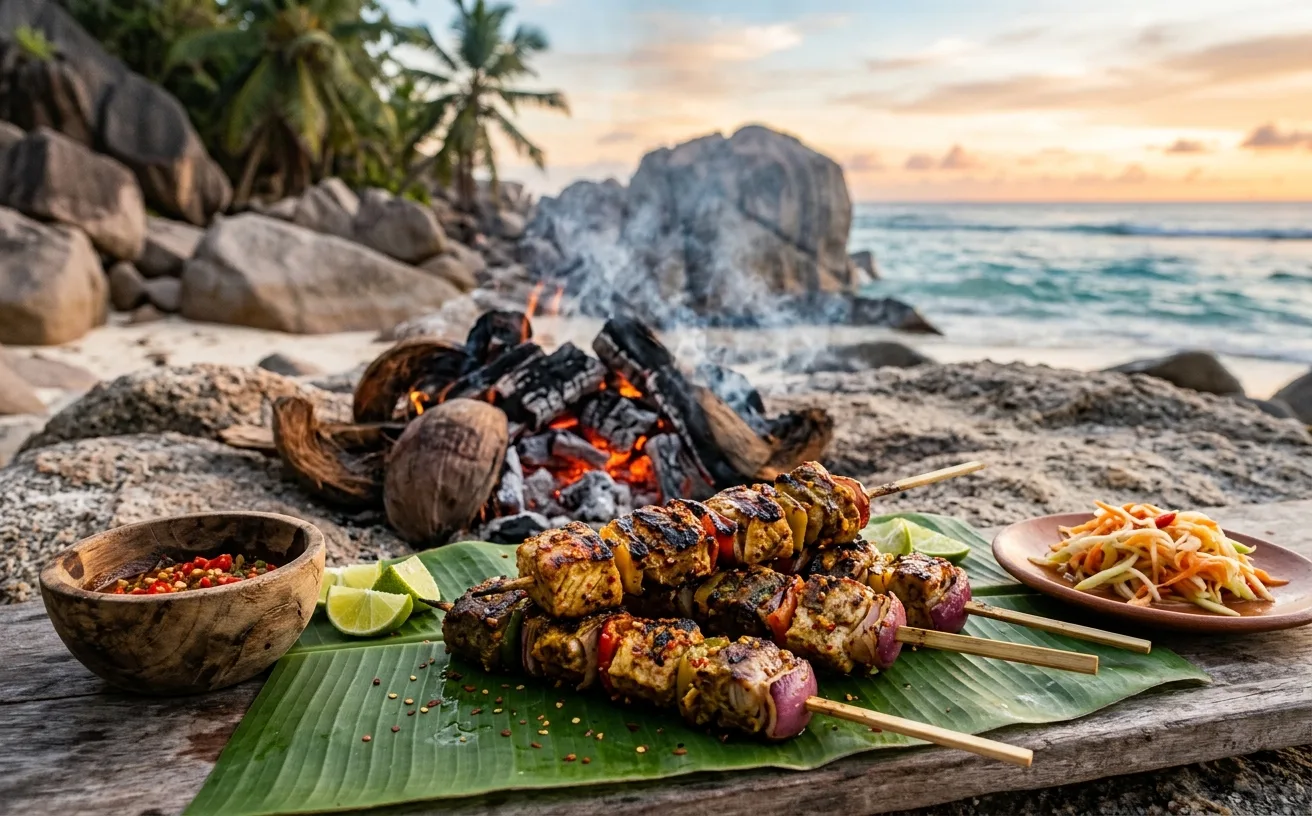
Beach grills on Mahé and Praslin skewer chunks of job fish, snapper or tuna rubbed with the Seychellois crush of ginger, garlic and crushed chili, then grill them over coconut-husk coals and serve with a Creole tomato-onion sauce. It is the island adaptation of the French brochette to a fish-first Creole kitchen.
Also known as brochette de poisson, Creole fish skewers, grilled job fish skewers.
Ingredients
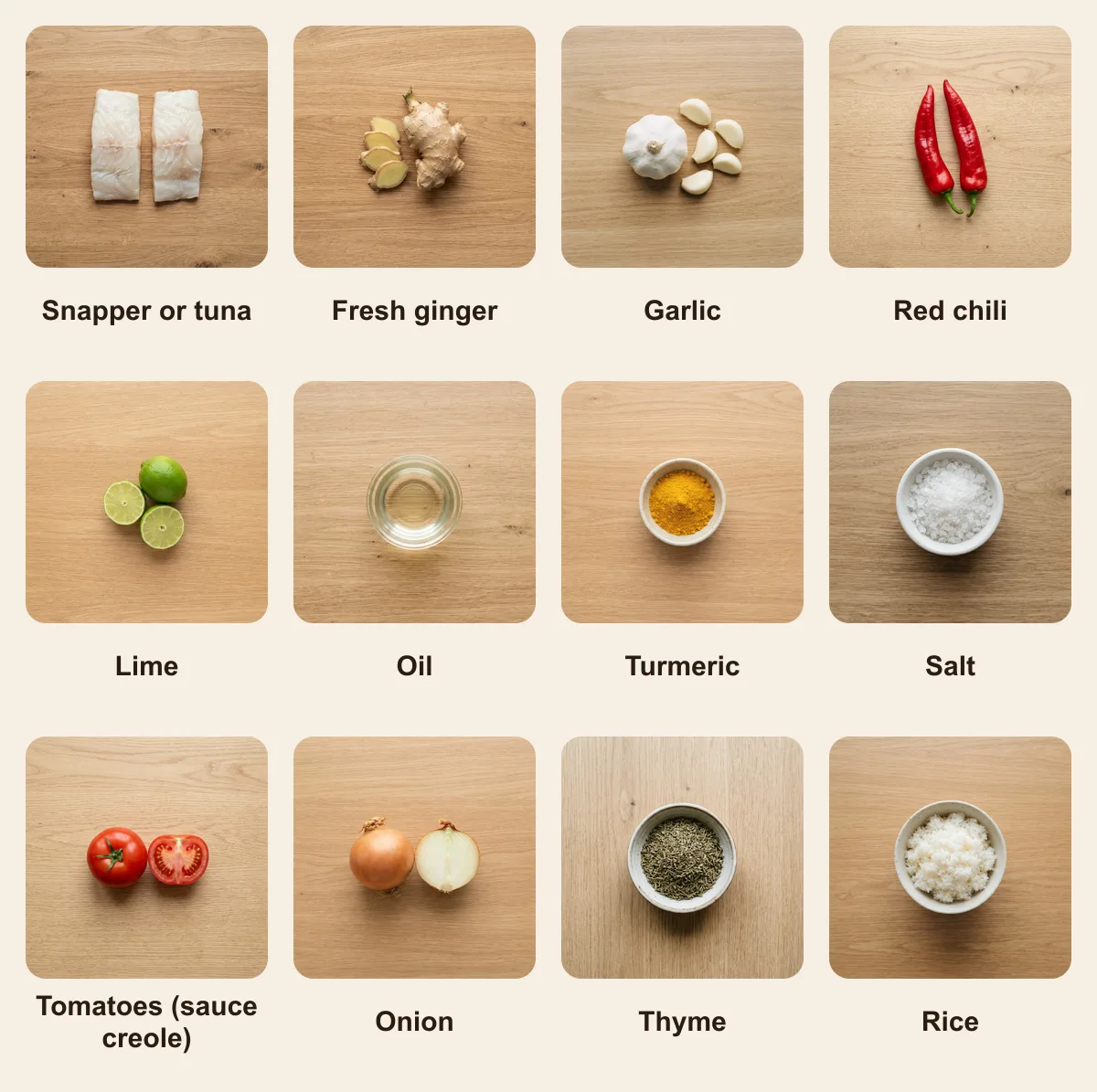
- 700 g firm fish (job fish, snapper or tuna), 4 cm chunks
- 3 cm fresh ginger
- 4 garlic cloves
- 1 red chili
- 1 lime, juiced, plus wedges
- 2 tbsp oil
- 0.5 tsp turmeric
- 1.5 tsp salt
- for the sauce creole: 2 tomatoes, 1 small onion, 2 thyme sprigs, simmered soft
- rice, to serve
How to make it
- 1
Crush the ginger, garlic and chili to the coarse island paste, mix with lime, oil, turmeric and salt, and coat the fish for 15 minutes — longer and the lime starts cooking it.
- 2
Simmer the tomatoes, onion and thyme with a splash of water into a loose sauce creole.
- 3
Thread the chunks gently onto flat or doubled skewers so they cannot spin.
- 4
Grill over hot coals 6-8 minutes total, turning once per face; tuna can stay pink at the center, snapper should just flake.
- 5
Serve on rice with the warm creole sauce and lime wedges.
Pro tip: Flat skewers (or two parallel bamboo sticks) are non-negotiable for fish — round ones spin inside the chunk and tear it apart at the first turn.
Where Seychellois fish brochettes come from
Coconut husk as fuel is the local signature and it is not merely what is available: it burns hot and fast with a distinctive sweet smoke that suits fish far better than hardwood does. The Seychelles has almost no grazing land, so a fish brochette is not a variant here but the default.
Firm fish and a quick, hot fire on Mahé and Praslin
Fish replaces meat entirely, and that changes the clock. Job fish, red snapper or tuna, cut in firm chunks, gets a crushed ginger, garlic, chilli and lime rub only about 15 minutes before grilling, because lime starts to cure the flesh; Brochettes créoles, from Réunion and Mauritius, marinate pork or chicken for hours. Coconut-husk coals burn hot, so the cook is short, and flat or doubled skewers stop the chunks spinning. Brochettes (East African) use fish only occasionally, as tilapia beside the usual goat. A Creole tomato-onion sauce or satini, rice and lentils complete the plate.
Compare: Brochettes créoles · Brochettes (East African)
How Seychellois fish brochettes are cooked
Firm-fleshed fish is essential, and the choice of species is the most important decision in the dish. Job fish, red snapper (bourgeois) and tuna hold together on a skewer; soft-fleshed fish disintegrates and there is nothing to be done about it.
The rub goes on shortly before grilling rather than hours ahead, because salt and acid begin curing fish within minutes. Coconut-husk coals burn hot, so the cook is short — three or four minutes a side — and the skewers are oiled well so nothing sticks and tears.
Ingredients and shopping
Job fish, red snapper, tuna or another firm white fish, in generous chunks so they hold on the skewer. Avoid soft-fleshed fish entirely. Some brochettes include prawns or squid.
The rub is crushed ginger, garlic, chilli, salt and lime, with a little oil. Satini — Creole tomato-onion relish with lime and chilli — is the accompaniment, along with rice, lentils and often a green mango salad. Coconut husk for the fire if you can get it.
How Seychellois fish brochettes are served
With rice, lentils, satini and a green mango or papaya salad, at a beach grill or a takeaway. SeyBrew beer or a fresh juice. It is everyday food in the Seychelles rather than a tourist dish, and the takeaway version comes in a foil tray.
Common mistakes
Soft-fleshed fish
It falls apart on the skewer. Job fish, snapper or tuna — firm flesh is non-negotiable.
Rubbing hours in advance
Salt and lime begin curing fish within minutes. The rub goes on shortly before grilling.
A dry grill
Fish sticks and tears. Oil both the fish and the grill bars well.
Overcooking
Three or four minutes a side over hot coals. Fish continues cooking after it leaves the fire.
Seychellois fish brochettes: questions and answers
What fish should I use?
Firm-fleshed fish only — job fish, red snapper (bourgeois) or tuna. Soft-fleshed fish disintegrates on the skewer.
Why coconut husk for the fire?
It burns hot and fast with a sweet smoke that suits fish better than hardwood. It is also what is abundantly available on the islands.
Sources and further reading
- Seychellois Creole Sauce – Lasos Kreol — The Creole Melting Pot
- Traditional Seychelles Creole Food: A Local's Guide — Finding the Universe
- The Maison Marengo, Typically Creole — Tourism Seychelles