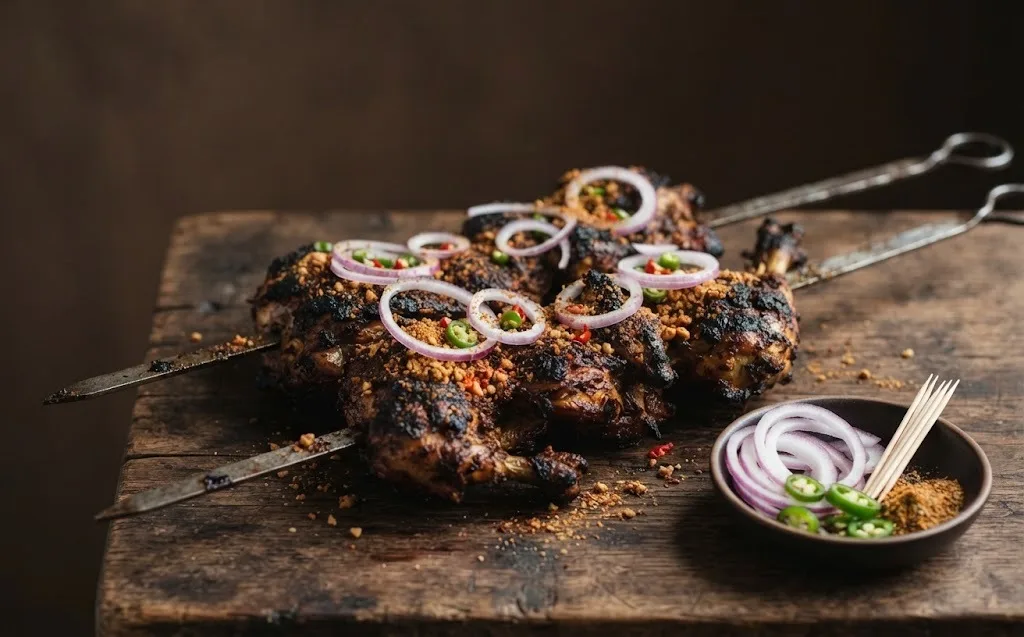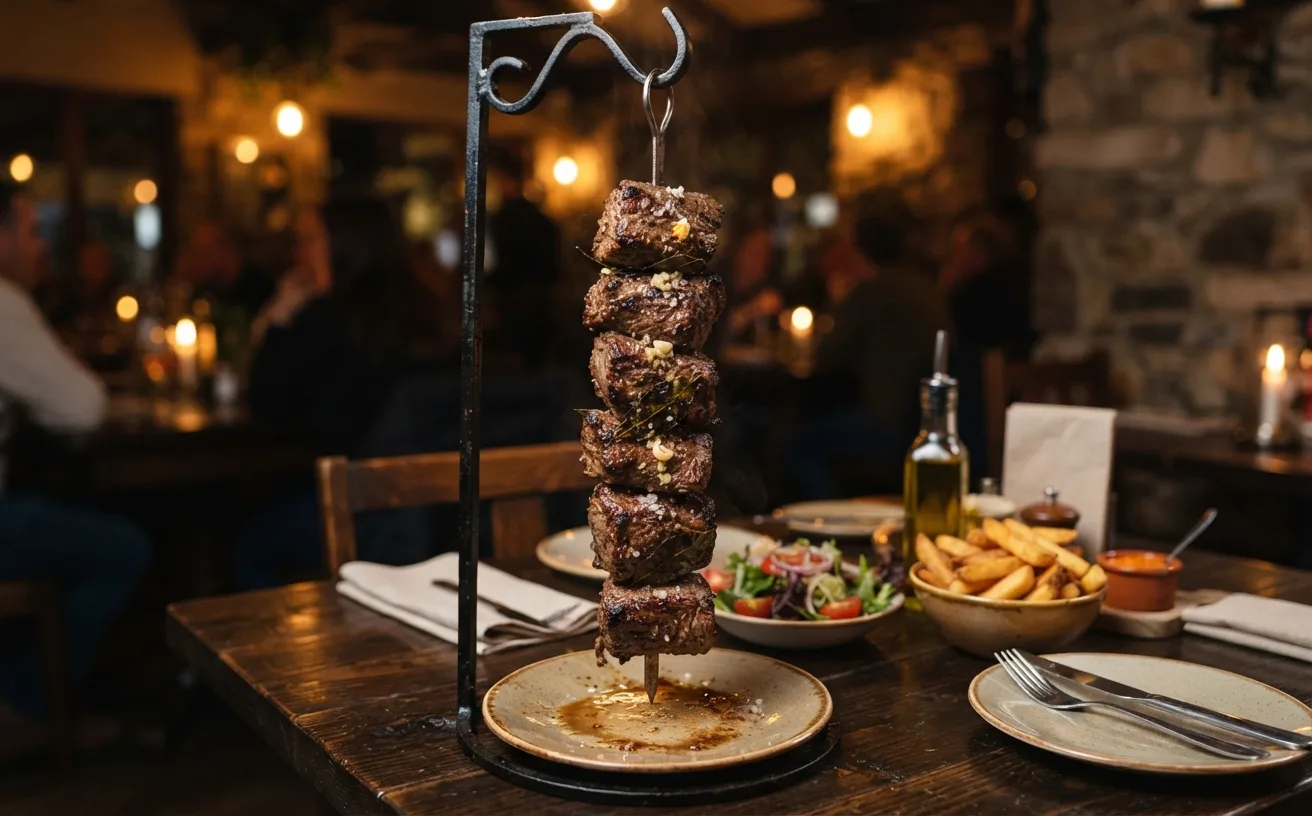
South Africa's large Madeiran-Portuguese community made the espetada a restaurant institution in Johannesburg and Durban: massive cubes of rump rubbed with coarse salt, garlic and bay leaf, grilled on a long skewer that arrives hung vertically at the table so the juices baste the meat as it is carved off. Alongside the marinated sosatie, it is the country's other great skewer tradition — braai culture filtered through Madeira.
Also known as espetada, beef espetada, Madeiran espetada.
Reference video
Ingredients
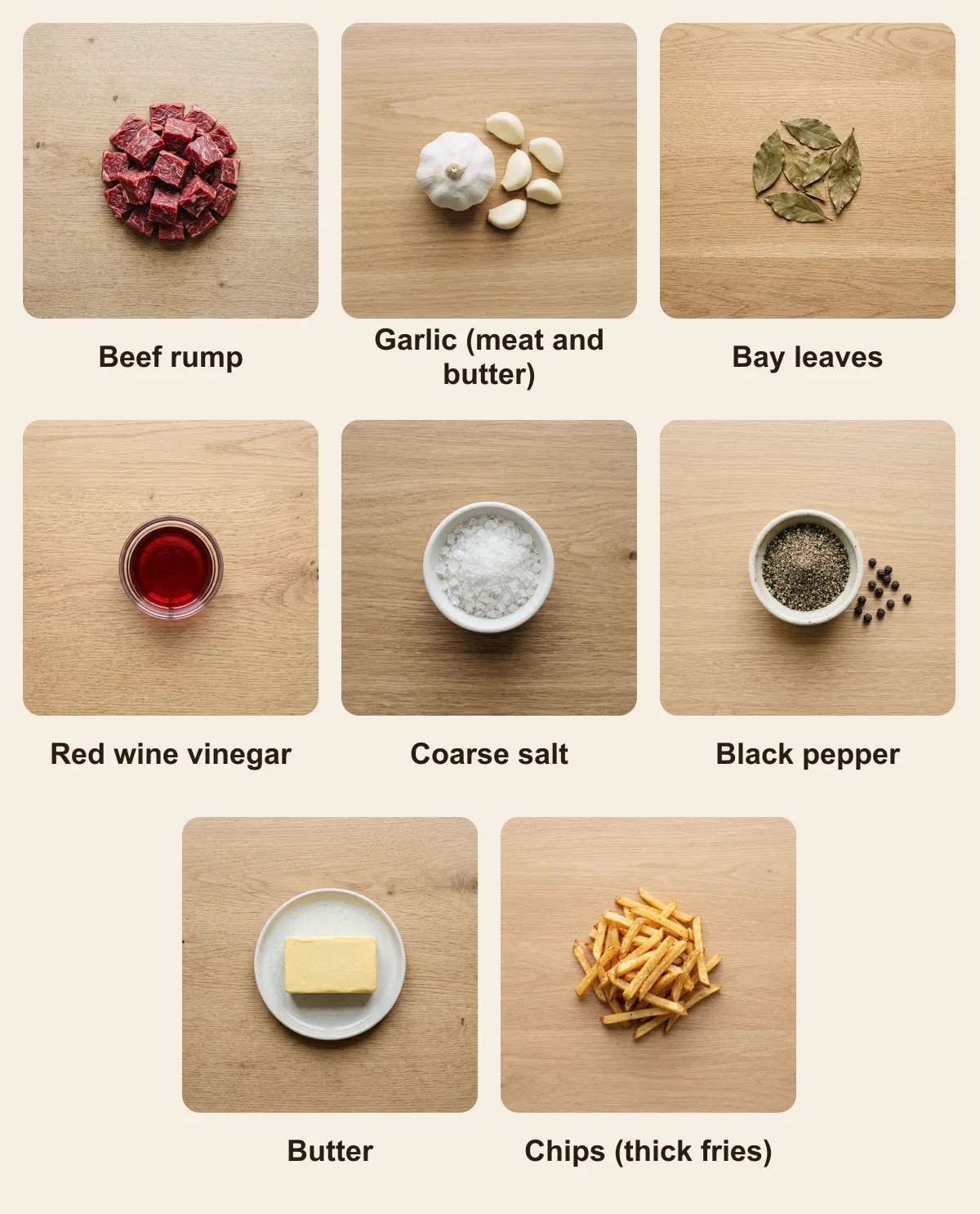
- 900 g beef rump, 5 cm chunks
- 6 garlic cloves, crushed
- 4 fresh bay leaves, plus more tucked between chunks
- 2 tbsp red wine vinegar
- 1 tbsp coarse salt
- 1 tsp black pepper
- 80 g butter
- 2 garlic cloves extra, for the garlic butter
- chips (thick fries), to serve
How to make it
- 1
Bruise the bay leaves and massage the rump chunks with garlic, vinegar, salt and pepper; marinate 4 hours in the Madeiran manner the Joburg restaurants inherited.
- 2
Thread the chunks onto long metal skewers with bay leaves pressed between every piece.
- 3
Braai over moderate coals 12-15 minutes, turning for an all-over crust while the centers hold rosy.
- 4
Melt the butter with the extra garlic while the meat rests on its skewer.
- 5
Hang or stand the skewers vertically over a plate of chips and pour the garlic butter from the top, letting it run down through the meat onto the fries.
Pro tip: The vertical pour is not theatre only — resting juices and garlic butter travel down every chunk, so the bottom of the skewer bastes the chips.
Johannesburg's hanging skewer: metal, bay leaves, garlic butter
Think of it as the restaurant cousin of Madeira's Espetada, found in Johannesburg and Durban. Rump goes on in cubes of five centimetres or more, threaded on a long metal skewer with whole bay leaves between the pieces instead of onto a laurel branch. Garlic butter poured over at the table runs down the stack, so the lowest cubes end up the most basted, whereas in Madeira the drippings soak into bolo do caco. Chips, a salad and Portuguese rolls come alongside. Mozambican espetada uses butter as well, though as a piri-piri baste during grilling, and Churrasco Espeto arrives as thin slices carved from whole picanha instead of cubes.
Compare: Espetada · Mozambican espetada · Churrasco Espeto
How South African espetada is cooked
The vertical service is the technique that continues after the fire. The skewer is hung so gravity pulls the juices and melting garlic butter down through the stack of meat, basting the lower cubes while the upper ones are being eaten. It is a slow, continuing process across the meal.
The cubes are very large — five centimetres or more — and grilled over moderate coals for twelve to fifteen minutes, turned for an all-over crust while the interior stays pink. Bay leaves are threaded between the cubes rather than used as a laurel skewer, which is the South African adaptation of the Madeiran original.
Ingredients and shopping
Rump, in cubes of five centimetres or more. It has the marbling to survive a long grill and the size to justify the format. Fillet is a waste and sirloin is acceptable.
Coarse sea salt in quantity, applied well ahead, plus crushed garlic and whole bay leaves threaded between the cubes. Garlic butter melted over the skewer at the table is standard in South African restaurants and is what runs down the stack.
How South African espetada is served
Hung vertically on its stand at the table with garlic butter poured over, chips, a salad and Portuguese rolls. A South African red or a beer. Diners carve their own cubes off as they eat, and the last ones are the most basted.
Common mistakes
Cutting the cubes small
The vertical basting format needs a tall stack of large cubes. Small ones cook through and the service makes no sense.
Fine salt
Coarse salt forms a crust and seasons without over-salting. It is the Madeiran method.
Serving it flat
The whole point is the vertical hang so the juices and garlic butter run down through the meat. Laid on a plate, they are lost.
Overcooking
Large cubes over moderate coals, pulled while the interiors are still pink. They continue cooking on the hanging stand.
South African espetada: questions and answers
Why is it served hanging vertically?
So the juices and melted garlic butter run down through the stack and baste the lower cubes while the upper ones are eaten.
What cut is used?
Rump, in cubes of five centimetres or more. It has the marbling for a long grill and the size the format needs.
Sources and further reading
- Espetada — Wikipedia
- The disappearing act of Madeiran cuisine — Daily Maverick
- Cesco's Portuguese Restaurant Randburg | Authentic Madeira Cuisine — JoburgETC