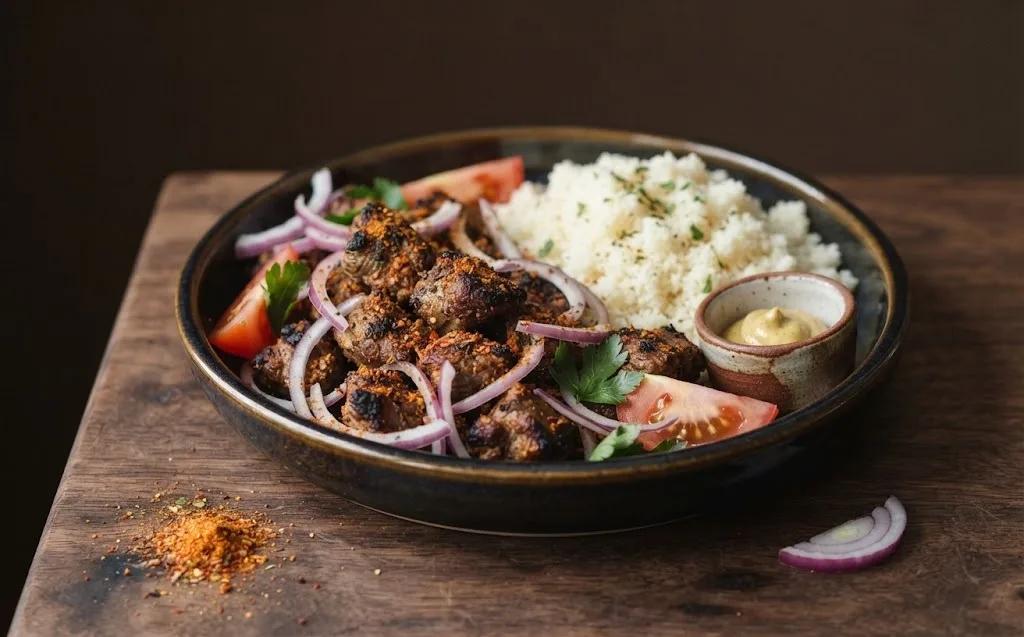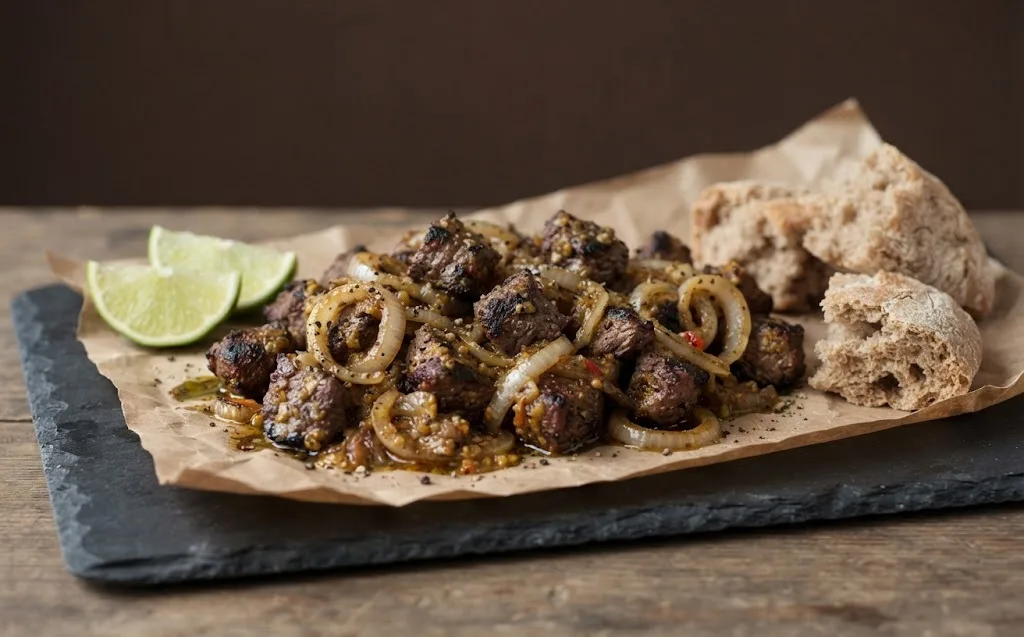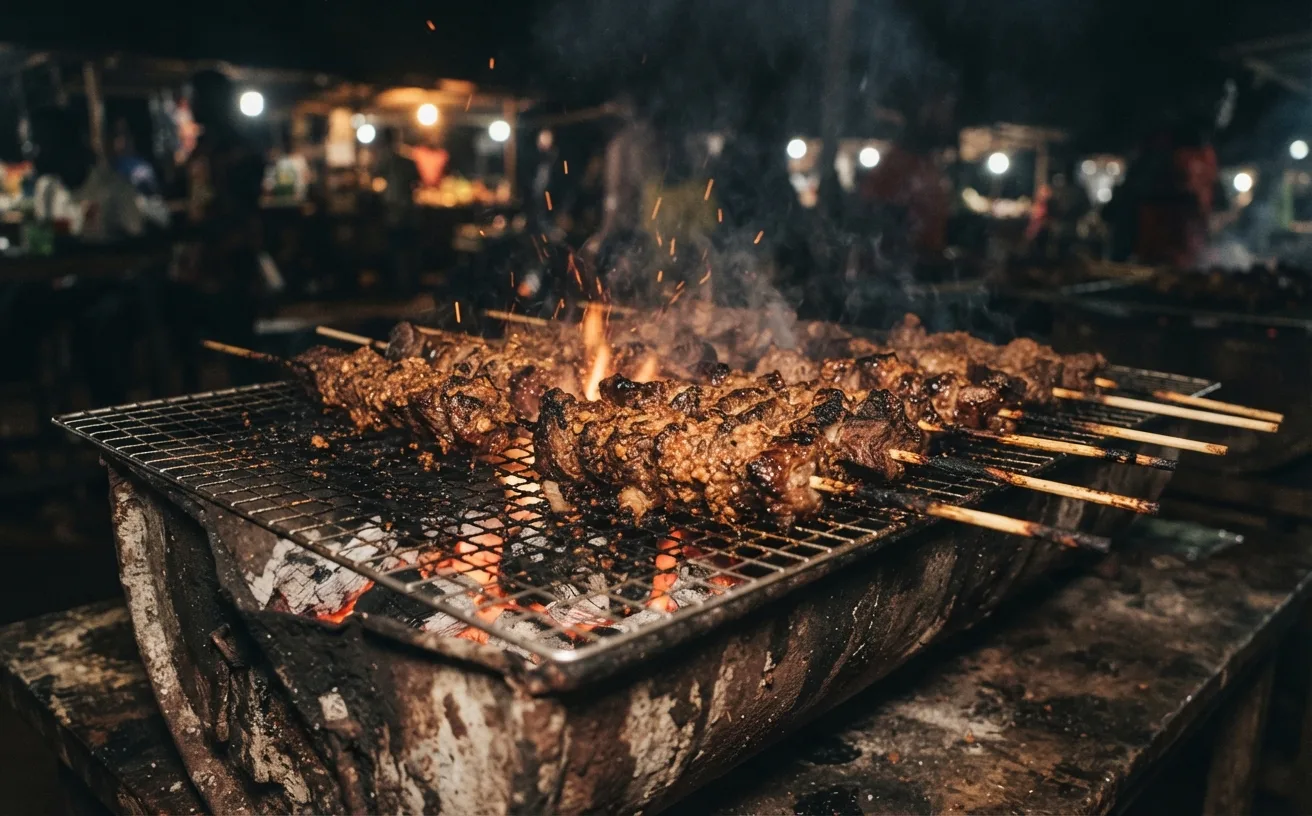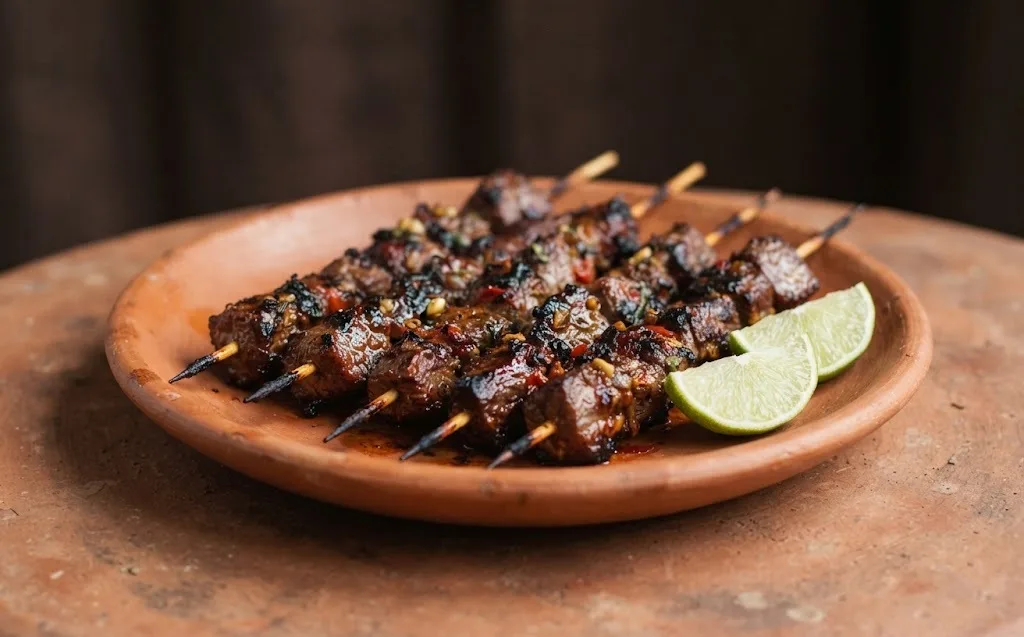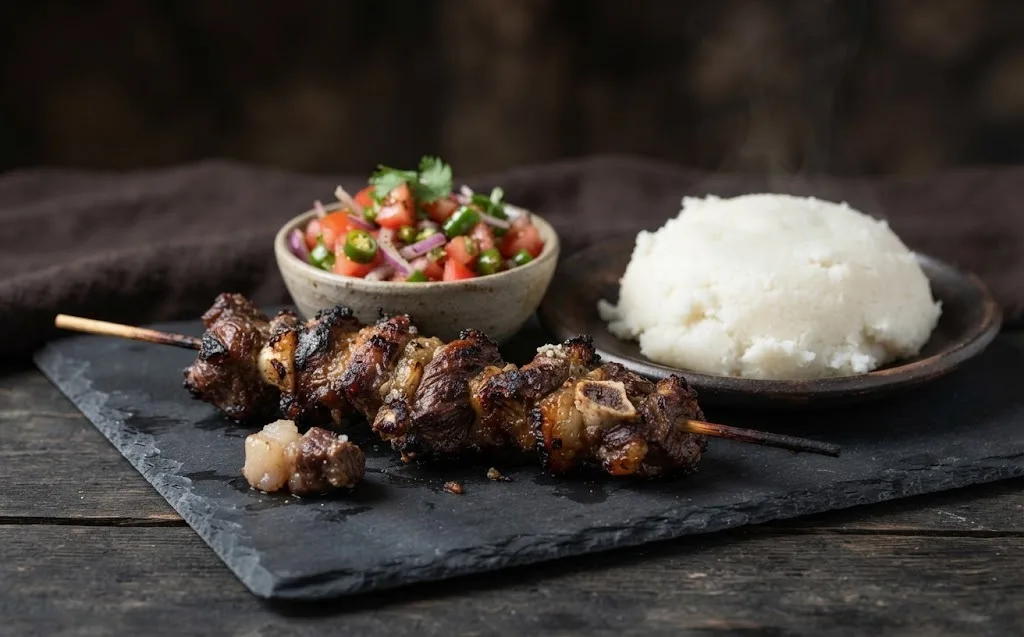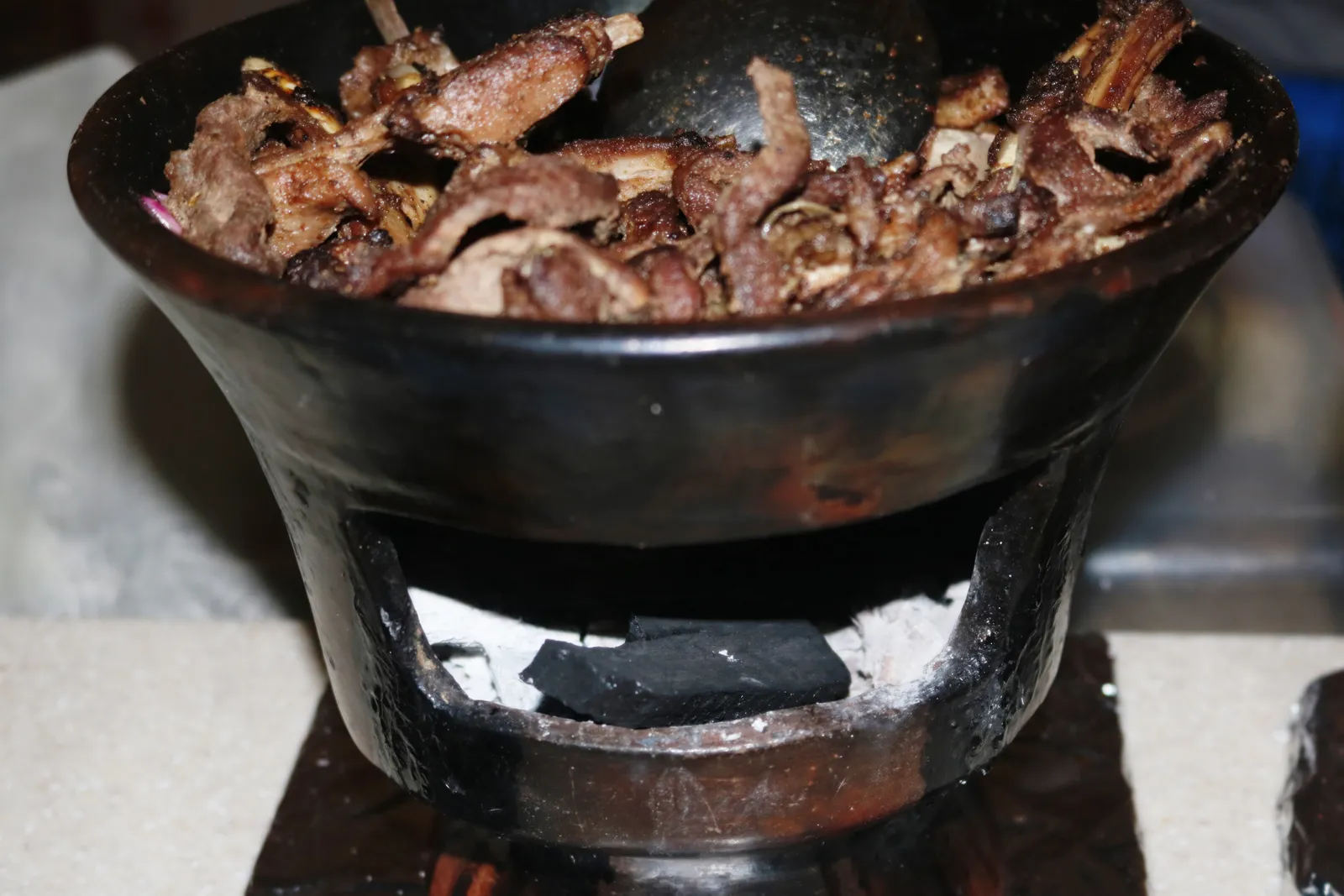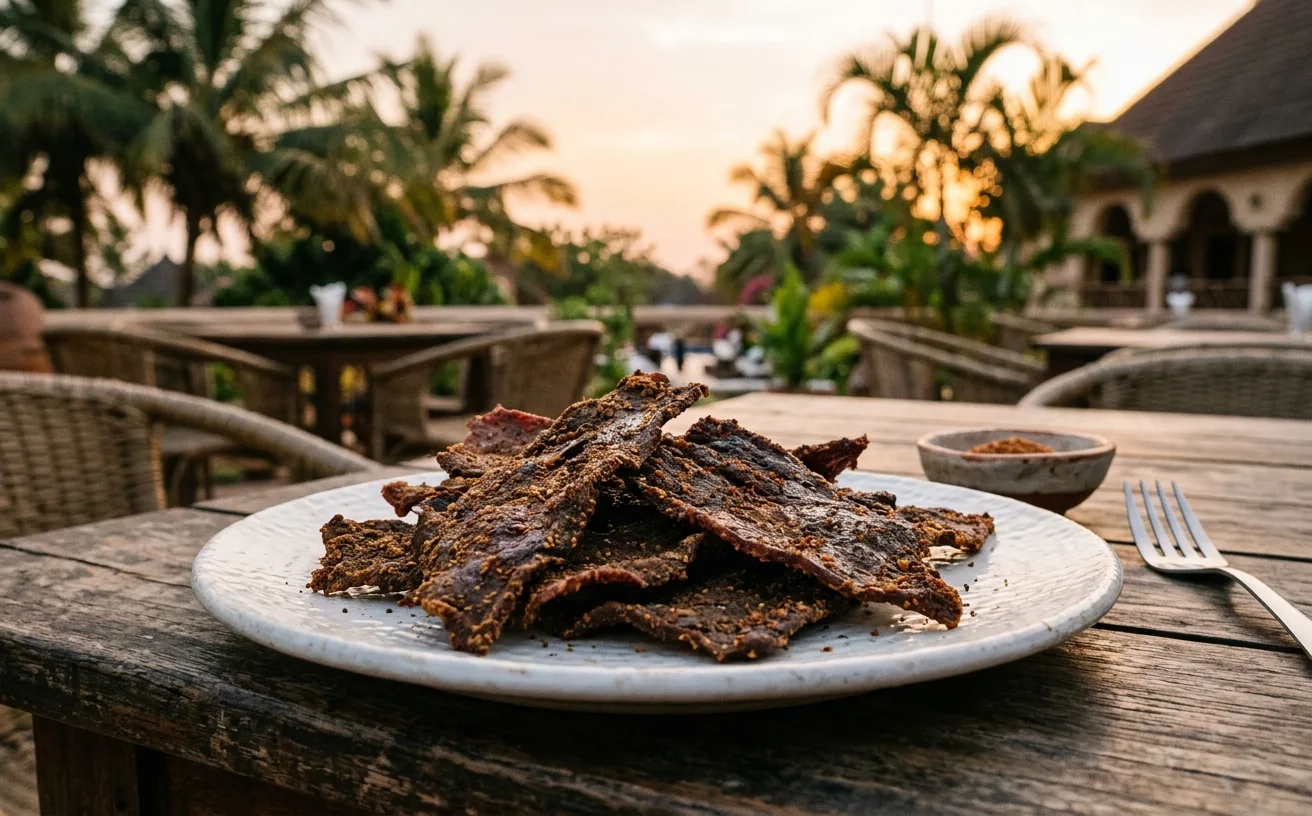
Sheets of beef sliced paper-thin, sun-dried, painted with a peanut-yaji spice slurry, then briefly grilled to finish, a shelf-stable cousin of suya from northern Nigeria. The result is a chewy-crisp, chili-and-groundnut jerky sold in stacked sheets at markets and motor parks.
Also known as kilishi jerky, Nigerian spiced jerky, Hausa dried meat.
Reference video
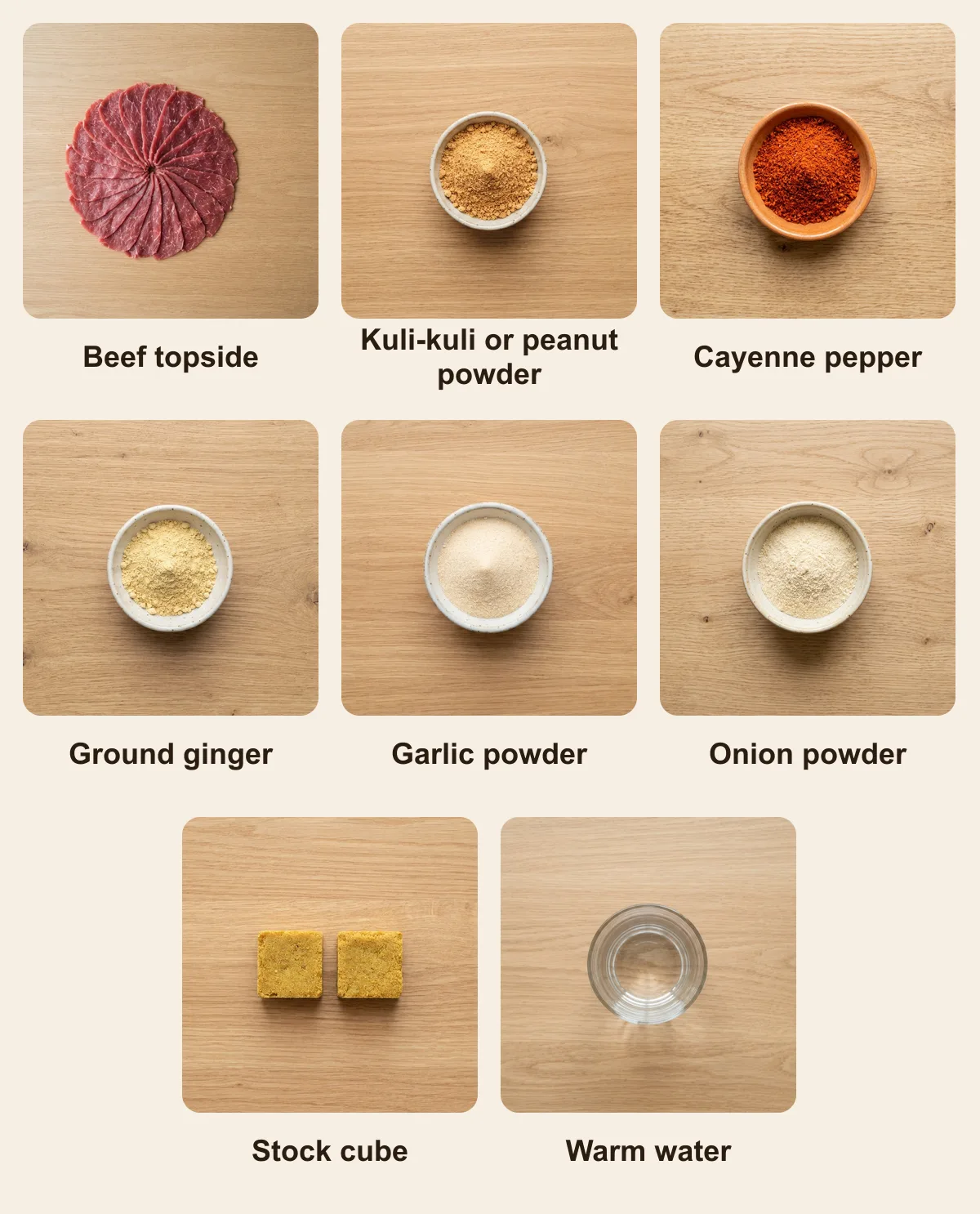
Ingredients
- 1 kg beef topside, trimmed of all fat
- 100 g ground kuli-kuli or defatted peanut powder
- 2 tsp cayenne pepper
- 1 tbsp ground ginger
- 1 tsp garlic powder
- 1 tsp onion powder
- 1 stock cube, crushed
- 150 ml warm water
How to make it
- 1
Firm the beef in the freezer 1 hour, then slice with the grain into sheets thin enough to see light through.
- 2
Dry the sheets on racks at 70°C in a fan oven with the door ajar for about 3 hours, until leathery but still flexible.
- 3
Whisk the peanut powder, spices, stock cube and warm water into a pourable slurry and drag each sheet through it, coating both faces.
- 4
Return to the oven 2-3 hours more until the coating is dry to the touch.
- 5
Finish 1-2 minutes per side over hot coals or under a fierce grill so the crust toasts and blisters lightly.
Pro tip: Test before saucing: a sheet should bend like cardboard without snapping — brittle, over-dried meat cannot hold the peanut slurry.
Where Kilishi comes from
It solves a preservation problem that has shaped Sahelian food for centuries — how to keep meat without refrigeration in a hot dry climate — and it does so while remaining recognisably part of the suya family. It travels well, which is why it is bought at transport hubs and carried as a gift.
Kilishi: suya's spice, dried into sheets
Kilishi shares suya's ingredients but not its method. The beef, trimmed of all fat, is sliced thin enough to see light through and dried until leathery before any spice touches it. Each sheet is then dragged through a kuli-kuli and yaji slurry, dried again, and only finished for a minute or two over hot coals. Suya and tsire are fresh meat under a dry rub, grilled and eaten straight away. Kilishi is the shelf-stable version, sold in stacked sheets at markets and motor parks.
How Kilishi is cooked
The slicing is the hardest part and it is genuinely demanding: the beef must be cut into sheets thin enough to see light through, which requires a very sharp knife, a partially frozen piece of meat, and patience. Kilishi makers slice by hand and the skill is the trade.
The sheets are sun-dried until leathery, then coated in a thick slurry of ground kuli-kuli, chilli, ginger, garlic, onion and spices thinned with water, dried again, and finally passed briefly over a fire to toast the coating and set it. Three stages, and skipping the second drying gives a product that will not keep.
Ingredients and shopping
Lean beef — topside or silverside — trimmed of every scrap of fat, because fat goes rancid and is the reason a badly made kilishi spoils. Partially freeze it before slicing.
Kuli-kuli ground fine, dried chilli, ginger, garlic and onion powder, a little salt and sometimes a pinch of sugar, mixed with water into a thick paint. A dehydrator or a low oven substitutes for the sun, at around 70°C.
How Kilishi is served
Torn into pieces and eaten as a snack, on its own or with raw onion. It is sold in stacked sheets by weight at markets and motor parks and keeps for weeks without refrigeration, which is the entire reason it exists.
Common mistakes
Leaving any fat on the meat
Fat goes rancid and ruins the keeping quality. Trim it completely.
Slices too thick
They will not dry evenly and stay moist in the middle. Thin enough to see light through is the standard.
Skipping the second drying
After the slurry goes on, it must dry again before the final grilling. Otherwise it will not keep.
Over-grilling at the end
The final pass over the fire is brief — a minute or two a side — to toast the coating. Longer and it burns.
Kilishi: questions and answers
How long does it keep?
Weeks without refrigeration if it is made properly — which means all fat trimmed off and both drying stages completed.
How thin should the slices be?
Thin enough to see light through. Partially freezing the beef makes this achievable.
Can I make it without sun?
Yes — a dehydrator or an oven at around 70°C substitutes for both drying stages.
Sources and further reading
- Kilishi — Wikipedia
- Kilishi (Nigerian Beef Jerky) — All Nigerian Recipes