Shashlik and shish kebab are the same idea, pieces of meat grilled on a skewer over embers, and both names grow from the same Turkic root, şiş, meaning skewer. What separates them is the kitchen around the skewer: shish kebab is the Turkish cube of about 3 cm, marinated briefly in onion juice and oil and grilled close and fast for 8 to 12 minutes, while shashlik is the Caucasian and post-Soviet version, cut into 4 to 5 cm pieces, soaked in an onion-heavy marinade and cooked for 15 to 20 minutes on a mangal, never on a grate. Şiş is usually lamb or beef; in Russia and Ukraine the everyday shashlik is pork neck.
Comparison
Shashlik vs Shish Kebab: Meat, Marinade, Cut and Fire Compared
How shashlik differs from shish kebab: the shared şiş root, 4-5 cm pieces vs 3 cm cubes, vinegar or kefir marinades, the mangal fire, and which one to cook.
By Ali Ocak
Updated 2026-09-11
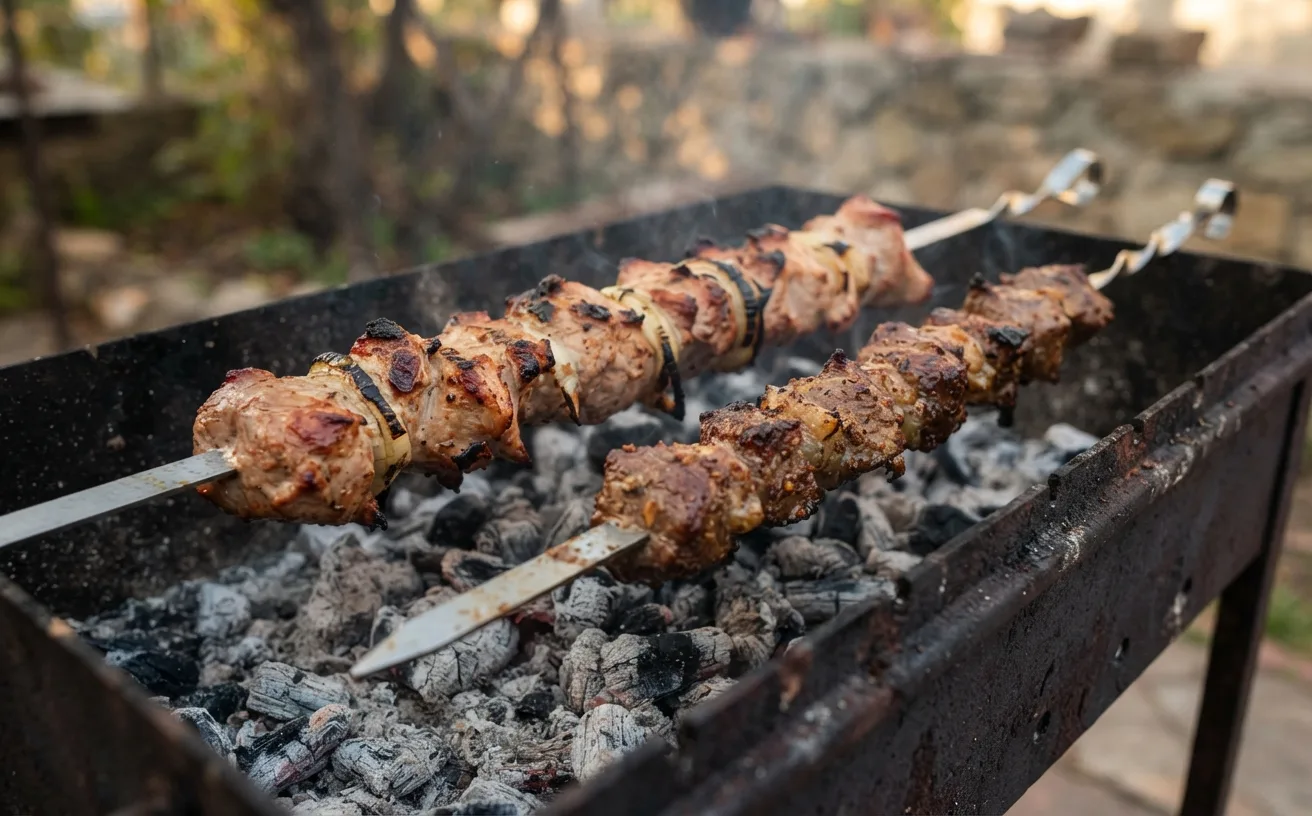
None of those differences is decoration. A 3 cm cube browns outside in about the time its centre needs, so şiş takes a fierce fire and a short cook. A 5 cm piece would char long before its middle moved over that same fire, so shashlik slows everything down: fattier meat, a marinade that softens a cheaper cut, and a cook that starts close to the coals and finishes higher. Swap the parts and you get the two classic failures: a big chunk burnt outside and raw inside, or small cubes dried into pellets before they colour.
The full recipes sit on the site's shashlik and shish kebab pages.
Source-backed support
Sources Worth Watching
Reference material this guide draws on — each link opens with its original publisher.
Source video
Russian BBQ (Shashlik) – The Simplest Recipe You’ll Ever See
A Russian home shashlik at its simplest: pork shoulder cut into medium pieces, layered overnight with sliced onion and salt, threaded onto skewers and grilled over charcoal while turned constantly, with a lemon, parsley and onion salad alongside.
Source: Milana Russian Wife
Embedded from the original YouTube source. Not hosted locally.
Watch On SourceEncyclopedia reference
Encyclopaedia Britannica - Shish kebab
https://www.britannica.com/topic/shish-kebab
Etymology and history reference
Wikipedia - Shashlik
https://en.wikipedia.org/wiki/Shashlik
Soviet shashlik culture reference
Russia Beyond - How Soviets made BBQ parties outside
https://www.rbth.com/russian-kitchen/333734-soviet-bbq-shashlik
Georgian mtsvadi reference
Georgia Travel (Georgian National Tourism Administration) - Mtsvadi
https://georgia.travel/mtsvadi
The short verdict, and where each one comes from
Shish kebab is the plainest member of the kebab family: cubes of whole meat on a metal skewer over charcoal. Because the method needs nothing but a rod, meat and embers, it travelled widely, and shish kebab became the generic English term for meat on a stick. In Turkey it means lamb, sometimes beef, on a flat, sword-like skewer.
Shashlik is the same method seen from the north. Skewering meat over embers is an old herders' technique of the Caucasus and Central Asia, and the original shashlik was lamb or mutton. It became popular in Russia in the 19th century, after the empire conquered the Caucasus, and reached Moscow and mainstream Russian cooking by the century's end. The Soviet era made it a ritual: the weekend meal at the dacha or on the riverbank, tied above all to the May holidays.
Encyclopaedia Britannica treats shashlik as the closely related version of shish kebab eaten in the Caucasus and Russia, and that is the honest verdict: one idea raised by two kitchens. Today shashlik is cooked across the former Soviet republics, the Caucasus, the Baltics and Eastern and Central Europe.
The word itself: one root, two routes
Start with Turkish. Şiş means skewer and kebap means roast or grilled meat, so şiş kebap is simply skewered grilled meat. English took shish kebab from Turkish şiş kebap just before the First World War.
Shashlik came the long way round. The Russian shashlyk was borrowed from Crimean Tatar şışlıq, the same şiş plus the suffix -lik, roughly 'something for the skewer', and it entered Russian in the 18th century. The food historian William Pokhlyobkin credited the Zaporozhian Cossacks with coining it, which is an attribution rather than a documented fact. Keep one distinction straight: the word came through Crimean Tatar, but the dish did not begin in Crimea; it belongs to the herders of the Caucasus and Central Asia.
A famous early literary use is Pushkin's A Journey to Arzrum, from his 1829 trip with the army, where he describes Asiatic shashlik washed down with English beer and champagne.
From Russian the word spread west: German Schaschlik, Polish szaszłyk, Czech šašlik, and English shashlik, which came from Russian rather than straight from Turkish.
The meat: lamb on one side, pork neck on the other
Turkish şiş is a lamb dish first. Shoulder is the all-round cut: at 15 to 20 percent fat it survives a hot fire and stays good up to about 70 °C. Leg is the precision option, around 7 to 9 percent fat, excellent pulled at 54 to 57 °C and woolly past 63 °C. Beef sirloin or rump also appears, and the traditional basting system is a cube of lamb fat threaded between the lean ones.
Shashlik's meat depends on where you stand. In the Caucasus, where the dish began, the answer is lamb, usually shoulder, the older tradition. Across Russia and Ukraine the everyday shashlik is pork neck, or collar, whose seams of fat, 10 to 15 percent of the meat, keep it juicy. Georgia is the exception: its mtsvadi is pork first, with veal, lamb and chicken behind it. Central Asia grills mostly mutton, often with every second or third piece on the skewer a piece of fat, and sheep-tail fat, dumba, is the prize.
The logic under all of it is time. A şiş cube spends 8 to 12 minutes on the fire, so even lean leg survives if you watch it. A shashlik piece spends 15 to 20 minutes over the coals, and lean meat does not survive that; the fat inside the cut bastes it while the centre catches up. That is why pork neck is the most forgiving shashlik cut, and why the shashlik recipe on this site says to swap the vinegar for kefir with anything leaner.
The marinades, and why they work differently
A marinade works on the outer 2 to 3 mm of the meat; only salt travels deeper. Acid denatures surface proteins until they stop holding water, which is how an over-marinated cube ends up mushy raw and dry cooked. Raw onion juice gets there by another route, with enzymes that break protein down.
Şiş keeps it short and light. Grate an onion, squeeze out the juice and discard the pulp, then add olive oil, black pepper and oregano or thyme; many Turkish cooks add milk, a spoon of yogurt or tomato paste, and the Gaziantep style uses pepper paste with Aleppo pepper. Two to four hours is the working window. Some Turkish recipes run longer, but raw onion juice keeps working as long as it sits, and with lemon in the bowl, overnight is already too much. Salt goes on just before grilling, and every shred of pulp comes off, because pulp chars bitter before the lamb colours.
Shashlik starts from onion, sliced into rings and squeezed into the meat by hand; Russia's standard for shop and restaurant shashlik, GOST R 70148-2022, even requires onion in the marinade. Then pick one school and commit. Vinegar and onion is the Soviet canteen classic and a four-hour tool at most; overnight, it turns the surface into a soft grey layer. Kefir is the gentle school, a dairy acid that forgives an overnight soak and suits leaner cuts. Sparkling mineral water, classically Georgian Borjomi, softens through carbonation with almost no flavour, and two hours does it. Wine, tomato juice and pomegranate all have loyal cooks.
Two rules hold across every school. Never mix acid and dairy: vinegar and kefir in one bowl give the worst of both. And salt in the last hour, not at the start, because hours of salt draw moisture out. Georgia supplies the counterpoint: classic Kakhetian mtsvadi is not marinated at all, just salted, grilled and splashed with wine as it cooks.
Cutting and threading: 3 cm against 5 cm
For şiş, cut lamb or beef to about 3 cm, every cube within half a centimetre of its neighbours, because a skewer cooks as one piece. Below about 2 cm a cube cooks through before it browns; above about 4 cm the outside chars before the centre moves, unless you sear first and finish on a cooler zone. At 3 cm, a hot fire browns the surface in about the 8 to 12 minutes the centre needs. Thread snug but not crushed on flat metal skewers, which stop cubes spinning, and give peppers and tomatoes their own skewers; in Turkey a şiş is normally meat only.
Shashlik in Russia and Ukraine deliberately sits at and above that 4 cm line; Central Asian skewers are usually cut smaller. The usual Russian cut is 4 by 4 or 5 by 5 cm, and the national standard calls for calibrated pieces of 50 to 70 g, roughly the weight of a 4 cm cube. That size is why shashlik gets a sear followed by gentler, higher heat. The pay-off is a thick, juicy middle a small cube never has, and less of each bite made of marinated surface, which is why the stronger marinades suit it. Skewer along the grain with a whisper of space between pieces.
The skewer is part of the difference. A shampur is a long stainless-steel blade, flat or bent to a 90-degree angle, and both shapes stop heavy pieces rolling when you turn it. Buy them well longer than your mangal is wide, so the handles sit clear of the heat. At the other extreme sits çöp şiş from Selçuk and Germencik near Ephesus: lamb and fat nuggets under 2 cm on thin wooden skewers.
The fire, step by step: mangal against ocakbaşı
Both need embers, not flames: flames mean soot, and fat dripping into them returns as acrid smoke. Light the charcoal and wait 20 to 30 minutes until every coal is ashed grey; the Russian cue is grey coals that glow red when fanned. For mtsvadi over vine prunings, Georgians wait until the embers have cooled to white.
Shashlik, step one: rake an even bed of coals along the mangal, the long, narrow, open trough, and lay the skewers across its rails so the meat hangs over the coals with nothing in between. Why: fat drips into the embers instead of pooling on hot metal, and one turn of the skewer turns every piece. The trap is the grate; shashlik is always a mangal, never a grate. Step two: sear close, about 2 minutes on each of four faces. Why: a big piece needs its crust set before the long part of the cook. The trap is fidgeting; a piece turned every 30 seconds never browns.
Step three: raise the skewers for about 8 minutes of gentler heat, turning regularly, 15 to 20 minutes in all, so the centre cooks through before the outside burns. The trap is full blast to the end, which gives the burnt-outside, raw-inside skewer. Step four, flare-ups: sprinkling water or marinade on the coals is a common shashlik habit, but this site recommends moving the skewer to a cooler spot for 20 to 30 seconds, because water throws ash and knocks the heat down. Step five: nick a piece; the juice should run clear with the centre still glistening, and a probe in pork neck reads 63 to 68 °C. Rest 5 minutes.
Şiş is cooked the ocakbaşı way. The word means roughly at the hearth: a restaurant built around one large hooded charcoal grill, diners seated around it while the usta, the grill master, cooks. The coals sit shallow, around 8 to 12 cm below the meat, and hot: hold your palm 10 cm above the meat's level and you should last only 2 to 3 seconds. Give each of four faces 2 to 3 minutes, a quarter turn between, 8 to 12 minutes in total. The trap is flaming coals, which scorch the outside and leave the middle raw. Rest 3 minutes on lavash so the bread drinks the juices.
Serving: what goes on the table with each
Shashlik comes with onion rings, raw, iced or pickled in vinegar, everywhere from Georgia to Uzbekistan. Lavash, or shoti in Georgia, pulls the pieces off the skewer and soaks up the juices. Around it go fresh herbs such as coriander, dill and tarragon, tomatoes and pickles, and in Russian homes ketchup-based or plum sauces. The drink is vodka, beer or Georgian wine, and the meal happens outdoors.
The serious sauces come from Georgia. Tkemali is a tart cherry-plum sauce with garlic, coriander, dill, pennyroyal and chilli, and its everyday role there is often compared to ketchup's in the United States. Adjika is a spicy paste of red pepper, garlic, herbs and spices from Abkhazia and Samegrelo. Satsebeli completes the Georgian set, and neighbouring Azerbaijan adds narsharab, reduced pomegranate juice. Mtsvadi keeps it simplest: raw onion rings, pomegranate seeds, coriander and shoti.
Şiş arrives on thin lavash with sumac onions, flat-leaf parsley and grilled long green peppers and tomatoes, with bulgur pilaf or rice and ayran or cacık alongside, often on a mixed grill with adana and chicken şiş.
Which one to cook at home, and when
Cook şiş when you have good lamb and a short evening: leg or shoulder, an onion-juice marinade started two to four hours ahead, a hot fire, and 8 to 12 minutes of grilling. It rewards a cook who pulls lamb leg at 54 to 57 °C and punishes one who wanders off, because leg has no fat to hide an overshoot. If that worries you, buy shoulder.
Cook shashlik when you are feeding a crowd outdoors with a cheaper cut and a whole afternoon. Buy pork neck, cut it to 4 to 5 cm, and choose the marinade by the clock: kefir the night before, or vinegar and onion four hours before the fire. Pork neck is genuinely forgiving, well marbled and tolerant of both a long marinade and a hot fire, which makes pork shashlik a gentler first skewer than lamb-leg şiş.
Equipment settles the rest. A mangal, or any long box where skewers rest across the edges with the meat over the coals, suits both. With only a kettle grill and a grate, şiş is the easier fit, because 3 cm cubes cook well over one hot zone; if shashlik has to go on a grate, a compromise purists reject, build two zones, sear hot and finish cool.
Quick answers
Is shashlik the same as shish kebab? They share a root, the Turkic şiş, meaning skewer, but not a kitchen. Shish kebab is the generic Ottoman-descended cube on a stick; shashlik is the Caucasian and post-Soviet take, with bigger 4 to 5 cm pieces, an onion-heavy marinade and always a mangal rather than a grate.
Why is shashlik marinated in vinegar? Vinegar and onion softens a cheaper cut and seasons it fast, which made it the Soviet canteen classic; Russia's standard for shop-bought shashlik still expects a vinegar aroma. Keep it to four hours at most, or the surface turns soft and grey. For lean meat or an overnight marinade, use kefir.
Is shashlik Russian or Georgian? The name is Russian, the dish Caucasian. Skewering meat over embers is an old herders' method of the Caucasus and Central Asia; the word reached Russian through Crimean Tatar in the 18th century, and Russia made the dish a national weekend habit. Georgia's own version is mtsvadi: pork over vine embers, classically with no marinade.
Cook These Next
 AI illustration
Pork / 1h
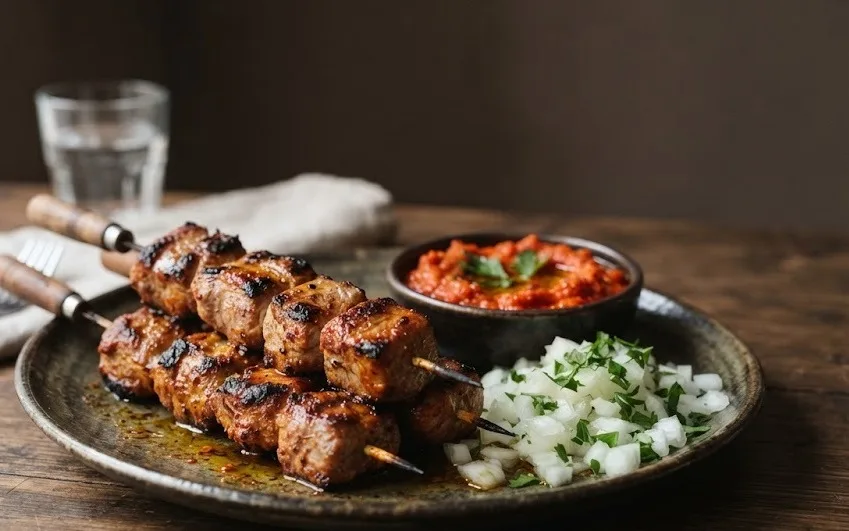
Raznjici
Simple Balkan skewers. Pork or chicken cubes simply seasoned and grilled.
 AI illustration
Lamb / 24h
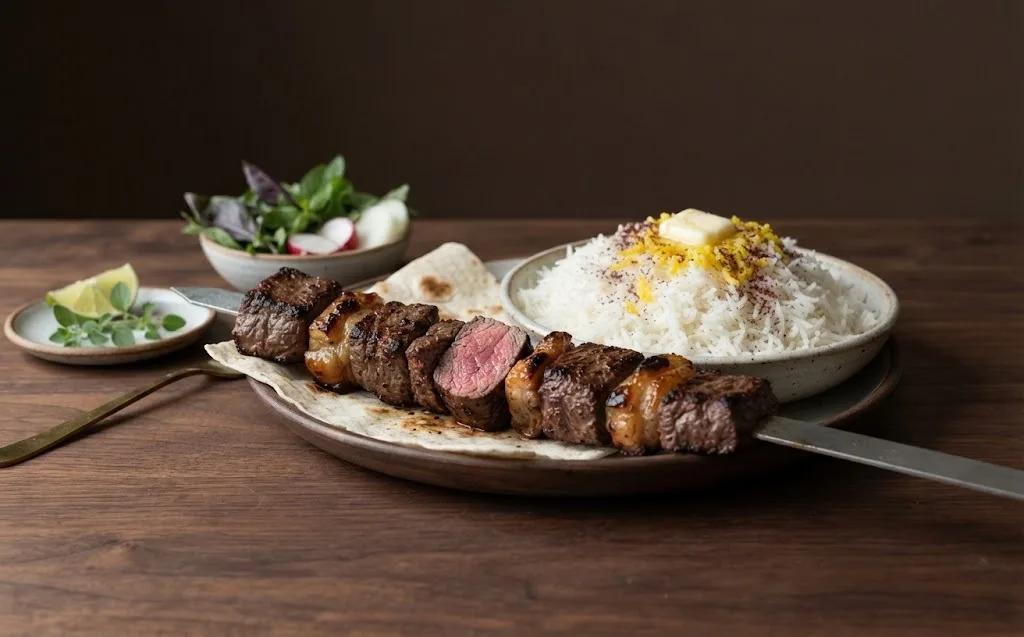
Kabab Chenjeh
The Prime Steak Kebab. Cubed sirloin or leg of lamb, tenderized with kiwi or onion juice.
Pork / 2h
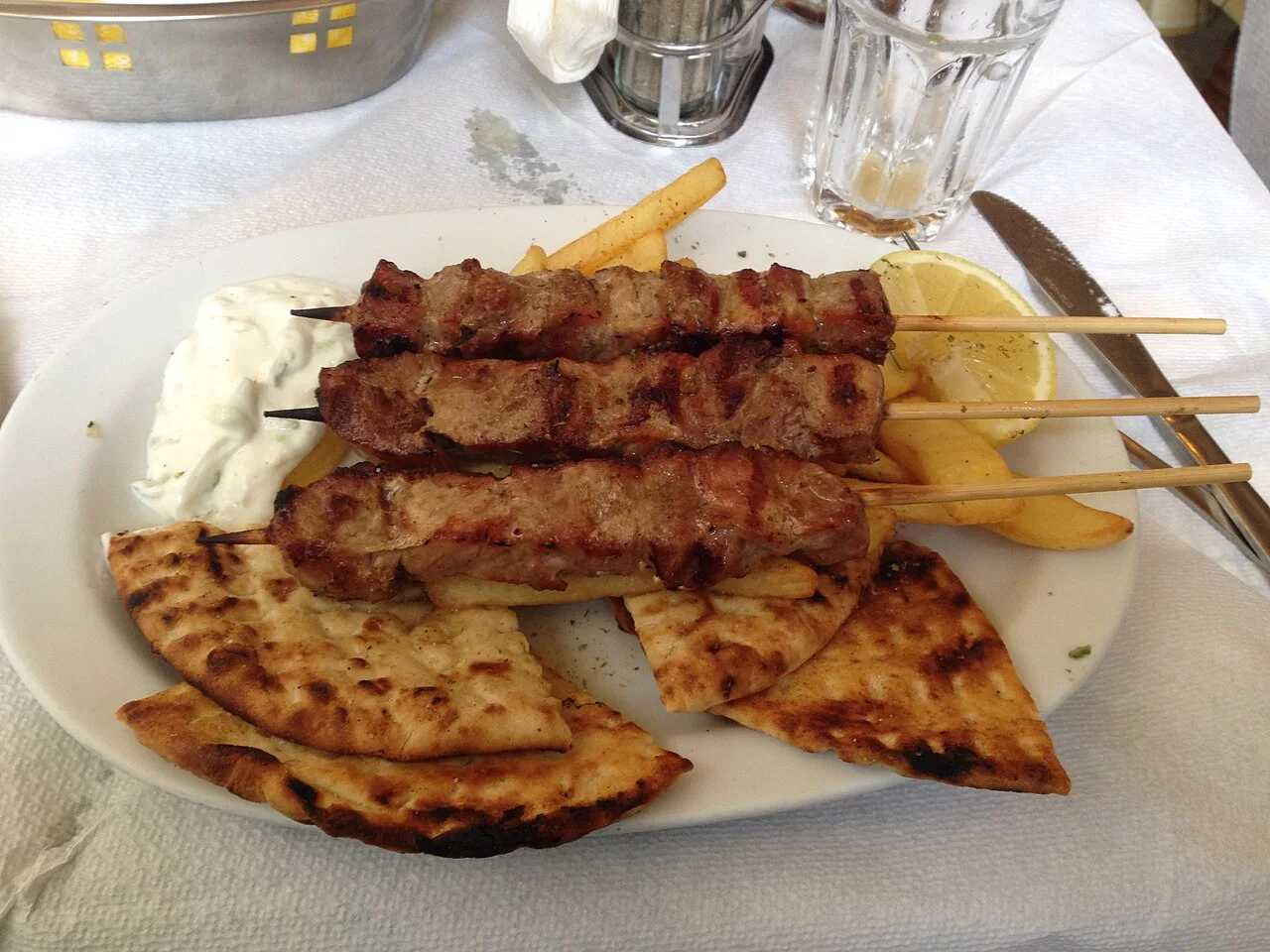
Souvlaki
Classic Greek skewers. Traditionally Pork, marinated in lemon and oregano.
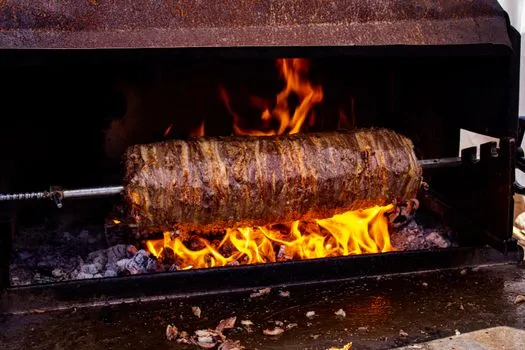
Lamb / 12h
Cag Kebabi
The horizontal ancestor of Doner. Marinated lamb slices on a wood fire.
Related Collections
Turkish Kebab Guides
A focused collection for Turkish kebab styles including Adana, Urfa, Cag, Iskender, and supporting bread pages.
Balkan Kebab Recipes: Cevapi, Somun, Lepinja, Raznjici
Compare Balkan kebab recipes, breads, and serving traditions including cevapi, somun, lepinja, raznjici, onion garnish, ajvar, and kajmak.
Persian Kebab Recipes
A collection of Persian grilling styles, from koobideh and barg to joojeh and other skewer traditions.
More Guides
Spice guide
Yaji Suya Spice: Kuli-Kuli, Ratios and How to Make It
Yaji, the Nigerian suya spice: why kuli-kuli beats whole peanuts, ginger level with the base, four working ratios, a step-by-step grind and the two coats.
Technique guide
Viral Parchment Paper Doner: Why It Works and How to Fix It
The viral parchment paper doner: why thin rolled mince imitates spit meat, what it misses (salt, fat, a dry crisp) and a step-by-step method to 71°C.
Heat guide
Charcoal vs Gas for Kebab: The Heat Matters More Than Smoke
Charcoal vs gas for kebab: why coals win for minced adana and koobideh, where gas loses almost nothing, and the settings that close the gap on a gas grill.
Greek guide
Gyro vs Souvlaki: Spit, Skewer and the Pita Between
Gyro vs souvlaki: vertical spit versus skewer, why pork rules in Greece, what goes in the pita, and how to make both properly at home without a rotisserie.
Meat guide
Best Meat For Kebab
Choose the best meat for kebab by fat ratio, cut, grind, and cooking style, whether it ends up on a skewer, in a wrap, or on a plate.
Technique guide
How To Keep Kebab On The Skewer
Learn how to keep kebab on the skewer with the right fat level, onion handling, kneading, skewer shape, and grill timing.